REVIEW · PRAGUE
Private Prague Cold War Walking Tour
Book on Viator →Operated by Insight Cities · Bookable on Viator
Prague feels peaceful today. Then this tour quietly reminds you it was controlled. A private 3-hour walk with a historian guide, built around the Soviet-era places that shaped daily life from 1948 to 1989, turns regular landmarks into real stories you can almost hear.
I especially like the one-on-one attention from your guide, since you’ll get time to ask questions instead of rushing through a slideshow. And I love the mix of sites: big political monuments, plus smaller details like locked doors to Cold War bomb-shelter corridors that make the past feel physical. The only real drawback is the steep climb around Vitkov Hill, including about 20 minutes of uphill walking—so if mobility is an issue, you’ll want to flag that early.
In This Review
- Key things I’d plan for on this Prague Cold War tour
- Starting out near Republic Square: how the tour sets the tone
- The Karlin-Zhizhkov pedestrian tunnel: a Cold War secret you can still see
- Vitkov Hill and the National Monument: Soviet memorial art and political memory
- Zizkov Television Tower: the quick stop with the best payoff
- Wenceslas Square: where 1989 stops being a headline
- The upside-down King Wenceslas statue: a political joke with bite
- How long you’ll be walking (and why 3 hours is the right amount)
- What’s included vs. what you’ll pay separately
- Who this tour is best for
- How to get ready for a Cold War walking tour in Prague
- Should you book the Private Prague Cold War Walking Tour?
- FAQ
- What’s the duration of the Private Prague Cold War Walking Tour?
- How much does the tour cost?
- Is the tour offered in English?
- Does the tour include pickup?
- Where do we meet the guide?
- Are tickets and admissions included?
- What should I know about walking and fitness?
Key things I’d plan for on this Prague Cold War tour
- Private, historian-led route with undivided attention for a group up to 10
- Cold War “daily life” stops, not just propaganda monuments
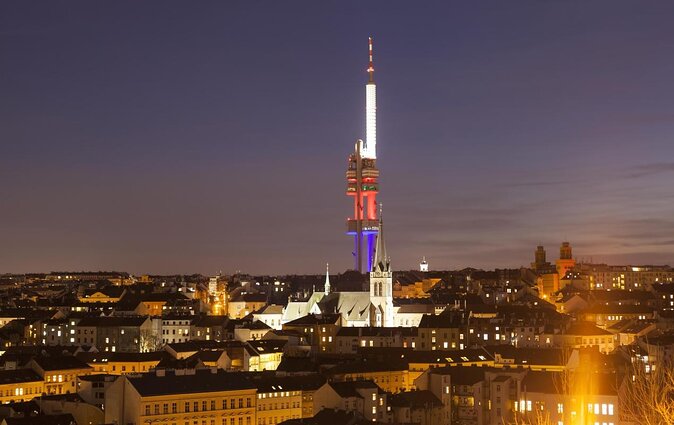
- Vitkov Hill viewpoint time, where the city and the Zizkov TV Tower show up in one glance
- Nuclear shelter corridors nearby via the Karlin-Zhizhkov pedestrian tunnel
- Wenceslas Square in context, from Prague Spring to Warsaw Pact tanks and the 1989 Velvet Revolution
- Some admissions not included, especially at Vitkov’s major monument site
Starting out near Republic Square: how the tour sets the tone
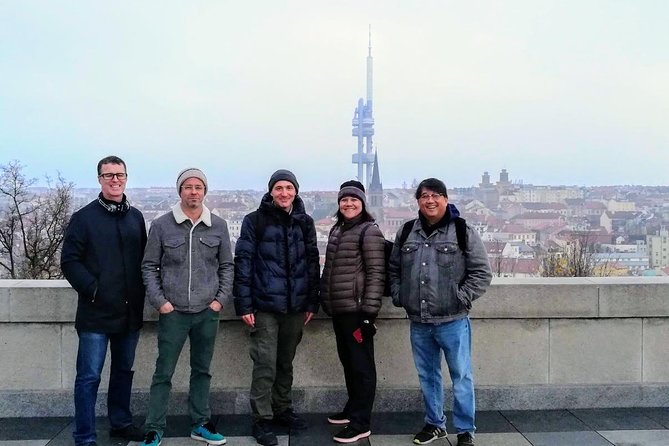
You begin in central Prague, near Náměstí Republiky (Republic Square). If hotel pickup isn’t arranged, you meet your guide 15 minutes early at the church at the same address area—Kostel Svatý Josef at Náměstí Republiky 1077/2. The location is practical: it’s close to public transport, so you’re not locked into a complicated arrival plan.
This tour runs about 3 hours, and you can choose a morning or afternoon start. I like that flexibility because Prague can be busy mid-day. Also, since part of the experience is visual—the views from Vitkov and the stark look of Zizkov’s Brutalist TV tower—lighting and timing matter. Morning tends to feel calmer. Afternoon can feel dramatic, especially when you’re looking back over the city.
You can also read our reviews of more walking tours in Prague
The Karlin-Zhizhkov pedestrian tunnel: a Cold War secret you can still see
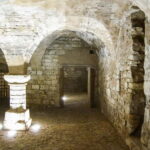
One of the first stops is the Pedestrian Tunnel Karlin–Žižkov. On paper it’s just a tunnel. In real life, it’s unsettling. You walk through, and the key detail is what’s around you: locked doors that lead toward nuclear bomb-shelter corridors built during the Cold War and still maintained.
That’s the value here. You’re not only learning about ideology. You’re seeing infrastructure—how fear was built into the city and how it stayed ready. For me, this is the moment the tour stops being abstract. Even if you already know the terms—Warsaw Pact, Soviet influence, communist rule—this place makes it concrete.
It’s also a nice break early on, since the tunnel segment is short. And it’s free (no admission ticket needed for this stop).
Vitkov Hill and the National Monument: Soviet memorial art and political memory
From the tunnel, the route heads toward Vitkov Hill and the National Monument. This is the big-ticket zone of the walk—both in importance and effort. You’ll spend time at the National Monument and its major complex.
Plan for the climb. The tour notes a steep climb of about 20 minutes. It’s not the end of the world, but it matters. If you’ve got knee issues, asthma, or general mobility limits, tell the operator in advance so they can adjust and skip Vitkov Hill while keeping other Cold War-focused sites in the plan.
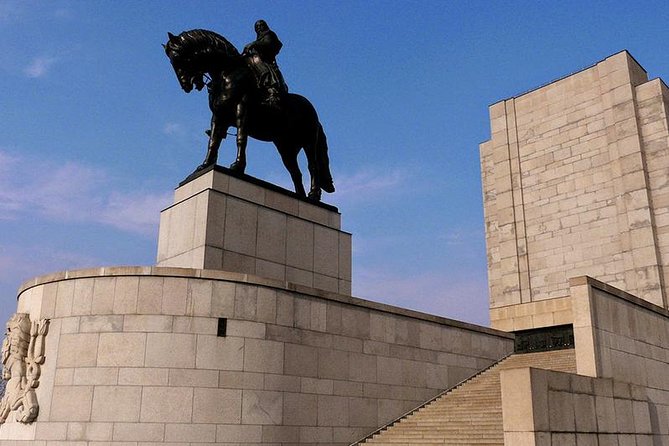
At Vitkov, you’re not just looking at a building. You’re looking at Soviet-era messaging—statues, decorative friezes, and the “official” version of history. The Hall of the Soviet Soldier was designed to honor Soviet soldiers killed during World War II in Eastern Europe. It’s the kind of place where the art and the politics blend together, and your guide can connect what you’re seeing to what it meant for Czechoslovakia under communist rule.
Then comes one of the most striking parts of the tour: the former mausoleum area tied to Klement Gottwald, the Communist Party leader and President from 1948 to 1953. You’ll hear how his mummified body was displayed there, and you’ll also see references to the surrounding support systems—like the laboratory and temperature-control center used to maintain the preserved body.
Whether you’re drawn to history or you’re just curious how propaganda worked, this stop hits hard. It’s not subtle. It turns power into a physical showpiece.
A practical note: the National Monument stop includes 30 minutes of time on-site, and admission is not included. So budget a little extra for tickets at this major complex.
Zizkov Television Tower: the quick stop with the best payoff
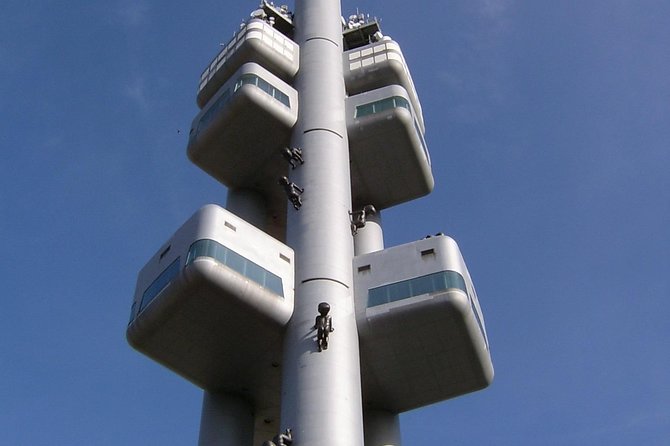
After Vitkov, you’ll get a short visit to the Prague TV tower at Žižkov—Zizkov Television Tower. This stop is brief, but it’s worth it because of what it gives you: a look at the tower’s Brutalist design and a strong sense of how it sits on the skyline.
Even if you’re not planning to go inside, you’ll get a better read on Prague’s modern edges after spending time with Cold War memorial architecture. Think of it as a visual bridge: from heavy political symbolism to a more chaotic, industrial-looking Prague skyline.
This part is free (no admission ticket required).
Wenceslas Square: where 1989 stops being a headline
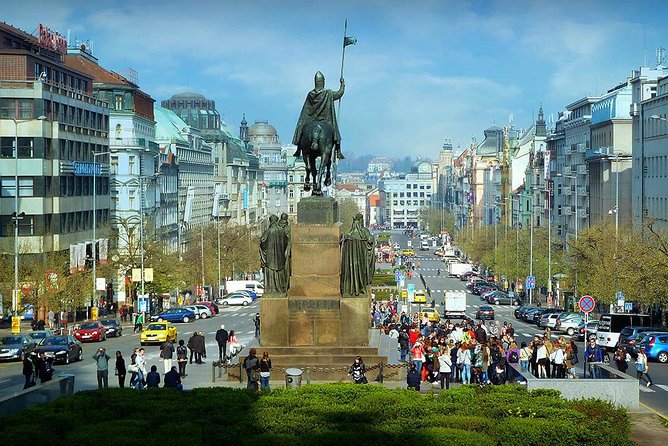
Wenceslas Square is one of those places you’ve probably seen in photos. This tour helps you understand why it mattered, long before the Velvet Revolution became a shorthand for freedom.
You walk through and consider the square’s long timeline—its founding in the 14th century, how it was used for military parades by occupying forces, and how it ties into the tragic cycle of Prague politics in the 20th century.
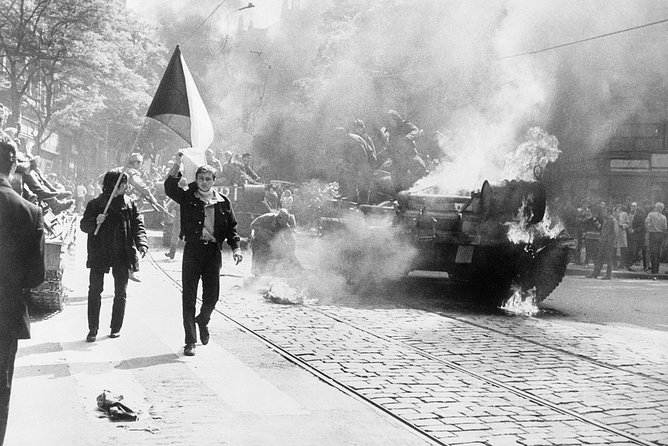
The key Cold War story centers on 1968 and 1989. In 1968, Warsaw Pact tanks converged on the square to crush the Prague Spring, ending a brief period of greater freedom of speech and independent press. Then in 1989, the square became a stage for demonstrations that led into what’s known as the Velvet Revolution—the push that helped end communist rule.
I like how your guide links the monuments and the street geometry to the people behind the events. It’s easier to grasp crowds and courage when you’re standing where they actually happened.
This stop is free, and it includes about 20 minutes of walking time across the square’s key areas.
You can also read our reviews of more private tours in Prague


The upside-down King Wenceslas statue: a political joke with bite
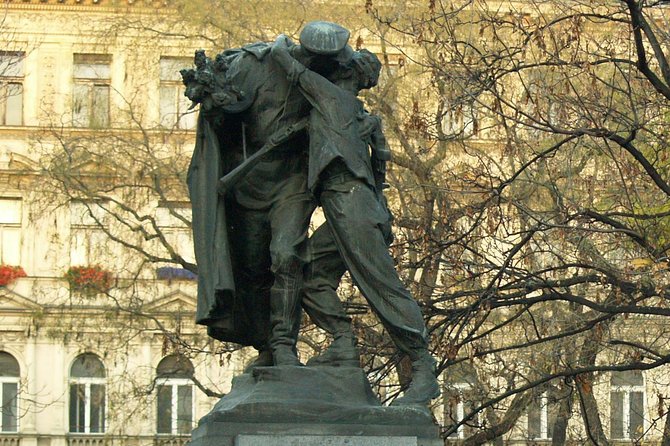
Another quick, free stop is the Upside-Down Statue of King Wenceslas Riding a Dead Horse. It sounds like something you’d screenshot and move on. But in this context, it becomes an interpretation tool.
You’re encouraged to think about why an old symbol gets flipped. King Wenceslas is tied to Czech identity, and the ironic sculpture points toward how political attitudes can change—sometimes fast, sometimes ugly, sometimes with dark humor.
This isn’t a heavy museum stop. It’s a moment to step back and ask: what does a society do after decades of control? Art like this is one answer.
It’s short (about 5 minutes) and free.
How long you’ll be walking (and why 3 hours is the right amount)
This is a 3-hour private walk. That duration is a sweet spot for a topic like the Cold War, which can turn into a lecture if time isn’t managed.
You’ll move through several distinct zones:
- a tunnel stop that feels secret and claustrophobic
- Vitkov’s monument complex that’s political and physically intense
- a short Brutalist visual hit at Zizkov
- a street-and-square segment at Wenceslas
- a quick sculpture stop for interpretation
The total walking feels moderate overall, but the Vitkov climb is the one part you should treat as the main physical challenge. If you’re choosing this tour for family reasons, or because you’re traveling with students or friends, it helps that the route is private. You can slow down, ask questions, and keep your pace instead of being bullied by a larger group’s schedule.
Also, because it’s private, you get fewer awkward moments of trying to read signs while someone else is talking. It’s just you and your guide.
What’s included vs. what you’ll pay separately
The tour includes:
- a historian guide
- tram tickets
- a mobile ticket (useful for entry-related steps, when needed)
- pickup offered (but hotel pickup/drop-off is listed as not included)
It’s offered in English, and it’s a private group experience. The price is per group, based on up to 10 people.
What’s not included:
- food and drinks
- hotel pickup and drop-off
- admission where noted (especially the National Monument at Vitkov)
For value, here’s the practical math: you’re paying for time with a specialized historian guide and a route that connects sites you might otherwise ignore or misunderstand. Prague has plenty of attractions. This one is different because it teaches you how to read the city as political space.
If you’re traveling solo or as a couple, you may feel the price more strongly. But the private format can still be worth it if you want focus and conversation. If you’re a small group up to 10, the cost is easier to justify because you’re effectively splitting the guide time.
Who this tour is best for
I’d book this if you want more than surface sight-seeing. This tour works especially well if:
- you like political history that stays grounded in places
- you want an explanation of events like the Prague Spring and the Velvet Revolution from the streets themselves
- you enjoy guides who can connect buildings and symbols to the lived experience under communist rule
It’s also a strong fit for educators and student groups who want a guide that handles questions and discussion. In prior groups led by guides such as Alzbeta and Vadim, the common thread was teaching in a way that felt interactive, not just directional.
If you prefer very light walks and minimal stairs, you should double-check your ability to handle Vitkov—or plan on asking to skip that hill.
How to get ready for a Cold War walking tour in Prague
A few practical tips that make a difference:
- Wear shoes with good grip. Prague sidewalks can be uneven.
- Bring water, even though food and drinks aren’t included.
- If you have mobility concerns, speak up early so the route can be adjusted around Vitkov.
- If you’re someone who hates surprises, keep in mind that one major stop (Vitkov) has admission not included.
Also, think about your expectations. This is not a cheerful tour about liberation only. It’s about control, fear, propaganda, and resistance—told through real spaces. If you can handle that tone, you’ll get a lot more out of it.
Should you book the Private Prague Cold War Walking Tour?
Yes, if you want a guided walk that turns Prague’s monuments and street corners into a clear story of 20th-century communist rule. The private historian format helps a lot, and the mix of Soviet-era memorials, the John Lennon Wall-style message of protest, Wenceslas Square’s revolution stage, and even the bomb-shelter corridor details is a smart combination.
Skip it or adjust it if Vitkov Hill’s climb sounds too hard. But if that’s manageable, this tour is one of the more purposeful ways to spend your time in Prague when you want history with location-based meaning—not just names and dates.
FAQ
What’s the duration of the Private Prague Cold War Walking Tour?
It lasts about 3 hours.
How much does the tour cost?
The price is $390.37 per group, for groups of up to 10 people.
Is the tour offered in English?
Yes, it’s offered in English.
Does the tour include pickup?
Pickup is offered, but hotel pickup and drop-off are listed as not included.
Where do we meet the guide?
If hotel pickup isn’t arranged, meet 15 minutes before the start time at Kostel Svatý Josef, Náměstí Republiky 1077/2, 110 00 Praha 1.
Are tickets and admissions included?
Tram tickets are included. Some admissions are not included, including the National Monument at Vitkov.
What should I know about walking and fitness?
The tour is suitable for moderate physical fitness, but it includes a steep climb of about 20 minutes up Vitkov Hill. If you have mobility issues, you should let the operator know so Vitkov Hill can be left out and other Cold War-related sites can be prioritized.