REVIEW · PRAGUE
Prague: Jewish Quarter Walking Tour with Admission Tickets
Book on GetYourGuide →Operated by Get Prague Guide · Bookable on GetYourGuide
Prague’s Josefov feels like a city within a city. This tour turns the Jewish Quarter into a clear story you can walk through, with synagogue entry and time inside the places that still carry echoes of real people. I love how the guide storytelling makes the history feel human, especially the Nazi-era persecution stories. One possible drawback: you’ll spend more time than you might expect dealing with lines at entrances, and the pace can feel tight if you’re hoping to linger.
You start at Get Prague Guide near Maisel Synagogue, then connect four synagogues plus the Old Jewish Cemetery in about 150 minutes. The route is compact, but it still manages to cover the big ideas: community life, later upheavals, and the layered meaning of preserved spaces. Just know the synagogues have strict dress expectations, so plan your outfit before you arrive.
In This Review
- Key highlights you get from this Jewish Quarter tour
- Why Josefov matters—and why a walking tour is the right format
- Meeting at Maiselova 5: the practical start that saves your first hour
- Maisel Synagogue: starting with the anchor site of the quarter
- Pinkas Synagogue: guided time that makes the interior feel meaningful
- Old Jewish Cemetery: where thousands of tombstones change the tempo
- Old-New Synagogue: the “chapter” stop in the middle of the route
- Spanish Synagogue: finishing at Španělská with the last guided interior
- Dress code rules: the thing that most affects your comfort (and entry)
- The pacing reality: time inside sites, plus lines at entrances
- Price and value: what $76 is really buying you
- Which guides shine here (and what to look for)
- Who should book this tour—and who should choose differently
- Should you book this Prague Jewish Quarter tour?
- FAQ
- How long is the Prague Jewish Quarter walking tour?
- Where do I meet the guide?
- Which synagogues are included in the ticket?
- Is the Old Jewish Cemetery included?
- What is the dress code for entering the synagogues?
- Does the tour run every day?
- What languages is the live guide offered in?
Key highlights you get from this Jewish Quarter tour
- Four synagogue interiors included: Maisel, Pinkas, Spanish, and Old-New, with guided context at each stop
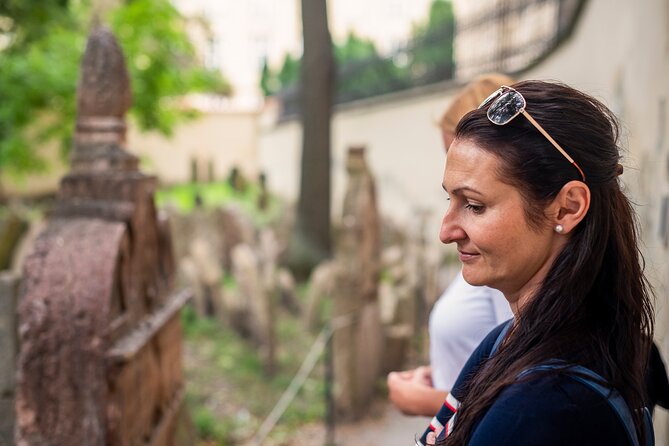
- Old Jewish Cemetery visit: one of the oldest cemeteries in Central Europe, with time to see thousands of tombstones
- Real persecution stories, handled carefully: the tour includes touching accounts of people persecuted by the Nazi regime
- Great starting point in Josefov: meeting at Maiselova 5 keeps you close to the action from minute one
- Live guide, multiple languages: English, Czech, French, German, Italian, and Spanish are available
- Ticket line help included: the package includes entry, with “skip the ticket line” noted as part of the experience
Why Josefov matters—and why a walking tour is the right format
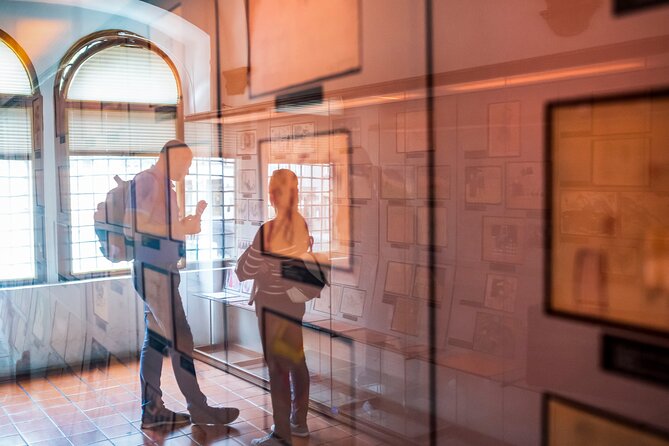
Josefov isn’t just a pile of old buildings. It’s an area where centuries of Jewish life, architecture, and public memory overlap in small spaces—so you get more by seeing it in sequence than by bouncing between stops on your own. Walking helps you connect locations to the stories the guide tells, and it also keeps the experience grounded in what you can actually see.
I also like that the tour doesn’t treat the synagogues as isolated sights. It links community life to major turning points, including the darkest chapter of WWII persecution. That order matters, because you’ll understand what you’re looking at before the story reaches the heavier parts.
You can also read our reviews of more tours and experiences in Prague


Meeting at Maiselova 5: the practical start that saves your first hour
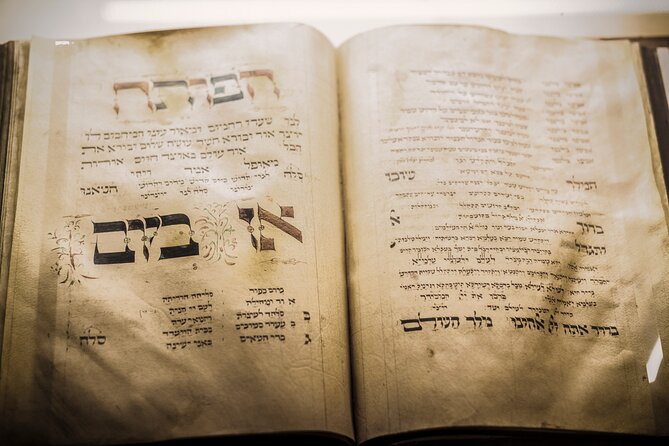
You meet your guide at Get Prague Guide at Maiselova 5, Prague 1, near Maisel Synagogue. That matters because the first minutes set the tone: you’re already in the neighborhood, and you can get your bearings quickly without wasting time on transit.
This is a 150-minute tour, so timing is part of the deal. The plan is to move through multiple indoor sites—each with guided time—then end at Španělská Synagoga (Spanish Synagogue). In other words, it’s not a slow museum crawl. If you’re the type who loves lots of unstructured wandering, you’ll likely want to add extra time on your own after the official route.
One more practical note from real pacing: some groups run into lines at entrances, which can stretch the time you spend there. If you hate waiting, try to wear patience like it’s another layer.
Maisel Synagogue: starting with the anchor site of the quarter
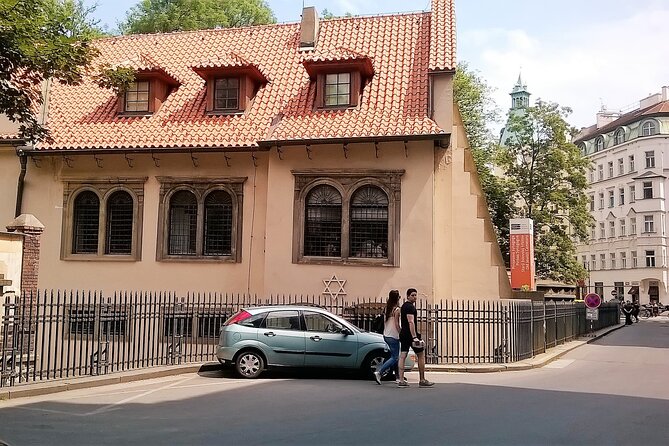
The tour kicks off with a guided visit inside Maisel Synagogue, including about 25 minutes there. Starting at a major synagogue early is smart. It gives you the right framework for the rest of Josefov, so later stops don’t feel like random buildings you toured in sequence.
What I like about the way this kind of start works is simple: your guide can set vocabulary and context before you hit details. You’ll also get the benefit of being fresh, not already tired from moving between locations.
If you’re lucky, you’ll get a guide with a teacher’s rhythm. In the reviews, I saw names like Peter, David, and Steve praised for making the story feel approachable and clear—often with humor used to keep the group engaged, not to shrink the topic.
Pinkas Synagogue: guided time that makes the interior feel meaningful
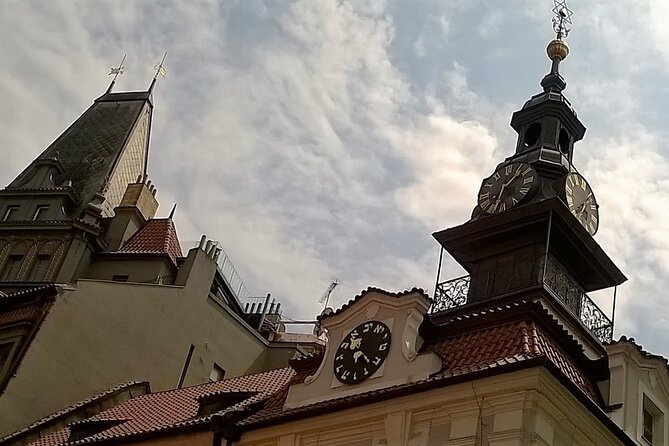
Next is Pinkas Synagogue, again with about 25 minutes of guided visit time. Even if you’ve read about Jewish Prague before, a guide can help you notice what you might otherwise skip: why the building matters, how it fits into community life, and how later events shaped what people preserved.
This is one of those stops where you’ll likely feel the difference between sightseeing and understanding. The tour is designed so the guide’s narrative carries you from “this is old” to “this is remembered for a reason.”
From the reviews, a recurring theme is storytelling quality. Guides like Peter and David were described as extremely engaging and interactive, and that matters here—because synagogues require a different kind of attention than, say, a clock tower or a view point.
Old Jewish Cemetery: where thousands of tombstones change the tempo
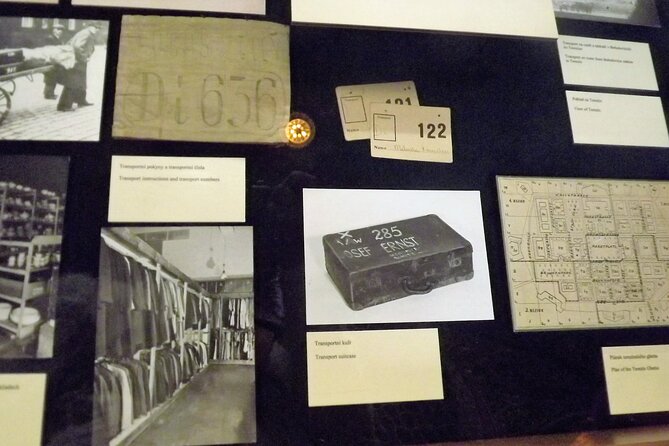
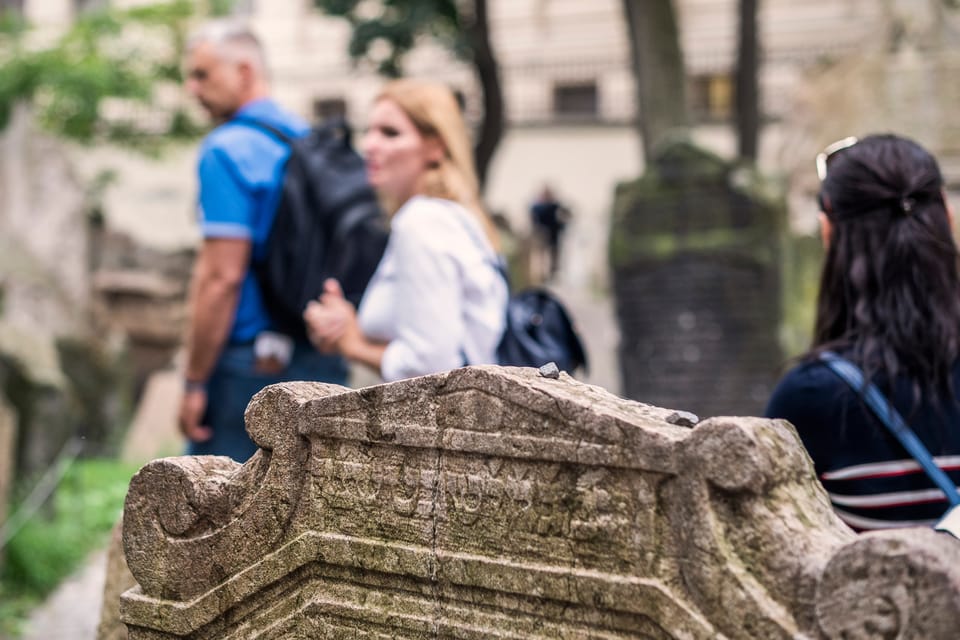
After Pinkas, you go to the Old Jewish Cemetery for guided time of about 25 minutes. This cemetery is described as one of the oldest in Central Europe, and seeing thousands of tombstones in the same space changes how you process the whole Jewish Quarter story.
This stop is also where the tour’s emotional weight becomes hardest to ignore. The experience includes touching stories about people persecuted by the Nazi regime, and the cemetery setting is the kind of place where that history doesn’t stay abstract. If you come expecting a quick photo stop, adjust your mindset fast.
One practical consideration: outdoor time can feel longer in bad weather, even though the scheduled guided portion is fixed. Bring an umbrella and comfy shoes, because the cemetery visit is part of a walking itinerary, not a drive-by.
You can also read our reviews of more walking tours in Prague





Old-New Synagogue: the “chapter” stop in the middle of the route
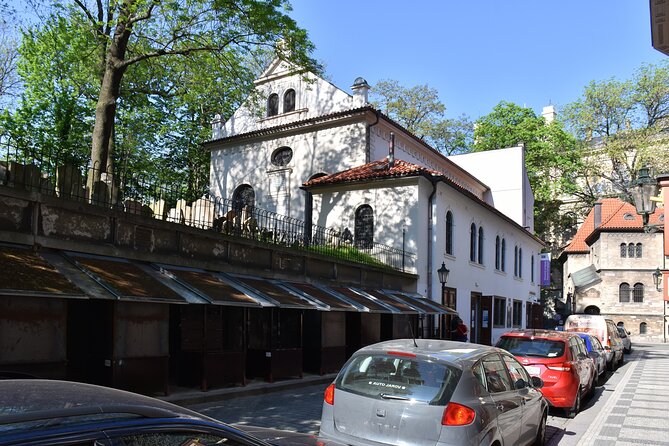
Then you visit the Old-New Synagogue with guided time of about 25 minutes. By the time you reach this point, the tour has usually helped you understand the bigger arc: community life, continuity, and the forces that disrupted it.
This stop tends to work well in the middle because it lets your brain connect earlier context to later meaning. It’s not just another interior. It’s one of the places where the tour can make the history feel anchored to real architecture.
If the group needs a quick breath, this is often a good place for it. You’ll have guided time plus a chance to look around enough to register the space. Just remember that time is shared, and the tour stays scheduled.
Spanish Synagogue: finishing at Španělská with the last guided interior
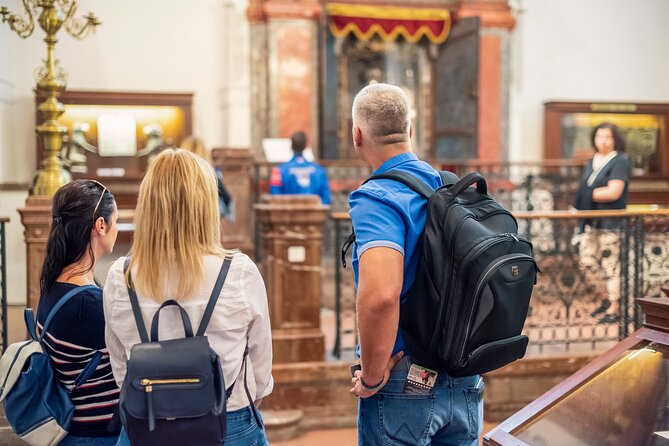
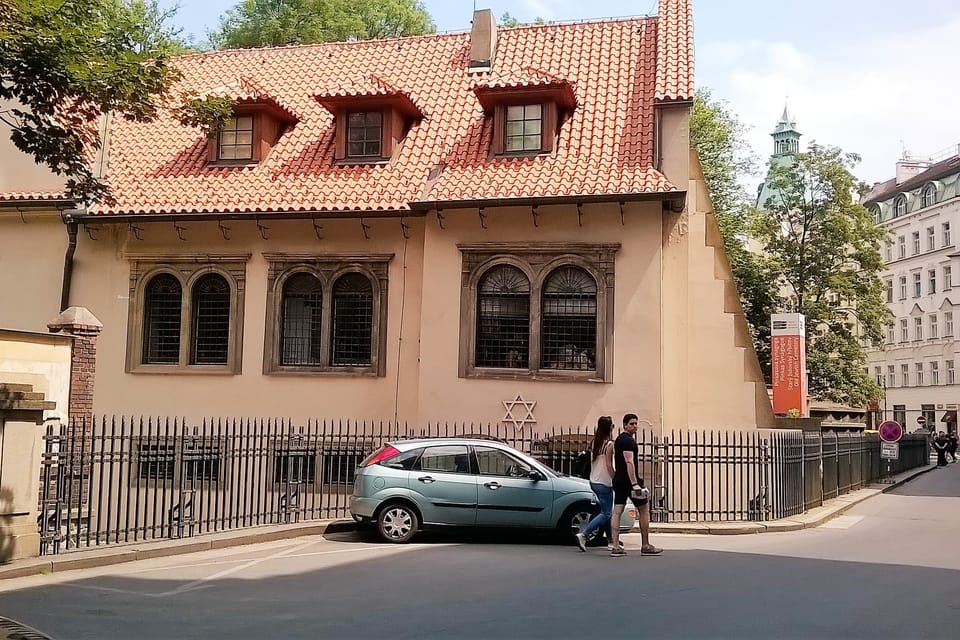
Finally, you visit the Spanish Synagogue, which is also the finish point of the tour at Španělská Synagoga. Like the other indoor sites, you get a guided visit of about 25 minutes, and then you’re done with the official route.
Finishing at a synagogue rather than a street corner is practical. It gives the last stop a feeling of closure. It also makes your exit easier, because you’re already at the final site instead of having to navigate away while tired and carrying questions you still want to ask.
If you’re the kind of person who likes to end with atmosphere, this helps. You leave feeling like you saw the quarter as an integrated whole, not a series of disconnected entries.
Dress code rules: the thing that most affects your comfort (and entry)
Synagogues have strict expectations about clothing. Inappropriate dress can block entry, including situations like exposed arms/shoulders/abdomen, wearing a swimsuit, or going in without shoes or without outer clothing where required.
So plan ahead like you’re entering a formal sacred space, not a casual attraction. Comfortable layers are a win, especially if Prague weather swings.
This is also where your group timing matters. If you show up underdressed, you might lose time sorting it out on-site, and that can ripple across the entire schedule.
The pacing reality: time inside sites, plus lines at entrances
The tour is designed to pack in multiple interiors plus the cemetery in about 150 minutes. That means each guided segment is tight, and you’ll get the right balance of explanation and viewing time—but not endless free wandering.
Real-world friction is that entrances can involve waiting. One review mentioned lines to get into the synagogues slowing things down. Another pointed out a long wait at the cemetery and the last synagogue, up to about 45 minutes. You can’t control it, but you can plan for it by showing up early and staying flexible.
Also, I’d suggest going in with your hearing expectations set realistically. One review noted that headsets/audio equipment would have helped, which suggests that sound can be tricky in indoor spaces with multiple groups. If you’re sensitive to that, consider bringing a pair of earplugs, not for the guide, but for comfort in crowded interiors.
Price and value: what $76 is really buying you
At $76 per person, this isn’t a budget-only walking tour. But it’s also not just a guide telling stories on a street. You’re paying for a guided route plus included entry to the Maisel, Pinkas, Spanish, and Old-New synagogues and entry to the Old Jewish Cemetery.
That’s the key value equation. Entrance fees can add up fast in historic Prague, and having a licensed guide helps you understand what you see without needing to research every building yourself. The tour also specifically notes skip-the-ticket-line help, which can be a meaningful time-saver in popular seasons.
So is it worth it? If you care about more than photos and want the quarter’s story stitched together, yes. If you only want a quick look at exteriors and you love self-guided exploring more than structured interpretation, you might feel the price more than the value.
Which guides shine here (and what to look for)
From the review set, certain guides get repeat praise for delivery style. Names that stand out include Peter, David, Steve, Vojtech Durt, Jana, and Yanna. The common thread is strong storytelling: humor that keeps you listening, and clear explanations that make the history feel grounded rather than like a lecture.
Here’s what you should watch for as you listen. A great guide will pace the heavier parts so you’re not overwhelmed too fast. They’ll also answer questions without derailing the route, which matters when multiple entrances and indoor segments are involved.
If you’re hoping for an interactive experience, the reviews suggest Peter and David are strong at that—engaging with the group and responding to curiosity. If you prefer a quieter style, it can still work, but you’ll likely want to arrive ready to focus.
Who should book this tour—and who should choose differently
This tour is a strong fit if you want an organized way to understand Josefov and see the major synagogue sites included in the ticket. It’s also ideal if you want a guided cemetery visit where the meaning lands alongside the visuals.
It’s not suitable for people with mobility impairments, since the format is a walking tour with multiple stops and indoor/outdoor movement. Also note the tour does not run on Saturdays and during Jewish Holidays, so check your calendar before you commit.
If you travel with kids or you’re sensitive to heavy WWII themes, the tour includes persecution stories tied to the Nazi regime. You can still go, but you should decide in advance whether your group is ready for that tone in a concentrated 150-minute session.
Should you book this Prague Jewish Quarter tour?
Book it if you want the Jewish Quarter as a story with built-in context, not just a list of buildings. The inclusion of multiple synagogue interiors plus the Old Jewish Cemetery makes the ticket feel practical, and the best guides here use humor and clarity to keep the experience readable even when the topic is painful.
Skip it if you’re mainly after independent wandering, you dislike waiting in lines, or your group needs more slow time per stop. In those cases, you might do better with a self-paced plan and a separate guide only for one or two key interiors.
If your goal is understanding, this is one of the more efficient ways to get it in Prague.
FAQ
How long is the Prague Jewish Quarter walking tour?
The tour lasts about 150 minutes.
Where do I meet the guide?
Meet at Get Prague Guide, Maiselova 5, 110 00 Prague 1, near Maisel Synagogue.
Which synagogues are included in the ticket?
The ticket includes entry to Maisel Synagogue, Pinkas Synagogue, Spanish Synagogue, and Old-New Synagogue.
Is the Old Jewish Cemetery included?
Yes. Entry to the Old Jewish Cemetery is included, and the tour includes a guided visit there.
What is the dress code for entering the synagogues?
You must dress appropriately. The tour notes that entry is prohibited if you have exposed arms, shoulders, or abdomen, or if you’re in a swimsuit, without shoes, or without required outer clothing.
Does the tour run every day?
No. It does not run on Saturdays or during Jewish Holidays.
What languages is the live guide offered in?
The guide is available in English, Czech, French, German, Italian, and Spanish.