REVIEW · PRAGUE
Prague: Castle Tour with Local Guide and Entry Ticket
Book on GetYourGuide →Operated by Fun in Prague · Bookable on GetYourGuide
Prague Castle is all drama and detail. This guided walk turns a giant complex into a clear story, with headphones so you catch every explanation, even in the busiest corridors. I also like the built-in convenience of skipping the ticket line and using the short security queue, so you spend more time seeing and less time waiting.
You’ll get focused time in the places that define the castle: St. Vitus Cathedral with major artworks, the Old Royal Palace and Vladislav Hall, plus Golden Lane and its working-life vibe.
One consideration: Prague Castle occasionally closes areas due to last-minute official rules, so you might not access every single building on the day you go.
In This Review
- Key things I’d prioritize before you go
- Prague Castle with a Local Guide: Why It Feels So Much Easier
- Where You Meet: Malostranská Metro, the Fountain, and an Orange Umbrella
- Riding Up the Castle Hill by Tram: Fast Access Without the Guesswork
- The Headphones and the Line-Skip: The Practical Win
- St. Vitus Cathedral: Mucha Stained Glass and Gargoyles That Actually Have Meaning
- Tombs and Chapels: Wenceslas, Charles IV, and John of Nepomuk
- Old Royal Palace and Vladislav Hall: Where Big Events Need Big Space
- The Defenestration of Prague: A Window, a Turning Point, and a War That Followed
- St. George’s Basilica: A Different Mood from the Main Cathedral
- Golden Lane: The “Working Life” Side of the Castle
- Small-Group or Private Tour: Pick Based on Your Comfort with Crowds
- Pace, Weather, and What to Wear (Yes, Comfortable Shoes)
- Price and Value: Why Around $61 Can Make Sense Here
- Should You Book This Prague Castle Tour?
- FAQ
- Where is the meeting point for the Prague Castle tour?
- How long is the tour?
- What does the admission ticket include?
- Do I get help with hearing the guide in crowded areas?
- Are there different tour formats and what languages are available?
- What if parts of Prague Castle are closed or I need to cancel?
Key things I’d prioritize before you go
- Headset commentary makes crowded stops actually enjoyable
- Short security line cuts friction at one of Prague’s biggest attractions
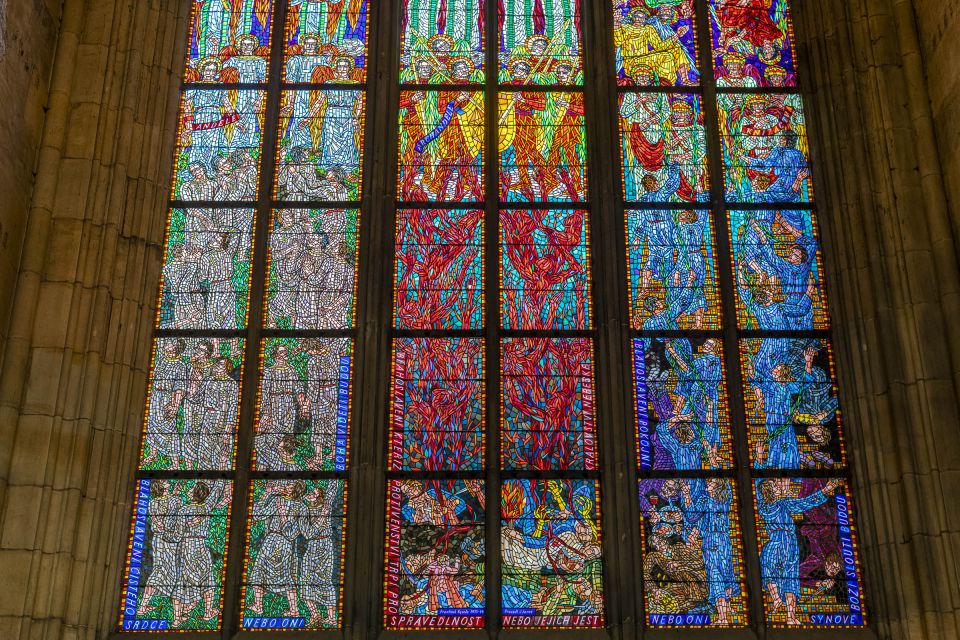
- St. Vitus highlights include Mucha stained glass and the Last Judgment mosaic
- Real political moments are explained at the Defenestration location
- Golden Lane context connects sharpshooters, goldsmiths, and Kafka’s era
- Flexible formats let you pick small-group or private
Prague Castle with a Local Guide: Why It Feels So Much Easier
Prague Castle can overwhelm you fast. It’s huge, there are layers of buildings stacked over centuries, and the signage alone won’t tell you what matters most. A guide does the heavy lifting—turning a confusing maze into a logical walk with clear “why this matters” context.
I especially like how this tour guides your attention to the right details. You’re not just looking at stained glass and tombs—you understand what you’re seeing and how it connects to Czech history and power struggles. And because you get headset audio, you can keep your eyes on the artwork instead of constantly craning toward a person speaking nearby.
You can also read our reviews of more tours and experiences in Prague



Where You Meet: Malostranská Metro, the Fountain, and an Orange Umbrella
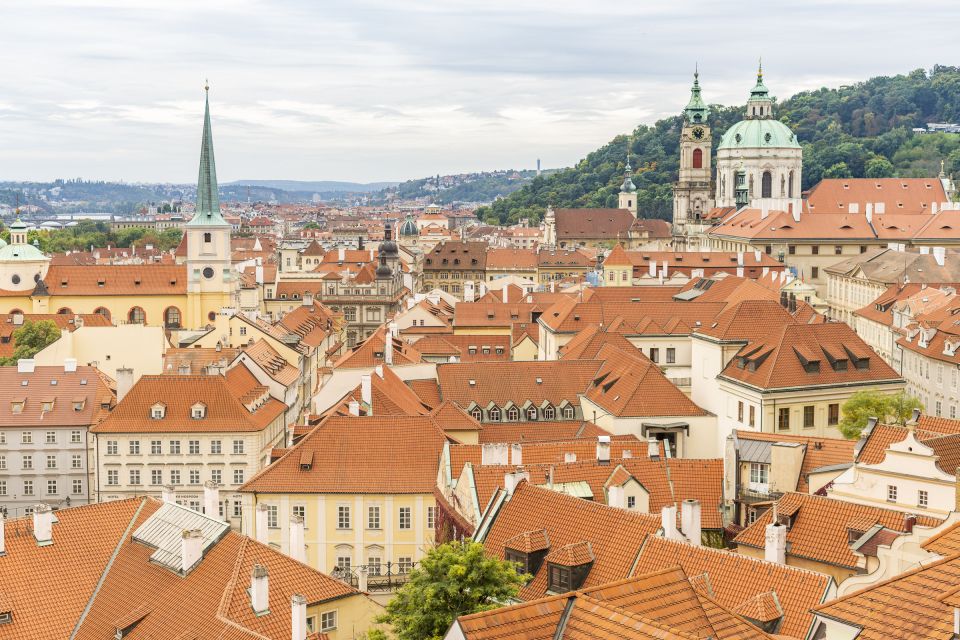
The meeting point is straightforward: right in front of the exit of Malostranská metro station, near the small water fountain. There’s a brown and white sign that says Meeting Point, and you’ll be looking for a guide holding an orange umbrella.
One small seasonal note: the water fountain can be covered during winter. So don’t panic if it’s not doing its usual fountain thing—just use the sign and the umbrella as your reference points. Comfortable shoes matter here too, because you’ll be walking around the castle grounds after you get dropped off.
Riding Up the Castle Hill by Tram: Fast Access Without the Guesswork
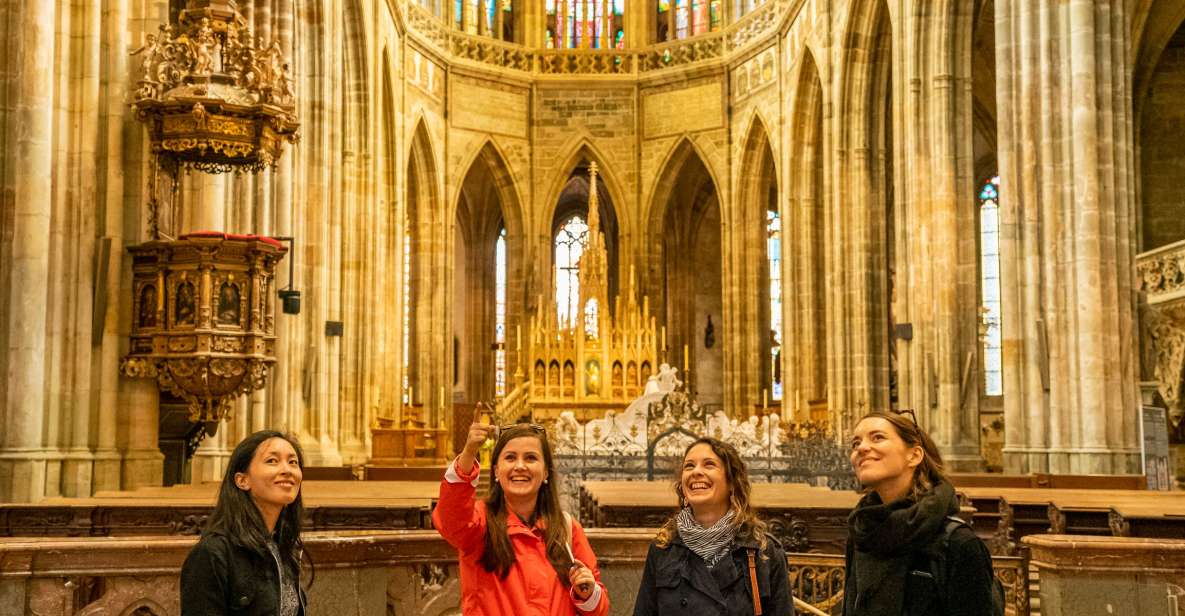
Instead of forcing you to figure out buses or a longer uphill walk, the tour uses tram service from the Malostranská area up to Prague Castle. That matters because the castle district is a steep climb, and on a cold or windy day, “just walk it” gets old quickly.
This tram approach also helps you start the experience smoothly. You’re already oriented, already moving toward the main sights, and your guide can set the story tone before you hit the big interior stops.
The Headphones and the Line-Skip: The Practical Win
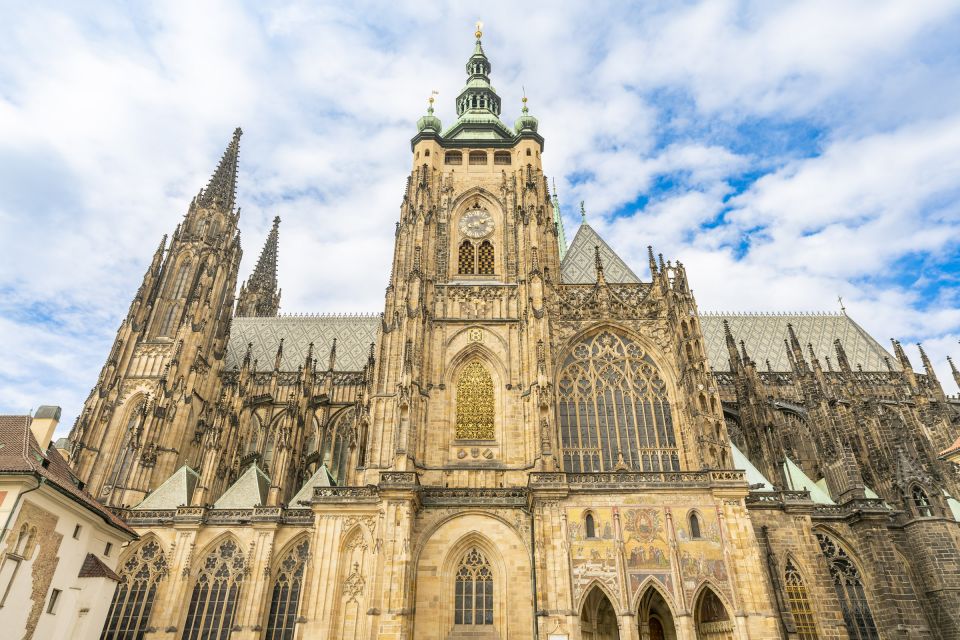
At Prague Castle, crowds are the main villain. You can get stuck in slow-moving lines and then lose your attention once you finally reach the sights. This tour fights that in two ways:
- You get access that helps you skip the ticket line and use a short security line.
- You wear headphones so the guide’s commentary stays clear while you’re inside and in crowded areas outside.
That headset piece is not a small upgrade. It means you can pause for photos without missing the key explanations. It also keeps you from doing the classic group-tour move—hovering near the guide’s shoulder just to hear what’s being said.
St. Vitus Cathedral: Mucha Stained Glass and Gargoyles That Actually Have Meaning
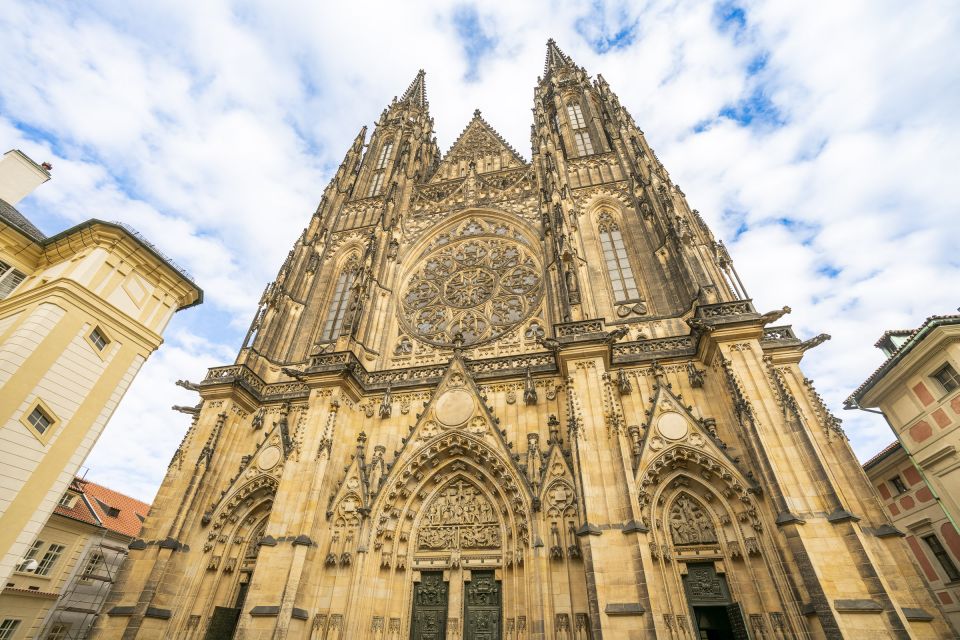
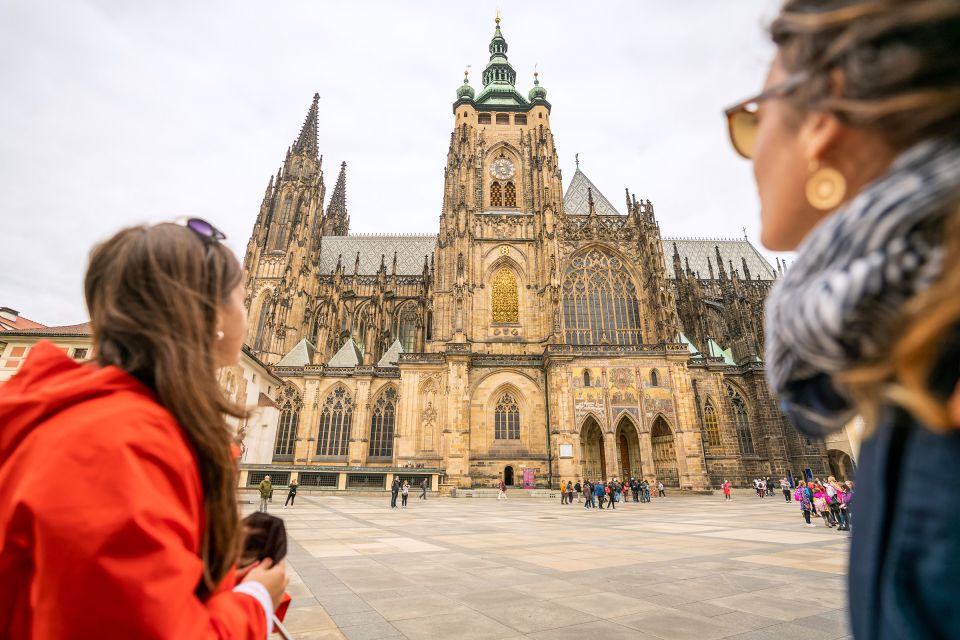
St. Vitus Cathedral is the emotional center of the castle complex. You’ll see Gothic architecture that feels purposeful and heavy, plus exterior features like gargoyles. The guide’s commentary helps you see these aren’t just decoration—they’re part of the cathedral’s visual language.
Inside, you’ll hit some of the most memorable visual moments:
- The stained glass designed by Czech artist Alfons Mucha, including the Art-Nouveau-style impact people come for.
- A 14th-century mosaic of the Last Judgment, the kind of detail that’s easy to overlook if you only glance around.
The value here is guidance. A guide points out the elements you’d likely miss in a free-for-all visit—especially when you’re surrounded by other groups and you’re trying to keep your pace.
You can also read our reviews of more guided tours in Prague



Tombs and Chapels: Wenceslas, Charles IV, and John of Nepomuk
After the cathedral’s big visual moments, the story shifts into power, protection, and memory. You’ll see tombs and chapels tied to major figures:
- The tombs of St. Wenceslas and Charles IV
- The baroque tomb of St. John of Nepomuk
- The Chapel of St. Wenceslas
This part is about learning how the castle became a political and spiritual anchor. You’re not just walking past graves—you’re watching how rulers and saints reinforced legitimacy over time. Even if you don’t consider yourself a history person, this section helps you connect names to places, and places to the Czech story.
Old Royal Palace and Vladislav Hall: Where Big Events Need Big Space
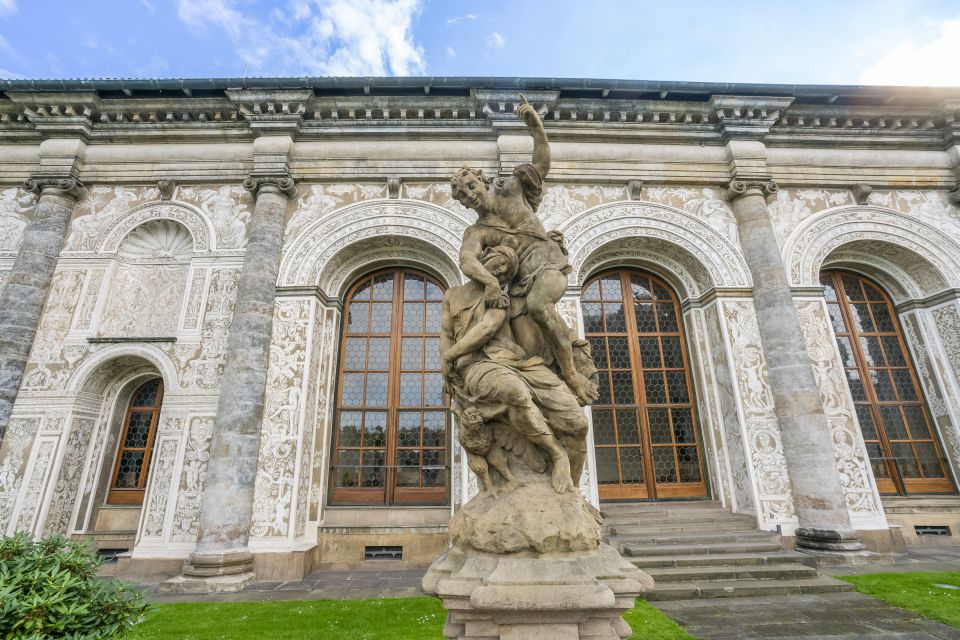
Next, the tour moves into the Old Royal Palace and the famed Vladislav Hall. The hall’s vaulted ceiling is hard to forget. When you stand beneath it, you get the sense that rulers wanted ceremonies and audiences to feel monumental.
The palace spaces are also a reminder that power wasn’t only in churches. It was administrative, political, and public-facing. This is one of the reasons the tour format is valuable: you get the architecture first, then you get the historical explanation that makes the rooms feel alive instead of just impressive.
The Defenestration of Prague: A Window, a Turning Point, and a War That Followed
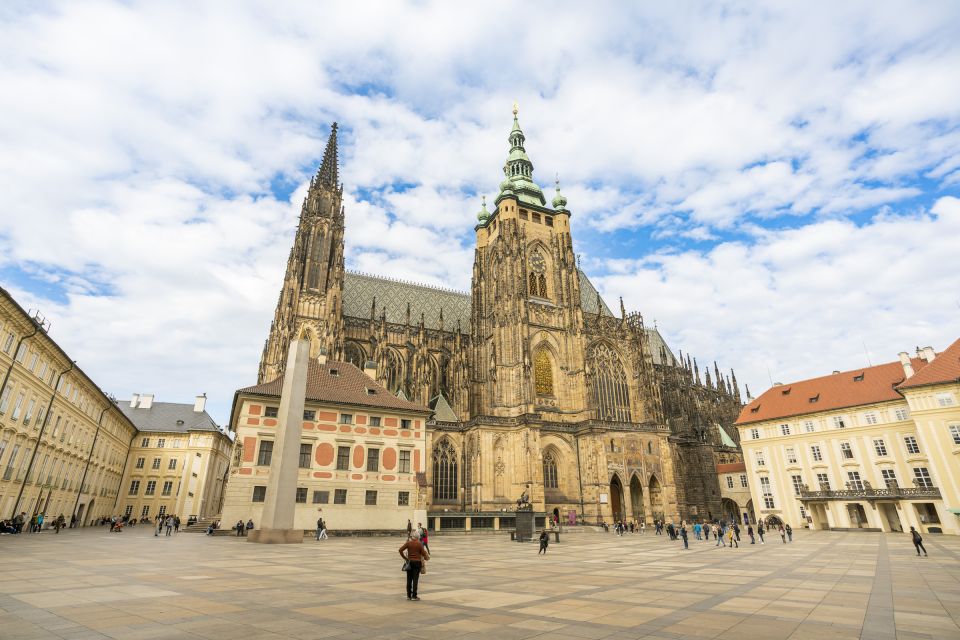
The tour includes a moment that sounds dramatic because it was. You’ll enter the chamber where the Defenestration of Prague occurred—where Czech Protestant aristocrats threw Catholic governors of the Habsburg emperor and their secretary out the window.
That single event helped spark the Thirty Years War, and your guide connects the dots so it doesn’t stay as a trivia item. You’ll leave this stop understanding why an action like this mattered beyond the immediate shock.
St. George’s Basilica: A Different Mood from the Main Cathedral
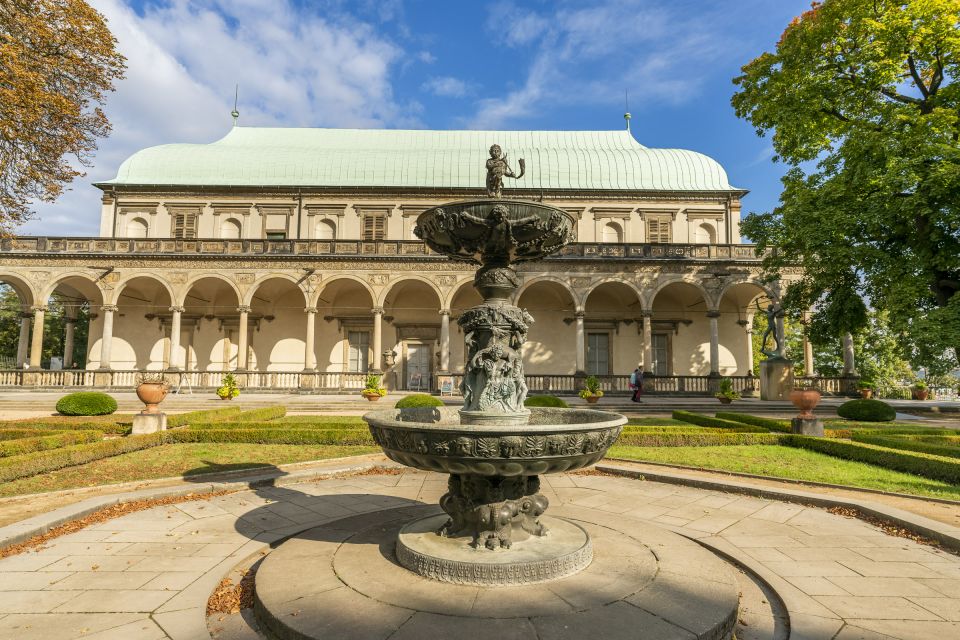
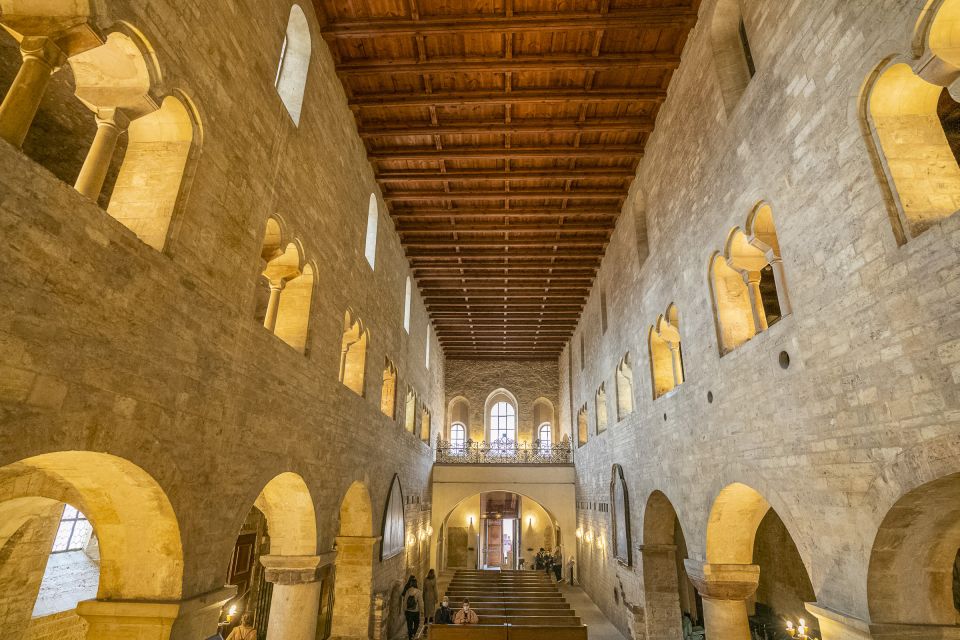
Not everything in the castle district is supposed to feel grand and loud. St. George’s Basilica offers a counterpoint—stone walls and design that feel quieter, more grounded.
Here’s what you’ll take in:
- Fragments of 12th-century frescoes
- A double staircase that leads you to the remains of St. Ludmila
This stop works well because it slows you down. After Gothic cathedral spectacle and palace grandeur, the basilica gives you texture. It helps you understand the castle as a complex of overlapping eras, not one single “medieval theme.”
Golden Lane: The “Working Life” Side of the Castle
Golden Lane is where the castle shifts from rulers and religious power into ordinary human scale. You’ll walk along the lane and learn how the cottages originally served sharpshooters, later housing goldsmiths.
Then you’ll hear the cultural layer—artists like Franz Kafka later lived in these buildings. That detail matters because it turns Golden Lane from a pretty alley into a story about how people actually lived in the castle’s shadow.
You’ll also see reconstructed workshops and homes, which helps you picture everyday routines. This is one of those stops where the guide’s explanations turn “cute buildings” into something more useful: an idea of work, housing, and life under castle power.
Small-Group or Private Tour: Pick Based on Your Comfort with Crowds
This tour comes in both small-group and private formats. If you like chatting, asking follow-up questions, and keeping a relaxed pace, private can feel calmer because you’re not negotiating your position with a larger group.
A small-group experience can be great too, especially if you enjoy shared momentum and don’t mind learning alongside others. Just know the castle can still be crowded—headphones help in both formats, but the setting stays what it is.
If you’re visiting during a peak season day, I’d lean toward a guided format either way. The guide’s flow management is a real part of the value.
Pace, Weather, and What to Wear (Yes, Comfortable Shoes)
The tour lasts about 150 minutes, so you’ll move at a steady, organized tempo. That’s a sweet spot: enough time to hit the major interiors and key exterior moments, but not so long that you feel like you’re trapped in a marathon.
Cold weather can make “open areas” feel longer, and the castle includes plenty of walking on uneven surfaces. The simplest advice: wear shoes you don’t mind getting damp or dirty, and plan for some stairs and level changes.
Also keep in mind the tour doesn’t promise every single access point. On rare occasions, parts of Prague Castle may close due to official regulations. Your guide will do their best, but you should understand that last-minute changes can happen.
Price and Value: Why Around $61 Can Make Sense Here
At $61 per person for a 150-minute experience, you’re paying for more than a narrated walk. You’re bundling several things that add up fast on your own:
- A tram ticket to get up to the castle area efficiently
- Admission to major castle components, including St. Vitus Cathedral, the Old Royal Palace, St. George’s Basilica, and the Golden Lane
- A local guide with live commentary
- Headphones so you hear the story clearly in busy areas
- A short security line to reduce waiting friction
If you’ve ever priced out Prague’s “must-see” sites and then added the time cost of navigating lines and crowds, this package often looks better. The guide portion is what turns the visit from scanning sights into understanding them.
Should You Book This Prague Castle Tour?
I’d book it if you want the best mix of major highlights plus the story behind them—especially if it’s your first time at Prague Castle. The combination of skip-the-line convenience, headset audio, and targeted stops like Vladislav Hall and Golden Lane makes this a strong “time well spent” option.
You might skip the guided version only if you’re the type who enjoys wandering at your own pace with zero structure, and you’re okay doing the heavy lifting yourself—line navigation, finding what matters, and filtering history without a live explainer.
If you do book, go in with one mindset: you’re there to connect names, buildings, and events. When you do that, the castle stops feel like part of one long story instead of a checklist.
FAQ
Where is the meeting point for the Prague Castle tour?
Meet directly in front of the exit of the Malostranská metro station, near the small water fountain. Look for a brown and white sign that says Meeting Point, and an official guide holding an orange umbrella.
How long is the tour?
The tour runs about 150 minutes. Starting times depend on availability.
What does the admission ticket include?
The admission ticket covers Prague Castle entry, including St. Vitus Cathedral, the Old Royal Palace, St. George’s Basilica, and the Golden Lane.
Do I get help with hearing the guide in crowded areas?
Yes. You’ll receive headphones so you can hear the expert local guide’s live commentary throughout the tour.
Are there different tour formats and what languages are available?
You can choose either a small-group or a private guided experience. Live guide languages include Italian, French, Spanish, English, German, and Russian.
What if parts of Prague Castle are closed or I need to cancel?
On rare occasions, some areas of Prague Castle may close due to official regulations. Your guide will do their best to adjust, but access to every building can’t be guaranteed. If you need to cancel, you can cancel up to 24 hours in advance for a full refund.