REVIEW · PRAGUE
Prague: Plague Doctor Old Town History Walking Tour
Book on GetYourGuide →Operated by The Nightwatchman of Prague · Bookable on GetYourGuide
A plague doctor in Old Town changes your pace. This 90-minute walk uses a guide in 1713 plague clothing to explain how the bubonic plague shaped daily life in Prague and beyond. You’ll follow along while learning what plague doctors did (and what they tried to protect themselves with).
I particularly love the interactive, story-forward approach: the guide builds the drama with humor, questions, and hands-on bits for the senses. I also like that you don’t just stay in theory; you hit real-world stops tied to care and community life, including Na Františku (St. Francis Hospital) and the Convent of St. Agnes.
One consideration: the subject is grim, and even though the tour is 90 minutes, you’ll be outside rain or shine, so dress for weather first.
In This Review
- Key things that make this tour work
- A 1713 plague doctor costume that turns Prague’s streets into a classroom
- Price and 90 minutes: what makes this feel worth $23
- From Seminářská to Clementinum: setting the scene in Old Town
- Old Town Square, Josefov, and Kafka: following fear through the map
- Na Františku Hospital and the Convent of St. Agnes: where care and confinement meet
- St. Castulus finish: meeting A. Schamsky and the PPE lesson
- How guides handle the mood, humor, and your questions
- Who should book this tour (and who might skip it)
- Should you book this tour or not?
- FAQ
- How long is the Prague Plague Doctor Old Town History Walking Tour?
- What does the tour cost?
- Where do I meet the guide?
- What’s included in the tour price?
- Where does the tour finish?
- What languages are the tours offered in?
- Is the tour wheelchair accessible, and are private groups available?
Key things that make this tour work
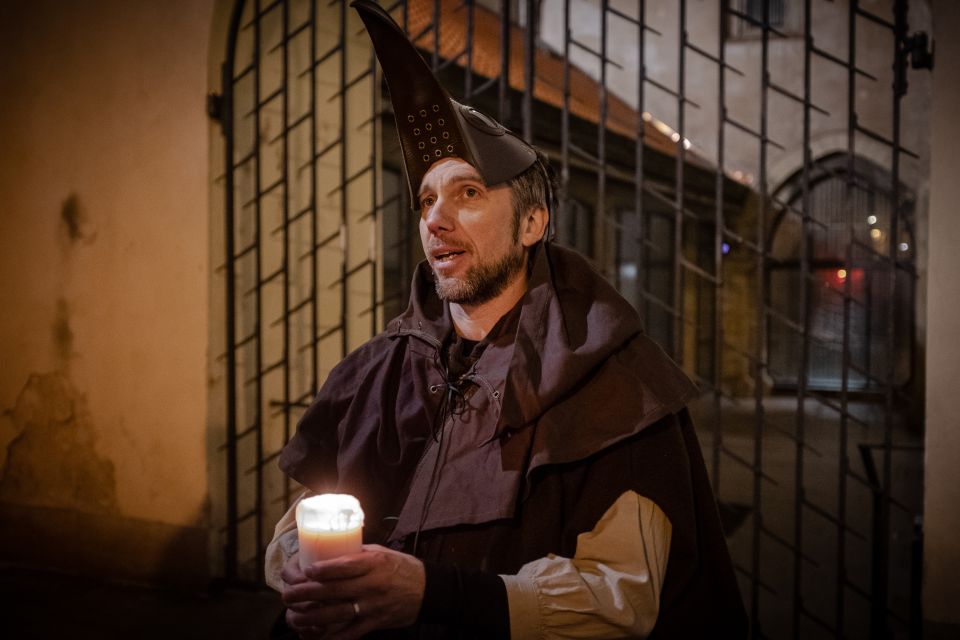
- A licensed guide in full plague doctor dress that stays in character through the walk
- Real Prague stops tied to sickness, care, and community spaces (Na Františku and convent sites)
- PPE explained the old way, so you understand what protection meant in that era
- A. Schamsky gets center stage, connecting plague history to a named 1713 fighter in Prague
- Comfortable pacing and group energy, with lots of room for questions
A 1713 plague doctor costume that turns Prague’s streets into a classroom
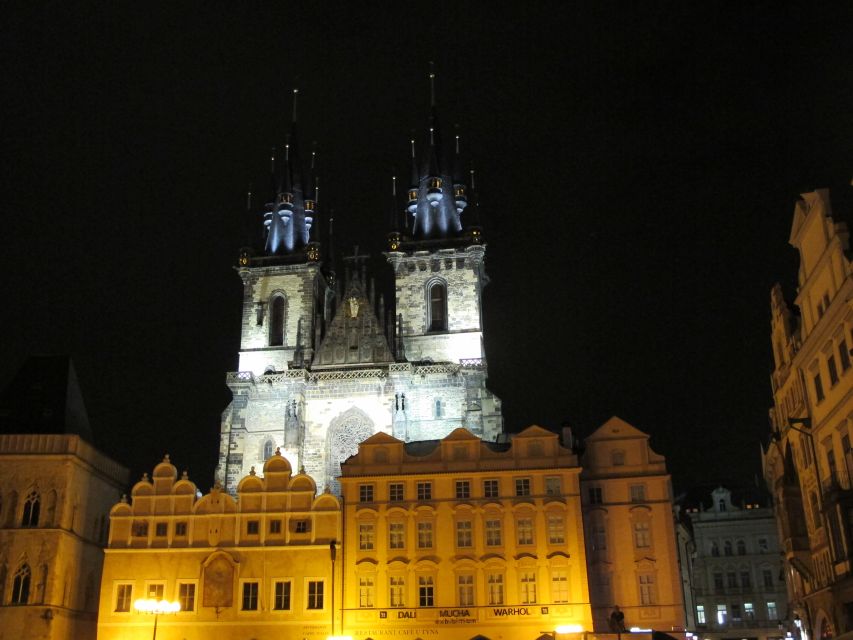
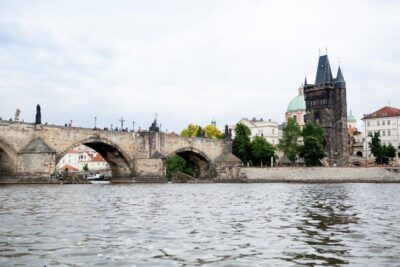
Prague is stunning in daylight. This tour adds a second layer: the story of fear, protection, and survival moving through the same cobbled streets you’re walking today. The guide shows up dressed like a plague doctor from 1713, and that visual instantly sets the tone.
I like that the tour treats plague history as lived experience, not a textbook summary. You’ll hear how the plague spread and what it did to daily routines, while the guide keeps the mood light enough that you can actually stay engaged.
And yes, the costume details matter. They give you a clear mental picture of what plague doctors wore and why people believed those choices could help.
You can also read our reviews of more walking tours in Prague

Price and 90 minutes: what makes this feel worth $23
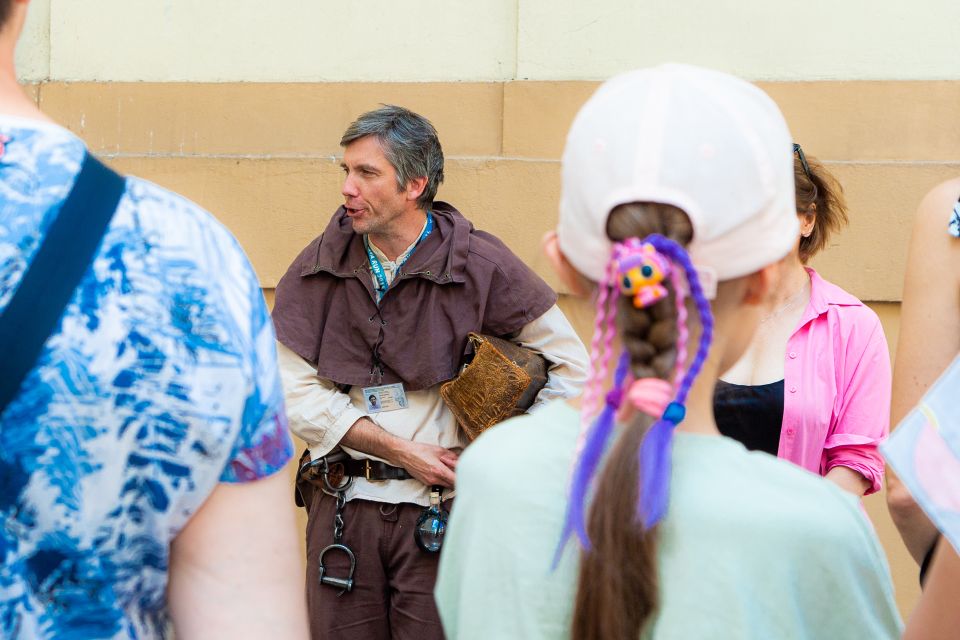
At about $23 per person for a 90-minute guided walk, you’re paying for something more specific than a standard “see the sights” tour. You’re getting a licensed guide in themed plague doctor dress, plus an anti-plague pill (candy) as a fun, on-theme touch.
Value also comes from the format. This is a walking tour, but it’s not a long hike—so you can fit it early in your trip or as a first evening activity. Some people do this on day one to get their bearings around Prague’s Old Town area.
If you want your history with personality, you’re likely to feel the price matches the effort: guides named Óscar and David Merten show up with serious storytelling, while other guides like Thomas and Tomaš are known for strong pacing and comic timing.
From Seminářská to Clementinum: setting the scene in Old Town
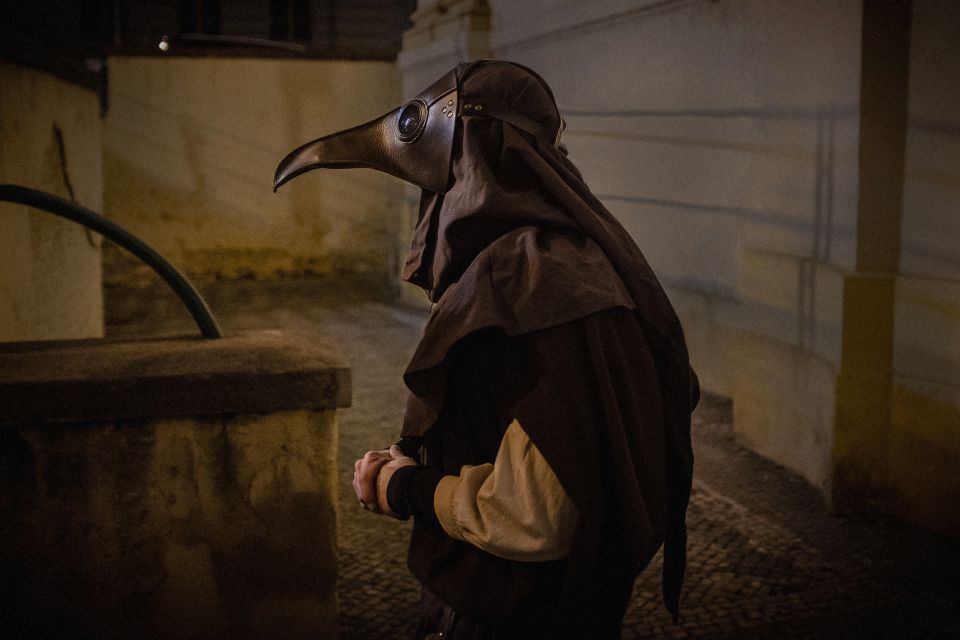
You start near Seminářská (Staré Město). Your cue is simple: look for the guide dressed as the plague doctor—no extra guesswork.
From there, the walk begins with Prague’s formal, historic backbone. The first stop is the Clementinum, a major landmark that helps anchor the story in a city that had institutions, learning, and power—things plague outbreaks tested hard. In practical terms, this early phase helps you settle into the route without feeling rushed.
Next you move through the area around Mariánské náměstí, where the visuals help you understand how a crisis didn’t erase architecture and street life. It’s easier to absorb the history when you can see the squares and street patterns the guide is referencing.
This portion is also where the tour’s tone clicks. If you’re worried plague history will be too heavy, this start is where the guide balances facts, humor, and direct explanations so you stay with the story.
Old Town Square, Josefov, and Kafka: following fear through the map
After the early landmarks, you get pulled toward the beating heart of the city. The tour includes time around Old Town Square, and that matters because the square is where public life happens—markets, gatherings, and the kind of crowded normal that can’t hide from disease.
From there, the route touches Josefov, Prague’s historic Jewish Quarter. This stop gives you context for how communities lived side by side with risk and rumor during plague eras. Even when you’re not learning “medical details” every minute, you’re still learning what it meant to live through uncertainty in a dense old city.
You also pass the Franz Kafka Monument. Kafka isn’t a plague doctor, of course, but the point here is connection: Prague’s later literary and civic identity sits on top of earlier eras of hardship. It’s a reminder that the city’s story keeps layering over itself.
A tip for enjoying this stretch: ask questions as you go. The tour is built for interaction, and guides often keep the pace comfortable so you can stop listening long enough to ask something specific.
Na Františku Hospital and the Convent of St. Agnes: where care and confinement meet
This is the section where the tour turns from “history lecture” into “place-based understanding.”
One of the main stops is Na Františku Hospital (St. Francis Hospital). You’ll spend enough time there to connect plague history to actual care spaces, not just legends. The point isn’t to shock you—it’s to show that sickness didn’t only happen in streets. It was managed in hospitals, too, with all the limitations people had at the time.
Then you move to the Convent of St. Agnes. Convents in Europe weren’t just religious sites; they were part of how communities organized time, responsibility, and, in hard periods, care and order. This stop fits the tour theme of survival—how people coped, where they waited, and how institutions responded.
In some guides’ hands, this is also where the tour gets hands-on. People describe being given things to see, smell, and taste, along with pictures used to explain parts of the story. That’s not just theater—it’s a practical way to make the “how it felt” side of plague history stick.
You can also read our reviews of more historical tours in Prague

St. Castulus finish: meeting A. Schamsky and the PPE lesson
The story closes around Saint Castulus Church, where you finish at the Church of St. Castulus. Ending at a major church site gives the walk a natural, memorable boundary—like the city story wraps up and you can step back into modern Prague.
Before you finish, the tour brings in a named figure: A. Schamsky, described as a forgotten 18th-century hero who fought the plague in 1713. Having a person to anchor the plague story makes it easier to remember. You’re not only tracking a disease—you’re tracking decisions, bravery, and practical response.
You’ll also learn about the kinds of PPE plague doctors used. The tour doesn’t just say, “They wore things.” It explains what protection meant then, and how people tried to manage risk with the tools they had. Even if you already know the classic plague doctor look, you’ll likely walk away with a clearer sense of the logic behind it.
And don’t skip the tour’s small included details. The anti-plague pill (candy) is quick, but it’s one of those touches that keeps the theme consistent without dragging the pace.
How guides handle the mood, humor, and your questions
A plague-themed tour can go two ways: it’s either too dark to enjoy, or too silly to feel respectful. The best guides thread that needle—serious subject, but with comic timing and a clear teaching rhythm.
That’s exactly what people praise most. Guides like Óscar, David, Thomas, and Tomaš are described as funny, in-character, and highly engaged, while still sensitive about the topic. It helps that the tour invites questions. If you’re curious about how people behaved, how outbreaks disrupted routine, or why certain protective ideas took hold, you’ll have room to ask.
You’ll also notice how guides manage group comfort. One example from a past walk: a chain smoker was asked to step further away so the rest of the group could enjoy the tour without smoke. That’s not just kindness—it’s practical crowd management, especially for a themed walk where people are paying attention to the story.
For your side of the experience, come with a curious mindset. Plague history is complicated. The tour’s humor and costume make it easier to handle, but you’ll get more out of it if you treat it like a conversation, not a performance you just watch.
Who should book this tour (and who might skip it)
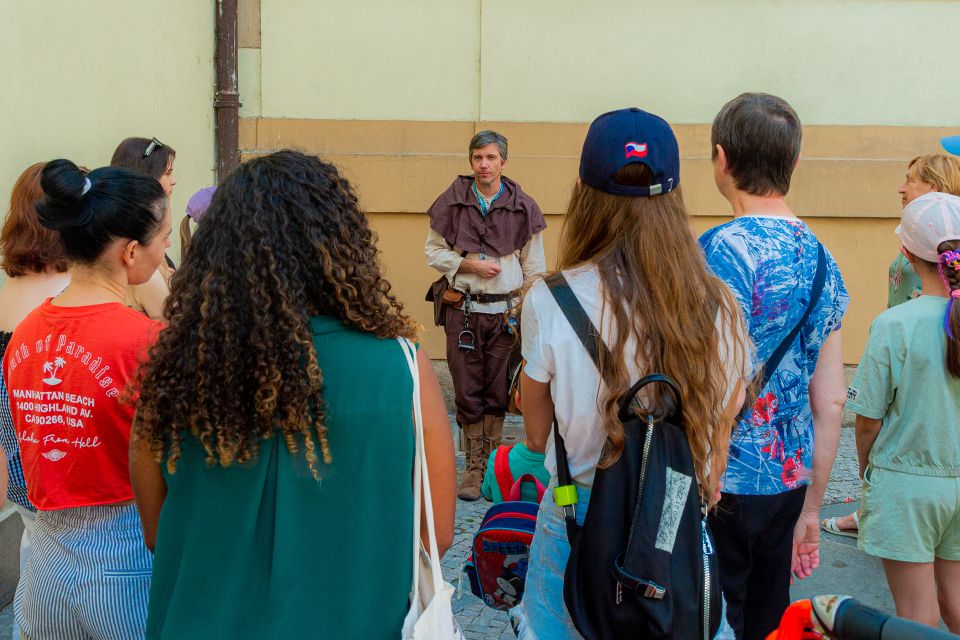
You’ll love this tour if you want history that’s story-driven and place-based. It’s especially good for your first evening in Prague, since the route focuses on Old Town sights and gives you a map in your head after 90 minutes.
It’s also a solid pick if you’re traveling with someone who likes the darker side of history, or if you’re bringing kids who need active engagement. Some families report that even younger visitors stayed locked in for the whole walk.
You might want to think twice if you’re sensitive to illness topics or if you dislike walking in weather. The tour runs rain or shine, and it’s outdoors for long enough that weather will affect comfort.
Should you book this tour or not?
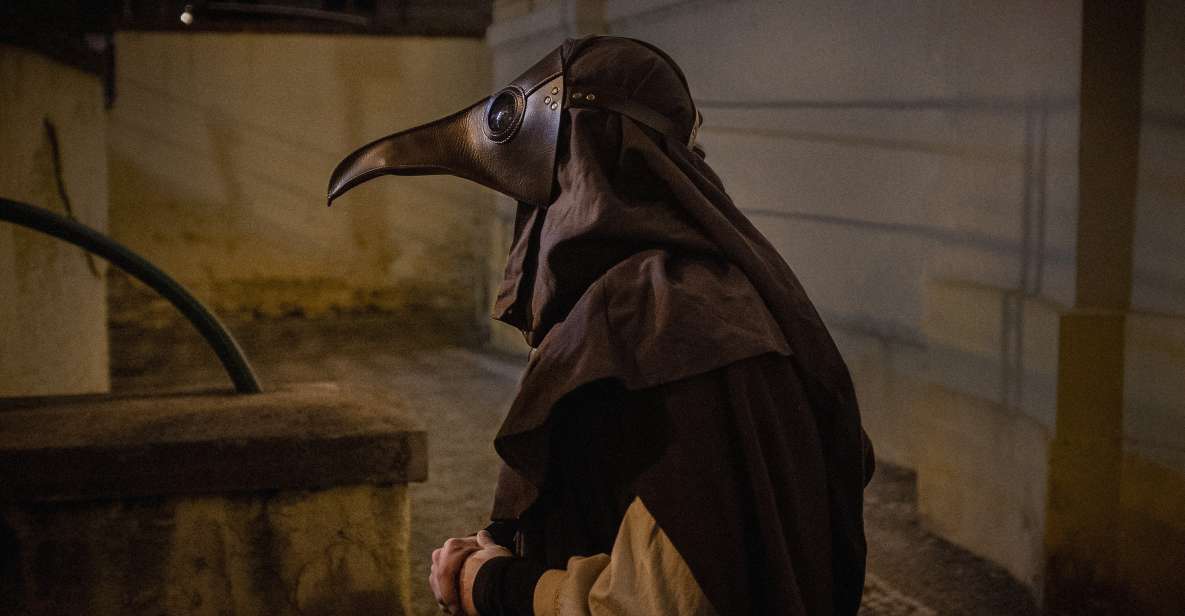
If you like guides who tell stories with humor plus facts, I’d book it. For $23, you’re getting a licensed plague doctor character, a PPE lesson, named historical context like A. Schamsky, and time at care-related sites such as Na Františku.
Skip it only if you already know this topic deeply and you’re not looking for a theatrical, hands-on style of learning. Otherwise, this is one of those Prague experiences that makes the city feel different—without requiring you to sacrifice your evening to a long, exhausting walk.
FAQ
How long is the Prague Plague Doctor Old Town History Walking Tour?
The tour lasts 90 minutes.
What does the tour cost?
It costs $23 per person.
Where do I meet the guide?
Meet at Seminářská 175/2, Staré Město, 110 00 Praha-Praha 1, Czechia. Look for your guide dressed as the plague doctor.
What’s included in the tour price?
Included are a licensed guide in plague doctor dress, an anti-plague pill (candy), and a walking tour.
Where does the tour finish?
The tour finishes at the Church of St. Castulus.
What languages are the tours offered in?
The live guide speaks English and Czech.
Is the tour wheelchair accessible, and are private groups available?
Yes, it is wheelchair accessible, and private group options are available.