REVIEW · PRAGUE
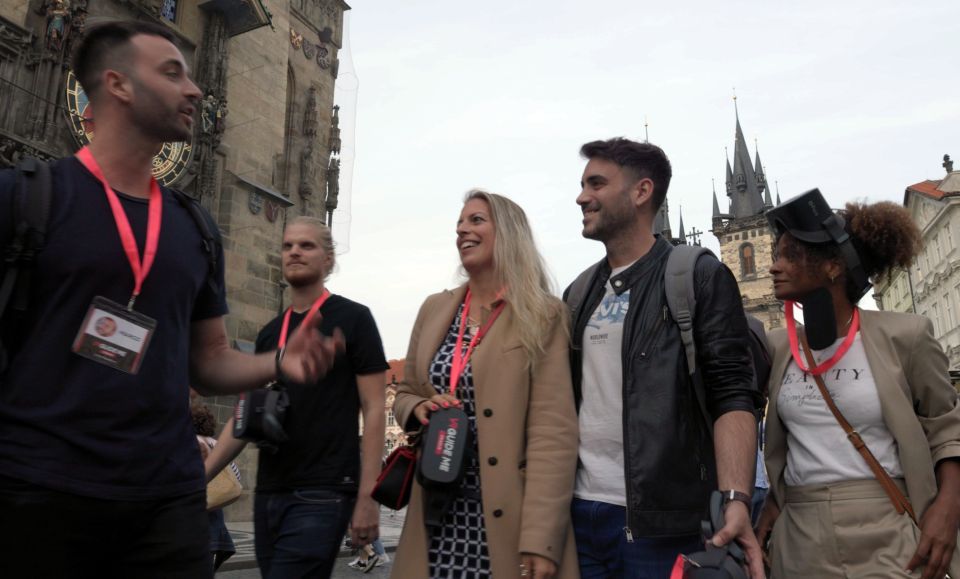
Prague: Immersive History Walking Tour and VR
Book on GetYourGuide →Operated by VR Guide ME · Bookable on GetYourGuide
A headset turns Prague into a time machine. This 2-hour history walking tour uses VR to show what key streets looked like during turning points of Czech history.
I like the pairing of an expert local guide with VR scenes at major spots like Old Town Square and the Dancing House. You’ll also get a clear before-and-after feeling by taking off the headset and noticing what’s changed.
One consideration: the VR moments are more about viewpoint and context than lots of action, so if you want heavy movement on screen, adjust your expectations.
In This Review
- Key things to know before you go
- VR history in Prague: why this format actually works
- Price and what you get for $33
- Where you meet: Panská 1, near Hamleys
- Old Town Square with a 120-years-ago view
- Wenceslas Square: moving from spectacle to story
- Prague National Museum: the city’s big public stage
- New Town Hall and the shift toward modern Prague
- Saints Cyril and Methodius Cathedral: where faith meets national identity
- Six VR scenes: from Prague Spring tanks to Operation Anthropoid
- Dancing House finish: the Vltava promenade payoff
- Who should book this VR walking tour
- Quick practical tips to make it smoother
- Should you book the Prague VR history walking tour?
- FAQ
- How long is the Prague Immersive History Walking Tour and VR?
- Where is the meeting point?
- What does the tour include?
- What VR experiences will I see during the tour?
- Is the tour suitable if I wear glasses?
- What languages are available?
Key things to know before you go
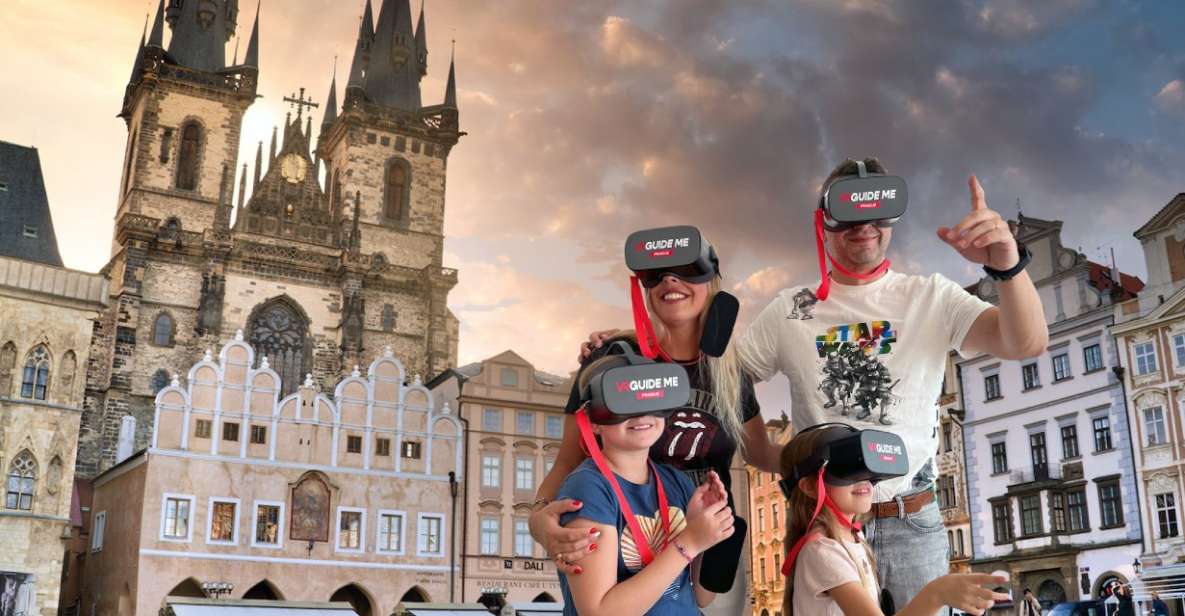
- VR at six Prague locations so your photos turn into a real timeline, not just sightseeing
- Expert guide in English, plus optional audio support in multiple languages
- On-site comparisons when you remove the headset and see the present-day streets again
- Big landmarks with meaning from Old Town to Wenceslas Square and the National Museum area
- Major 20th-century events in VR, including Prague Spring tanks and Operation Anthropoid
- Great value for 2 hours at $33 per person for a guide + headset experience
VR history in Prague: why this format actually works
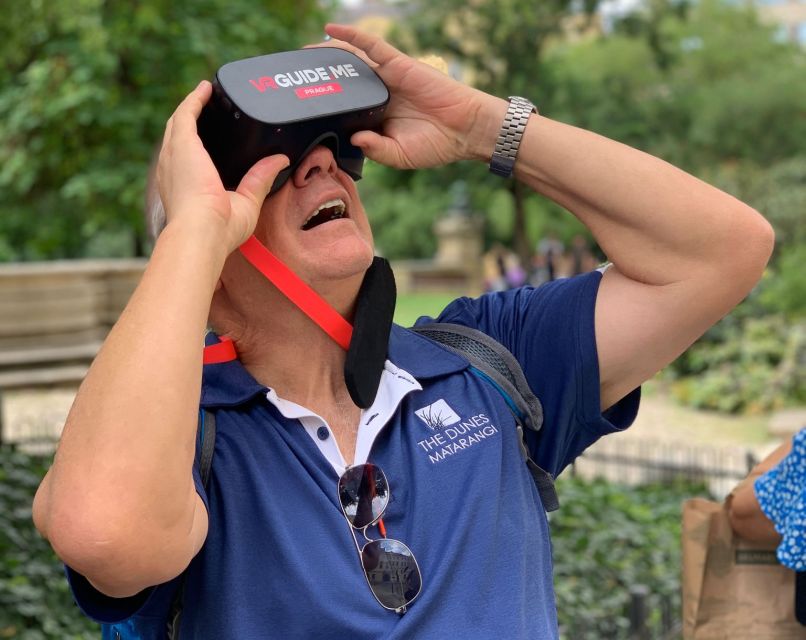
Prague has a knack for making history feel visible. You look up, you spot the styles, you notice the layers. What this tour adds is a way to connect those layers to specific events, right where you’re standing.
That is the big win: the VR scenes are tied to street corners and landmarks, not shown as abstract clips in a museum. You put on the headset, you see what a place was like in a different era, then you take it off and look again at the same buildings. That compare-and-contrast moment is where the tour earns its ticket price.
I also like that the experience isn’t just “here’s a fact.” It’s closer to a short guided lesson with visuals. The sounds are part of that, and that matters in a way people don’t always expect. Hearing the scene while you’re physically in the real square helps your brain treat it like a memory, not a video.
For guides, you may meet instructors like Marco or Gaby, and the common theme in the feedback is passion plus a good pace. That human storytelling is what keeps the tech from feeling cold.
You can also read our reviews of more walking tours in Prague

Price and what you get for $33
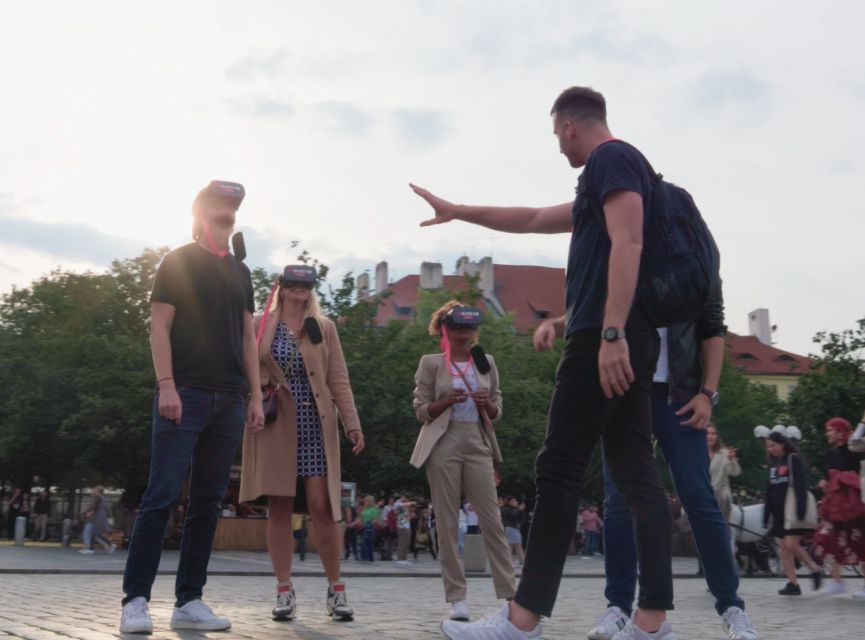
At $33 per person for a 2-hour tour with a professional guide and VR headset, the value comes from the combo. Walking tours are common. What you’re paying for here is the guided route plus six VR sequences that take time to build and stage.
This can be a strong option if:
- you want a fast route through key Prague neighborhoods without spending your day doing repeated “standard stops”
- you like history, but you get more from stories when they come with visuals
- you want something different from the usual museum-only approach
It may be less ideal if:
- you’re only after famous icons and don’t care about Czech history beyond surface facts
- you hate wearing gear for short periods (the headset is part of the experience)
- you expect lots of screen action and movement. The VR is more about place and perspective than constant motion
Where you meet: Panská 1, near Hamleys
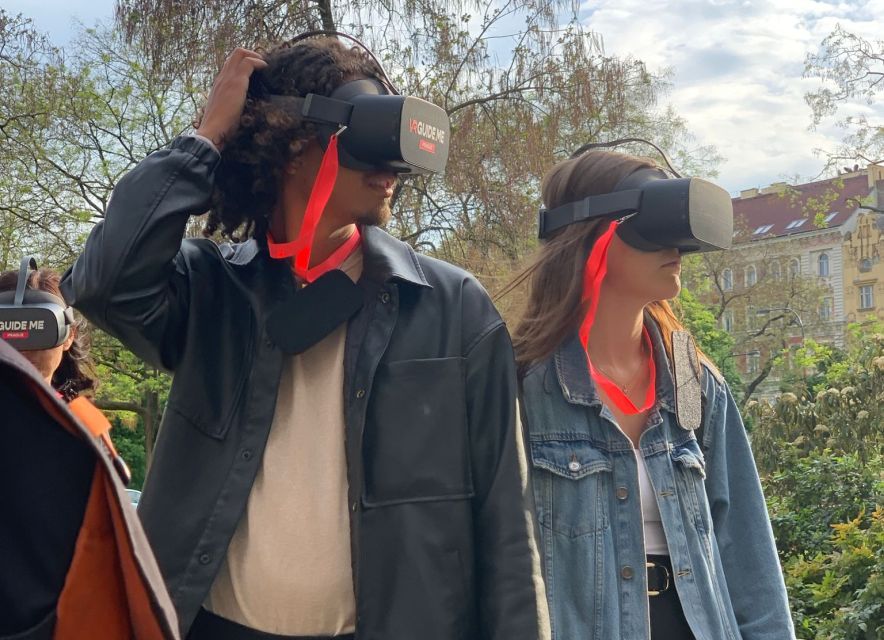
Your guide meets you at Panská 1 (with Prague Tour Info located next to Hamleys). This location is easy to find in central areas, and it sets you up for a walk that hits both Old Town and New Town.
Timing-wise, plan on being ready at the start because the headset portion is built into the flow. If you’re late, you’ll slow the whole group. And yes, you’ll be looking a bit funny with the VR glasses on, so if you’re self-conscious, just remember: you’re not the first person to feel that for the first couple minutes.
Old Town Square with a 120-years-ago view
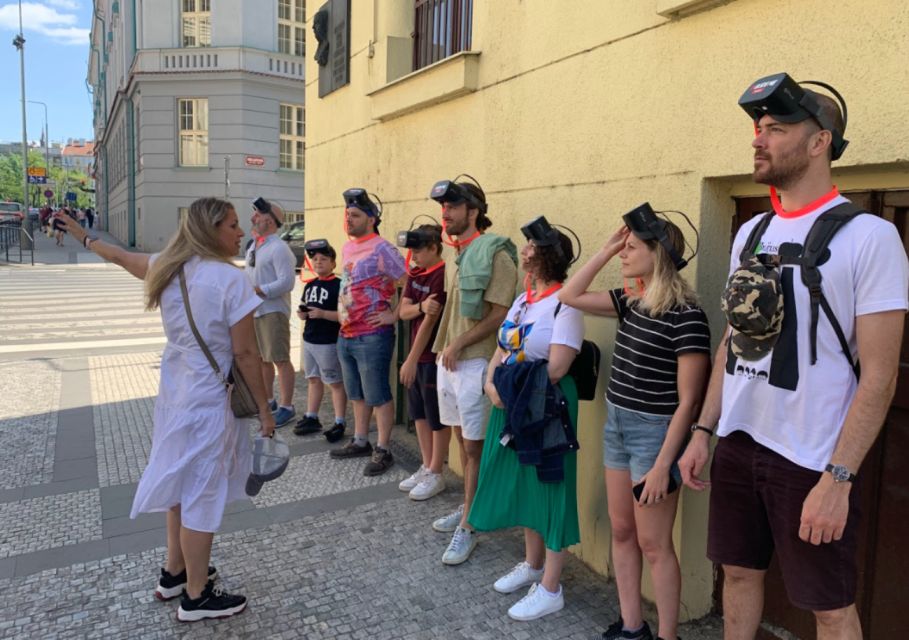
Old Town Square is the kind of place where you can wander for hours. The tour gives you a reason to focus. You don’t just look at the buildings; you learn how the location fits into Czech history.
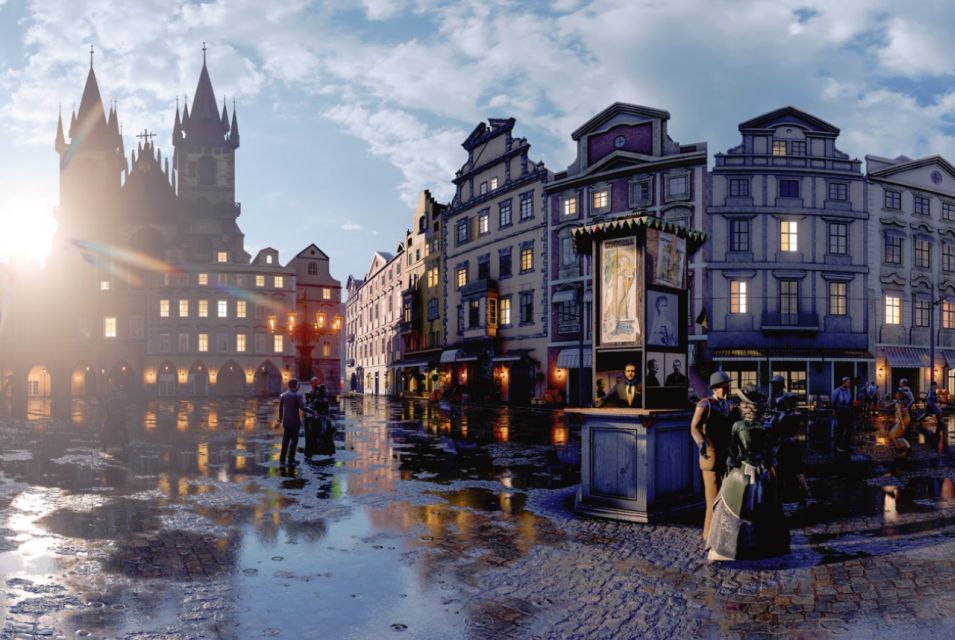
The standout moment here is the VR sequence that recreates the square about 120 years ago. When you see that older version overlaid onto the real place, it gives you a new sense of scale—what used to be there, what the street-level world felt like, and how dramatic change can happen without moving far at all.
Practical note: stand where your guide tells you before putting on the headset. VR works best when you’re at the intended viewpoint. Also, take a quick look around before the headset goes on. That way, when you remove it later, the comparison feels instant.
Wenceslas Square: moving from spectacle to story
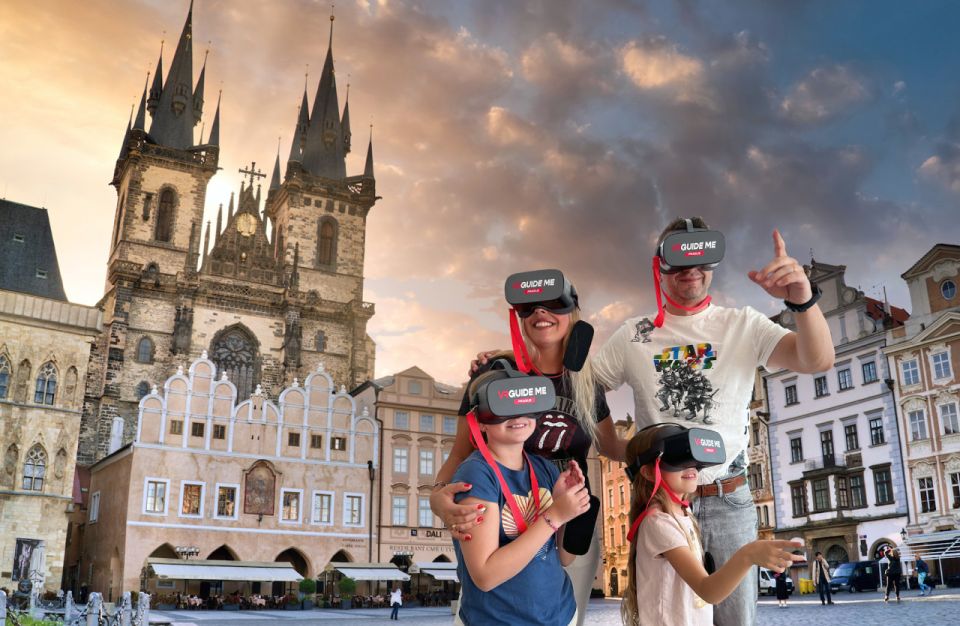
From Old Town, the route shifts toward Wenceslas Square, a major artery in Prague. Even if you’ve seen it before, the guide helps you read it differently by connecting the space with historical tensions and turning points.
This is also where the tour’s “past vs present” theme starts to click. You’re walking through a place that still carries a public identity, and then the VR scenes help you understand what that public identity meant in earlier periods—especially when history is about power, streets, and people.
If you’re the type who likes architecture but also likes why it matters, this part works well. You’ll notice what looks ordinary at first—signs, sightlines, the way open space frames buildings—then you’ll realize those same factors influenced real events.
You can also read our reviews of more historical tours in Prague



Prague National Museum: the city’s big public stage
Next up is the Prague National Museum area, another stop that feels like “Prague as a national statement.” A museum building is one thing; understanding it in the context of Czech history is another.
This tour uses VR to connect the museum-adjacent world to the broader timeline, including the idea of conflict and the forces that shaped wars in the Middle Ages. You might not walk away reciting dates perfectly, but you’ll feel the cause-and-effect pattern: history wasn’t random. It grew from specific decisions, pressures, and power struggles.
The museum area can be busy outside the tour window. If there are crowds, the guide will typically help you keep your spot and focus on what matters. You’ll get more from this stop if you treat it as a “pause and look” moment rather than trying to capture every photo angle.
New Town Hall and the shift toward modern Prague
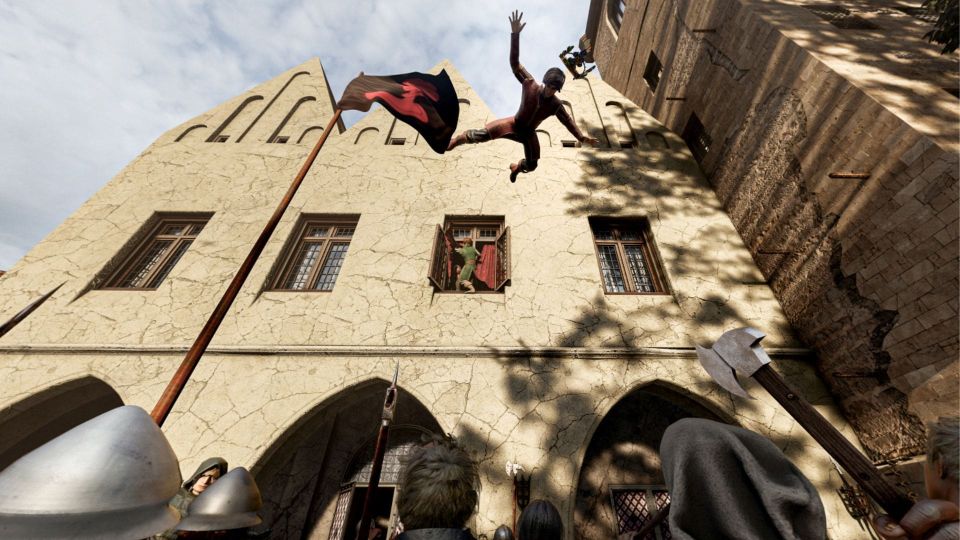
Then you move into the New Town Hall area. This part of the route is where Prague’s story gets more official and more civic.
The benefit of including New Town Hall on a VR history walk is that it balances Old Town’s famous identity. You start to see Prague not just as a maze of pretty streets, but as a place where institutions shaped daily life, policy, and public identity.
It also keeps the walking tour from feeling like one continuous postcard. You’re changing neighborhoods and changing the “tone” of what you’re seeing, which makes the VR scenes feel more like chapters than like repeats.
Saints Cyril and Methodius Cathedral: where faith meets national identity
The route includes Saints Cyril and Methodius Cathedral, a stop that can be quick if you treat it as just another church photo. On this tour, it’s more likely to become a context stop—part of the bigger Czech story the guide is building.
You’ll see how religious and cultural identities overlap with national history. The VR part of the experience doesn’t turn every stop into a cinematic action sequence. Instead, it uses the headsets to help you connect what you’re seeing now with what people faced then.
If you’re traveling with kids, this stop often lands well because it adds atmosphere without requiring a lot of technical reading. And since the tour is listed as suitable for all ages, it’s designed to be understandable even when you’re not a history specialist.
Six VR scenes: from Prague Spring tanks to Operation Anthropoid
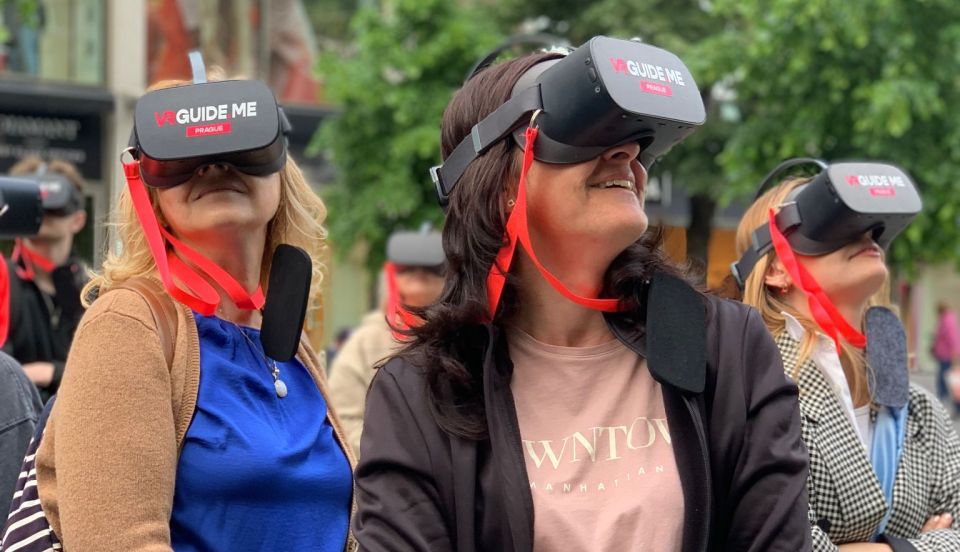
This tour’s signature is that you don’t just get one VR story. You get six different scenes across the route, and they cover major moments in Czech history across different time periods.
A few of the scenes you should look out for:
- a look at Old Town Square about 120 years ago
- a VR viewpoint tied to how conflict in the Middle Ages took shape
- a sequence showing Soviet tanks entering the city during the Prague Spring
- a firsthand-feeling experience connected to Operation Anthropoid
Here’s what matters for your expectations: this isn’t “war documentary” pacing. It’s a guided history experience that uses VR to make you feel what it was like to be in the space during the event. The power comes from location. Standing on the real ground while seeing the recreated moment helps you understand how history plays out in ordinary places.
Also, the headset is easy to use (as noted in feedback). If you wear glasses, you can still do the activity. That’s a key point if you’re deciding between tours, because some VR experiences can be awkward without eyewear options.
Dancing House finish: the Vltava promenade payoff
The tour ends near the Dancing House, next to one of Prague’s beautiful promenades along the Vltava River. Ending here is smart. It gives you a modern visual note after all the time travel.
You’ll likely notice the contrast immediately: old squares and institutional buildings earlier, then a design icon and open river views at the end. It’s the kind of final scene that helps your brain store the experience. Instead of rushing to the next stop, you get a calm place to look back at what changed across centuries.
If you’re feeling energized, this is a good launch point for a slow riverside walk after the tour. If you’re tired, it still works because you’ll have light and open space to reset.
Who should book this VR walking tour
I’d put this on your short list if:
- you want Prague history with a guided narrative and visuals
- you like interactive formats more than lecture-style tours
- you’re short on time and want a structured 2-hour route through major areas
- you’re traveling solo or in a small group and want an experience that can feel personal (some participants have described very small group days)
I’d think twice if:
- you want only famous “must-see” viewpoints with no deeper timeline
- you dislike wearing a VR headset for part of the walk
- you expect a lot of physical movement inside the VR scenes
Quick practical tips to make it smoother
- Arrive a few minutes early at Panská 1 so you don’t miss the first briefing.
- If you wear glasses, you can still participate, but bring a comfortable fit and don’t assume every headset setup will be identical.
- Wear a layer. You’ll be outdoors for part of the walk, and wearing the headset can make you feel warmer than expected.
- If you’re a photo person, remember you’ll also want some shots without the headset. The before-and-after comparison is the moment to catch.
Should you book the Prague VR history walking tour?
If you want Prague history that feels specific and located, book it. The combination of an expert guide, a tight 2-hour walk, and six VR scenes covering everything from a 120-years-ago Old Town look to events like Prague Spring tanks and Operation Anthropoid makes it more than a standard walking tour.
It’s also a smart pick for value. For $33, you’re paying for time, storytelling, and technology in one package. If that mix sounds like your style, this tour is one of the easier ways to make Prague’s layers click.
If you’re more into architecture sightseeing only, you might still enjoy parts of it—but you may get less from the VR component. In that case, consider pairing a regular landmarks walk with a shorter museum stop instead.
FAQ
How long is the Prague Immersive History Walking Tour and VR?
It lasts 2 hours.
Where is the meeting point?
The guide meets you at Panská 1 (Prague Tour Info, next to Hamleys).
What does the tour include?
You get a professional tour guide and a virtual reality headset. Optional audio is included in several languages.
What VR experiences will I see during the tour?
You’ll see six different VR scenes connected to the places you visit, including a look at what Old Town Square looked like about 120 years ago, plus scenes involving the Prague Spring, Soviet tanks entering the city, and Operation Anthropoid.
Is the tour suitable if I wear glasses?
Yes. The tour notes that people who wear glasses can also do the activity.
What languages are available?
The tour guide is listed as English, and optional audio is included in English, German, Czech, French, Spanish, Italian, and Russian.