REVIEW · PRAGUE
Prague: Top Sights and Historic Center Introduction Tour
Book on GetYourGuide →Operated by Real Prague Guides · Bookable on GetYourGuide
Prague tells its story in three hours. This top-sights introduction stitches together Old Town, the Jewish Quarter, and Charles Bridge, with enough time to learn how to read the Astronomical Clock instead of just staring at it.
I love that the tour is led by certified local guides. In the feedback I’m seeing names like Lucie, James, David, Hana, Jay, and Jakub praised for clear English, good humor, and stories that make Prague feel personal instead of like a museum label. I also like the way the walk is built around small “how to look” moments, from reading the clock to spotting what’s worth photographing in the historical center.
The one thing to plan for is the walking. You’ll cover about 3 km on foot, rain or shine, and it’s not suitable for wheelchair users or people with mobility impairments.
In This Review
- Key Highlights That Make This Tour Worth Your Time
- Where You Start: Powder Gate Orientation and an Easy First Win
- Powder Tower to Old Town Walls: Seeing the City’s Guardrails
- Black Madonna House and the Estates Theatre: Prague’s Art and Power Nodes
- Old Town Square and the Astronomical Clock: The Stop That Usually Clicks
- Charles University Area: Czech Sprinkles and Don Giovanni Context
- Coffee and Restroom Break: Take It Seriously
- Jewish Quarter Stops: Synagogue Exteriors, Cemetery Sights, and the Golem Legend
- Charles Bridge to John Lennon Wall: Photos, Flow, and a Clever Ending
- Price and Value: Why $20 Makes Sense for This Route
- Who Should Book (and Who Should Skip)
- Should You Book This Prague Top Sights Introduction Tour?
- FAQ
- How long is the tour?
- Where do I meet the guide?
- Is the tour in English?
- How much walking is involved?
- Are the synagogue interiors included?
- Is there a break during the tour?
Key Highlights That Make This Tour Worth Your Time
- Astronomical Clock coaching: you’ll be taught how to read it, so it clicks during the stop at Old Town Square
- Old Town defenses explained: Powder Tower plus the original defensive wall line and moat location in context
- Mozart and Czech touches: guidance near Charles University and the Estates Theatre tie-in to Don Giovanni
- Jewish Quarter storytelling: Old-New Synagogue exterior area, Old Jewish Cemetery sights, and the Golem legend
- Photo-friendly finish: Charles Bridge momentum, then ending at the John Lennon Wall
- Group size that stays manageable: typically around 6 to 30 people for an affordable price without feeling chaotic
Where You Start: Powder Gate Orientation and an Easy First Win
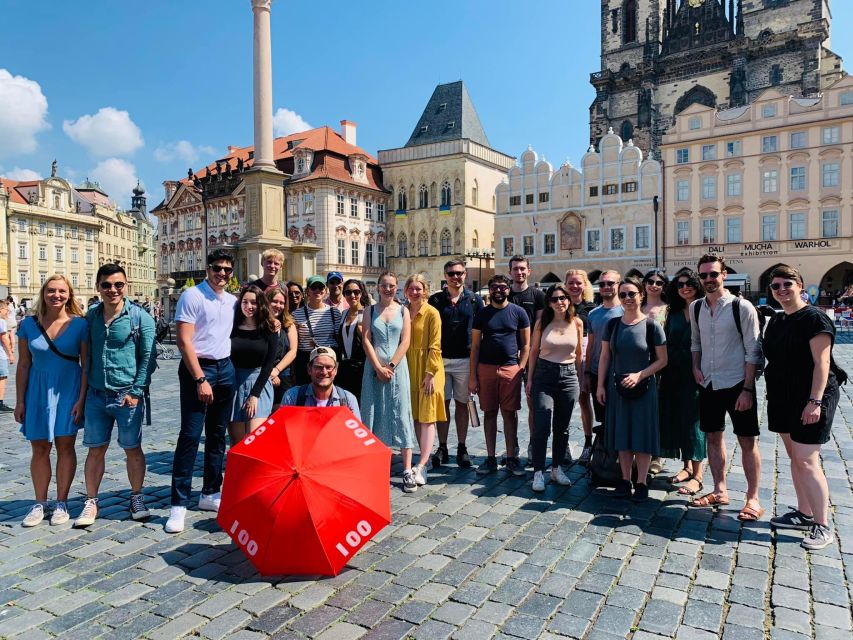
This tour begins at the Powder Gate area (Prašná Brána), specifically in front of the gate where your guide holds a red open umbrella with a white 100 logo. The starting point is centered and walkable, which matters because it sets you up for the rest of the day: once you learn the route logic here, Prague’s Old Town streets stop feeling like a maze.
From the start, you’re not just marching from landmark to landmark. The tour gives you orientation clues—how the city’s layout used to work, how certain buildings relate to older fortifications, and why a few streets matter more than they look on a map. That “map-to-life” effect is what makes a good first-day tour pay off later, when you’re deciding what to revisit on your own.
A quick practical note: bring comfortable shoes and expect a steady walking rhythm. It’s a 3-hour tour with a total distance of about 3 km, which is doable for most visitors, but not the kind of outing where you should wear brand-new shoes and hope for the best.
You can also read our reviews of more historical tours in Prague

Powder Tower to Old Town Walls: Seeing the City’s Guardrails
The first major stop is the Powder Tower area, and this is more interesting than it sounds. You’re guided to the places where the original defensive wall of Old Town used to run, including the moat line. That turns the street scenery into a story about protection, control, and how cities grew.
Powder Tower gets explained in that same context, so you’re not left wondering why this tower is standing where it is, or what its role was. You’ll also get a sense of how Prague’s Old Town boundaries shaped movement patterns—where people could enter, where commerce and people concentrated, and why certain gates became important.
This opening segment also helps you settle into the tour style: you get short stops (about five minutes at each point early on), quick context, and then you move again. It’s a smart way to keep attention high while you’re still building your internal “Prague map.”
Black Madonna House and the Estates Theatre: Prague’s Art and Power Nodes
Next up is the House at the Black Madonna, described as the most famous cubist house in the world. Even if cubism isn’t your thing, the guide’s framing helps you see why this building gets attention: it’s a marker of how Prague isn’t only medieval stone and fairy-tale facades. It also has modern artistic identity woven into the historic center.
Then you pass by the Estates Theatre area. The tour highlights the connection to Mozart and points out where Mozart premiered Don Giovanni. That detail is useful because it changes your experience of the building: you start looking for significance, not just architecture. If you’re an opera fan, this stop can feel like an extra layer of Prague you didn’t know you wanted.
One of the best parts here is that the tour doesn’t dump dates at you. It uses these cultural anchors to show how Prague’s identity has been shaped over time—by royalty, by artists, and by the constant conversation between the old and the newer parts of the city.
Old Town Square and the Astronomical Clock: The Stop That Usually Clicks
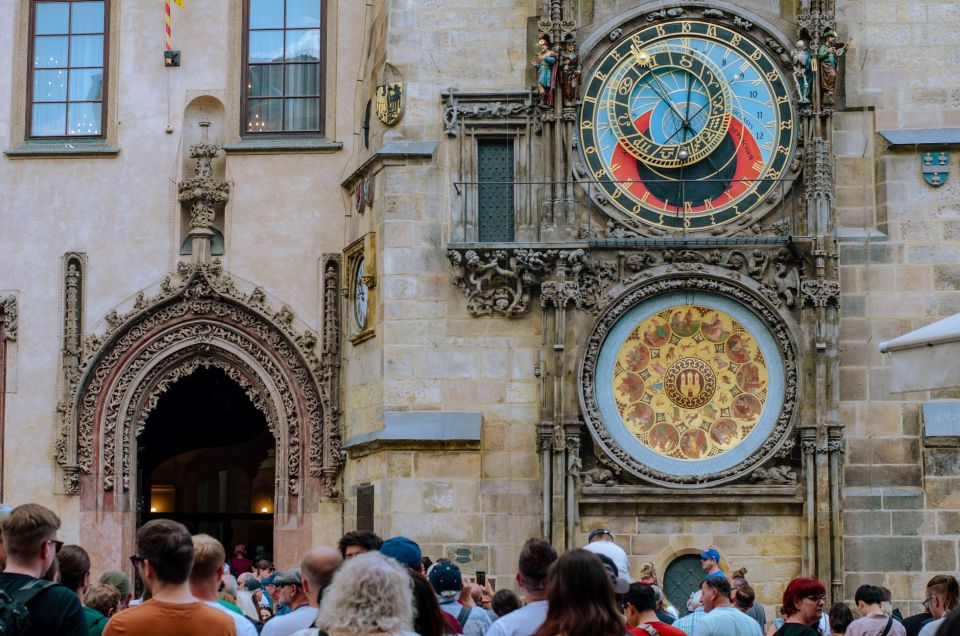
Old Town Square is where a lot of visitors feel two emotions at once: awe and confusion. The Astronomical Clock can be one of those “I see it, but I don’t know what I’m seeing” attractions. This tour solves that problem by teaching you how to read Prague’s Astronomical Clock right there, not later.
You’ll get dedicated time at the clock (about fifteen minutes). That’s enough for the guide to walk you through what you should watch and how to interpret the main elements, so you don’t experience it like a random visual show. Even if the details don’t stick instantly, the coaching gives you a structure—so when the clock does its thing, you have something to connect it to.
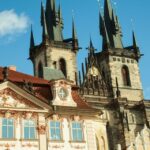
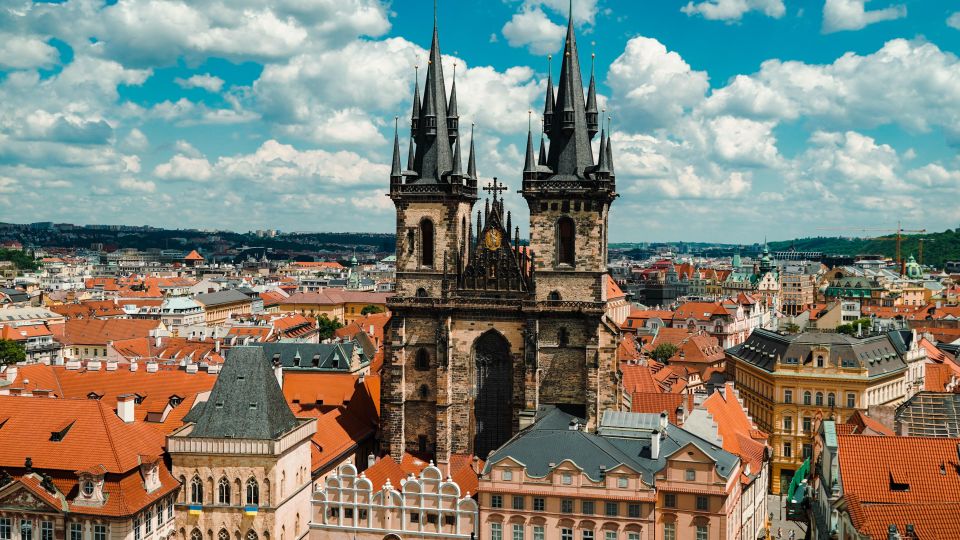
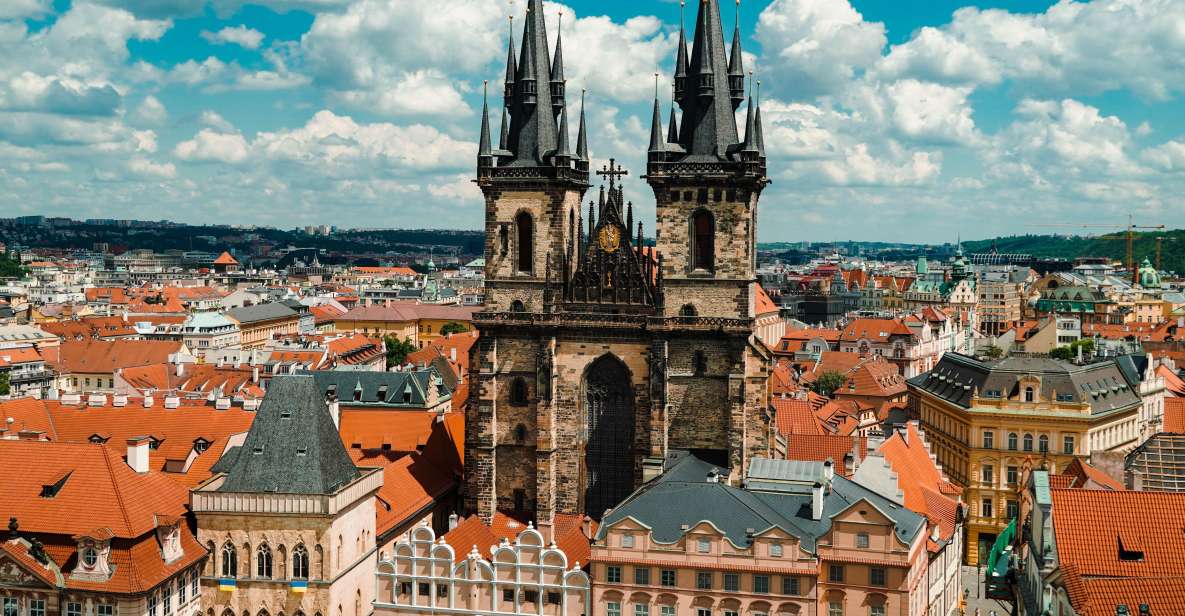
The Old Town Square block also includes key nearby sights, including the Church of Our Lady before Týn and the Jan Hus Monument stop. These are short (five to ten minutes), but they matter because they place the clock in its real setting: a square built for public life, debate, power, and religious identity. When the clock stop is done well, you leave thinking in layers, not in isolated photo moments.
Charles University Area: Czech Sprinkles and Don Giovanni Context
After the clock and the early Old Town sequence, you’re taken toward the Charles University doorstep area. This part of the tour focuses on small, memorable learning moments—your guide may teach you some Czech, and you’ll connect cultural history to the streets you’re standing on.
There’s also a Mozart tie-in here (again tied to Don Giovanni). The goal isn’t to turn Prague into a lecture hall. It’s to give you enough language and cultural framing that you can walk around later and recognize patterns: names, meanings, and why certain buildings were where they were.
If you like moments that feel slightly interactive—like a quick Czech phrase or a guided explanation that makes you look twice—this stop is for you. It’s also a good reminder that Prague isn’t only about big attractions. It’s about the meaning you pick up from the smaller context, the “why this exists here” kind of information.




Coffee and Restroom Break: Take It Seriously
You’ll have a short break (about fifteen minutes) for coffee and restrooms after the clock viewing. This is exactly the right placement in a walking tour: it gives you a chance to cool down your brain after the busiest stop of the morning/early afternoon.
Do plan for restroom lines in central Prague. In the feedback, some people flag that the queue can be long. If you need a restroom urgently, use the break early rather than waiting until you’re desperate.
And yes, this break is also where you can regroup. If you came as a couple or small group, it’s a natural moment to confirm where you want to go next after the tour ends at the Lennon Wall.
Jewish Quarter Stops: Synagogue Exteriors, Cemetery Sights, and the Golem Legend
The Jewish Quarter portion is one of the most compelling parts of the whole route because it’s story-driven. You’ll see the Old-New Synagogue area, the Old Jewish Cemetery sights, and you’ll hear the story of the Golem—the legendary creature tied to Prague’s folklore.
Important detail: the tour does not visit the synagogue interiors. The reason given is ticket requirements. That might disappoint anyone who wants inside access, but the guide still prepares you. You’ll get explanations of what you can expect to see inside, and guidance on getting tickets later if you want the full experience.
That approach is practical. It keeps the walking tour on schedule while still respecting that these are significant, ticketed sites. If you want the most value, treat this portion as your orientation and story primer, then plan a return visit when you have time for interiors.
The cemetery stop is short, but it carries weight. Even without long stays, a good guide helps you understand why the place matters and how Prague’s Jewish history shaped the city’s identity. It’s not just a sightseeing box. It’s a shift in tone.
Charles Bridge to John Lennon Wall: Photos, Flow, and a Clever Ending
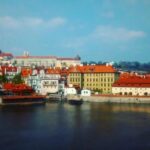
Once you cross toward Charles Bridge, the pace shifts slightly into scenic mode. Charles Bridge is given more time (about twenty minutes) because it’s where photos and atmosphere happen. This is the part of Prague people remember: river views, the sense of old-city movement, and the feeling that the bridge is a landmark in its own right.
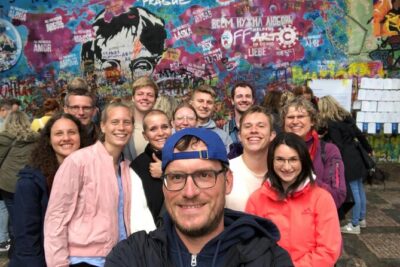
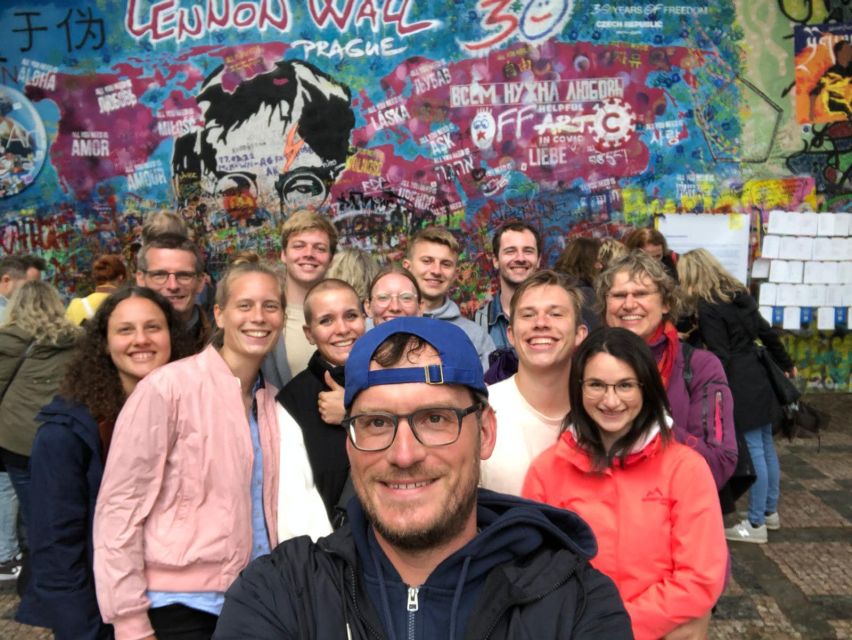
Then you end at the John Lennon Wall. Ending here is smart because it’s both visual and contemporary. You’ve spent part of your day with medieval structures and historical narratives; now you finish with a wall that feels like a living canvas. It also gives you an easy starting point to keep exploring afterward without forcing you to backtrack across the entire center.
If you want a smooth flow: treat Charles Bridge as your “slow down and look” segment, then use the Lennon Wall stop to wrap up your day with something that feels less formal and more immediate.
Price and Value: Why $20 Makes Sense for This Route
At $20 per person for a three-hour, guided walk, the value comes from what’s included—not just what’s visible. You get a certified guide, a structured route across multiple historic zones, and coaching that helps you understand the big “wow” stop: the Astronomical Clock.
This is also a tip-based tour offered in a prepaid way. The setup matters because it’s designed so the majority of your payment goes directly to your guide, without extra fees piled on top. For many visitors, that feels fair: you’re paying for a real person’s time and storytelling skill, not just for someone to point at buildings.
You’re also not stuck with a long day. Three hours at ~3 km is a manageable introduction length. It’s enough time to learn key context and still leave you energy to explore on your own later, including returning to places you want to see in more detail.
Who Should Book (and Who Should Skip)
This tour fits you best if:
- you want a first-day orientation through the core neighborhoods (Old Town + Jewish Quarter + bridge area)
- you’re curious about the Astronomical Clock and want practical help interpreting it
- you like guided stories and local context, not only sightseeing checklists
- you want a guide to point you toward what to do next in Prague
You may want to skip or reconsider if:
- you have mobility limitations or you use a wheelchair (the tour is not suitable)
- you’re hoping for lots of interior visits, since synagogue interiors are not included due to ticket requirements
- you’re sensitive to crowds at major stops like Old Town Square and Charles Bridge, where it can be busy even outside peak season
Should You Book This Prague Top Sights Introduction Tour?
I think you should book this tour if you want your first Prague day to feel guided, organized, and actually informative. The best reason is the Astronomical Clock coaching. It turns a famous attraction into something you understand, which pays dividends when you walk through Old Town again later.
I’d especially recommend it early in your trip. The tour ends at a great springboard location (John Lennon Wall), and you’ll come away with a clearer sense of where Prague’s different eras show up in real streets. Just be honest with yourself about the walking distance and the fact that some interiors (notably synagogues) are not part of this route.
If you’re planning Prague Castle too: this tour does not include it, but there’s another option focused on the castle interiors. That separation is helpful. You can do this as your historic-center intro, then switch gears for the castle on a different day when you’re ready for a bigger site.
FAQ
How long is the tour?
It lasts about 3 hours.
Where do I meet the guide?
Meet in front of the Powder Gate (Prašná Brána). The guide will have a red opened umbrella with a white 100 logo.
Is the tour in English?
Yes, it’s conducted in English only.
How much walking is involved?
Expect about 3 kilometers of walking, and it’s rain or shine.
Are the synagogue interiors included?
No. The tour does not visit synagogue interiors because of ticket requirements, but the guide explains what you’ll find inside and gives advice on getting tickets for later visits.
Is there a break during the tour?
Yes, there’s a 15-minute coffee and restroom break.