REVIEW · PRAGUE
Prague: Skip-the-line Strahov Monastery and Library Tour
Book on GetYourGuide →Operated by Rosotravel - Czech · Bookable on GetYourGuide
Strahov feels like Prague’s quiet power center. With skip-the-line access and a licensed private guide, you get the story behind the monastery’s tough centuries and then the payoff: Strahov Library. I love how your guide ties the place to real events (religious conflict, two world wars, and the communist regime), and I love walking out with clear ideas about what to look for in the library halls.
One consideration: the 3-hour private format costs $161 per person, and if you’re the type who visits fast and hates pacing, this may feel pricier than a do-it-yourself ticket.
In This Review
- Key moments worth marking on your mental map
- Strahov in Hradčany: why this monastery tour feels different
- Meeting at Tomáš Garrigue Masaryk and the short approach through Hradčany
- Skip-the-line tickets: what they save and where you still queue
- Inside Strahov Monastery: history you can feel in the stones
- Strahov Library halls: Theological and Philosophical Rooms
- Strahov Picture Gallery: Gothic to Baroque religious art in one sweep
- Basilica of the Assumption of Our Lady: Baroque frescoes and serene altars
- Gardens, pacing, and why 3 hours can be great or just too long
- What this private tour includes (and what it leaves for you to choose)
- Languages, private-group comfort, and who this suits best
- Price and logistics: how to judge whether $161 is worth it
- Should you book the Prague Strahov Monastery and Library tour?
- FAQ
- Where does the tour meet?
- How long is the Strahov Monastery and Library tour?
- What does skip-the-line mean on this tour?
- What’s included in the admission during the tour?
- Is the tour walking-heavy?
- Is the tour wheelchair accessible?
- What languages are available for the private guide?
Key moments worth marking on your mental map
- Hradčany Square warm-up: Baroque views and quick orientation before you reach the monastery
- Skip-the-line tickets: you bypass the ticket office queue, not entrance/security checks
- Strahov Library halls: Theological and Philosophical rooms with frescoed ceilings and ornate woodwork
- Strahov Picture Gallery: religious art spanning Gothic through Baroque periods
- Basilica of the Assumption of Our Lady: Baroque frescoes, serene altars, and a strong sense of sacred design
- Private-guide steering: guides like Valentina and Ilia are known for clear, engaging explanations
Strahov in Hradčany: why this monastery tour feels different
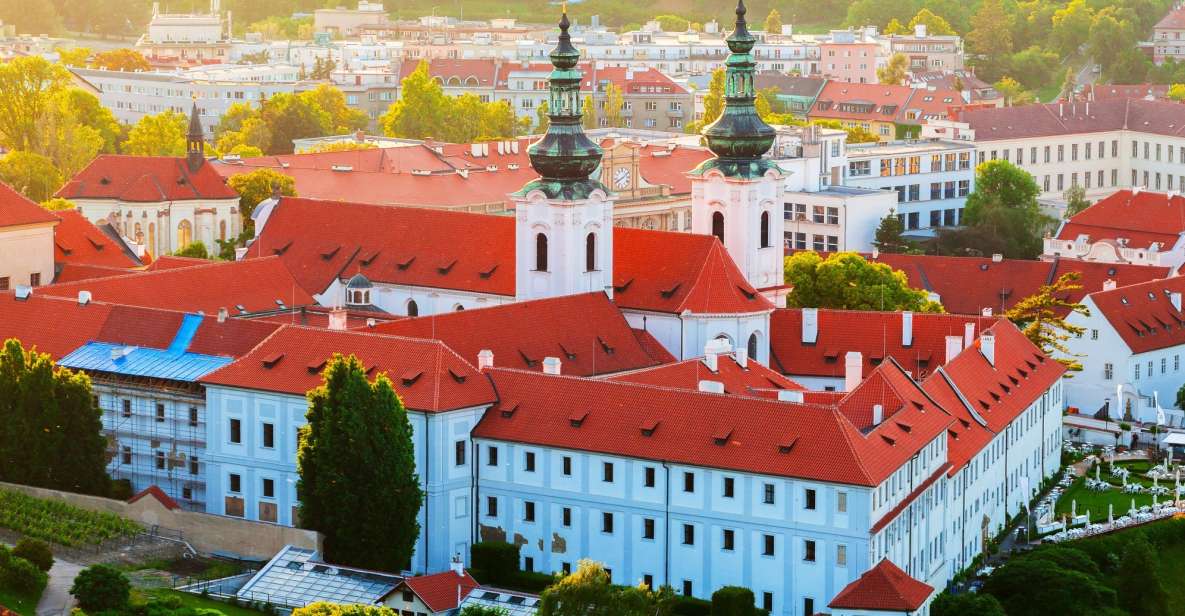
Prague’s Castle area gets all the attention. Strahov Monastery is a bit more under-the-radar, and that’s exactly why it works. You’re stepping into a place tied to prayer, learning, and survival through violent political and religious waves—not just a pretty building to photograph.
I like that the tour is structured around the sites that actually matter. You start in the Hradčany district and build up context as you go, so the monastery and library don’t feel like random rooms you’re checking off. And because this is private, the guide can slow down when you want more explanation—or speed up when you want to keep moving.
This is also one of the best ways to handle Prague’s “I’ll figure it out later” problem. Strahov can look simple from the outside, but once you’re inside the monastery complex, there’s a lot of symbolism and art to notice. A good guide makes you look smarter with zero effort.
You can also read our reviews of more tours and experiences in Prague

Meeting at Tomáš Garrigue Masaryk and the short approach through Hradčany

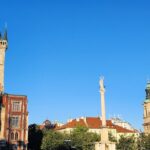
Your tour meets in front of the Statue of Tomáš Garrigue Masaryk in Hradčany (Hradčanské náměstí). From there, you’ll walk through the district with a guide who uses the streets as part of the lesson.
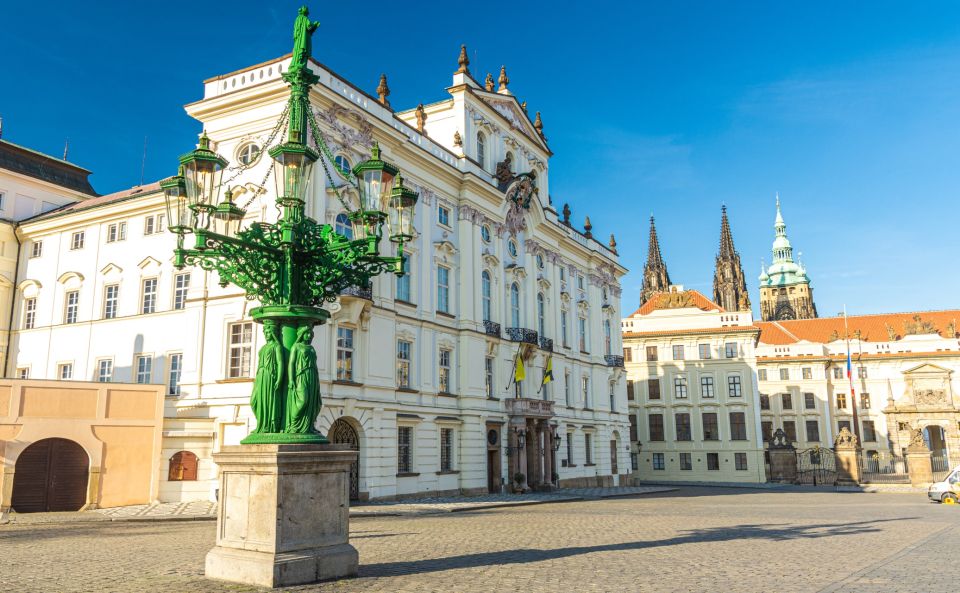
The route is designed to help you get bearings fast. You begin at elegant Hradčany Square, and along the way you pass major landmarks in the area, including the Prague Castle complex and the Loreto pilgrimage site. It’s not a long trek, but it’s enough to connect what you see outside to what you’ll see inside the monastery.
Be ready for a moderately paced walk. The tour includes about 25–30 minutes on foot, with some uneven surfaces or steps. Wear comfortable shoes. Prague stones can be slick when it rains, and you don’t want to be thinking about your footing while the guide is explaining the place.
Skip-the-line tickets: what they save and where you still queue
This tour includes skip-the-line access with pre-booked, date-specific tickets. That matters because Strahov is popular, especially during peak visiting times.
Here’s the key detail: skip-the-line applies at the ticket office. It does not skip you past the entrance or any security checks. So, yes, you’ll save time—but don’t expect the building door to be a free pass with zero waiting.
Why I think this is worth it: when you’re paying for a 3-hour private tour, you want your time to go into actual viewing and explanation, not standing around. For places like this, a short queue can turn into a longer wait if you show up at the wrong moment.
Inside Strahov Monastery: history you can feel in the stones
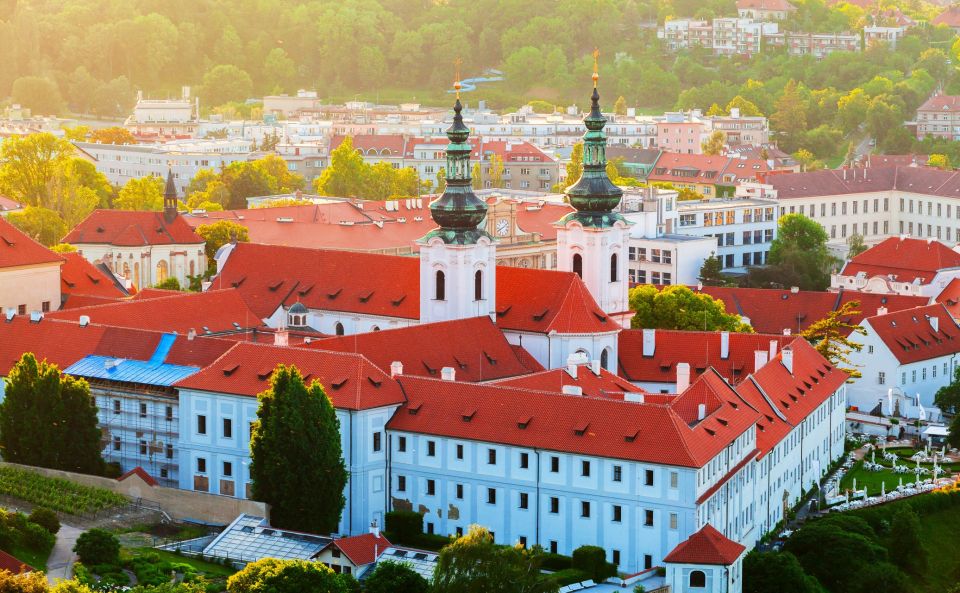
Once you reach the Strahov Monastery complex, you’re there for more than architecture. The guide walks you through the monastery’s turbulent past and how the place kept operating through major clashes of faith and politics.
You’ll hear how the monastery withstood repeated religious conflict over the centuries, including major disruptions during two world wars and under the communist regime. The point isn’t just dates. The point is understanding why certain spaces, objects, and artworks have the tone they do—resilient, guarded, and deeply purposeful.
Private guides also make the monastery visit feel less like a checklist. Instead of you staring at walls and hoping you’ll “get it,” you’ll know what to notice: where the art is placed, how the monastery’s identity shows up in the spaces, and what kind of mindset the Canons Regular of Prémontré brought to learning and worship.
Strahov Library halls: Theological and Philosophical Rooms
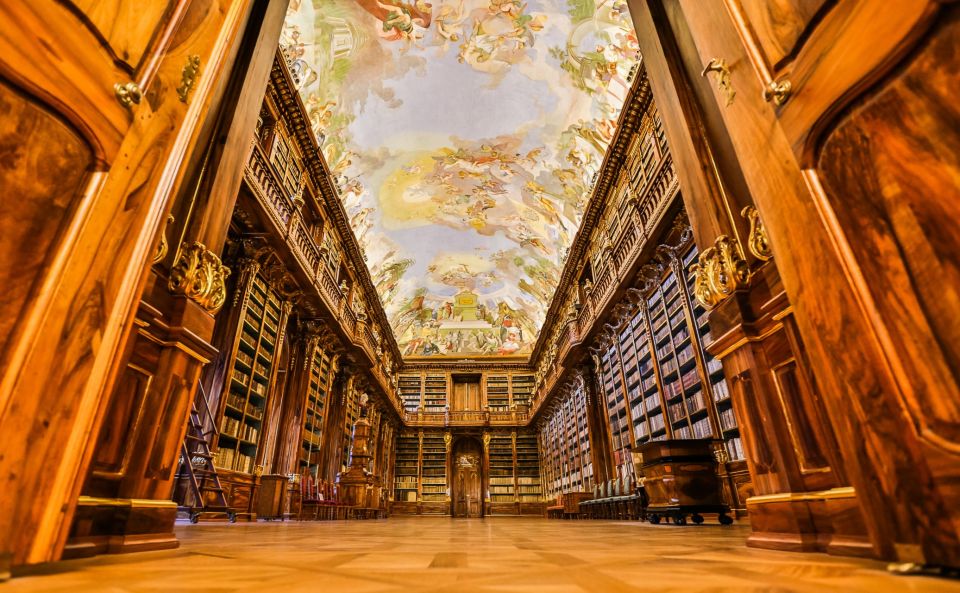
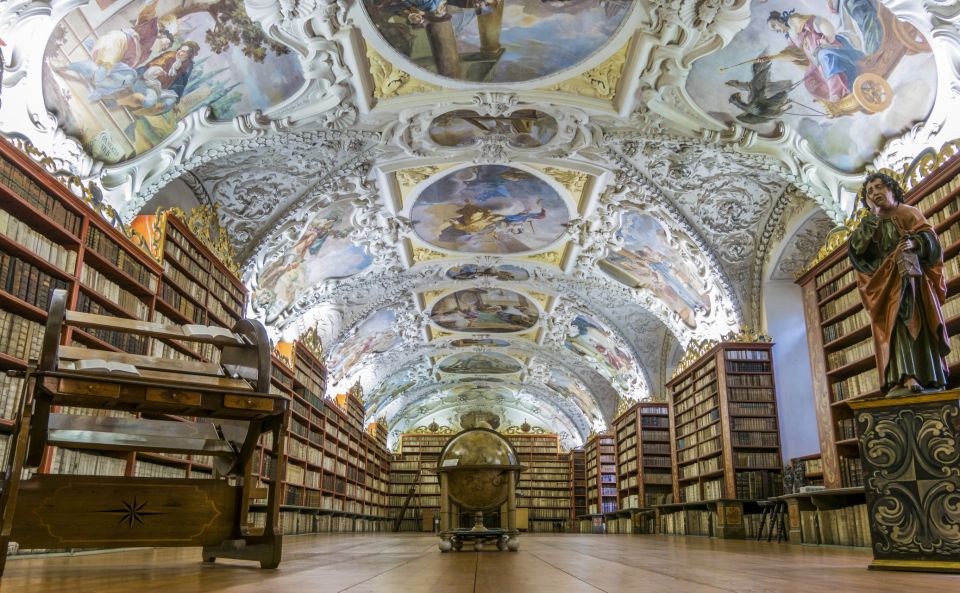
The main event is the Strahov Library, and this tour centers on what makes it famous: the Theological and Philosophical Halls.
You’ll see frescoed ceilings and ornate woodwork that create a serious sense of old-world scholarship. Even when you’re not standing inches away from every display, you’ll get the logic of the rooms. That’s what elevates it from sightseeing to understanding. A guide helps you recognize what the library was built to communicate: knowledge as something sacred, not just academic.
You’ll also learn how the library’s collections link to preserving manuscripts and knowledge through the ages. That theme shows up naturally as the guide connects the library to the monastery’s wider mission.
One practical tip: the library is sometimes best appreciated at a comfortable viewing distance—especially when crowds move or if certain areas are restricted. Don’t rush. Give yourself a slow look for ceiling details and the woodwork patterns before you go hunting for the perfect photo.



Strahov Picture Gallery: Gothic to Baroque religious art in one sweep
Next comes the Strahov Gallery, which focuses on religious art across different periods. You’ll move through works from Gothic, Renaissance, and Baroque eras, including sculptures, paintings, and rare works tied to the monastery’s artistic evolution.
What I like about this portion is the clear time-jump. Religious art can feel like it all blends together when you’re looking at it quickly. A guide helps you separate styles and understand what changed from one period to the next—especially in how emotion, realism, and drama show up in the artwork.
This is also where the tour earns its “private guide” label. In a group, you might be pushed forward. Here, you can spend extra seconds with the details that matter to you—whether that’s the sculpture texture, the painting composition, or how the Baroque pieces try harder to pull you into the scene.
Basilica of the Assumption of Our Lady: Baroque frescoes and serene altars
The tour also includes the Basilica of the Assumption of Our Lady, a Baroque masterpiece inside the monastery complex. The atmosphere shifts from art-on-the-wall to space-for-worship, and you feel it as soon as you step in.
You’ll see intricate frescoes and serene altars. The guide’s job here is to help you read the room: why the design feels dramatic without being loud, and how Baroque architecture uses color and composition to guide your attention.
If you like religious art but hate tours that move through churches like they’re museum hallways, this part usually hits better. It gives you that slow, respectful pause that makes the whole visit feel complete.
Gardens, pacing, and why 3 hours can be great or just too long
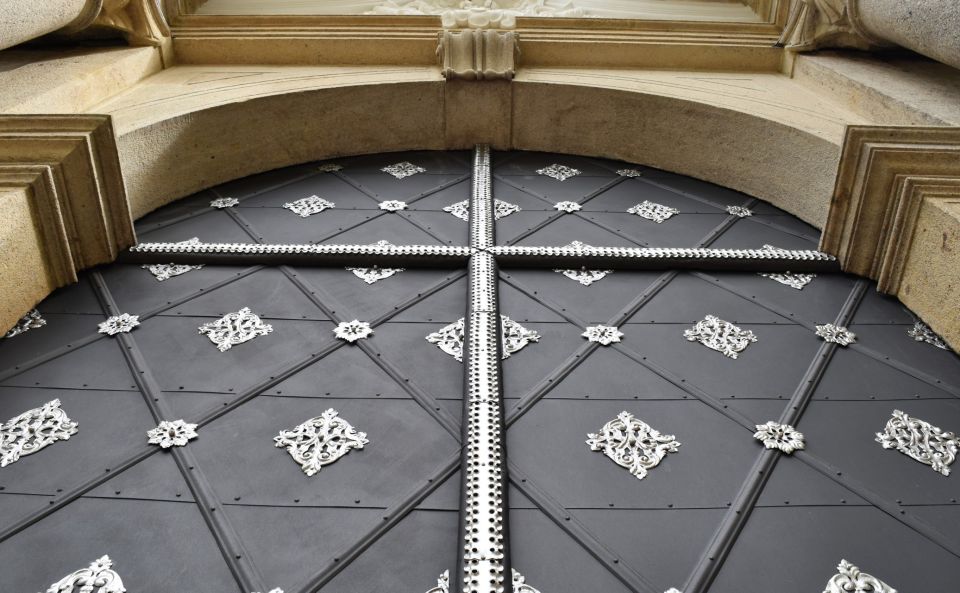
This is a 3-hour private tour that includes the monastery, library, basilica, and gardens. It’s built for a “see, understand, and notice” pace—not a sprint.
The tour is moderately paced and adjusts to your group. Still, the walking component and some uneven surfaces mean it’s not a “sit down every five minutes” experience. If your energy is limited, wear shoes with grip and plan for a steady pace.
Now the value question. The price is $161 per person, and that’s not pocket change. One trade-off you should think about: a very efficient museum visit might not need a full 3 hours. If you’re the type who wants only the library rooms and you’ll move quickly, you might wonder if you paid extra time for explanation you already knew.
On the other hand, the guides can be the difference between a pretty visit and a meaningful one. People I’ve seen rate this tour highly often mention guides who are sharp, helpful, and able to shepherd you between the right stops without chaos. Names like Valentina and Ilia come up in feedback as strong examples of clear, engaging guiding.
So I’d frame it like this: if you want context and a smooth route through multiple rooms, it’s good value. If you want the minimum possible time, you may decide you can do it cheaper on your own.
What this private tour includes (and what it leaves for you to choose)
Included:
- Private tour of Strahov Monastery, Library, Basilica, and Gardens
- A 5-star licensed guide fluent in your chosen language
- Skip-the-line tickets for the Strahov Monastery complex
- History, anecdotes, and legends as part of the explanation
- A personalized experience adapted to your pace
Not included:
- Access to special exhibitions and the brewery is not included. Your guide can recommend options if you want to extend your visit.
This matters because it changes expectations. You’re paying for the core complex and the guided interpretation—not a guaranteed full-day “everything on site” ticket. If you want to build a longer itinerary, ask your guide what to prioritize after the tour.
Languages, private-group comfort, and who this suits best
The tour runs as a private group, so you’re not sharing your guide time with strangers. That’s a real benefit at Strahov, where good viewing angles and a calm pace help you actually absorb what you’re seeing.
Languages offered include German, English, Russian, Spanish, French, Italian, Polish, and Czech. If you’re trying to keep your visit flowing without language stress, this is one of the safest ways to do it.
It’s also wheelchair accessible, which is a huge practical plus. The tour includes uneven surfaces or steps, but the accessibility note means you won’t be totally shut out. If mobility is a concern, it’s smart to mention your needs in advance so the guide can adjust the route and pacing.
This tour works best if you:
- want a guided route through multiple Strahov spaces (library + art + basilica)
- like historical explanation tied to what you see in front of you
- prefer a private setting over herd-style museum movement
- want a clean way to handle queues thanks to skip-the-line tickets
Price and logistics: how to judge whether $161 is worth it
At $161 per person, you’re paying for three things:
- A licensed guide who can interpret what you’re seeing
- The time structure of a full complex tour in one visit
- Skip-the-line ticket handling at the ticket office
If you’re visiting during a busy time, skip-the-line often earns its keep because it protects your schedule. If you’re visiting at a quieter hour, it might save less time. Either way, you’ll still go through entrance/security checks.
My practical advice: decide what your “must-have” is.
- If your must-have is context and a guided route, this price is easier to justify.
- If your must-have is speed and you’re happy reading guide signs yourself, you might decide to buy entry tickets separately and only spend time in the rooms you care about most.
Either choice can work. The trick is matching the format to your style.
Should you book the Prague Strahov Monastery and Library tour?
I’d book it if you want a guided visit that connects Strahov Monastery’s story to the art and learning spaces you’re seeing. The combination of Theological and Philosophical Library halls, the Picture Gallery, and the Baroque basilica is a lot to stitch together on your own—so a private guide helps you make sense of it quickly.
I’d think twice if you’re a fast-moving, no-nonsense visitor who only wants the highlights with minimal explanation. In that case, the 3-hour pacing may feel like paying for time you wouldn’t spend otherwise.
If you’re not sure, this is the simplest way to decide: if you’ll enjoy listening for 3 hours, you’ll likely feel the value. If you’ll get restless, go independently and keep it short.
FAQ
Where does the tour meet?
Meet your guide in front of the Statue of Tomáš Garrigue Masaryk, Prague, Hradčanské nám., 118 00 Praha 1-Hradčany, Czechia.
How long is the Strahov Monastery and Library tour?
The tour lasts 3 hours.
What does skip-the-line mean on this tour?
You have skip-the-line access with pre-booked, date-specific tickets to bypass the queue at the ticket office, but not the entrance or any security checks.
What’s included in the admission during the tour?
Admission includes the Monastery, Library, Picture Gallery, and Basilica. Special exhibitions and the brewery are not included.
Is the tour walking-heavy?
It’s a moderately paced walking tour with about 25–30 minutes on foot, and it may include uneven surfaces or steps.
Is the tour wheelchair accessible?
Yes, the tour is listed as wheelchair accessible.
What languages are available for the private guide?
The live guide is available in German, English, Russian, Spanish, French, Italian, Polish, and Czech.