REVIEW · PRAGUE
Prague Jewish Town/Skip-the-Line Official Entry Ticket
Book on GetYourGuide →Operated by Židovské muzeum v Praze/Jewish museum in Prague · Bookable on GetYourGuide
Five synagogues, one focused ticket. This official skip-the-line pass from Židovské muzeum v Praze lets you enter key Prague Jewish Town sites quickly, and it stays valid for three days from your first activation. I like how it turns a heavy subject into a manageable walking route, and I love that once you’re inside, you can linger and go at your own pace.
The main downside is that it’s not a live guide. If you want a smoother story arc and extra context, plan on an audio guide, or consider pairing this with a guided tour for at least part of the route.
In This Review
- Key Highlights You’ll Actually Feel
- A 3-Day Jewish Town Ticket That Lets You Move on Your Schedule
- Starting at Maisel Synagogue: Power, Politics, and Community in One Room
- Pinkas Synagogue: The Shoah Memorial Wall You Don’t Rush
- Old Jewish Cemetery: Rabbi Loew and a Burial Ground from the 1400s
- Old-New Synagogue (Altneushul): Europe’s Oldest Active Synagogue
- Spanish Synagogue: Moorish Interior Design and the Alhambra Connection
- How Much Time to Give Each Site (Without Feeling Rushed)
- Hours, Closure Days, and What Can Stop Your Visit
- Entry Rules You’ll Want to Know Before You Leave Your Hotel
- Price and Value: Is This $27 Ticket Worth It?
- Best Fit: Who This Ticket Suits and Who Might Add a Guide
- Should You Book This Prague Jewish Town Ticket?
- FAQ
- What is included with the Prague Jewish Town entry ticket?
- How long is the ticket valid?
- Does the ticket skip the line?
- What are the main opening hour patterns, and are there closure days?
- What items are not allowed inside?
- How much does the ticket cost?
Key Highlights You’ll Actually Feel
- Skip-the-line entry to five major sites, so you spend more time inside and less time waiting
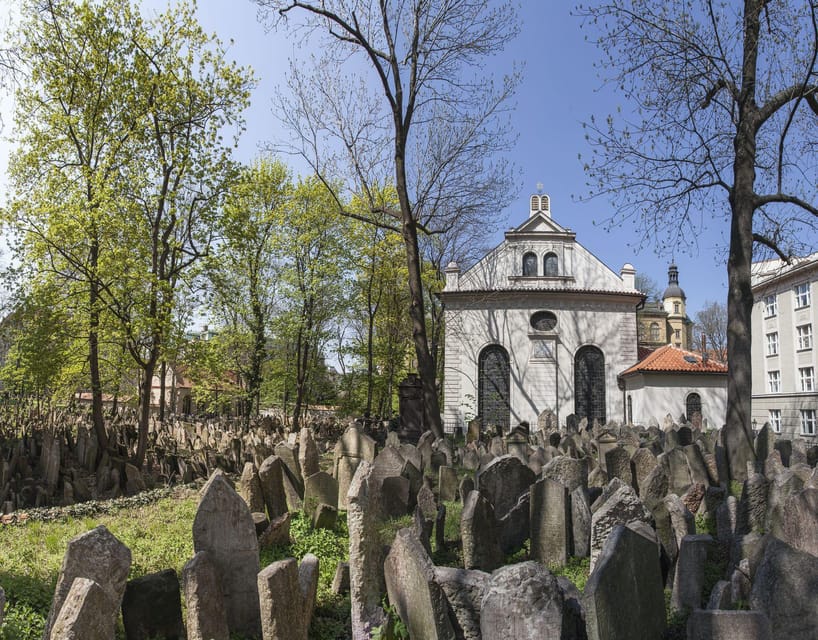
- Old-New Synagogue (Altneushul): the oldest extant synagogue in Europe and still active after 700+ years as a community hub
- Old Jewish Cemetery: a burial ground dating to the 1400s, including Rabbi Judah Loew Ben Bezalel (the Maharal of Prague)
- Pinkas Synagogue memorial wall for nearly 80,000 Shoah victims from the Czech lands
- Spanish Synagogue with Moorish interior design influenced by the Alhambra
- Flexible pacing across 3 days, letting you stay longer where you need to
A 3-Day Jewish Town Ticket That Lets You Move on Your Schedule
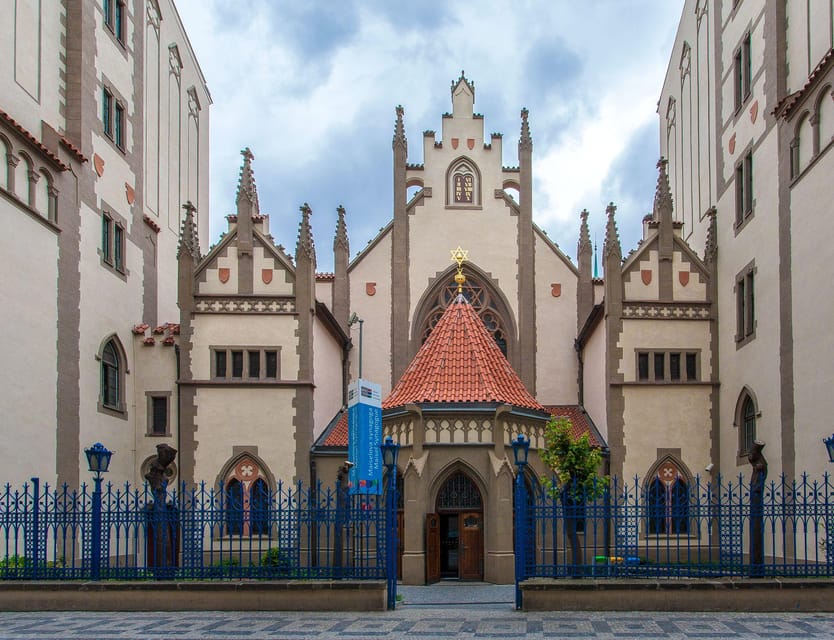
This is an official admission ticket covering five specific stops in Prague Jewish Town. You get entry to the Old Jewish Cemetery, the Old-New Synagogue, and three major synagogues: Maisel, Pinkas, and Spanish. The big value is timing: “skip-the-line” means you don’t have to queue for every single building.
Your ticket is valid for 3 days starting from your first activation, not from the moment you buy it. That’s handy because Prague plans can change fast—weather, dinner reservations, or just how long one site holds your attention. I also like that the sites are connected enough to build an easy route, so you’re not hopping across town with luggage and transit stress.
One practical point: the experience is basically self-guided. That can be a positive if you like quiet looking time. If you prefer someone to stitch the history together for you, you’ll either want an audio guide or plan to add a guided tour separately.
You can also read our reviews of more tours and experiences in Prague

Starting at Maisel Synagogue: Power, Politics, and Community in One Room
You’ll typically start with Maisel Synagogue, and that’s a smart first step. It links the Jewish community to Prague’s civic leadership during the era of Emperor Rudolf II. The synagogue was founded by Mordecai Maisel, described here as the mayor of the Prague Jewish Town at that time.
Why start here? Because it sets up a theme you’ll keep seeing: Jewish life in Prague wasn’t only about religious practice. It was also about community organization, influential patrons, and how a city’s leadership shaped what could be built and preserved.
In practical terms, Maisel is a good “warm-up” stop before you hit the heavier memorial and cemetery sites. You’ll be moving through real places of worship and remembrance, not just museum rooms, so a gentler entry helps your brain adjust.
If you like to structure your visits, set aside time for each site to be its own chapter. Spend enough time in Maisel Synagogue to notice details of design and layout, then let that context carry you forward.
Pinkas Synagogue: The Shoah Memorial Wall You Don’t Rush
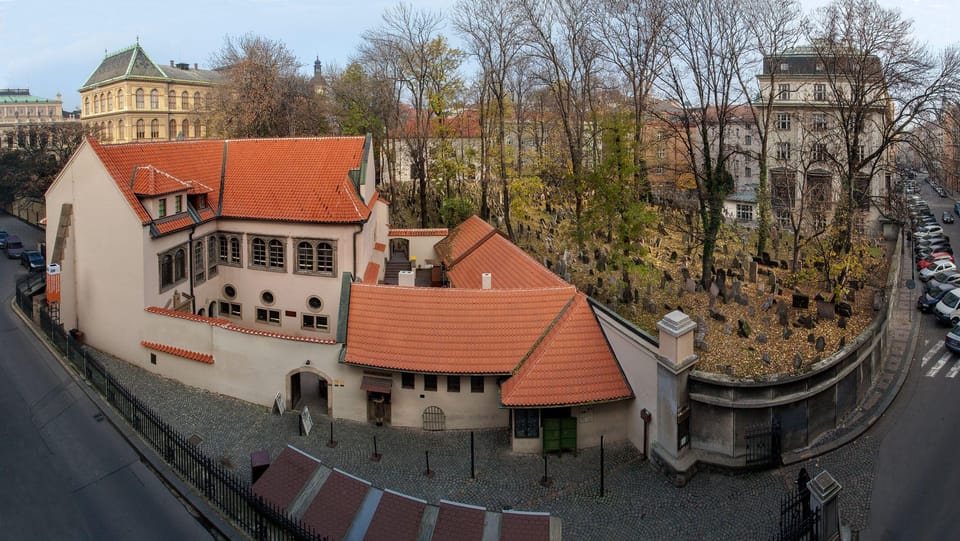
Next on the route is Pinkas Synagogue, and it’s the one stop where you’ll probably feel yourself slow down. It functions as a memorial to nearly 80,000 Jewish victims of the Shoah from the Czech lands.
Even if you know the basics of World War II history, a physical memorial changes the way you process it. Here, the purpose is remembrance, not sightseeing. Expect a quiet, reflective atmosphere, and plan your time accordingly.
This is also a good moment to decide how you want to handle interpretation. If you like to read and then absorb, give yourself time to stand with the memorial space before moving on. If you rely on audio, this is often the best place to use it—because the emotional impact can be intense, and you’ll want help focusing on what you’re seeing.
The drawback of going without a guide is that the names and themes can start to feel disconnected. The ticket gets you in; it can’t give you the narrative thread. So for Pinkas, I’d strongly recommend adding interpretation time—audio or a guided supplement—so your visit has shape, not just weight.
Old Jewish Cemetery: Rabbi Loew and a Burial Ground from the 1400s
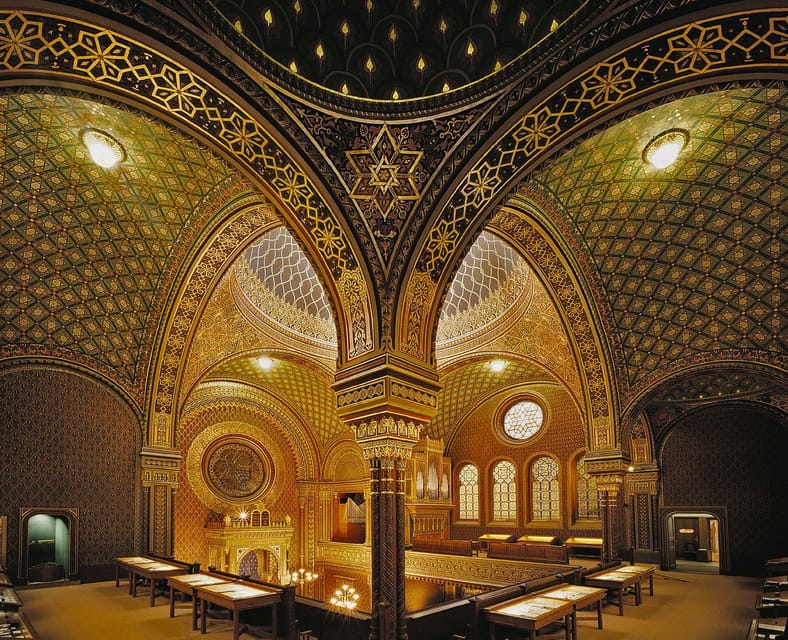
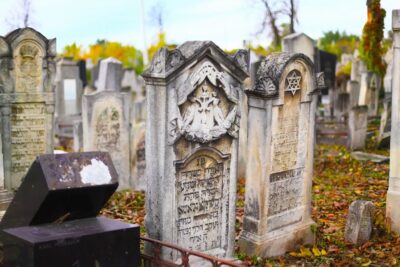
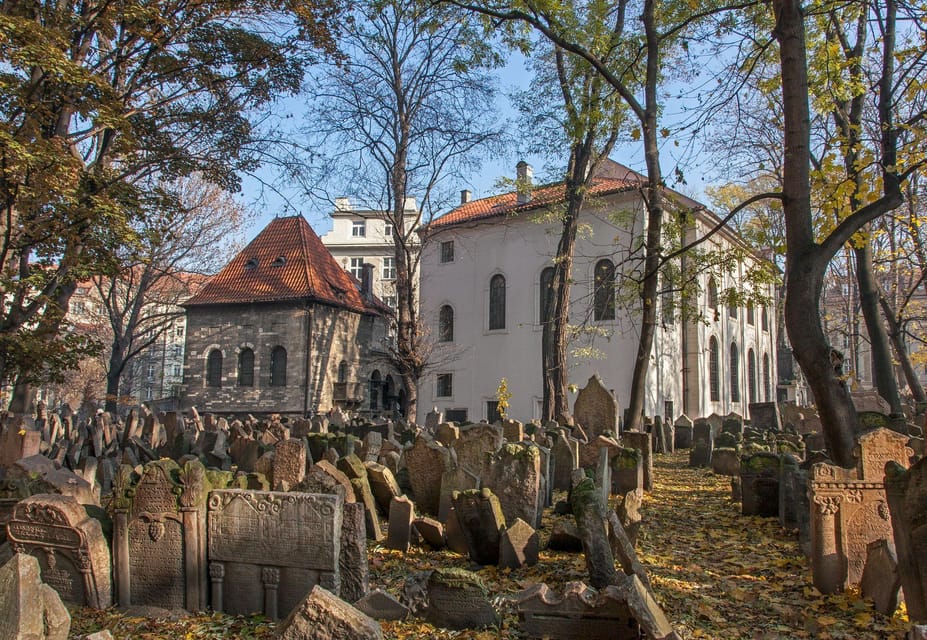
After Pinkas, the route brings you to Old Jewish Cemetery, one of the oldest surviving Jewish burial grounds in the world. It was founded in the first half of the 15th century—so you’re walking in a place with long continuity.
This stop includes the resting place of Rabbi Judah Loew Ben Bezalel, known as the Maharal of Prague. Even if you’ve heard the Maharal name before, seeing the actual burial context tends to make it feel more grounded and less like legend.
Cemeteries can be tricky travel stops. You don’t want to treat them like photo locations, and you don’t want to rush past them out of discomfort. This cemetery is exactly the kind of place where slower is better. If your legs are tired, take breaks. If you’re reading instead of standing still, keep your attention on the space itself.
Also, plan your mindset. This is not a “quick history stop.” It’s a place of memory and endurance. I like that the ticket includes cemetery entry because it prevents the classic mistake: skipping the cemetery because it seems less dramatic than a synagogue interior.
Old-New Synagogue (Altneushul): Europe’s Oldest Active Synagogue
Then you’ll visit the Old-New Synagogue, also known as the Altneushul. It’s described here as the oldest extant synagogue in Europe, and it has been the main synagogue of the Prague Jewish community for more than 700 years.
That’s a big claim, and it changes how you view the building. When a place has served the same community role across centuries, you’re not just looking at architecture—you’re tracking continuity. The building’s age and continued function make it feel unusually alive for a historic site.
This is also one of the stops where you’ll get the “wow, this is still used” effect. It helps connect the earlier stops (the leadership context from Maisel, the remembrance function of Pinkas) to living religious identity.
If you’re deciding how long to spend at each stop, this is usually where I’d allocate extra time. It’s central to the whole Prague Jewish Town story, and you’ll likely get more out of it if you slow your pace and actually look at details.
You can also read our reviews of more tours and experiences in Prague




Spanish Synagogue: Moorish Interior Design and the Alhambra Connection
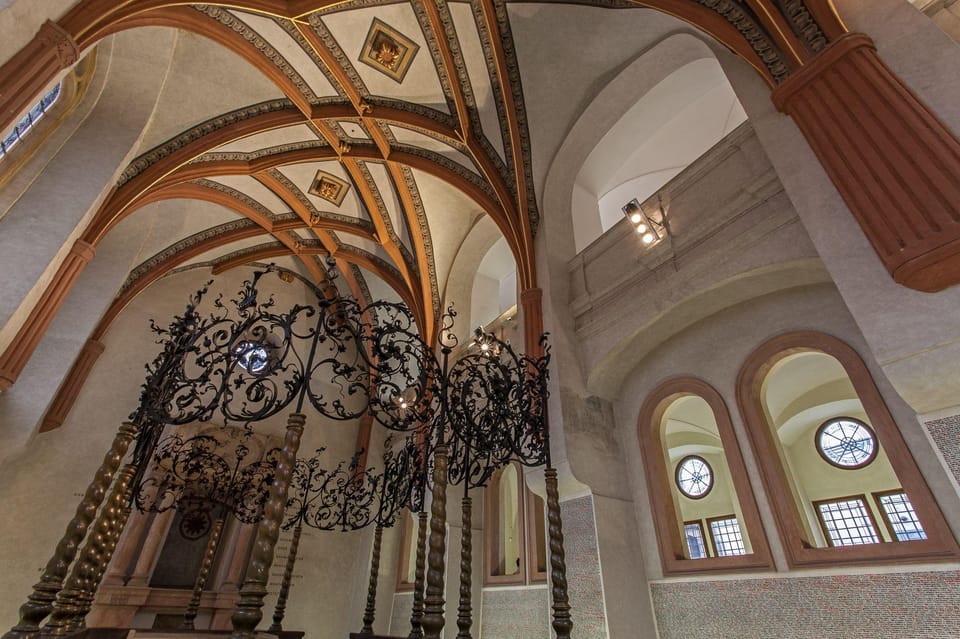
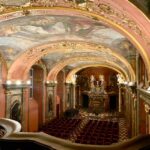
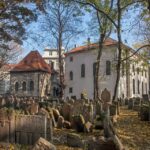
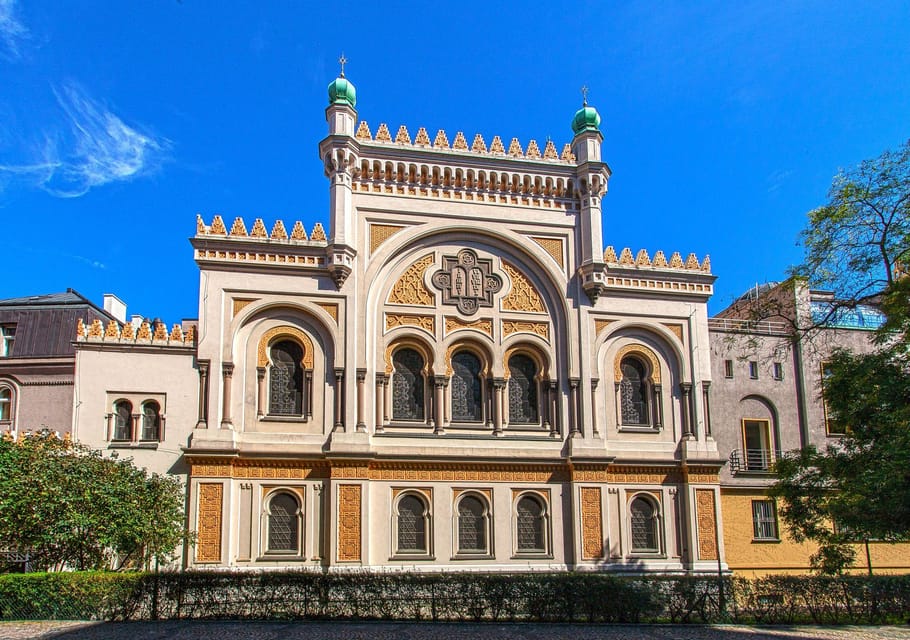
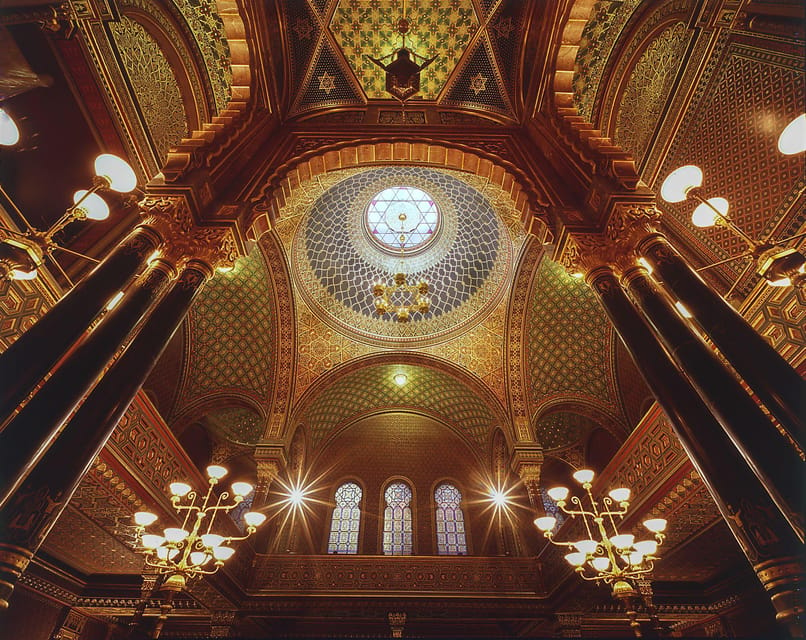
Next is the Spanish Synagogue, named for its impressive Moorish interior design, influenced by the famous Alhambra. This is a striking contrast in style compared with what many people expect from synagogue interiors in central Europe.
The practical benefit is that it resets the emotional tone after the cemetery and memorial weight. You can shift from reflection to admiration—still respectful, but with a different kind of focus. Spanish Synagogue often works well as a final or near-final stop because it feels visually memorable.
At the same time, it’s not just “pretty architecture.” The style points to cultural exchange and artistic influences, showing that Prague’s Jewish community wasn’t isolated from broader European currents. That context helps you understand why Jewish Town buildings can vary dramatically in design.
If you like to take notes, Spanish Synagogue is a good place to write down what you notice: materials, patterns, and the overall feel of the interior space. When you return to the later part of your visit, your brain will already have images to anchor the story.
How Much Time to Give Each Site (Without Feeling Rushed)
This experience is made for self-paced wandering. One strong advantage noted in real use of the ticket is quick entry and the ability to spend as much time at each place as you want.
Here’s a practical pacing approach:
- If you only have one day, prioritize Old-New Synagogue and Pinkas Synagogue first, then fill in the cemetery and the other synagogues.
- If you have two or three days, split the heavier stops. For example, do Pinkas and Old Jewish Cemetery on one day, and the other synagogues on another.
- Use a simple rule: don’t plan back-to-back stops with zero buffer. Prague is a walking city, and your mood matters more than tight timing.
I also recommend planning for an interpretation tool. An audio guide is available to purchase onsite, and it can make a big difference for people who want more explanation than what you’ll pick up from signage alone.
Hours, Closure Days, and What Can Stop Your Visit
Before you go, check opening hours for your dates. The sites have seasonal changes, and they are closed on Saturdays and during Jewish holidays.
In 2025, for example:
- 1 January: 11 a.m. to 4:30 p.m.
- 2 January to 31 March: 9 a.m. to 4:30 p.m.
- 1 April to 30 April: 9 a.m. to 6 p.m.
- 1 May to 31 August: 9 a.m. to 7 p.m.
- 19 October to 31 December: 9 a.m. to 4:30 p.m.
Also note 24 December closes early at 9 a.m. to 2 p.m.
If your travel dates include a Saturday or a Jewish holiday, assume closure. Planning around that is the difference between a smooth day and a “why is everything shut?” moment.
Entry Rules You’ll Want to Know Before You Leave Your Hotel
These sites have visitor regulations, and a few are easy to miss if you’re traveling light. Common issues are luggage and certain items you can’t bring in.
The ticket’s restrictions include:
- No weapons or sharp objects
- No oversize luggage
- No smoking
- No food and drinks
- No luggage or large bags
- No pets (assistance dogs allowed)
- No tripods
- No alcohol or drugs
- No short skirts and no sleeveless shirts
- No see-through clothing
If you’re used to museum days where backpacks go everywhere, adjust your plan here. Wear clothing that won’t cause problems at entry. And if you’re bringing camera gear, skip the tripod unless you’ve confirmed it’s allowed (the rules here say tripods aren’t allowed).
Wheelchair access is described as limited, so if you need specific accommodations, you should check in advance rather than assuming every space can be reached the same way.
Price and Value: Is This $27 Ticket Worth It?
At $27 per person, you’re paying for admissions to five major sites: Old Jewish Cemetery, Old-New Synagogue, Maisel Synagogue, Pinkas Synagogue, and Spanish Synagogue. That’s a lot of entry coverage for one ticket, and the skip-the-line benefit matters because lines add up across multiple buildings.
The best “value” angle isn’t just the number of places. It’s the flexibility: your ticket is valid for 3 days from first activation. That gives you breathing room if you need to redo a stop due to timing, or if you want to re-enter your favorite site later within the validity window.
You’ll also appreciate that food and hotel transport aren’t included. That’s normal for an official admission ticket, but it means you should plan your day like a walking route—snacks elsewhere, water when you can, and meals around your synagogue schedule.
If you want the deepest historical narration, you may still want an audio guide or a separate guided tour. But even then, the ticket itself is a cost-effective way to make sure you can access all the key buildings without wasting time in queues.
Best Fit: Who This Ticket Suits and Who Might Add a Guide
This ticket suits you if you:
- Prefer self-paced visiting and quiet time inside sacred spaces
- Want to cover the major Prague Jewish Town sites in a structured walking route
- Like paying for access and choosing your own interpretation style (audio, reading, or both)
It may be less ideal if you strongly want a connected narrative delivered by a person. The history here is complex, especially across centuries, and without a live guide, you can miss how the pieces link. One sensible workaround is using the audio guide at the most demanding stops like Pinkas and the cemetery.
If you’re a first-time visitor to Prague Jewish Town and you want a “start to finish” story, consider pairing this ticket with a guide for part of the day. You’ll still get the convenience of skip-the-line entry, and you’ll add the context your brain will thank you for later.
Should You Book This Prague Jewish Town Ticket?
Book it if you want official access to five major sites, skip-the-line entry, and the freedom to spread the visits across three days. The price makes sense for the amount of entry you get, and the route covers both the religious center and the remembrance spaces that define Prague Jewish Town.
If you’re the kind of person who needs a spoken explanation to fully connect the history, plan an audio guide at minimum—or add a live guided tour supplement so you don’t feel like you’re just reading walls. For most visitors, though, this is a smart, efficient way to experience Prague Jewish Town without turning it into a rushed checklist.
FAQ
What is included with the Prague Jewish Town entry ticket?
The ticket includes admission to the Old-Jewish Cemetery, the Old-New Synagogue, the Maisel Synagogue, the Pinkas Synagogue, and the Spanish Synagogue.
How long is the ticket valid?
It’s valid for 3 days, starting from your first activation.
Does the ticket skip the line?
Yes, the ticket includes skip-the-line entry.
What are the main opening hour patterns, and are there closure days?
Opening hours vary by season. The sites are closed on Saturdays and during Jewish holidays.
What items are not allowed inside?
Restrictions include no weapons or sharp objects, no oversize luggage or large bags, no food and drinks, no smoking, no tripods, no alcohol or drugs, no pets (assistance dogs allowed), and dress restrictions such as no short skirts and no sleeveless shirts.
How much does the ticket cost?
The price is listed as $27 per person.