REVIEW · PRAGUE
Prague Castle Walking Tour
Book on Viator →Operated by Insight Cities · Bookable on Viator
Prague Castle is a whole city up a hill. This 3-hour small-group walk focuses on what you’re actually seeing: Romanesque, Gothic, Baroque, Rococo, Renaissance, and Neoclassical buildings tied to Czech history. I like the historic guide approach (small enough that you can actually hear every detail) and the mix of royal power, religion, and everyday stories in just one route. One thing to plan for: the castle/cathedral admissions are extra, so the ticket part can add up if you’re budgeting tightly.
You’ll meet near public transport in Malá Strana, then climb up toward Hradčany Hill to the official residence area, and continue through the Royal District before wrapping near Strahov. The route is best for curious travelers who like context, not just photos. And if you’re traveling with a stroller, one parent mentioned it still worked well—just expect some uphill walking.
In This Review
- Key things to know before you go
- Why this Prague Castle walk feels different from the usual “line tour”
- One practical consideration: admissions are not included in the base price
- Meeting in Malá Strana and starting on the right foot
- Prague Castle complex: how 1,100 years show up in your footsteps
- What you should know about castle entry
- Ball Game Hall: Renaissance tennis, plus the kind of detail you’ll remember
- Queen Anne’s Summer Palace: architecture that became an observatory
- St. Vitus Cathedral and the royal meaning of Gothic stone
- Budget note for cathedral admission
- Vladislav Hall and Old Royal Palace: jousting, coronations, and political shockwaves
- Admission again: plan for it
- St. George’s Basilica and the contrast you didn’t know you needed
- Golden Lane: tiny houses, big stories, and the Dalibor connection
- Domeček and Strahov Monastery: the walk becomes more than castle walls
- Price and value: is $126.16 worth it for 3 hours?
- Who should book this tour (and who should choose something else)
- The guide factor: hearing the story is half the experience
- Should you book this Prague Castle walking tour?
- FAQ
- How long is the Prague Castle walking tour?
- What’s included in the price?
- Do I need to pay for Prague Castle entrance separately?
- Which languages is the tour offered in?
- How big is the group?
- Can I get a full refund if my plans change?
Key things to know before you go
- Max 8 travelers, so the guide can slow down and answer real questions.
- Pick morning or afternoon; an afternoon tour can mean a calmer castle complex.
- You’ll walk through major stops including St. Vitus Cathedral and Golden Lane.
- The tour includes a historic guide, but you’ll need to budget extra for Prague Castle entrance.
- Expect lots of architectural contrasts: Gothic vs Romanesque, plus multiple styles layered over centuries.
Why this Prague Castle walk feels different from the usual “line tour”
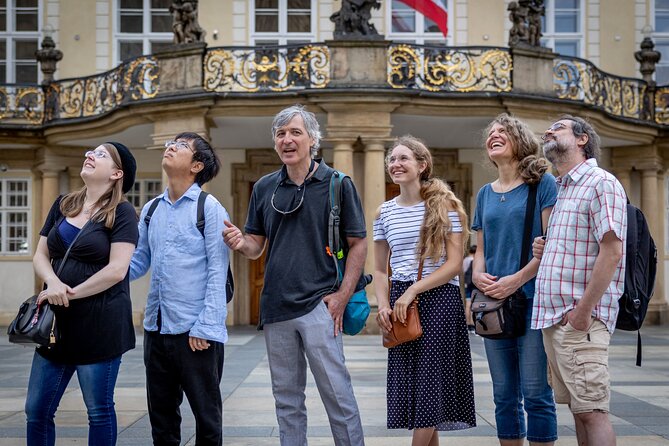
Prague Castle can be overwhelming in the best way. You arrive expecting one big palace and leave realizing it’s more like a fortified neighborhood that grew, broke, got rebuilt, and kept changing hats. That’s exactly what this tour helps you understand.
I like that the focus isn’t only on where to go. It’s on how the place tells its story through architecture. You’ll see buildings from different eras right next to each other—so Gothic lines feel different after Romanesque stone, and Renaissance ornament feels different after baroque drama.
The small-group size matters more than people think. When you’re with a big crowd, you end up playing audio guess-the-guide. Here, the group stays small enough that you can hear explanations clearly as you move.
You can also read our reviews of more walking tours in Prague



One practical consideration: admissions are not included in the base price
The tour price covers the historic guide, not the entry tickets. Prague Castle entrance is listed separately for adults (CZK 450) and for students & seniors (CZK 300). On top of that, some major stops (like St. Vitus Cathedral and Old Royal Palace areas) specifically show that their admission isn’t included. If you want a smooth day, budget for those costs before you arrive.
Meeting in Malá Strana and starting on the right foot
Your tour begins in Malá Strana at Bagel Lounge MalostranskáLetenská, address 118/1, 118 00 Praha 1-Malá Strana. It’s an easy-to-find meeting point and it’s near public transportation, which helps if you’re coming from Old Town, the river area, or your hotel by tram.
Timing is flexible in a useful way. You can choose a morning or afternoon start. If your schedule allows it, I’d lean afternoon—castle areas can feel less packed later in the day, which makes the walking and photo moments less stressful.
Once you meet, you’ll head toward Hradčany Hill. That climb is part of the experience. It’s where Prague Castle starts to feel “inevitable,” like you can’t avoid noticing the scale.
Prague Castle complex: how 1,100 years show up in your footsteps
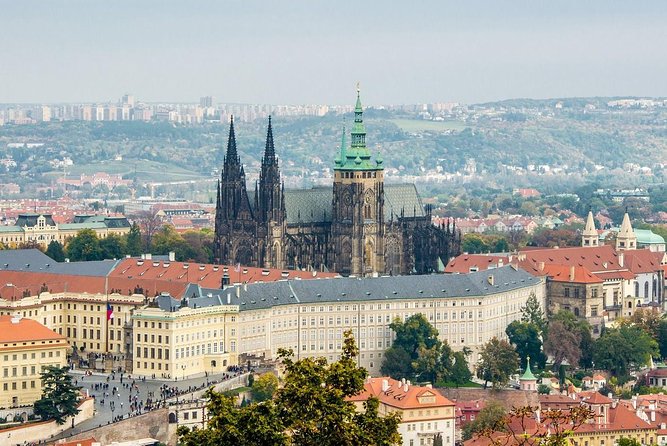
This is the heart of the tour: the Prague Castle area atop Hradčany Hill. You’ll move through the Royal District route that includes the Royal Garden and the Stag Moat. It’s not just a transfer between points. The guide uses the settings around you—open viewpoints, courtyards, and the moat lines—to explain why different sections look the way they do.
What I love here is the “every era in one walk” framing. You’ll see monuments tied to Romanesque, Gothic, Baroque, Rococo, Renaissance, and Neoclassical styles. Instead of treating them like random sights, the guide connects them to Czech and Central European power shifts over centuries.
You’ll also hear the turbulent side of the story. The castle has been bombarded by artillery, plundered by marauding armies, and left to deteriorate by indifferent Austrian emperors over time. That kind of history changes how you look at restoration. Suddenly, repairs and rebuilds feel like part of the narrative, not background work.
What you should know about castle entry
Prague Castle entrance costs extra and is not included in the base price. So plan to pay that on-site (or follow whatever the operator provides for mobile entry). If you’re the type who hates surprises, this is your heads-up: you’re paying for both the guide and the site access.






Ball Game Hall: Renaissance tennis, plus the kind of detail you’ll remember
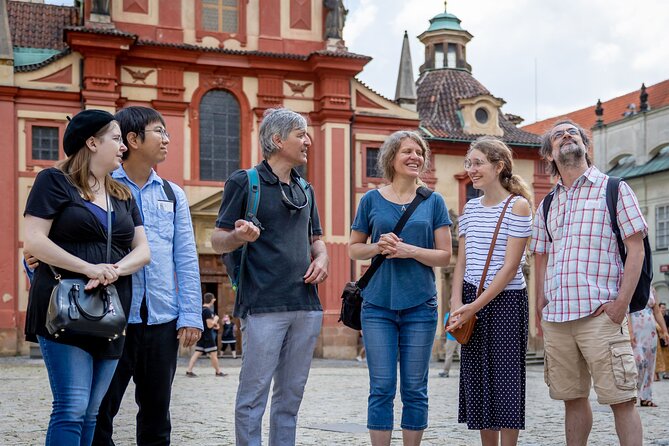
After the first big castle introduction, you step into smaller, more specific spaces in the Royal Garden.
At the Ball Game Hall, the talk shifts to how Renaissance aristocrats lived—and played. The idea of sporty nobles practicing tennis with imperial connections sounds almost too neat, but it’s exactly the kind of story that makes a building feel human. You’ll also get a look at Renaissance sgraffito showing allegories tied to virtues, arts, and sciences.
This stop is short—about ten minutes—but it works well as a mental reset. Instead of trying to memorize dates, you start noticing visual clues: symbolism, materials, and how art was used to communicate status.
Queen Anne’s Summer Palace: architecture that became an observatory
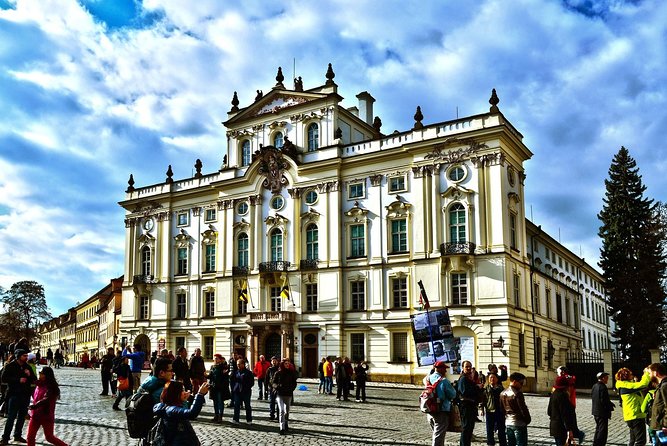
Next comes the Queen Anne’s Summer Palace, described as the purest Renaissance architecture outside Italy. That’s a big claim, and even if you don’t measure it like a professor, the building is the point: clean Renaissance proportions and the idea of a “summer house” turned into something far more serious.
The palace was commissioned by Ferdinand I in the mid-1500s. Later, Rudolf II converted it into an astronomical observatory. This is where names start flying in a helpful way: Tycho de Brahe and Johannes Kepler are linked to the observatory period, and the emperor himself died there after losing his royal title.
If you like history that connects art and science, this stop is one of the most fun. It also breaks up the day so you don’t spend all three hours only in churches and royal halls.
St. Vitus Cathedral and the royal meaning of Gothic stone
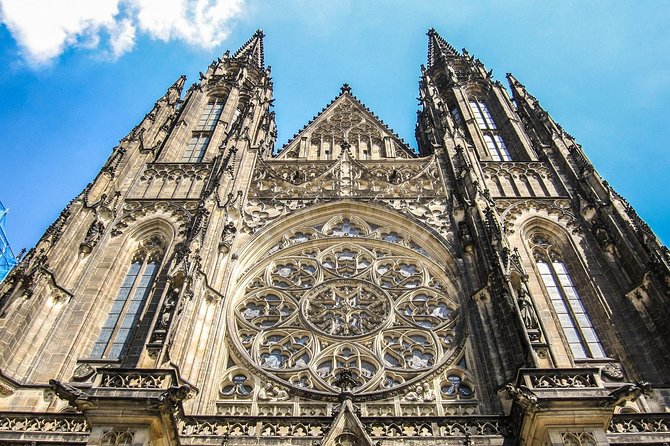
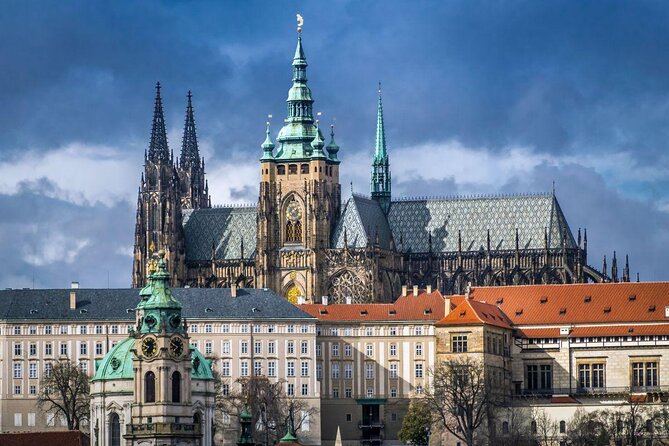
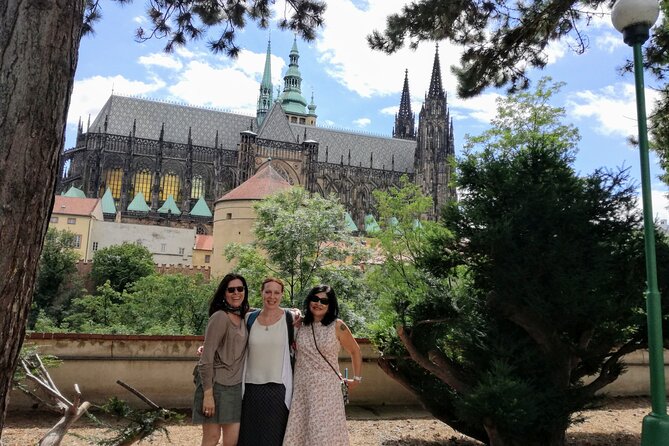
St. Vitus Cathedral is a major stop and it’s worth giving it attention. It’s one of Central Europe’s monumental cathedrals and a prominent example of Gothic architecture.
The guide frames it in a timeline you can actually grasp: the cathedral was founded in the first half of the 14th century and finally completed about 600 years later in the first half of the 19th century. So you’re not just looking at one Gothic moment. You’re seeing Gothic stretching across generations.
You’ll also learn where power is “stored” inside the building. St. Vitus Cathedral is the site of royal crypts for Czech sovereigns and patron saints. That connection between religion and government is the theme you’ve been building all day.
Specific sights to look for include:
- The baroque tomb of St. John of Nepomuk, cast in silver
- The Gothic St. Wenceslas Chapel, which houses relics of the saint
Budget note for cathedral admission
Cathedral entry is not included in the tour price (admission ticket not included). So even if your walking tour is timed smoothly, you’ll still need to cover entry costs to get inside.
Vladislav Hall and Old Royal Palace: jousting, coronations, and political shockwaves
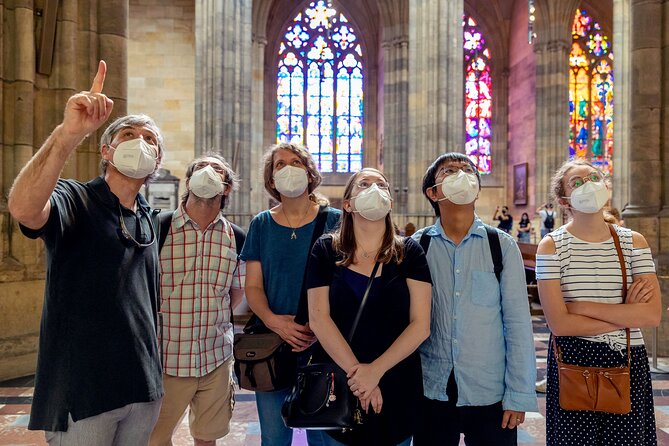
The Old Royal Palace section is where the castle moves from sacred to political theater.
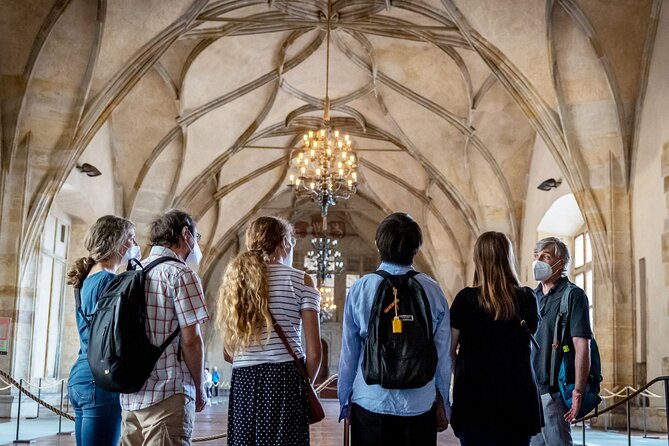
You’ll walk through Vladislav Hall, built at the end of the 15th century and combining Late Gothic with a new Renaissance style. This hall hosted coronation festivities and banquets, plus knights’ tournaments. The guide points out how dramatic the design was—knights entered in full armor and on horseback through the Riders’ Staircase, which was designed specifically for that purpose.
Then you shift to a darker, more explosive story inside the Ludwig Wing: the window where members of the Czech Estates defenestrated two Austrian governors and their scribe, sparking the Thirty Years’ War. It’s one of those events that sounds almost unbelievable until you see the setting and understand why the location mattered.
For me, this is where the architecture lessons click. You start realizing buildings weren’t only built to last. They were built to stage events—power grabs, ceremonies, public messages.
Admission again: plan for it
Old Royal Palace areas here are noted as not included for admission. That means you’ll want to keep your ticket budget ready so you don’t lose time to payment or lines.
St. George’s Basilica and the contrast you didn’t know you needed
Right after Gothic grandeur, the tour takes you to St. George’s Basilica, an austere Romanesque basilica built in the 1100s.
This stop is brief, but it’s a smart palate cleanser. The guide encourages you to compare what you just saw in St. Vitus with this older, sturdier Romanesque form. In practice, that comparison helps you read the buildings instead of just admiring them.
If you’re the kind of person who likes “before and after” learning, this is one of the easiest ways to make architecture stick.
Golden Lane: tiny houses, big stories, and the Dalibor connection
Next up is Golden Lane, a small, quaint street built in the 16th century to house Rudolf II’s castle guards. The space is famously tight, which makes it feel like a medieval time capsule, even if you’ll also see modern souvenir shops in the tiny rooms today.
One reason I recommend paying attention here is the layering of life and punishment. Golden Lane connects with Dalibor Tower, which used to serve as a dungeon. So this cute street also has a darker edge.
There’s also mention of a museum of medieval armor accessible from Golden Lane, held within a former 14th-century fortification. If you’re into physical history—tools, weapons, how people equipped for conflict—this can add a different kind of context to the day.
Domeček and Strahov Monastery: the walk becomes more than castle walls
After your time in the castle ends, the tour continues with a quieter, more reflective shift.
You’ll pass Domeček, the former prison where political opponents were imprisoned by the Gestapo. This is not a long stop, but it changes the tone. Suddenly, the castle isn’t only about royal splendor. It’s also about control and consequence.
Then you’ll head toward Strahov Monastery, where an ancient library is housed. It’s a nice change of pace—less royal drama, more cultural survival. Even if your photos are mostly of buildings you already know from postcards, the feeling is different when you understand what happened there.
Price and value: is $126.16 worth it for 3 hours?
The price is $126.16 per person for a tour that runs about 3 hours and keeps the group small (maximum 8 travelers). The included part is the historic guide, delivered in English, with a mobile ticket.
Here’s how I’d judge value:
- If you love context—architecture styles tied to political eras—this guide-led route is where you get your money back. A smaller group also helps you catch details instead of hearing half a sentence.
- If you just want quick photo stops, you might feel the time pressure, because part of the day is spent walking between meaning, not only between landmarks.
The “extra cost” piece matters too. Prague Castle entrance is not included, and some specific interior admissions are listed as not included. So your all-in spending will be higher than the headline price. If you factor the ticket costs in up front, the day feels more reasonable.
Who should book this tour (and who should choose something else)
This tour is a strong match for:
- Curious travelers who want Czech history explained through architecture
- People who dislike big groups and want a guide you can actually hear
- Anyone planning to spend time in Prague’s castle area and wants an efficient overview without getting lost
It’s also been reported as workable for families using a stroller, which suggests the walking pace is manageable for a typical day—though you are still climbing a hill and moving across uneven, historic ground.
You might consider a different option if:
- You want a purely self-guided day with zero extra planning around admissions
- You only care about one or two interiors and don’t want to pay for a structured route
The guide factor: hearing the story is half the experience
A big reason people rate this tour highly is the guide delivery. One review specifically mentioned a guide named Robert, described as entertaining and very knowledgeable. I can’t promise your guide will be the same person, but I can tell you the format is designed for clear storytelling: small group, historian-style explanations, and frequent “look at this, now understand why” moments.
When you’re paying for a walking tour, this is the part you’re really buying—someone who can connect what you see to why it matters.
Should you book this Prague Castle walking tour?
I’d book it if your ideal Prague day includes: architecture you can name, history you can connect, and a route that doesn’t turn into a race. The small-group size and clear focus on the Royal District stops make it a practical way to get oriented in Prague Castle without feeling like you’re buried under crowds.
Skip or swap it if you prefer a self-paced day and already plan to visit everything on your own. The added admissions mean your day is already “ticket heavy,” so you’ll want to decide whether you value guided interpretation enough to justify the structured route.
If you do book, pick your timing wisely—an afternoon start can feel calmer—and budget for Prague Castle entrance and any interior admissions so the day stays easy instead of stressful.
FAQ
How long is the Prague Castle walking tour?
It runs for about 3 hours.
What’s included in the price?
The tour includes a historic guide. Food and drinks, plus Prague Castle entrance, are not included.
Do I need to pay for Prague Castle entrance separately?
Yes. Prague Castle entrance is listed as CZK 450 for adults and CZK 300 for students and seniors, and it is not included in the tour price.
Which languages is the tour offered in?
The tour is offered in English.
How big is the group?
The maximum group size is 8 travelers.
Can I get a full refund if my plans change?
Yes. You can cancel up to 24 hours in advance for a full refund. If you cancel less than 24 hours before the start time, the amount paid is not refunded.