REVIEW · PRAGUE
Prague’s TOP Sights – Old Town, Jewish Quarter, Charles Bridge (Tip-based tour)
Book on Viator →Operated by Real Prague Guides · Bookable on Viator
Prague can feel like a puzzle, and this walk helps solve it quickly. I like how it strings together Old Town legends and big-picture context in one smooth route, plus the Astronomical Clock stop comes with the clock show you actually want to see. The mix of architecture and story also makes the walk feel less like sightseeing chores and more like understanding how Prague ticks.
The main catch is simple: it’s still a walking tour for about 2 hours 45 minutes, so you’ll want comfortable shoes and a steady pace. It’s not designed for mobility issues, and you will cover ground between stops.
If you want a first-day overview with licensed English guidance, this is an easy yes. You get a smart sampler of the center—then you can come back later for deeper museum time, especially in the Jewish Quarter.
In This Review
- Key points before you go
- Where the tour starts: Powder Gate to Obecni Dum in one breath
- Obecni Dum and the Black Madonna House: Prague’s architecture as a clue
- Charles University at Karolinum: students, change, and centuries in motion
- Theatre des Etats and the Mozart story: a tiny stop with big storytelling power
- Old Town Hall and the Astronomical Clock: the show is the point
- Church of Our Lady before Týn: gothic questions answered
- The Old-New Synagogue and the Golem legend: Jewish Quarter exteriors without the museum
- Charles Bridge and Vltava views: statues, legends, and why this is worth the walk
- Lennon Wall at the finish: modern Czech culture, not just a mural
- Price and value for a licensed, English, tip-based intro
- Pace, comfort, and the kind of traveler this suits
- Should you book Prague’s TOP Sights walk?
- FAQ
- How long is the tour?
- What language is the tour in?
- Is it a walking tour, and what level of fitness do I need?
- What does the price cover, and what are admission tickets like?
- Does it include the Jewish Quarter museums or the Old Jewish Cemetery?
- Does the tour cover WWII in the Jewish Quarter?
- Where does the tour start and end?
Key points before you go
- Licensed English guides who tell stories, not just facts, and several guide names come up often: James, Kamil, David, Jan, Petr, and more.
- Old Town Hall + Astronomical Clock with the clock show included as part of the walk.
- Jewish Quarter highlights focus on exteriors, plus a legend (the Golem) without trying to replace a full museum visit.
- Charles Bridge + views of the Vltava River, with statues and legends explained along the way.
- John Lennon Wall as a final stop, tying modern Czech culture into the city’s older layers.
- Max 30 people, which usually keeps it more conversational than huge-coach tours.
Where the tour starts: Powder Gate to Obecni Dum in one breath
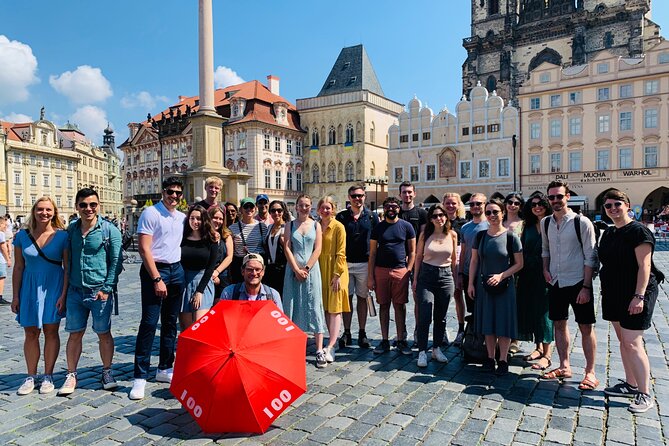
Most first-time Prague tours start late or feel scattered. This one starts right in the Old Town area near Powder Gate and you quickly get that classic city feeling: stone, towers, and streets that make you look up even when you are trying to hurry.
The first big visual hit is Obecni Dum, a stunning Art Nouveau building across the road from your start area. Even if you’ve seen photos of Prague before, you’ll likely notice things in person that don’t translate well online—ornamentation, proportions, and that slightly theatrical look Art Nouveau buildings have when you’re standing close.
What I like here for you: the guide uses the architecture as a quick “language lesson.” You’re not only looking at a pretty facade; you’re learning how to read Prague’s layers as you move. That matters later at the Astronomical Clock and the Gothic churches, because you’ll understand what you’re seeing instead of just passing landmarks.
One practical note: the first stop is short, so be ready to listen while you’re still getting your bearings. If you’re jet-lagged, bring water and let your feet warm up before you settle into the stories.
You can also read our reviews of more tours and experiences in Prague.



Obecni Dum and the Black Madonna House: Prague’s architecture as a clue
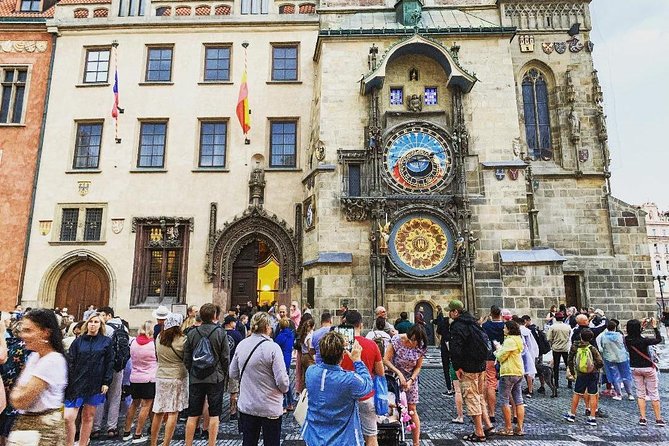
After Obecni Dum, you shift into another architectural style check: the House of the Black Madonna. The guide’s framing is smart here. Instead of treating it as a random facade, the tour points out how Cubist architecture fits Prague’s creative side.
This is a great stop if you like details you can’t easily grab from afar. You get just enough time to look closely, take a photo, and then move on. You’re not trapped in one place long enough to get cold—or bored—if the day is busy.
If your travel style is “show me why this matters,” this is the spot where the tour usually wins you over. You’ll come out thinking, I get how Prague isn’t one style or one era. It’s a stack of ideas.
Drawback to consider: both Obecni Dum and the Black Madonna House are “see it, then go.” If you want extended time for slow photography, you’ll likely want to schedule a second walk later on your own.
Charles University at Karolinum: students, change, and centuries in motion
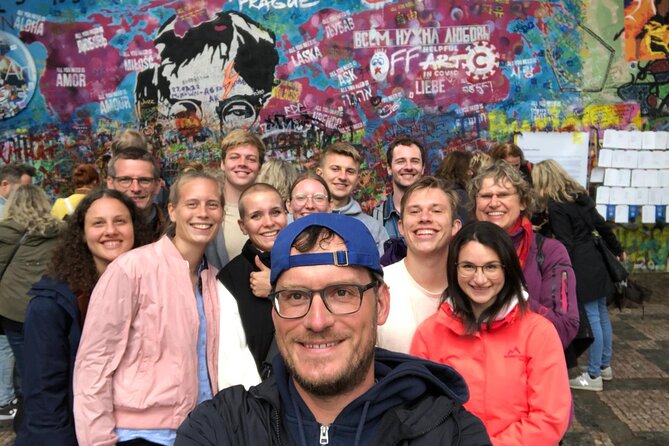
Next comes Karolinum, the historic core of Charles University. You don’t just get a name drop. The tour explains how the university has been central to educational changes and activities for over 600 years—and then zooms in on the human side: who helped shape it, who taught there, and what student life used to look like in the Middle Ages.
I love this kind of stop because it interrupts the usual “Prague is just pretty buildings” story. Universities explain why cities have ideas, not just stones. And when you’re walking through Old Town streets, that context makes it easier to connect the past to the place you’re standing in.
The timing here is also useful. It’s long enough (about 10 minutes) for the guide to sketch the big picture, but short enough that you keep your momentum toward the more iconic Old Town sites.
Tip for you: if you’re also planning a longer Prague day later, treat this stop as your roadmap. When you see street patterns around Old Town, you’ll start noticing how the city supported learning, trade, and gatherings.
Theatre des Etats and the Mozart story: a tiny stop with big storytelling power
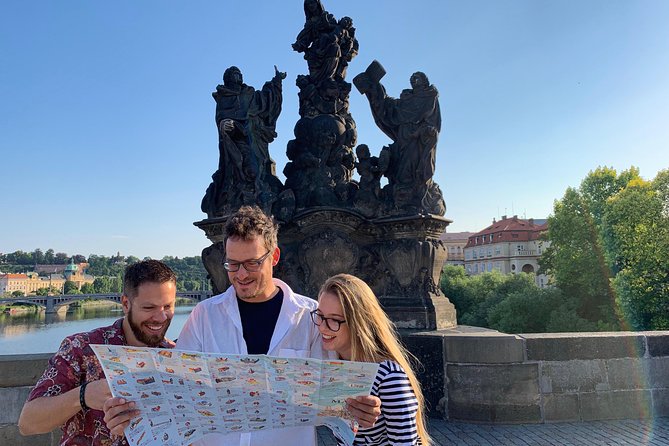
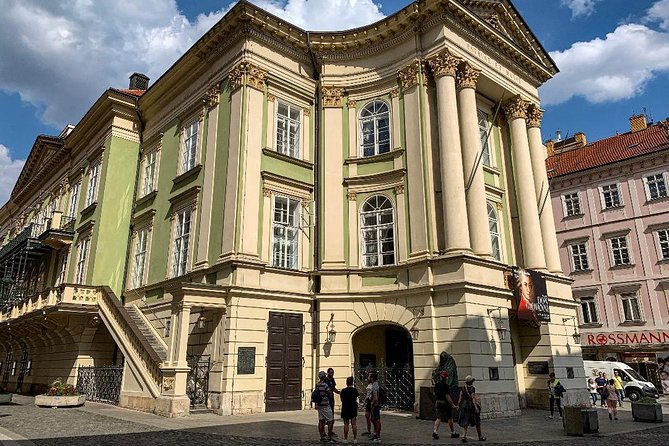
The tour then moves to Theatre des Etats, billed as the oldest theatre in Prague. The guide explains how it was built and tells the story of Mozart’s performance there.
This is one of those stops that can either feel like a quick name or become the “wait, that’s cool” moment. In the best versions of this tour style, the guide connects the theatre to the politics and culture around it—why theatres existed, who attended, and how music traveled through a city.
I can’t promise the exact details you’ll hear, but the tour’s structure suggests the guide uses the building as a story engine. And in this city, that’s the right approach.
Practical note: this stop is about 10 minutes, so if you’re trying to read every stone carving, you may need to pick your spots for photos. The goal isn’t to memorize the facade. It’s to understand what kind of world you’re walking through.
Old Town Hall and the Astronomical Clock: the show is the point
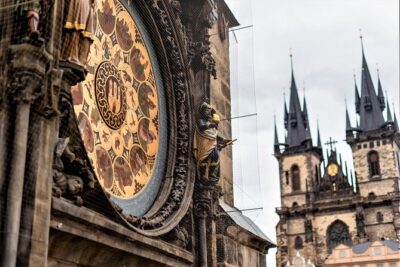
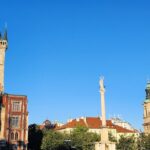
Now we reach one of the classic reasons people come to Prague: the Old Town Hall and its Astronomical Clock. Visiting Prague without seeing one of the world’s oldest astronomical clocks is basically like skipping the main course.
What you should expect: the guide explains the clock’s creation and mechanism, then you watch the famous clock show as part of the tour. That show is where your time pays off, because you get to see the clock do what makes it famous.
This stop is also a key “transition” moment. Before it, you’ve been moving through architecture and institutions. After it, you’re leaning deeper into the personality of Old Town squares, gothic silhouettes, and legend-heavy stops.
If you’re sensitive to crowds, go in with realistic expectations. This is a top Prague magnet. The tour’s value isn’t that it avoids crowds—it’s that you get context while you’re standing in them, so the experience feels earned instead of rushed.

Church of Our Lady before Týn: gothic questions answered
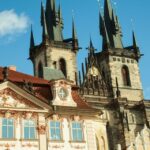
In Old Town Square you’ll see Church of Our Lady before Týn, a gothic landmark that prompts questions fast: who built it, how people enter it, and why the towers look different.
The tour handles these questions in a way that makes the building easier to read. Instead of just telling you, this is gothic, the guide pushes you to notice features and understand what they mean. When you know why the towers differ, you stop seeing the church as a silhouette and start seeing it as a design with reasoning.
This is also a nice break from the clock-related intensity. You still have a big landmark, but the vibe is different. You’re looking longer. You’re asking more quietly.
One consideration: this church exterior stop isn’t presented as a long interior visit. If you want deep interior time, you’ll likely need to plan separate time later with your own schedule.
The Old-New Synagogue and the Golem legend: Jewish Quarter exteriors without the museum
This part is important to understand before you book. The tour takes you through the Jewish Quarter with an emphasis on the exteriors of the Old-New Synagogue and a story connection—like the legend of the Golem.
What’s not included is equally clear: you will not get the full Jewish museum experience, nor the Old Jewish Cemetery. And the tour also doesn’t go into WWII details in depth; it points you toward a different WWII-focused tour.
So how do you get value here anyway? You get a guided introduction that helps you place what you’re seeing. If you’re coming from scratch, the Golem legend gives you an anchor story, and the exterior viewing helps you understand what’s where and what kind of sites you’re looking at before you commit time (and tickets) to museums.
If you already have a strong interest in Jewish history and want the full archival depth, plan for a separate guided Jewish museums visit. This walk is best as your orientation and story starter—not as a replacement for museum hours.
Also, a quick expectation setting: you’re moving, so you’ll see the neighborhood through a guided lens rather than stepping into everything.
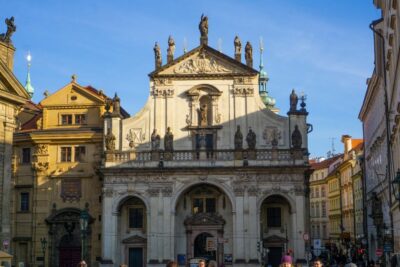
Charles Bridge and Vltava views: statues, legends, and why this is worth the walk
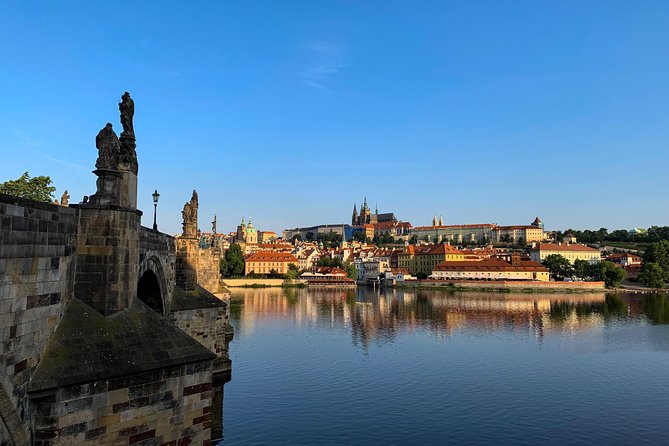
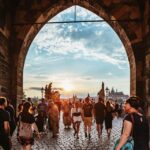
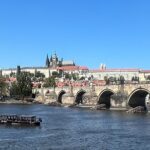
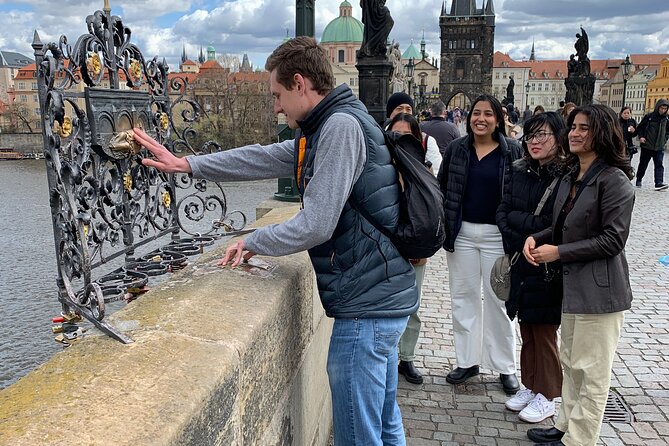
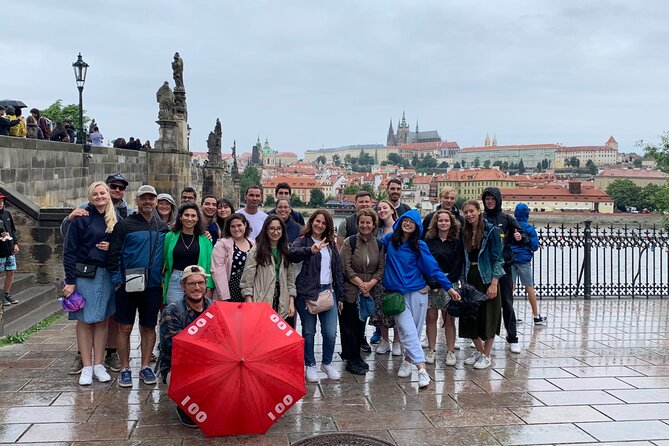
Then comes the big “Prague postcard” moment: Charles Bridge. You cross the oldest stone bridge in Prague, and the guide explains the famous statues and legends behind them.
What I like for you here is how the tour balances two needs:
1) the practical one—where to look for good views, how to handle the bridge crowd flow
2) the story one—why certain statues matter and what the legends say
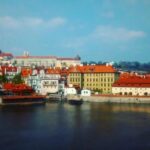
And you’re rewarded with views of the Vltava River, which is the payoff every time you return to a river city after walking up and down steep streets.
Expect this to be a slower-feeling segment compared with earlier stops, because bridges are naturally bottlenecky. If you’re prone to getting stressed by crowds, keep your tone flexible and focus on the guide’s explanations rather than trying to “race” for photos.
The tour ends at John Lennon Wall on Velkopřevorské náměstí, about a 1-minute walk from Charles Bridge, so you’ll get that quick second atmosphere shift without having to reorganize your day.
Lennon Wall at the finish: modern Czech culture, not just a mural
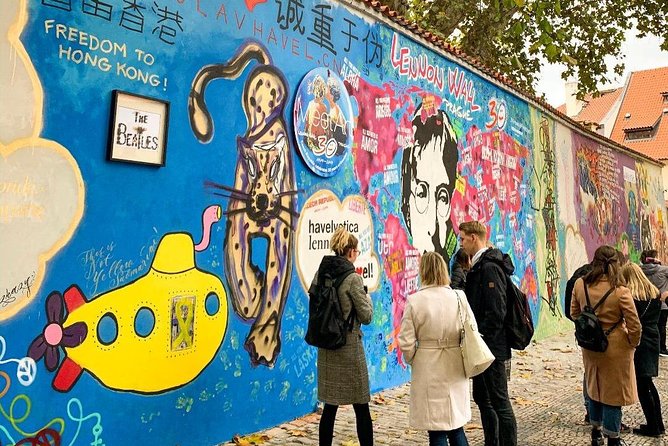
Most people see the Lennon Wall as a photo stop. The tour helps you see it as a cultural barometer. You’ll learn about its cultural significance and how it has been changing along with the Czech Republic.
This is a smart finishing move. You’ve spent the walk in older Prague layers—civic buildings, church towers, medieval education, an ancient theatre, and the Jewish Quarter exteriors. Ending at Lennon Wall adds modern meaning without breaking the flow.
If you like walks that connect eras, this ending makes the whole itinerary feel like more than a checklist.
One more practical note: the final segment is short, but it’s a high-attention spot. Give yourself a minute to look around before you decide where your next stop will be.
Price and value for a licensed, English, tip-based intro
The listed price is $3.63 per person, and the tour is tip-based. That’s a strong value signal on paper. The real question is what you get for that low entry cost—and you get most of the core experience you came for: licensed in-person English guides and guided time at the city’s headline locations.
You do not get ticketed museum access. Most stops explicitly say admission tickets are not included, and the Jewish museums and Old Jewish Cemetery are excluded entirely. Charles Bridge and the Lennon Wall stops are free, which helps.
So the best way to judge value is this:
- If you want a guided overview that helps you understand what you’re seeing and where to go next, the low price plus guide time is a win.
- If you’re expecting a “pay once, see everything including museums” plan, this won’t fit. You’ll need separate museum tickets or a different tour.
Duration is around 2 hours 45 minutes, which is a sweet spot. It’s long enough to feel like you learned the center, but not so long that your whole day vanishes.
Group size matters too. With a maximum of 30 travelers, you usually get better attention than on mega-buses, though crowding at top sights still happens.
Pace, comfort, and the kind of traveler this suits
A walking tour of this length means you should plan like it’s a walk, not a sit-down lecture. The tour notes moderate physical fitness and says it’s not recommended for travelers with mobility problems.
If you want a tour that’s easy on your legs, this may be too much. If you’re comfortable walking for nearly three hours with short stops, it should feel manageable.
Guide style seems to vary by person, and the names that pop up in the guide roster from recent experiences are a good clue: people like James, Kamil, Jan, Nico, David, Petr, Dita, Hana, Katarina, and Ivo often get credited for clear delivery and keeping the group engaged. That storytelling approach is the reason this tour works for many first-timers.
One weather note you might care about: guides often adjust to conditions. Still, Prague weather changes fast. Layer up and keep your hands free—standing around the Astronomical Clock and on the bridge makes it harder to manage bulky jackets.
Who this suits best:
- First-time Prague visitors who want a center-city orientation
- People who like architecture, civic buildings, and city myths
- Anyone who wants to end with both Old Town and modern culture (Lennon Wall)
Who should consider another plan:
- If you want deep Jewish history inside museums and cemeteries, you’ll need separate guided time
- If you want a faster, less story-heavy route, consider a shorter or self-guided option and pick your own museum stops
Should you book Prague’s TOP Sights walk?
Yes, I’d book it if you want a guided sampler that stitches together Old Town, Jewish Quarter exteriors, and Charles Bridge with context you can use all trip long. The Astronomical Clock show plus the finish at Lennon Wall make it feel like a complete storyline, not a random string of photos.
I’d think twice if you’re hoping to knock out museum tickets in one sweep or if walking for about three hours is hard for you. In those cases, you’ll get better value by pairing a shorter architecture walk with dedicated museum time.
If you’re doing Prague in a few days, this tour is the kind of first-day move that helps everything else make sense.
FAQ
How long is the tour?
It runs for about 2 hours 45 minutes.
What language is the tour in?
The tour is offered in English.
Is it a walking tour, and what level of fitness do I need?
It’s a walking experience with a note for moderate physical fitness. It’s not recommended for travelers with mobility problems.
What does the price cover, and what are admission tickets like?
The tour includes a licensed in-person English guide. Admission tickets are not included for most stops; however, Charles Bridge and the Lennon Wall are listed as free.
Does it include the Jewish Quarter museums or the Old Jewish Cemetery?
No. The tour does not cover the Jewish Museums, Synagogues, or the Old Jewish Cemetery. It focuses on key exteriors and a few story highlights.
Does the tour cover WWII in the Jewish Quarter?
It does not go into details about WWII. That topic is handled by a different tour.
Where does the tour start and end?
It starts at Na Příkopě 969/33 and ends at John Lennon Wall, on Velkopřevorské náměstí, which is about a 1-minute walk from Charles Bridge.