REVIEW · PRAGUE
Best of Prague Private Walking Tour (Left and Right Riverbank)
Book on Viator →Operated by Private Prague Guide Day Tours · Bookable on Viator
Prague clicks fast with this guided loop. You get a relaxed half-day that stitches together the left and right riverbanks into one easy-to-follow story, with a local guide keeping the route straight and the meaning clear. It’s a smart start if you’re short on time, or if you’d rather not spend your first hours playing street-survival on Prague’s steep, twisty lanes.
I love the feel of a private tour: you get real attention, not just a headset herd. I also like that the guide isn’t only about monuments—they add practical ideas like where to eat, plus photo spots and small side stops that make the city feel lived-in.
One possible drawback: this is a lot of walking, including hills around Prague Castle. If the weather turns foul or you’re not up for steady pace, you may want to build in extra time for breaks or skip a couple optional entries.
In This Review
- Key Things to Know Before You Go
- A Private Half-Day That Makes Prague Make Sense
- Starting at Náměstí Republiky and Why the Pickup Matters
- Prague Castle Hill: Saint Vitus, Charles IV, and the Seat of Power
- Malá Strana’s Lesser-Town Story and St. Nicholas Church
- Lennonova zeď: A Communist-Era Tribute That Refuses to Fade
- Charles Bridge: Statues, Legends, and the Best Views for First-Time Visitors
- Klementinum and the Pinkas/Old-New Synagogues: Prague’s Jewish Core
- Old Town Square and the Astronomical Clock: Time on Display
- Estates Theatre, Charles University, and Wenceslas Square’s Political Weather
- Powder Gate and the Municipal House: Gothic Meets Czech Pride
- How Much This Costs and Why It Can Still Feel Like a Good Deal
- What Makes the Guides Stand Out (and What to Watch For)
- A Practical Note on Moving Around (Taxis, Uber, and Cold Weather)
- Should You Book This Prague Private Walking Tour?
- FAQ
- How long is the Best of Prague Private Walking Tour?
- Is this tour private?
- What’s included in the price?
- What’s not included?
- Where does the tour start and end?
- Can I cancel for a full refund?
Key Things to Know Before You Go
- Left Bank-to-Right Bank flow: You see how Malá Strana and the Castle area connect to Charles Bridge and then onward to the Old Town core.
- Stories tied to specific places: Legends, rulers, and political moments are explained right where you’re standing.
- Time built for views: Charles Bridge viewpoints and Castle-hill perspectives are part of the plan, not an afterthought.
- A guide can tailor the stops: Several guides are praised for adapting to interests and even pace when it’s hot or rainy.
- You’ll likely get food and beer tips: Many guests call out recommendations that go beyond the usual tourist script.
- Most stops are quick hits: It’s an overview tour, so you get the big landmarks and the context, but not hours inside every building.
A Private Half-Day That Makes Prague Make Sense
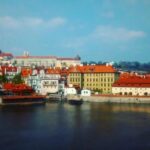
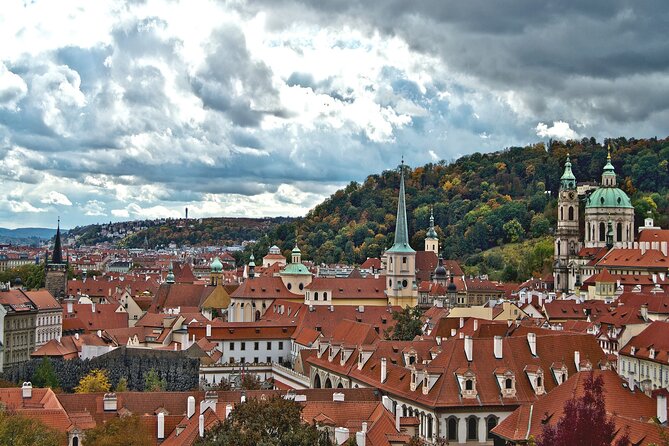
Prague can feel like two cities stacked on a hill: calm and elegant on one side of the Vltava, then crowded and theatrical on the other. This tour is built to solve that problem. Instead of bouncing randomly between sights, you follow a sensible arc from the Castle hill down toward Malá Strana, across the iconic Charles Bridge, and into the Old Town.
The private format is the real advantage. You can ask questions as you go—about what you’re seeing, why it’s arranged that way, or what changed when regimes shifted. On group tours, those questions often get swallowed by the schedule. Here, the guide has room to slow down or steer the walk.
If you care about both the famous monuments and the “how did people live here?” details, this is a good fit. Even the shorter stops add up because the guide’s explanations connect them into a single timeline rather than isolated facts.
You can also read our reviews of more walking tours in Prague


Starting at Náměstí Republiky and Why the Pickup Matters
You’ll meet at Náměstí Republiky 5 in Prague 1 (Staré Město). If you prefer a more Old Town start, there’s also an option to meet at the Municipal House area near the Gothic Powder Tower.
Pickup is offered from your hotel reception or just outside your apartment on foot (not by car). That small detail saves time and stress. In Prague, the easiest walking route and the easiest tram route aren’t always the same thing, and getting dropped at the wrong side of a hill can waste your first hour.
The tour also ends back near the meeting point, but the guide can tailor where you finish based on your preference. That matters if you want to continue on your own toward a specific dinner spot or museum.
Prague Castle Hill: Saint Vitus, Charles IV, and the Seat of Power
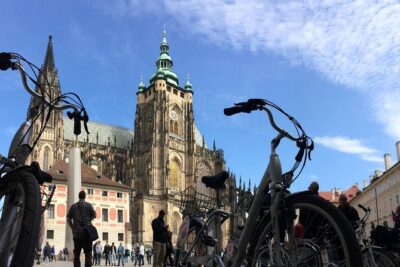
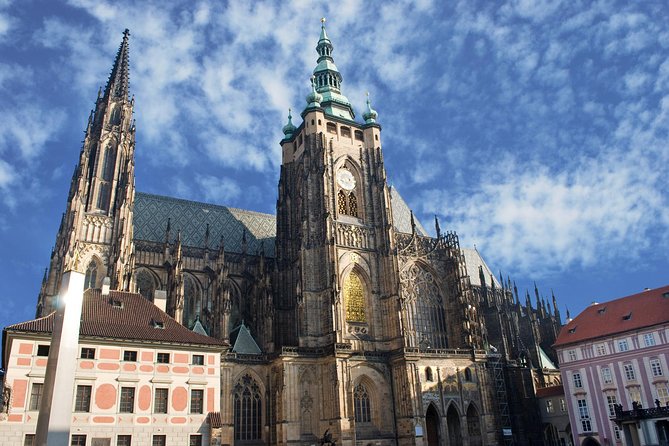
The tour begins with the big one: Prague Castle, the sprawling complex that dominates the city skyline from its hilltop. You get a sense of why it’s called one of the world’s largest castle complexes and why it has been a magnet for rulers for centuries.
The highlight is Saint Vitus’ Cathedral, mostly Gothic and famously long in the making—1000 years by the time the story wraps up. Standing there gives you a feel for how Prague mixes time layers: medieval ambition, later style changes, and the religious power that anchored both everyday life and state power.
This stop also connects to modern identity. The Castle has served as the seat of the Czech president, and the guide’s job is to place that within the deeper sequence: the era when Charles IV made Prague central to the Holy Roman Empire, and darker chapters too, including the time when Adolf Hitler occupied the complex. Then comes the postwar shift back toward democratic leadership with figures like Tomáš Garrigue Masaryk and Václav Havel.
Practical takeaway for you: give your legs a moment here. The hill climb is part of the experience, but you don’t want to arrive exhausted. If you’re traveling with anyone who gets tired on steep stairs, this is the moment to slow down and take a breather before the rest of the walk.
Malá Strana’s Lesser-Town Story and St. Nicholas Church
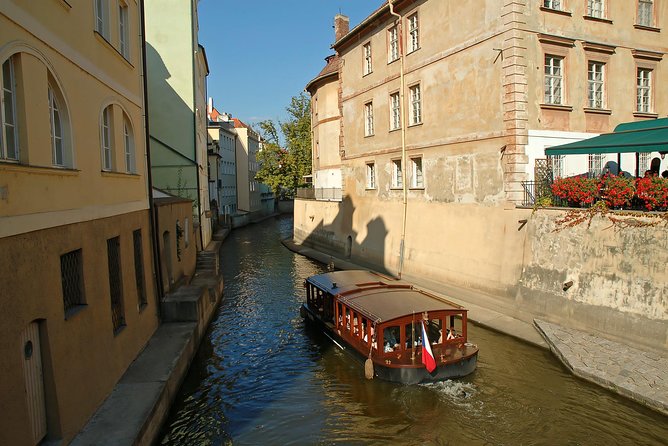
Once you’re down from the Castle area, the vibe changes in a good way. Malá Strana, the Lesser Quarter, has the texture of a neighborhood—not just a photo stop. It started as settlements outside the original fortifications, with many ethnic German inhabitants and merchants invited by King Přemysl Otakar II. Fires in the early 1400s and mid-1500s shaped what survived and what had to be rebuilt, which is why the area feels like a patchwork of eras rather than one single style.
A standout in this zone is St. Nicholas Church, described as the most beautiful Baroque church in Prague and a dominant feature of the quarter. There’s also a delightful cultural detail: Mozart liked to practice the organ here because of the acoustics. That kind of specific anecdote helps the stop stay memorable even if you’re seeing lots of churches in a day.
If your plan is to understand Prague beyond postcards, this is where you get it. You’re walking through the physical result of centuries of upheaval, rebuilding, and reshaping. It’s also one of the prettiest parts of the whole route for slow wandering—though you’ll still be under guide time, so don’t expect total drift.
Lennonova zeď: A Communist-Era Tribute That Refuses to Fade
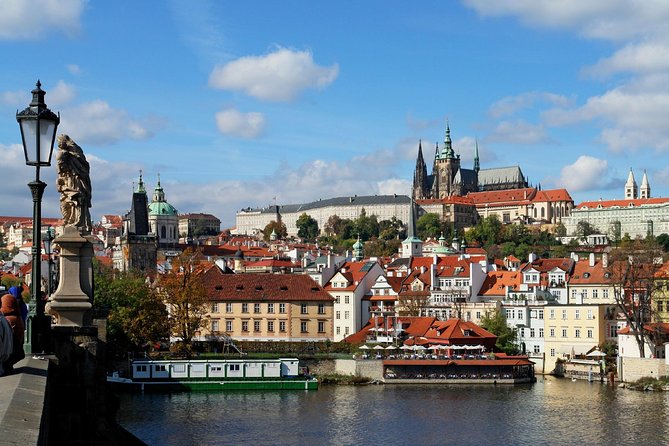
Then you turn a corner near the river and find Lennonova zeď, the Lennon Wall. It’s covered in tribute graffiti to John Lennon, and the start of it isn’t a modern pop-culture whim—it’s a political story.
During the Communist era, Western music was banned. Even so, fans began appearing with tributes to Lennon after news of his death in 1980 reached Czechoslovakia. They risked imprisonment for openly saying what they admired. That’s a heavy context for a wall that looks playful at first glance.
What makes this stop work on a guided tour is the way the guide adds meaning. Without that context, you’d just see street art. With it, the wall becomes a small monument to freedom of expression.
For your photo timing: this is usually short, so use your minutes wisely. Get at least one wider shot (to frame the full wall) and one close-up (for the details in the tribute writing).
You can also read our reviews of more private tours in Prague






Charles Bridge: Statues, Legends, and the Best Views for First-Time Visitors
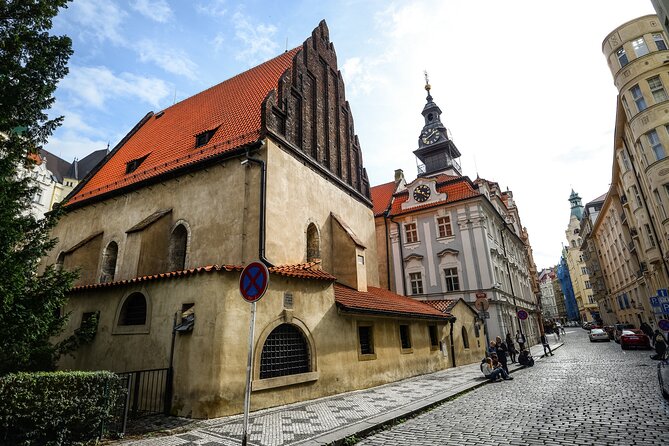
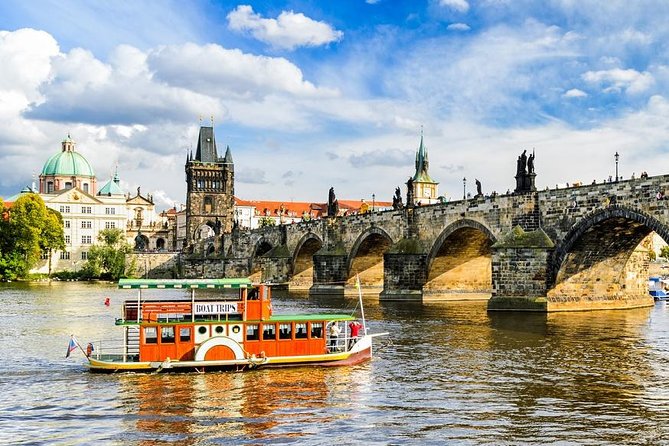
If you’ve only got one major “wow” bridge in Prague, it’s Charles Bridge. It’s described as one of the most beautiful Gothic bridges in the world, and it really earns the hype. It links the Old Town and the Lesser Quarter to Prague Castle, so it feels like a spine for the whole city’s movement.
The bridge’s best feature for lingering is its line of 30 Baroque statues, mostly sandstone and added in the 18th century. Most are replicas now, but you still get the sense of deliberate symbolism: saints placed like signposts for faith, protection, and identity.
The story you’ll hear most is about St. John of Nepomuk, the patron saint of Bohemia. According to legend, he refused to reveal confessions and was thrown from the bridge. The famous five-star halo above his statues connects to the legend about stars appearing in the sky that night.
Practical note: this is a “stay alert” stop. Charles Bridge can get packed, and because your tour is private, you’ll get more flexibility than the standard bus crowd, but you still need patience. If it’s windy, take a moment to steady your footing before you lean into the view.
Klementinum and the Pinkas/Old-New Synagogues: Prague’s Jewish Core
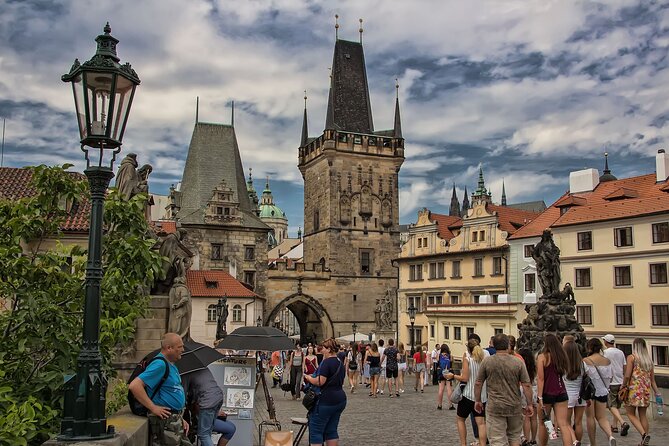
After the bridge area, the walk shifts into history that feels quieter and more textured: libraries, scholarship, and Jewish community memory.
The Klementinum appears as a major intellectual stop. It was founded as a Jesuit college and is home to the National Library, with valuable book collections. Even if you’re not entering every hall, being in the complex helps you understand why Prague has long attracted students and thinkers—not just monarchs and soldiers.
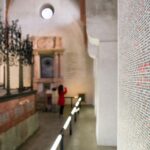
Then you’ll reach the Jewish sites: the Pinkas Synagogue and the Old-New Synagogue. The Pinkas Synagogue is part of the Jewish Museum and has walls covered with names of Jews who perished during World War II. It also ties into the Old Jewish Cemetery. That makes the stop emotionally heavy, but it also makes it real. This isn’t generic “see the synagogue” tourism. You’re seeing a place built for remembrance.
The Old-New Synagogue is described as the oldest serving synagogue in Europe, completed in 1270 in Gothic style. That age alone turns a quick visit into something mind-bending: you’re looking at a living structure that has continued to serve community life for centuries.
If you’re sensitive to heavy topics, plan to take a breath during the walk. The route doesn’t rush through everything, but these are not light stops. The guide’s pacing and tone can matter a lot here—so if you’d like more time, ask for it.
Old Town Square and the Astronomical Clock: Time on Display
Next comes Staroměstské náměstí, Old Town Square, one of Prague’s most famous open-air stages. It’s surrounded by ancient palaces and churches, and it’s been a stage for decisive national events.
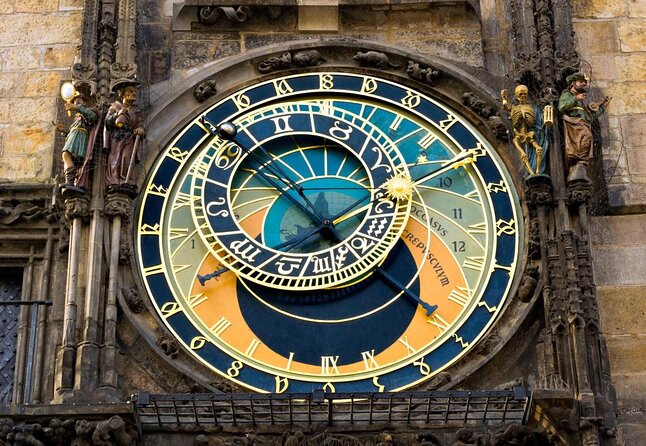
From there, you’ll stand near the Old Town Hall and the Astronomical Clock. The building includes a 60-meter tower, and the façade has a Renaissance window from 1520. The showstopper is the clock itself. Around the hour, people gather to watch the mechanical drama: Death tips an hourglass and rings a bell, then the 12 apostles march by, the cock crows, and another bell rings.
What I like about including this in a guided overview is crowd management. You get positioned without having to fight for your own spot from scratch. And the guide explains what you’re seeing so it doesn’t feel like random moving figures.
Practical tip for you: treat this as a short experience. Even if the clock show runs, your tour time is finite. Use this moment to enjoy it fully, but don’t try to cram extra shopping right at the same hour unless you like standing in loops.
Estates Theatre, Charles University, and Wenceslas Square’s Political Weather
The next stretch is built for “Prague isn’t frozen in the past.” You’ll pass by and learn about cultural and academic anchors, then see how modern history shaped the city layout.
The Estates Theatre is connected to Mozart. He visited Prague and chose this theatre for the world premiere of his opera Don Giovanni in October 1787, and he conducted it himself. This is one of those stops where classical music fans can practically feel the building’s past.
Then comes Karolinum, part of Charles University, founded by Charles IV in 1348. It’s the oldest university in the Czech Republic and one of the oldest in Europe. Even a brief stop helps you understand why Prague’s identity isn’t only royal and religious. It’s also academic and urban.
On Wenceslas Square, the story turns to politics and crowds. It started as the Horse Market and later became the scene for major events, including the Velvet Revolution in 1989 that ended Communist rule.
This is a good moment to ask your guide how the city’s geography reflects power. Squares, broad streets, and major buildings were designed for gathering. When you know that, you’ll see the city differently after the tour ends.
Powder Gate and the Municipal House: Gothic Meets Czech Pride
Near the end of the walk, you’ll see Prasna brána (Powder Gate), a Gothic tower that served as a gateway to the Medieval Royal Route. It’s currently one of Prague’s most iconic buildings, and it gives you a clean visual marker to connect your route back toward the Old Town.
Then there’s the Municipal House (Obecní dům) area. It was built in 1912 at the site of the former Royal Court to celebrate the Czech nation, and it includes a famous concert hall. The exterior decorations are the kind that reward slow looking, even if your stop is brief.
This part of the route also helps you “close the loop.” You start at a central square, move through Prague’s most famous sights, and end near where you began—so it feels less like wandering and more like you learned the city’s internal logic.
How Much This Costs and Why It Can Still Feel Like a Good Deal
At $134.23 per person for a tour around 3 hours 30 minutes, you’re paying for two things: guide time and private attention. That price can feel high if you’re comparing it to self-guided walking apps. But compare it to the cost of getting similar context from a good guide in a busy group, and the math starts to look better—especially if you value Q&A and a route that makes sense.
Two extra points that can make the value swing in your favor:
- Admission is not the same as guidance. The tour is structured so you can pay for any entries you want on the spot by card. That means you control how deep you go.
- Many stops are short landmark chapters, so you can decide later what to revisit on your own. A strong overview tour often saves you money by preventing random re-entry to places you rushed the first time.
If you’re traveling with one or more people, the private format often feels like the best use of your limited time.
What Makes the Guides Stand Out (and What to Watch For)
The best version of this tour is built on communication. In the feedback, Gabriela G and Linda are highlighted for combining history with humor and practical local ideas like where to sample beer and food. Jana is praised for thoughtful flexibility, and Hana for clear storytelling tied to the feel of the places.
There’s also a theme of adaptation. On hot or rainy days, some guides improvised while still hitting the core highlights, and at least one guide was described as tailoring content after asking what the group wanted—history-heavy or more of a feel-for-the-city pace.
Still, here’s the consideration you should keep in mind: not every guide communicates in the same way. One account pointed out a guide who seemed less confident with English or didn’t answer deeper questions comfortably. Another mentioned a guide giving answers that later checked out as incorrect when looked up. That doesn’t mean the tour always falls short, but it’s a reminder to treat this as guided interpretation, not a substitute for your own quick fact-check if something matters a lot to you.
If you want to avoid disappointment, come with a few ready questions:
- What should I prioritize if I only have one more day?
- Where should I eat that isn’t just tourist food?
- Which stops matter most for the political story of Prague?
A good guide will run with those.
A Practical Note on Moving Around (Taxis, Uber, and Cold Weather)
You’ll spend a lot of energy on foot, especially around the Castle area and between riverbank zones. If you need a ride at any point, one piece of practical advice shared with confidence is to use Uber rather than hailing Prague taxis, which can be overcharged and unregulated.
Also, bring the weather basics. Prague can be cold and rainy, and at least one group had to cut the tour short because conditions were miserable. The guide may adapt, but your stamina still matters.
Should You Book This Prague Private Walking Tour?
Book it if you want:
- A first-time-friendly overview that connects the Castle, Malá Strana, Charles Bridge, and the Old Town without chaos
- The chance to ask questions and get restaurant and photo tips
- A private format where the route can flex if your group wants less or more detail
Skip it or consider a shorter alternative if:
- You dislike long walks and steep sections—Prague Castle is not flat sightseeing
- You need very deep, inside-only museum time. This is a highlights-and-context walk, not a slow museum marathon
My bottom line: for most visitors, this is a strong way to get your bearings fast and understand why Prague looks the way it does. You leave with a mental map that holds up even after you wander off on your own.
FAQ
How long is the Best of Prague Private Walking Tour?
It lasts about 3 hours 30 minutes.
Is this tour private?
Yes. It’s a private tour/activity, and only your group participates.
What’s included in the price?
A local, licensed guide is included, along with pickup from your hotel reception or other city-center location on foot. You also get recommendations for restaurants, shops, hidden photo spots, and the tour includes a charity effort supporting local children’s homes.
What’s not included?
Snacks and admission are not included. Admission can be paid for on the spot by card.
Where does the tour start and end?
The meeting point is Náměstí Republiky 5, 111 21 Praha 1. The tour ends back at the meeting point, but the guide can tailor the ending location based on where you want to finish.
Can I cancel for a full refund?
Yes. You can cancel up to 24 hours in advance for a full refund. Cancellation within 24 hours does not receive a refund.