REVIEW · PRAGUE
Private Prague Art Nouveau and Cubism Walking Tour
Book on Viator →Operated by Prague Articulate · Bookable on Viator
Prague turns corners into architecture lessons. On this private Art Nouveau and Cubism walk, you move through Prague’s 1900s design experiments from Praha hlavní nádraží into the New Town-Old Town edge, with stops chosen for how details read at street level.
I especially like the way the route helps you recognize styles as you go, from the art blend at the Jerusalem Synagogue area to cubist geometry you can’t unsee once you spot it, like the cubist lamppost by Emil Kralíček. Your guide, Max Hutar of Prague Articulate, tells the story in clear, story-driven terms so you leave knowing what you’re looking at; the one drawback is that walking plus short transit hops can make it run a bit longer than the advertised 2.5 hours.
In This Review
- Key highlights you’ll actually notice
- Price and logistics that matter for a short Prague stay
- Stop-by-stop: Art Nouveau to Cubism across Prague’s key streets
- Praha hlavní nádraží: the 1909 Art Nouveau entry point
- Jerusalem Synagogue: Moorish style with Art Nouveau DNA
- Senovážné náměstí: Art Nouveau apartment grandeur in three buildings
- Hybernská 10 Hotel Central Palác: early Art Nouveau confidence (1899)
- Obecní dům (Municipal House): a major Art Nouveau statement
- House of the Black Madonna: Cubism shows up as a flagship style
- Na Příkopě: the Old Town / New Town border with Art Nouveau energy
- Emil Kralíček’s Cubist Lamppost: where Cubism becomes street furniture
- Václavské náměstí: Art Nouveau hotel and department-store Prague at full scale
- Vodičkova: a shortcut for finding both styles on the same street
- Three Cubist Houses: the famous triplet under the Vyšehrad rock
- Villa Kovarovic: Cubism meeting Gothic and Baroque vibes by the Vltava
- Neklanova: the final cubist apartment-building send-off (1913)
- What you actually learn: how to spot the styles on your own
- Pace, comfort, and practical tips for a smoother walk
- Who should book this private Art Nouveau and Cubism tour?
- Is $94.93 per group worth it?
- Should you book this tour or skip it?
- FAQ
- How long is the Prague Art Nouveau and Cubism walking tour?
- What does the tour cost?
- Is the tour private?
- Is the tour offered in English?
- Where do I meet the guide?
- Where does the tour end?
- Are admission tickets included for every stop?
- Will we use public transportation during the tour?
- Can I bring a service animal?
- Is it okay for people who aren’t expert art fans?
Key highlights you’ll actually notice
- Start at Praha hlavní nádraží: a reconstructed 1909 Art Nouveau showpiece that sets the tone fast
- You learn to spot Cubism in unexpected spots: even street furniture gets the cubist treatment
- A tight mix of public squares and boulevards: you get both façades and street-level rhythm
- Some major interiors aren’t included: you’ll be doing plenty from outside, unless you buy entry separately
- Private group, small-ish size: up to 15, and it’s only for your group, in English
Price and logistics that matter for a short Prague stay
At $94.93 per group (up to 15 people), this tour can be great value if you’re traveling with friends or family. If you fill the full group size, that’s roughly $6.33 per person—and even with fewer people, you’re still paying for a guided architecture-focused route rather than an entry ticket marathon.
It runs about 2 hours 30 minutes. The key detail: the time you’ll spend at each named stop doesn’t add up to the total duration, because there are short walks between highlights and a public transport segment at the end. Translation: you’re not stuck standing still at every façade, which I like.
It’s in English, and you get a mobile ticket. You’ll also end near Albertov (tram access) so you can roll back toward the center without having to plan a long return.
Meeting and ending are practical: you start at Prague Main Station (Wilsonova 300/8 area) and the tour finishes at Na Slupi 2102/2b, with the final connection at the Albertov tram stop. That last leg is built in—plus, the transit ticket used for that stretch is valid long enough to get you back toward the middle.
One more real-world note: it’s described as a tour that most people can join, and service animals are allowed. Still, wear proper shoes. The walk moves at a city pace, and a few short stops can turn into slightly longer time on your feet.
If you’re weighing risk: there’s free cancellation up to 24 hours before start time.
You can also read our reviews of more walking tours in Prague


Stop-by-stop: Art Nouveau to Cubism across Prague’s key streets
This is the kind of tour where the route itself teaches you. You start with an Art Nouveau “primer,” then you keep walking until Cubism starts showing up like a second language.
Praha hlavní nádraží: the 1909 Art Nouveau entry point
You begin at Praha hlavní nadrazi—Prague’s Central Station, opened in 1909. The building is a prime example of Art Nouveau architecture, and since it’s been reconstructed, the halls and corridors can be extra impressive even for people who don’t usually care about stations.
This stop is about 15 minutes, and the admission ticket is free. Even if you only have a short time inside, the station works as a mental warm-up: you train your eye for the style before you hit the rest of the city.
What to watch for: the way ornamental design turns functional spaces into something theatrical. If you’re the type who likes details at eye level, this start is a gift.
Jerusalem Synagogue: Moorish style with Art Nouveau DNA
Next is the Jerusalem Synagogue, built in 1906. It’s known for a traditional Moorish look, but it also includes elements of Art Nouveau that were popular at the time.
This is a quick 5-minute stop, and admission isn’t included. So if you want interior time, plan on purchasing entry separately. Even without that, the exterior styling is enough to show why Prague’s architectural story isn’t one uniform style.
Tip for photos: get one shot from the street and one from a slightly different angle. The façade reads differently as you shift positions.
Senovážné náměstí: Art Nouveau apartment grandeur in three buildings
At Senovážné Namesti, you’ll see one of New Town’s squares plus a cluster of three luxurious Art Nouveau apartment buildings. It’s a compact stop—about 5 minutes—but it’s built for recognition.
Admission is free here, which is handy. This is also one of the places where you start noticing how Art Nouveau in Prague often plays with rhythm: repeated patterns, sculpted ornament, and a sense of movement in stone.
You can also read our reviews of more private tours in Prague





Hybernská 10 Hotel Central Palác: early Art Nouveau confidence (1899)
Hybernska 10 Hotel Central Palac is one of the city’s earlier Art Nouveau buildings from 1899. It’s another short stop (about 5 minutes), with admission not included.
You’re mostly going for façade details here. That can be a plus if you want to see a lot of architecture without spending your time buying separate entries.
Drawback to consider: if you’re hoping every stop is an inside visit, this one (and a few others) may feel more exterior-focused.
Obecní dům (Municipal House): a major Art Nouveau statement
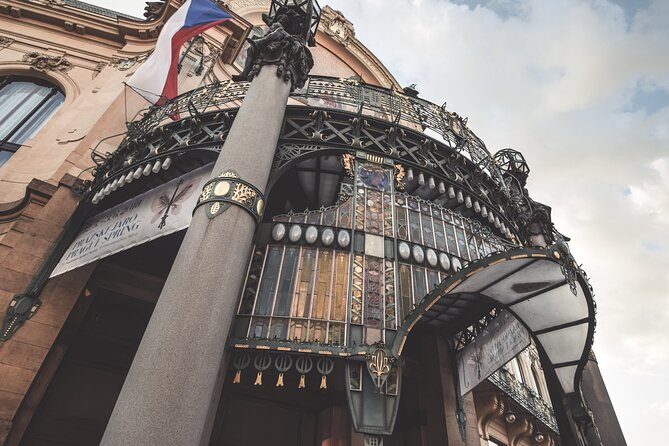
Then you reach Obecni Dum, the Municipal House of Prague. It was projected in 1905 and still functions as a house of culture. This is one of Prague’s biggest and most important Art Nouveau architectural pieces.
You’ll spend about 10 minutes. Admission is not included for this stop, so treat it as a look-first stop unless you choose to add interior time on your own.
What makes it valuable even from the outside: scale. This is where the style shifts from “pretty façade” to “big civic idea.” It’s architecture with a job: announcing the city’s cultural ambition.
House of the Black Madonna: Cubism shows up as a flagship style
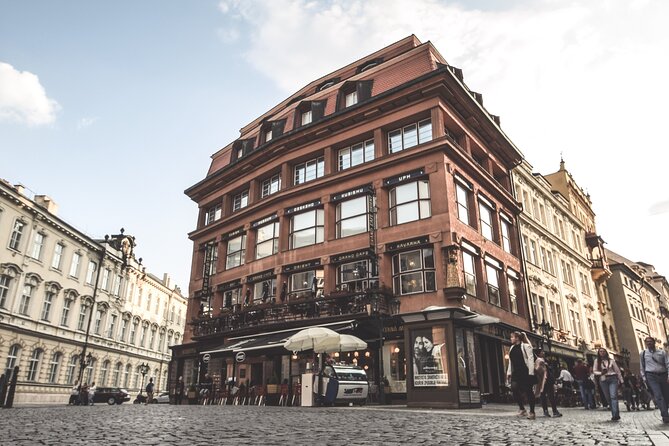
At House of the Black Madonna, you’ll see cubist architecture in an especially recognizable form. Built in 1912, it’s described as the flagship of cubist work by Prague architects in the years before World War I.
This stop runs about 10 minutes, and admission isn’t included. Again, you’re likely reading the building from the street, which is exactly how cubism wants to be seen—angles and geometric planes make the façade feel like it’s changing as you move.
Look for how edges cut across surfaces. If Art Nouveau feels like curves with personality, Cubism feels like structure with attitude.
Na Příkopě: the Old Town / New Town border with Art Nouveau energy
Na PrikopE is a borderline boulevard between Old Town and New Town, and it’s packed with bank and other buildings in Art Nouveau style.
It’s a short stop (about 5 minutes) and the admission is free. This section works because it gives you a “walking gallery” effect. Instead of only one landmark, you get a strip of architecture that you can compare line by line.
If you like to learn by contrast, this part is a win.
Emil Kralíček’s Cubist Lamppost: where Cubism becomes street furniture
This is a fun one: Emil Kralicek’s Cubist Lamppost. It’s a unique piece of street furniture that’s still described as one of the most radical cubist interventions in Prague.
Stop length: about 5 minutes. Admission is free.
Even if you don’t think you’ll care about a lamppost, you will. This is Cubism stripped down to form—no need for a grand building entry. You’ll walk away with a better sense of what makes cubism “cubist,” not just where it shows up.
Václavské náměstí: Art Nouveau hotel and department-store Prague at full scale
At Václavské náměstí (Wenceslas Square), you get a longer viewing window—about 20 minutes. Admission is free.
The focus here is practical: you see how Art Nouveau appears in everyday big-city commercial architecture, including hotels and department stores. This is where you’ll stop treating the style like a museum topic and start seeing it like city planning.
If you like to take photos, use this time to step back, then forward. Many façades show better at a distance first, then snap into detail up close.
Vodičkova: a shortcut for finding both styles on the same street
On Vodičkova, you’ll spot multiple Art Nouveau and Cubist buildings in a concentrated stretch. Stop length: about 10 minutes, and admission is free.
This is a good pause because it teaches you one of the tour’s big lessons: Prague doesn’t switch styles in a clean timeline. You see mixing, overlap, and different architects making different bets.
Three Cubist Houses: the famous triplet under the Vyšehrad rock
Then comes one of the Cubism standouts: Three Cubist Houses, a triplet of buildings under the rock of Vyšehrad fortress. It’s about 5 minutes, and admission is not included.
This stop is short, so your best move is to get a clear view early. The value here is in the overall composition: the trio format makes the cubist shapes feel intentional and architectural rather than incidental.
Villa Kovarovic: Cubism meeting Gothic and Baroque vibes by the Vltava
At Villa Kovarovic, you’ll see a cubist masterpiece built in 1912 on the Vltava river banks. It’s inspired by Gothic and Baroque architecture too, which makes it a standout because it doesn’t treat cubism like a single-note style.
Stop length: about 10 minutes. Admission isn’t included.
This is another place where angle matters. From one viewpoint, it reads as geometric calm; from another, you notice more of the layered inspiration. If the air is clear, the river-side setting also helps you place the building in the city’s geography.
Neklanova: the final cubist apartment-building send-off (1913)
Your tour wraps on Neklanova, a street known for an amazing cubist apartment building from 1913.
It’s a 5-minute stop with free admission. Then you transition out so you can reach the Albertov tram stop and head back to the city center quickly.
If you like having a clean ending, this works well. You finish with a building type Cubism often used—residential—so the style feels lived-in, not just ceremonial.
What you actually learn: how to spot the styles on your own
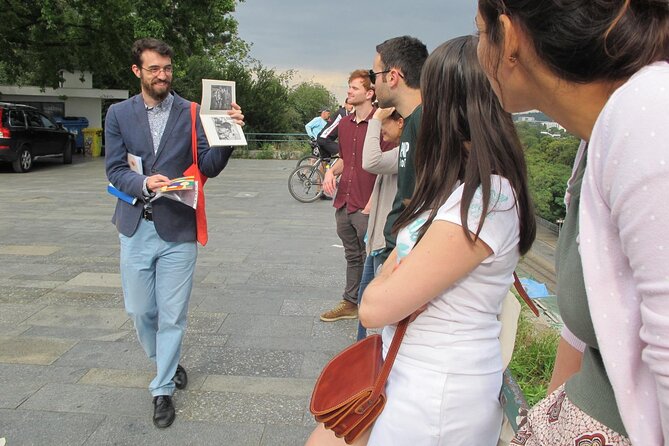
The best part of this type of architecture tour is that it teaches your eye to do the work after you’re done. You don’t leave with a list of names only. You leave with pattern recognition.
Art Nouveau in Prague often shows up through flowing ornament and a sense of motion. When you’re looking at façades like the Main Station’s interior styling, you start noticing how decorative design turns straight lines into something expressive.
Cubism is the counterpoint. Instead of curving decoration, you get strong geometry: faceted planes, sharp edges, and a feeling that the building is reorganized into blocks. That’s why the cubist lamppost works so well—it’s Cubism in miniature, and it’s easier to understand when you’re not distracted by size.
By the end of the walk, you’re more likely to look up and see the design thinking behind what you’re seeing. And yes, the style differences get easier fast once your guide puts them into words.
Pace, comfort, and practical tips for a smoother walk
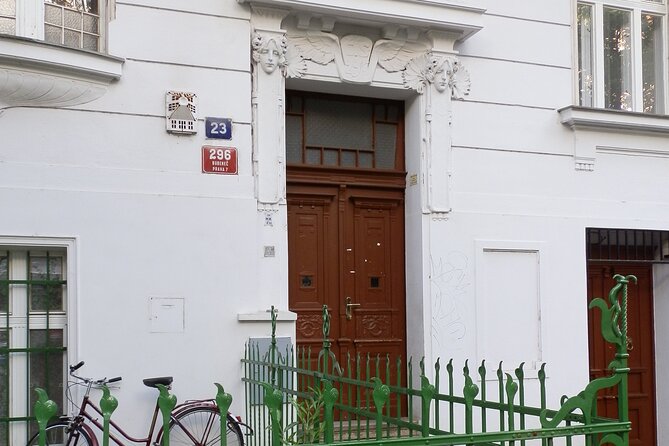
This tour is designed to move. Some stops are brief, and the total time includes short walks and a public transport segment.
Here’s how to make it feel comfortable:
- wear shoes you can walk in for a couple hours of city pacing
- bring a light layer if you’re sensitive to wind, especially around open squares
- plan to take photos quickly at each stop, then step back to reframe your angle
A key consideration: the stop durations don’t add up cleanly to the total time, and at least one guest experience notes that walking can make it run longer than advertised. So if you have a tight dinner reservation, give yourself a buffer.
Who should book this private Art Nouveau and Cubism tour?
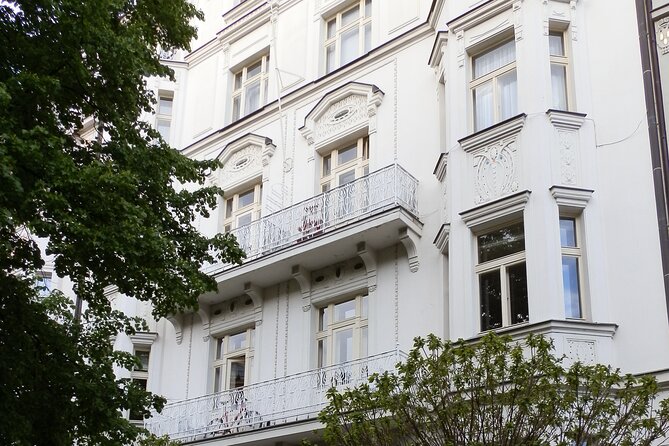
This is ideal if:
- you’re a first-timer in Prague who wants a fast, guided education in the city’s modernist-era styles
- you care about design and architecture details, not just big monuments
- you want a private experience that only includes your group, in English
It might be less ideal if:
- you want mostly interior museum time (some stops have admission not included)
- you dislike walking through dense city streets
If you’re traveling with friends who also like architecture, the per-person value improves quickly because the price is per group.
Is $94.93 per group worth it?
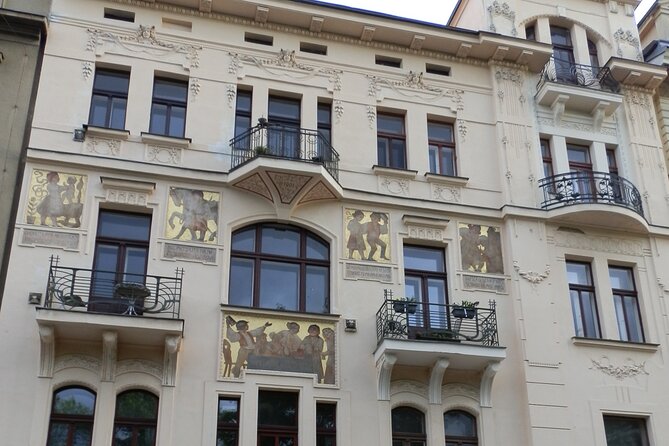
For many people, yes—if you think of it like this: you’re paying for a guided route that helps you understand what you’re looking at across multiple neighborhoods and building types.
You’re also getting a route structure that includes a mix of:
- free admission stops (like the station and several exterior-focused areas)
- stops where admission isn’t included, meaning you choose whether to spend extra time or money
- a private format with a passionate guide named Max Hutar, who uses storytelling to connect architecture to the era
Even if you skip interiors at some locations, the tour still functions as an architectural orientation course. And if your group is small, the value hinges on whether you’ll actually use that eye-training.
Should you book this tour or skip it?
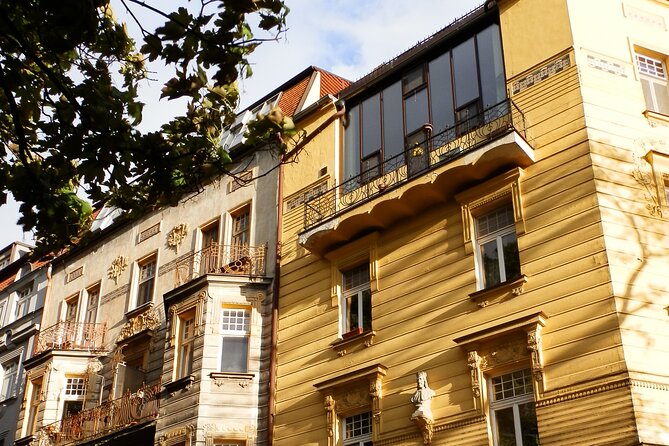
Book it if you want to leave Prague with more than photos. You’ll come away with the ability to look at façades and say what style clues you’re seeing—Art Nouveau’s decorative motion and Cubism’s geometric logic.
Skip it if your priority is inside-ticket sightseeing every step of the way, or if walking and street-level viewing isn’t your thing. Because several stops explicitly don’t include admission, you’ll want to be okay with outside viewing as the main event.
FAQ
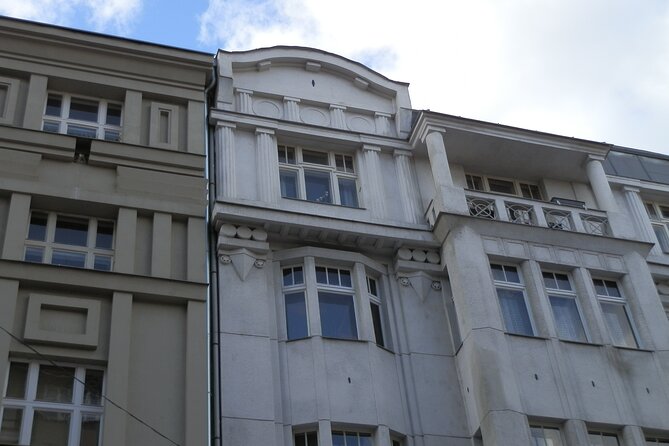
How long is the Prague Art Nouveau and Cubism walking tour?
It’s about 2 hours 30 minutes.
What does the tour cost?
It’s $94.93 per group, for groups of up to 15 people.
Is the tour private?
Yes. It’s a private tour/activity, and only your group participates.
Is the tour offered in English?
Yes, it’s offered in English.
Where do I meet the guide?
The start point is Prague Main Station, Wilsonova 300/8, Vinohrady, 120 00 Praha-Praha 2, Czechia.
Where does the tour end?
It ends near Na Slupi 2102/2b, Nové Město, Praha-Praha 2, and you conclude at the Albertov tram stop for an easy return toward the city center.
Are admission tickets included for every stop?
No. Some stops have admission free, while others say admission ticket not included. You may need to buy separate entry if you want to go inside those locations.
Will we use public transportation during the tour?
Yes. The tour includes short walks between stops and a public transportation segment at some point, especially toward the end.
Can I bring a service animal?
Yes, service animals are allowed.
Is it okay for people who aren’t expert art fans?
Yes. The tour is designed as an introduction and works for most travelers, especially if you enjoy architecture and want to learn the basics as you go.