REVIEW · PRAGUE
Prague Renaissance & Baroque Gardens Walking Tour
Book on Viator →Operated by Insight Cities · Bookable on Viator
Prague’s gardens can feel like a secret city inside the city. This 3-hour Renaissance and Baroque garden tour threads Prague Castle grounds with sculptural stops, fountains, and those famous wall views over the city. I like that you’re not just sightseeing from a path—you’re guided through the reasons these gardens were built, and what the art and plants were meant to say.
Two things I really love: the pace and scale. With a maximum of 8 travelers, the experience stays personal, and a scholar guide can tailor questions as you walk. I also like the mix of big-name garden settings and “you’ll remember this later” moments, like the Baroque statuary at Vrtbovská Garden and the Renaissance buildings tied to royal mythology and daily life.
One consideration: the steep stairs at Vrtbovská. The tour is listed as moderate fitness, and if stairs are hard, you can wait on a lower terrace while the group goes up, then return together about 10 minutes later. There’s also the option of a private tour if you want the route modified for you.
In This Review
- Key highlights worth planning around
- Renaissance & Baroque Gardens at Prague Castle: Why This Walk Feels Different
- Meeting Point, Tram to the Castle, and the 10am vs 2pm Choice
- Getting the Tickets Right: What’s Included vs What You Pay Separately
- Stop 1: Vrtbovská Garden’s Baroque Statuary and the Stair-to-View Payoff
- Stop 2: Waldstein (Wallenstein) Garden and Its Italian-Style Theater of Myths
- Queen Anne’s Summer Palace: Renaissance Architecture Built for Storytelling
- The Royal Garden at Prague Castle: From Medieval Vineyards to Exotic Specimens
- Ball Game Hall Above the Stag Moat: A Renaissance Building That Changed Jobs
- How the Tour’s 3-Hour Timing Works (and How to Enjoy It More)
- Who This Tour Suits Best (and Who Might Want Something Else)
- Should You Book This Prague Renaissance & Baroque Gardens Tour?
- FAQ
- What’s the duration of the Prague Renaissance & Baroque Gardens Walking Tour?
- Where do I meet for the tour?
- How big is the group?
- Is the tour offered in English?
- Are the garden admission tickets included?
- Do I need to pay for Vrtbovská Garden?
- What time options are available?
- Is the tour physically demanding?
- If I can’t do the steep stairs at Vrtbovská, what happens?
- Can I cancel for a refund?
Key highlights worth planning around
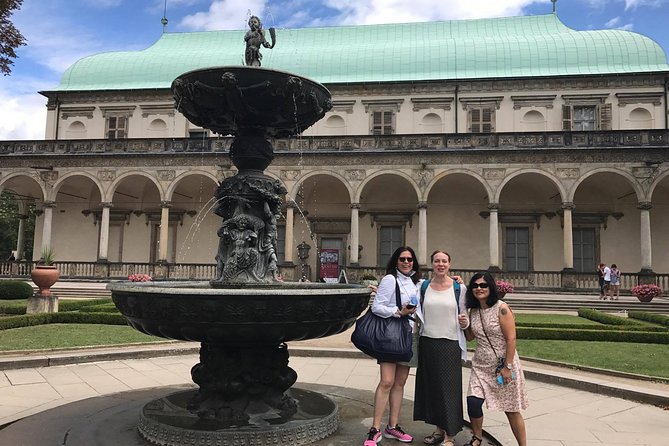
- Small group (max 8): less rushing, more time for questions and photos
- Vrtbovská Garden first-class Baroque statuary: plus serious views over Prague and the Castle
- Waldstein Garden’s Italian-style details: grotto, myth heroes, aviary, and an Adrian de Vries fountain
- Queen Anna’s Summer Palace symbolism: you’ll learn what you’re seeing on the frieze and reliefs
- Royal Garden plant history: medieval vineyard site turned Renaissance garden with exotic specimens
- Built-in pacing with two departures: choose the 10am or 2pm start
Renaissance & Baroque Gardens at Prague Castle: Why This Walk Feels Different
Prague does “beauty in layers,” and this tour is built to show you those layers in a way that actually sticks. You start in the castle garden zone and move through places that look like they belong to different centuries—yet they’re connected by the same idea: gardens as power, art, and leisure.
You’ll walk where statues and fountains aren’t just decoration. They’re part of a message—mythology, authority, taste, and even politics—translated into stone, water, and carefully arranged paths. And because the tour is designed for a small group, you get enough time to stop without turning the walk into a forced march.
If you’re the kind of traveler who loves noticing details (friezes, allegories, fountains, plant stories), this works nicely. If you want a long scenic stroll with zero interpretation, you might find you’re standing still more than expected. The stops are short, but the guide work is the point.
You can also read our reviews of more walking tours in Prague



Meeting Point, Tram to the Castle, and the 10am vs 2pm Choice
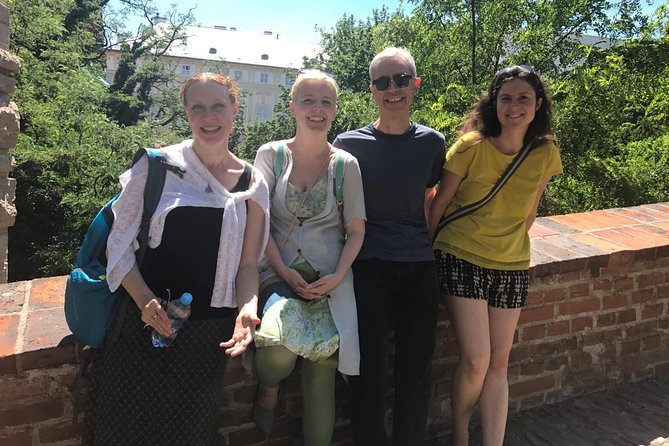
You’ll meet near public transit at Bagel Lounge Malostranská Letenská (118/1, Prague 1–Malá Strana), close to Malostranská Metro station. From there, the group rides a tram together up to the castle garden area.
This matters for two reasons. First, it keeps the start tidy—less “where is everyone?” stress. Second, it lets you arrive before you’re tired, which helps when you hit the steeper moments later.
Departure times are flexible: you can choose the 10am or 2pm slot. I’d pick based on your day. If you want calmer photo light and less crowd energy, the earlier departure often helps. If you’re already out exploring in the morning, the afternoon slot lets you stack castle-area views without feeling like you sprinted all morning.
The tour is in English, uses a mobile ticket, and runs about 3 hours. The maximum group size is 8 travelers, so it’s not a huge herd.
Getting the Tickets Right: What’s Included vs What You Pay Separately
This is where the tour earns its value, because garden admissions aren’t all the same.
- Vrtbovská Garden admission is not included. You pay separately: CZK 130 for adults; CZK 100 for students and seniors.
- Gardens under Prague Castle admission fee is included with the exception of Vrtbovská. That castle garden entry is listed as CZK 90 for adults; CZK 60 for students and seniors.
You’ll also notice some stops are listed as admission free. The Waldstein Garden is free for visitors, and both Queen Anne’s Summer Palace and the Ball Game Hall are also marked as free.
So what are you really paying for at $126.03 per person? You’re paying for the guided interpretation plus the protected time getting you through multiple historically important points in a tight loop, without you having to piece the story together yourself. If you’re someone who usually reads signs but wants the “why does this sculpture matter?” answer, that’s the value.
Stop 1: Vrtbovská Garden’s Baroque Statuary and the Stair-to-View Payoff

Vrtbovská Garden is the headline stop, and it earns that status. It’s a walled Baroque garden from the early 1700s, known for sculptural decor and statuary you can actually spend time understanding. There are also UNESCO-listed cultural values tied to the symbolism of what you see here, which your guide will help put into context.
This is also the stop with the physical requirement. The tour specifically notes steep stairs to reach the highest terrace. If stairs are an issue, you can pause on the second terrace while the group moves up, then you’ll all reconnect about 10 minutes later.
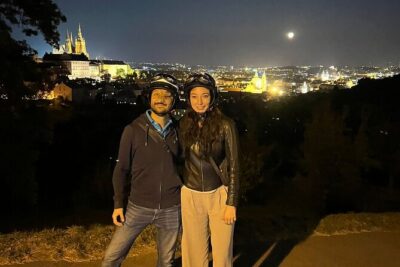
What you’re doing in practice: you walk the garden paths, then you’re rewarded with a view over Prague and Prague Castle from the higher terraces. Even if the scenery is the obvious draw, the real reason this stop stands out is the way the garden uses art and layout to create meaning. You’re not just looking at pretty corners—you’re reading the garden like a designed story.
Timing-wise, the stop is about 25 minutes, including the walking and the viewing pauses. For photos, bring a steady stance: stone terraces can be slick if the weather turns, and you don’t want to rush your angles.
Stop 2: Waldstein (Wallenstein) Garden and Its Italian-Style Theater of Myths
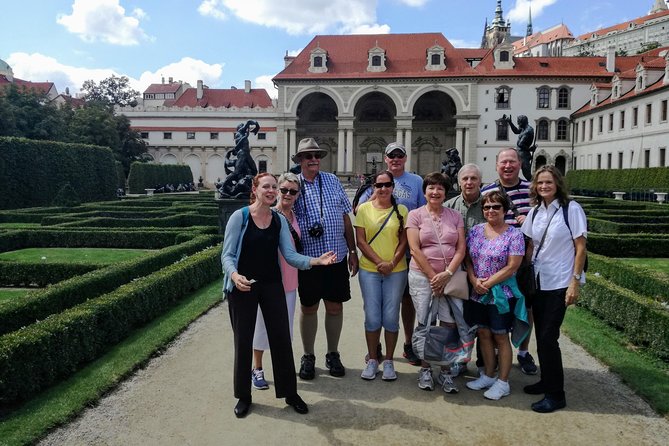
Next up is the Waldstein Garden, tied to the Wallenstein Palace gardens tradition. This one’s open to the public as the gardens of the Senate of the Czech Republic, and it’s described as an Italian-style garden layout.
What I like about it is that it gives you variety inside a single setting. You’ll see:
- an aviary
- an artificial grotto
- a sculptural gallery of mythological heroes
- a fountain by Adrian de Vries
So instead of one “main sight,” you’re surrounded by multiple designed features. And because this stop is marked as admission free, it’s a great place to slow down without worrying about another ticket barrier.
There’s also a practical benefit: this is the kind of stop that works even if you’re walking with a camera and trying not to fall behind. Short bursts of interest keep you engaged, and your guide can point out details as you move.
Expect about 25 minutes here as well.






Queen Anne’s Summer Palace: Renaissance Architecture Built for Storytelling
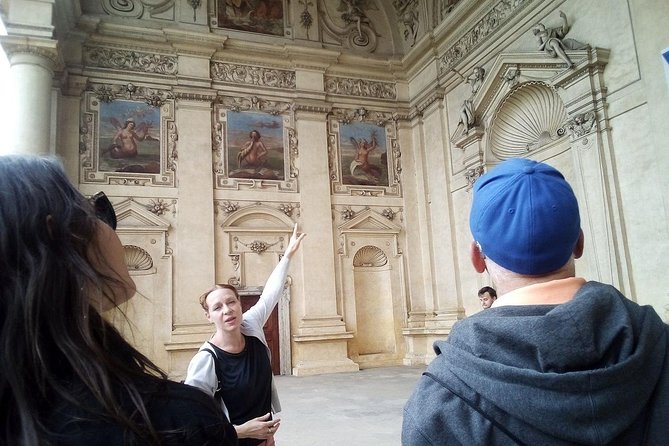
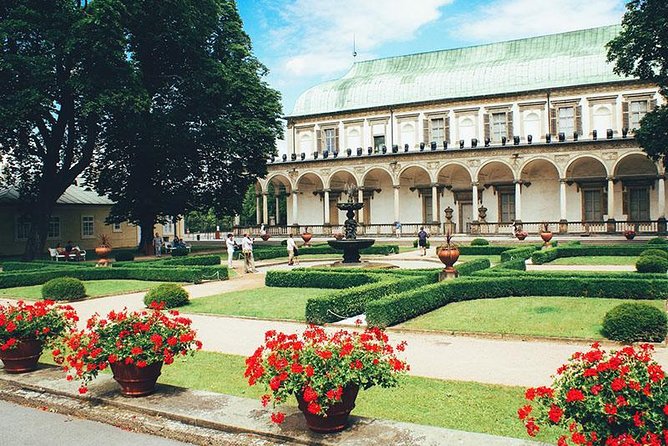
After the gardens open up around the castle area, you’ll reach Queen Anna’s Summer Palace. It’s finished in the middle of the 16th century, and it’s described as the purest Renaissance architecture outside Italian territory.
The palace isn’t just a shell; the exterior includes an ornamental, figurative frieze and relief work. Your guide will help you interpret what you’re seeing, including:
- decorated Tuscan heads on the outside arcades
- relief scenes tied to mythology, hunting, and wars
- a depiction of founder Ferdinand I with the Order of the Golden Fleece, offering Queen Anna a fig tree blossom
That last image matters because it turns a building into a kind of visual handshake: symbols, power, and a very specific relationship between ruler and court.
The stop is brief (about 5 minutes) and marked as admission free. That quick timing can be a plus. You’re not trapped in a long interior visit, but you get the “aha” moments to notice the details quickly as you walk by.
The Royal Garden at Prague Castle: From Medieval Vineyards to Exotic Specimens
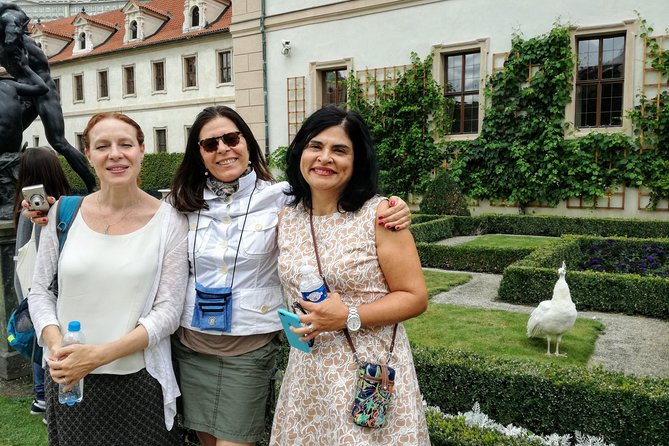
Between the palace and the other castle garden structures, you’ll also pass through the Royal Garden. This garden matters because it isn’t just “pretty plants.” It was established on the site of medieval vineyards in the 1500s, then later became famous for rare botanical specimens and exotic plants from distant countries.
That means the garden’s story is part agricultural, part Renaissance science-and-style. Even if you don’t recognize every plant name (and you probably won’t), the concept is worth grabbing: gardens here were curated spaces connected to world connections and elite collecting.
You’ll move through this section at walking pace with guidance, so you’ll be pointed to what to look for rather than staring at grass and hoping it’s interesting enough.
Also, this is one of the areas where the tour’s included admission for castle gardens becomes relevant. The tour’s structure is built around the idea that you’ll be able to enter castle garden zones without extra hassle—except for Vrtbovská, which remains your separate payment.
Ball Game Hall Above the Stag Moat: A Renaissance Building That Changed Jobs
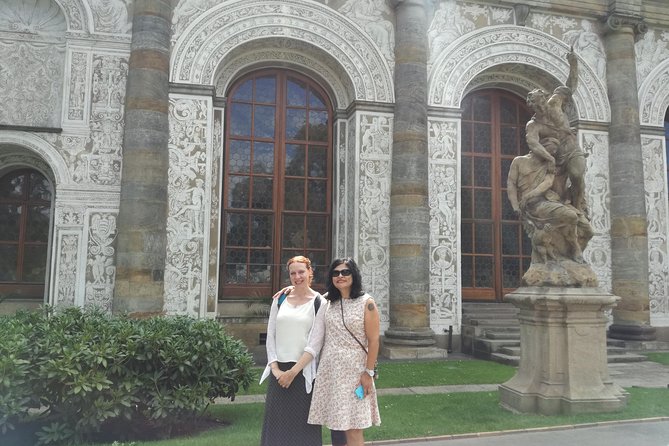
Your next architecture stop is the Ball Game Hall, a Renaissance building on the south side of the Royal Gardens, situated directly above the Stag Moat.
This stop is only about 5 minutes, but it’s memorable because of how many lives the building had:
- It served as a ball games hall when it was built (mid-1500s).
- Later, it was used as a riding school and stables.
That “same structure, different function” pattern is common in European monuments, but it’s still satisfying to hear. You start to notice how the building’s shape and setting make sense for sport, then later for animal care and training.
It’s also marked as admission free, so you get the story without extra ticket friction.
How the Tour’s 3-Hour Timing Works (and How to Enjoy It More)
A 3-hour garden walk sounds simple until you’re standing on stone terraces with stairs and multiple architectural stops. The good news: the itinerary is built with short segments and frequent “reset points” so you don’t lose the plot.
Here’s how to make it feel enjoyable rather than rushed:
- Wear comfortable shoes with grip. You’ll be moving between garden levels.
- Bring your camera, but don’t hold it up the whole time. Stop when the guide tells you why the view matters.
- Pace your water intake. Gardens + stone + walking adds up.
- If stairs at Vrtbovská worry you, decide ahead of time what your plan is. The tour offers a way to wait on the second terrace and catch up.
Small-group tours work best when you’re okay with a conversational pace. You’re not sprinting from flag to flag; you’re learning how the garden spaces connect.
And from past sessions I’ve seen names like Bonita and Vadim attached to this style of tour guiding, I can tell you the tone is story-driven. The best part isn’t a memorized lecture—it’s learning to look at garden art like it has an audience and a purpose.
Who This Tour Suits Best (and Who Might Want Something Else)
This tour fits you if:
- you enjoy art details (statues, reliefs, friezes, myth themes)
- you want a small-group walk with a guide who can answer questions
- you’re visiting Prague for the first time but don’t want only the usual big-ticket photos
- you like gardens, but you also want the cultural “why”
It may not fit you if:
- you hate stairs or you want completely flat walking (Vrtbovská has steep stairs, even with an option to wait and regroup)
- you prefer long, unstructured wandering where no one is explaining symbolism
For couples, friends, and solo travelers, the max-8 size is a sweet spot. You’ll still feel like you’re traveling in a group, but not stuck in a line.
Should You Book This Prague Renaissance & Baroque Gardens Tour?
I think this is a strong buy if you’re interested in gardens as art and architecture, not just a place to take pictures. The tour’s biggest advantage is the combo: castle-area access plus guided context across multiple distinct garden styles, capped by Vrtbovská’s Baroque statuary and city views.
Book it if you:
- can handle a chunk of stairs (or you’re comfortable using the terrace waiting option)
- want a guided story rather than self-guided wandering
- appreciate interpretation of sculpture and symbolism tied to Renaissance and Baroque tastes
Skip it and look for a different option if you want mostly flat walking or you’d rather spend your time doing castle interiors instead of garden focus.
FAQ
What’s the duration of the Prague Renaissance & Baroque Gardens Walking Tour?
It runs about 3 hours.
Where do I meet for the tour?
You meet at Bagel Lounge Malostranská Letenská 118/1 in Prague 1–Malá Strana, near Malostranská Metro station.
How big is the group?
The tour has a maximum of 8 travelers.
Is the tour offered in English?
Yes, it’s offered in English.
Are the garden admission tickets included?
Gardens under Prague Castle admission is included, except for Vrtbovská Garden.
Do I need to pay for Vrtbovská Garden?
Yes. Vrtbovská Garden admission is not included (listed as CZK 130 for adults, and CZK 100 for students and seniors).
What time options are available?
You can choose between a 10am departure and a 2pm departure.
Is the tour physically demanding?
It’s listed as requiring moderate physical fitness. There are some steep stairs at Vrtbovská Garden.
If I can’t do the steep stairs at Vrtbovská, what happens?
The tour says you can wait for the group on the second terrace while they go up, then return about 10 minutes later.
Can I cancel for a refund?
Yes. Free cancellation is available up to 24 hours before the experience start time for a full refund.