REVIEW · PRAGUE
Prague Jewish Quarter Private Half-Day Walking Tour
Book on Viator →Operated by Eva Prague Tours · Bookable on Viator
Prague’s Jewish Quarter can feel like a city inside the city. With Eva Prague Tours, you get a private half-day walking route that moves from working synagogue spaces to memorial sites, with time to ask questions and set your pace. It’s one of the best ways to understand how this neighborhood carried Jewish life from medieval Prague to the 20th century.
Two things I really like: Eva’s clear, friendly guidance (she speaks English well) and the tour’s mix of places that still hold meaning today, not just pretty facades. You also get personal attention, including flexibility when someone needs breaks or shorter standing time.
One consideration: entrance into the Jewish Museum complex costs extra (and many synagogue stops are tied to that ticket). If you don’t budget for it, the tour can feel pricier than it looks on the booking page.
In This Review
- Key points
- Meeting Eva and settling into the Jewish Quarter rhythm
- How the 4-hour walk fits together (and what it feels like)
- Old-New Synagogue: one of Europe’s oldest, still used today
- Old Jewish Cemetery: 1439 graves and the Golem legend
- Spanish Synagogue and the Jewish Museum: Moorish style and possible closures
- Klausen Synagogue: early Baroque within the ghetto story
- Pinkas Synagogue: a powerful Shoah memorial space
- Maisel Synagogue: from Rudolf II privileges to Neo-Gothic form
- Ceremonial Hall at the Jewish Museum: ritual space and changing uses
- Price and value: budgeting for museum entrance
- The guide makes the difference: Eva’s pace, English, and practical support
- Who should book this Prague Jewish Quarter tour
- Should you book the Prague Jewish Quarter private walking tour?
- FAQ
- How long is the Prague Jewish Quarter private walking tour?
- Is this tour private?
- What’s included in the price?
- What entrance fees should I expect to pay?
- Do I get pickup from my hotel?
- Where does the tour start?
- Do I get a mobile ticket?
- What language is the tour offered in?
- Can I cancel for a refund?
Key points
- Private guide in a small, no-rush setup: you walk with Eva alone and can move at your speed
- Old-New Synagogue visit: a still-active synagogue and one of Europe’s oldest, with gender-seating rules during services
- Old Jewish Cemetery + Golem legend: stacked graves and a Prague folktale moment in the same stop
- Jewish Museum sites included on the route: Spanish, Klausen, Pinkas, and Maisel synagogues plus the Ceremonial Hall
- Shoah remembrance at Pinkas Synagogue: commemorates about 79,000 Czech Jewish victims
- You’ll cover a lot in 4 hours: around seven focused stops across the district
Meeting Eva and settling into the Jewish Quarter rhythm
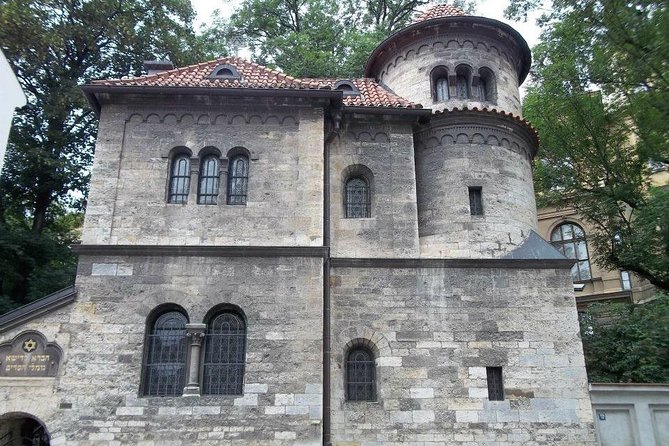
This tour starts with a pickup option, so you’re not forced to do a scramble in the city center. Your guide meets you at Prague Marriott Hotel (V Celnici 8, Nové Město) or can come to your hotel or where you’re staying, as long as you provide the exact address.
Once you’re walking, the pace feels practical rather than performative. Eva tends to match your group’s needs and keeps the tour flowing even when time is tight inside museums and near entrances. In at least one instance, she adjusted the experience for a visitor with mobility issues by advocating for rest breaks and working around long standing lines.
What you’re really buying here is context. In this part of Prague, history isn’t just something on a plaque—it’s embedded in buildings that still function as prayer spaces or museum rooms.
You can also read our reviews of more walking tours in Prague



How the 4-hour walk fits together (and what it feels like)
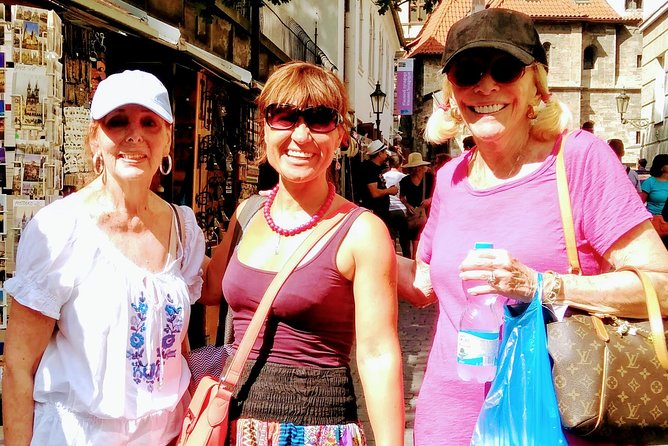
The total time is about four hours, and that matters because this neighborhood rewards focus. You’ll hit around seven major stops, each with a set visit window, so you don’t end up wandering for long stretches with only basic signage.
A private format makes a difference here. You can slow down when you spot something you want to read, or speed up when you’re eager to keep moving. And since you’re not sharing the group space with a big bus crowd, you’re more likely to get real dialogue.
Also plan for a bit of walking on uneven older streets. This is still manageable for many people—most can participate—but you should wear supportive shoes and expect to stand in some lines, especially when a synagogue or museum is busy.
Old-New Synagogue: one of Europe’s oldest, still used today
The first stop is the Old-New Synagogue, famous for its age and for staying active. It’s dated to 1270 A.D. and is described as the oldest synagogue in Europe and the oldest in the world outside Israel. You’ll also hear why it remained important: services have been kept inside, which gives the visit a lived-in feeling.
Here’s the practical rule to know in advance. During services, women are not allowed to be present, and men and women are separated into different halls. Women can hear some of the words, but they’re not in the same space as the service.
So think of this stop as a balance of architecture, tradition, and rules that were created for specific religious practice. If you’re visiting while services are occurring, your experience will feel different than a standard sightseeing visit—plan to be respectful and follow the guide’s directions quickly.
Old Jewish Cemetery: 1439 graves and the Golem legend
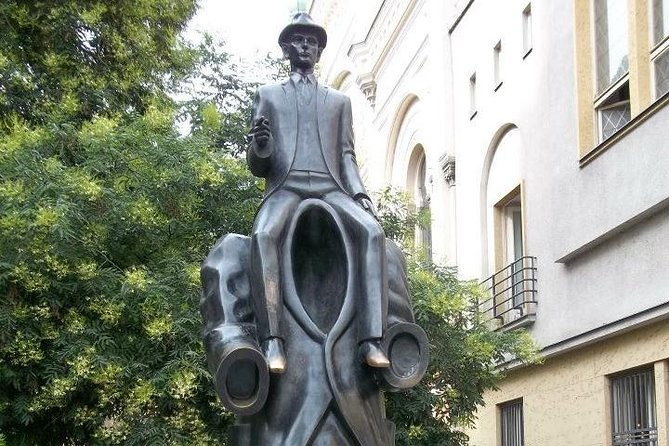
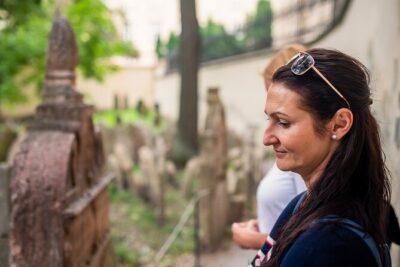
Next comes the Old Jewish Cemetery, dated to 1439 A.D. It’s described as the oldest still preserved Jewish cemetery in Prague, and it holds more than 100,000 people. The cemetery’s most striking reality is the burial practice caused by space limits: many people were buried on top of each other.
This is one of those stops where you’ll want a minute of silence, even if your guide keeps things moving. The legend of the Golem also enters the story here, and it’s a reminder that Prague Jewish culture wasn’t only about documentation. It lived in folklore, too—stories people told to make sense of fear, faith, and survival.
A practical note: the cemetery isn’t a place to rush. Even if your walking schedule is tight, give yourself time to look closely and let the scale sink in. The guide can help you connect what you’re seeing to the broader timeline of the community in Prague.
Spanish Synagogue and the Jewish Museum: Moorish style and possible closures
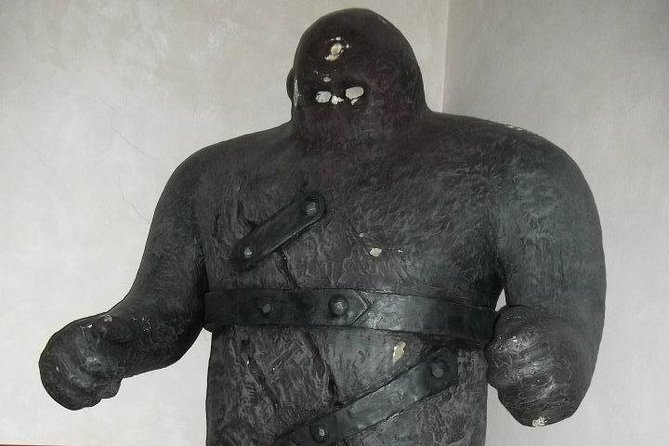
Then you move into the Spanish Synagogue, part of the Jewish Museum in Prague. The Spanish Synagogue was built in 1868 and is known for its Moorish, “oriental” design language. The interior is often compared to the Alhambra in Spain, which is a great way to picture the look: ornate, architectural, and meant to create an atmosphere.
This synagogue has also been used for classical music concerts, so it’s not only a museum room. In practice, that means the space can feel more performance-like than you might expect from a synagogue exterior.
One key consideration: the info you’ll receive notes that from May 2019, the Spanish Synagogue was expected to be closed for reconstruction for two years. If your trip overlaps a closure period, you might need to adjust what you can see on that day. Your guide should be able to guide you through what’s accessible.
You can also read our reviews of more private tours in Prague






Klausen Synagogue: early Baroque within the ghetto story
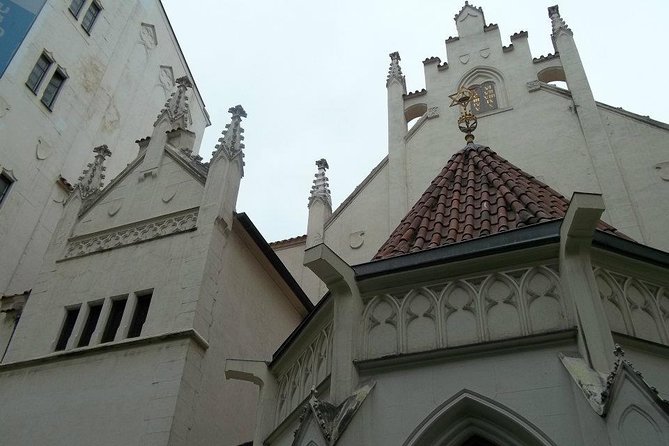
The Klausen Synagogue is described as the largest synagogue in the former Prague Jewish ghetto and as an example of early Baroque synagogue architecture. Today, it’s administered by the Jewish Museum in Prague, so it ties into the museum’s broader interpretive approach rather than standing entirely alone as a historic object.
This stop matters because it shows the Jewish Quarter wasn’t frozen in one era. Synagogue architecture evolved alongside community needs, and the Klausen Synagogue represents a later stylistic shift—Baroque forms arriving in a space shaped by Jewish life under changing city rules.
You’ll get just enough time here to notice features and understand what makes the room different from the older-feeling spaces you’ve already visited.
Pinkas Synagogue: a powerful Shoah memorial space
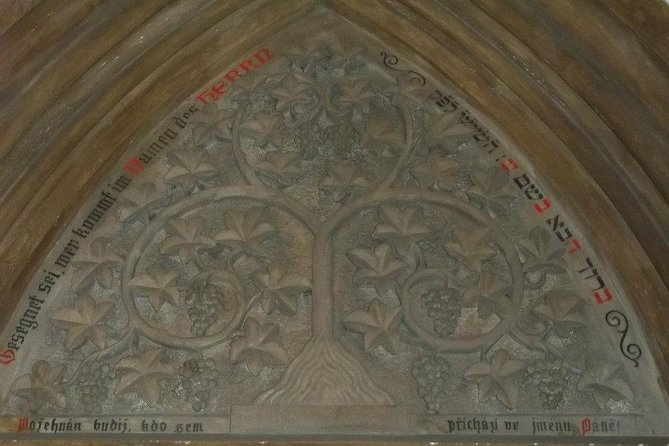
At the Pinkas Synagogue, the focus turns to remembrance. It’s described as the second oldest surviving synagogue in Prague, with origins connected to the Horowitz family. Like other stops on this route, it’s administered by the Jewish Museum in Prague today.
The most important part is the memorial function. The synagogue commemorates about 79,000 Czech Jewish victims of the Shoah. This is not the kind of stop where you skim, because the purpose is to hold names and loss in view.
Even if you’re not a “museum person,” this is one of the places where a guide can help you understand what you’re seeing and why it was built into this setting. Expect a quieter mood than at a typical photo stop.
Maisel Synagogue: from Rudolf II privileges to Neo-Gothic form
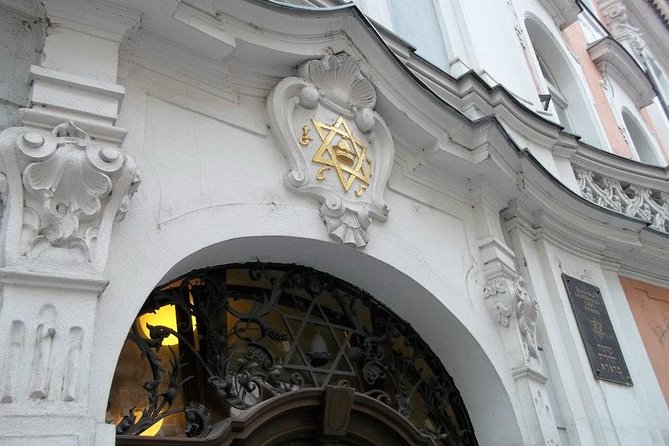
The Maisel Synagogue is built on an official promise: it was erected in 1592 based on a privilege granted by Emperor Rudolf II. Its founder is identified as Mordecai Maisel, the mayor of the Prague Jewish Town. That “mayor and emperor” connection is one of the ways this district tells its story—politics, power, and protection all shaped what people could build.
Architecturally, it started as a Renaissance temple with three naves, which was unusual for its time. Then history hit hard. The synagogue burned down in the ghetto fire of 1689 and was rebuilt several times.
Its current Neo-Gothic form is attributed to Prof. A Grotte, dated 1893–1905. So you leave here with a strong lesson: what you see today is the result of survival, destruction, and rebuilding—not one clean timeline.
This is also a longer stop on the route (about 45 minutes), which helps. You’ll want that extra time to notice how the room’s style reflects later restoration choices.
Ceremonial Hall at the Jewish Museum: ritual space and changing uses
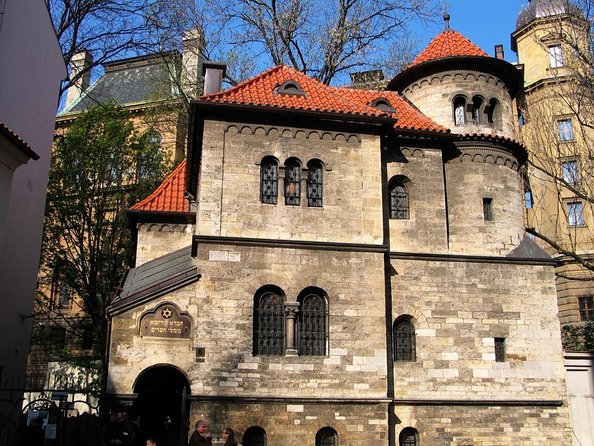
Near the Old Jewish Cemetery, you’ll also spend time at the Jewish Museum’s Ceremonial Hall. It sits on the site of an old mortuary used by the Prague Burial Society, called Hevrah Kaddisha.
The hall is built in a Neo-Romanesque style and was constructed in 1906–08. The description includes specific former uses: a room on the first floor for ritual washing of the dead, and a club room on the second floor for the burial society.
That may sound like “backstage” detail, but it’s actually one of the most revealing parts of the Jewish Quarter. It connects daily community responsibility—caring for the dead—with the way museums preserve memory.
For you, it means the tour doesn’t only focus on synagogues as religious buildings. It also shows community infrastructure that made life and loss more manageable in the Jewish tradition.
Price and value: budgeting for museum entrance
The tour costs $192.04 per person and runs about four hours. That price is for a private walking tour with a professional local guide, which is a big part of what makes this worth it if you like accuracy and context.
The main extra cost to plan for is the Jewish Museum entrance fee: €25.00 per person. The day’s synagogue and museum-related admissions are listed as not included, so you should treat the €25 museum ticket as the likely headline add-on you’ll need to pay to enter the museum spaces along the route.
Is it good value? For me, yes—because you’re not just paying for doors and photos. You’re paying for someone to connect the buildings to what they mean: an operating synagogue with real religious rules, a cemetery with burial realities, and memorial rooms tied to specific historical tragedies.
One more thing: this tour is booked well in advance on average (around 94 days). If you’re traveling in peak seasons, reserve early to avoid having to compress your schedule or shift to a less ideal time slot.
The guide makes the difference: Eva’s pace, English, and practical support
Eva is the thread that ties the whole experience together. The way the tour is described and the way people talk about the experience point to consistent strengths: English is strong, the storytelling is structured, and the tour stays friendly without losing seriousness.
A very practical highlight is that Eva can work with your physical limits. If lines are long or standing is hard, she’s prepared to advocate for your needs and build in rest breaks. That’s the kind of care that changes how enjoyable a historical walk is, especially when you’re visiting multiple sites close together.
She also tends to point out things along the way, helping you understand where you are even before you reach the next synagogue. And she offers local recommendations for food and less touristy places, which can make the Jewish Quarter stop feel like the start of a better day, not the end.
Who should book this Prague Jewish Quarter tour
This is ideal if you want more than a checklist of famous synagogues. If you care about how Jewish life in Prague changed over centuries—through faith, architecture, community systems, and tragedy—this route gives you a clear narrative spine.
It’s also a strong pick if you want private, tailored attention. People who appreciate a personal pace, questions, and the option for breaks tend to do especially well here.
If you only want quick exterior photos and you’re comfortable reading signage on your own, you might not need a private guide. But if you want the “why” behind each room and rule, a guide is the whole point.
Should you book the Prague Jewish Quarter private walking tour?
I’d book it if you’re the type of traveler who likes context in the places where history still lives. The combination of the Old-New Synagogue’s ongoing religious function, the Old Jewish Cemetery’s scale, and the memorial focus at Pinkas Synagogue gives the tour real emotional and educational weight.
I’d hold back only if you’re trying to avoid museum entrance costs or you’re worried about fitting a multi-stop walk into tight mobility or schedule constraints. The tour is short enough to plan for, but it does require paying attention to access and budgeting the €25 museum ticket.
If those two points don’t bother you, this is a high-value way to understand Prague’s Jewish Quarter with a guide who knows how to explain it clearly and kindly.
FAQ
How long is the Prague Jewish Quarter private walking tour?
It runs for about 4 hours.
Is this tour private?
Yes. It’s a private tour, so only your group participates.
What’s included in the price?
A professional local guide and a private walking tour are included.
What entrance fees should I expect to pay?
The Jewish Museum in Prague entrance fee is not included and is listed as €25.00 per person. The synagogues/museum stops also note that admissions are not included.
Do I get pickup from my hotel?
Pickup is offered. Your guide can pick you up from your hotel or another place you’re staying if you share the exact address.
Where does the tour start?
The start point is Prague Marriott Hotel, V Celnici 8, Nové Město, 110 00 Praha-Praha 1, Czechia.
Do I get a mobile ticket?
Yes, the tour uses a mobile ticket.
What language is the tour offered in?
The tour is offered in English.
Can I cancel for a refund?
Yes. Free cancellation is available up to 24 hours in advance for a full refund.