REVIEW · PRAGUE
Prague: 3–Hour Communism and World War 2 E-Bike Tour
Book on GetYourGuide →Operated by Prague by E-Bike · Bookable on GetYourGuide
Prague’s politics, up close, on an e-bike. This 3.5-hour ride ties together Nazi occupation, Soviet-era communism, and the people power that helped change it, with free entrance to the Museum of Communism along the way. You’ll also hit major landmarks across Prague 1 and Old Town without the usual slog of walking hills and long distances.
I like how the route turns big, heavy themes into real places you can point at: the John Lennon Wall, the Communist Memorial, the SS Headquarters area, and the Jewish Old Town. The e-bike does the legwork, and the small group size (10 max) helps the guide pace the story so questions stay possible.
One possible drawback: the emphasis can lean more toward the late communist era and the Velvet Revolution rather than the full, everyday details of life under communism.
In This Review
- Key Things I’d Plan Around Before You Go
- Why an e-bike Works for Prague’s 20th-Century Weight
- Old Town Anchors: Lennon Wall, Kafka Museum, and the Communism Setting
- WWII and Occupation Stops: SS Headquarters, Jewish Old Town, and Bombing Sites
- The Velvet Revolution Thread and the Cyril & Methodius Church Film Connection
- The Museum of Communism Stop: Why the Free Entrance Matters
- Guides, Pace, and the Small-Group Advantage (From Michal to Tatiana)
- E-bike Comfort, Water, and the End-of-Tour Beer
- Price and Time: Is $74 Worth It?
- Who Should Book This Tour (And Who Might Want a Different Plan)
- Should You Book the 3–Hour Communism and World War 2 E-Bike Tour?
- FAQ
- How long is the Prague 3–Hour Communism and World War 2 E-Bike Tour?
- Where does the tour start?
- What’s included in the tour price?
- Is the tour offered in English?
- How big is the group?
- What do I need to bring?
- What is the cancellation policy?
Key Things I’d Plan Around Before You Go
- Free Museum of Communism entry gives you a real stop, not just an exterior photo break
- 30+ stops and landmarks across WWII, occupation, resistance, and communist rule
- Velvet Revolution context linked to the student march so the story has momentum
- E-bike comfort for a 3.5-hour loop with optional helmet and poncho
- Small group (up to 10) with an English guide so you’re not lost in the crowd
Why an e-bike Works for Prague’s 20th-Century Weight
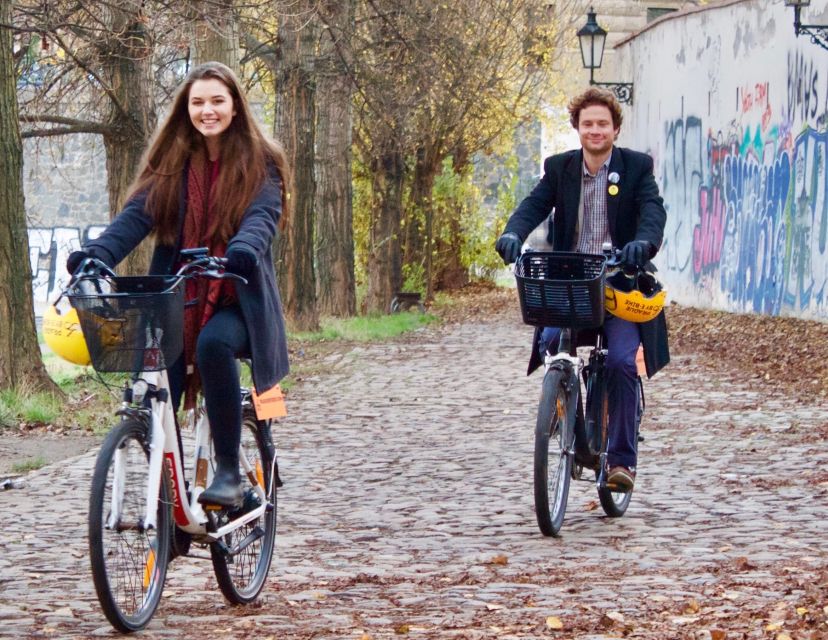
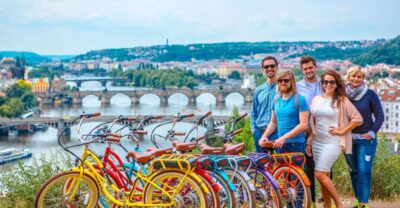
This tour is designed around motion—Prague in 3.5 hours, covering more ground than a typical walking history loop. The e-bike is the point. It lets you stay with the guide’s timing while you move through the city’s layers: Old Town streets, memorials, and the neighborhoods where the story of occupation and resistance took shape.
You’re not expected to pedal hard. The idea is to get your bearings fast and keep energy for the conversations. You’ll also get a bottle of water, and you can request a helmet and poncho if the weather turns.
A practical note: Prague’s stones can be bumpy, and some crowded sections may require walking your bike for short stretches. So if you hate uneven surfaces, plan on taking it slowly and holding the group pace. The upside is that the e-bike still makes the overall plan feel manageable.
You can also read our reviews of more cycling tours in Prague

Old Town Anchors: Lennon Wall, Kafka Museum, and the Communism Setting
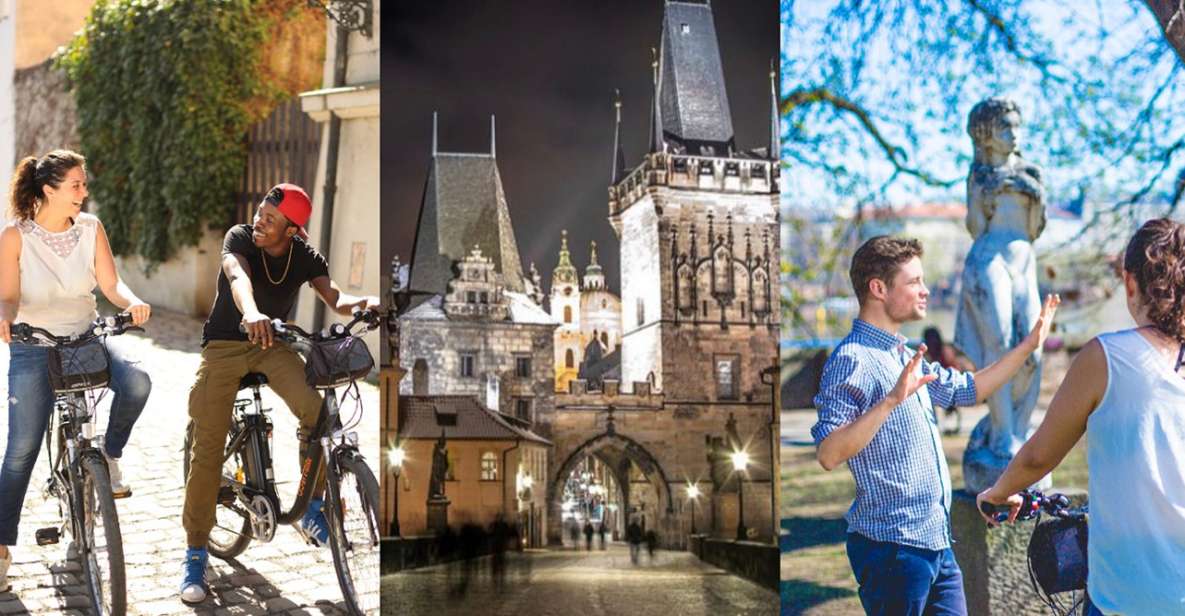
Your ride starts in Malá Strana, at Prague by E–Bike near the tram stop Újezd, and from there you work toward Prague’s central historic zones. Early stops matter because they set up the contrast between the city as it looks today and the political pressure that shaped everyday life.
Two stops that tend to land with people fast are the John Lennon Wall and the nearby cultural stops such as the Kafka Museum. Even if you already know Lennon’s name from pop culture, here it reads differently. It becomes part of the broader theme: youth, expression, protest, and the stubborn idea that people can speak back.
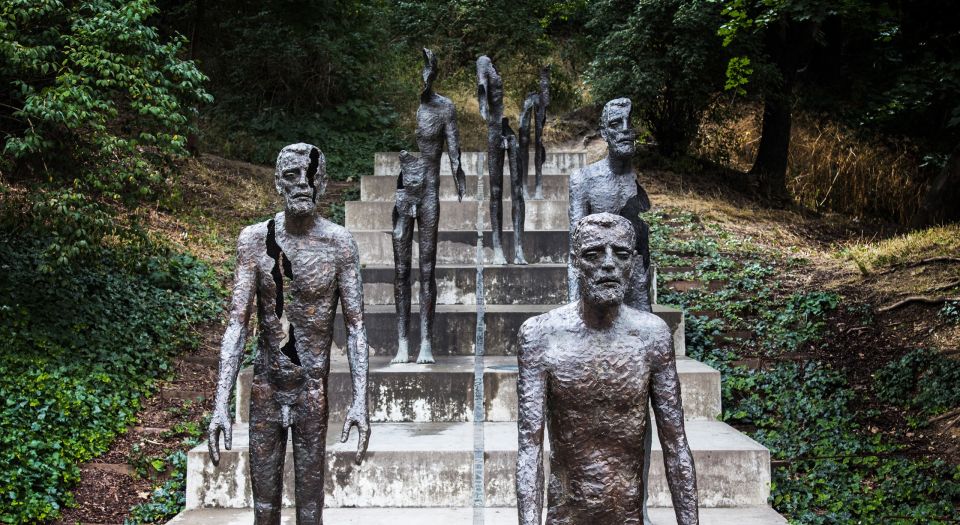
Then there’s the Communist Memorial, which gives you a clear physical reminder that ideology wasn’t abstract. It was built, displayed, and enforced in public space. Standing there, the tour’s pacing shifts from “what happened” to “how it showed up in the streets.”
If you’re the type who likes to connect symbols to context, this is a strong part of the route. If you’re expecting a purely chronological lesson, the guide’s style helps you connect eras by theme: occupation to resistance, resistance to memory, memory to revolution.
WWII and Occupation Stops: SS Headquarters, Jewish Old Town, and Bombing Sites
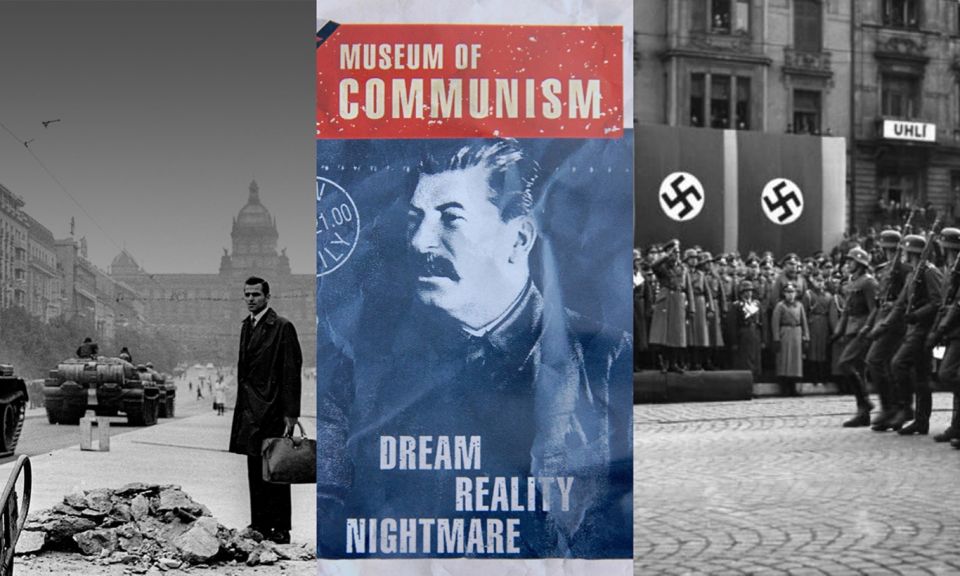
This tour doesn’t treat WWII as a distant prequel. It pushes you into the parts of Prague where Nazi control and violence left marks, including the SS Headquarters area and Second World War bombing locations.
The Jewish Old Town adds another layer. The city’s modern story here isn’t only about political power; it’s also about communities that were targeted, displaced, and changed permanently. The guide framing ties those places to anti-Nazi resistance and the hard realities people faced as the war tightened around them.
One reason this section works well: you get more than plaques. The stops are paired with explanations that connect what you see to what that meant for ordinary lives. That’s also where the tour’s energy tends to peak, because the themes stop being theoretical and start being local—names, institutions, and the places where decisions were made.
The Velvet Revolution Thread and the Cyril & Methodius Church Film Connection
This is the part that many people remember most: the tour follows the footprints of the student march that helped spark the Velvet Revolution, and it points you toward the kind of turning point you can feel in hindsight.
You’ll also visit the birthplace of the Velvet Revolution, so the story isn’t left floating. It’s attached to a spot. That makes the fall of communism feel less like a headline and more like a sequence of actions that real people organized.
A particularly fun stop here is the Cyril and Methodius Church, used as a filming location for the 2016 war film Anthropoid. If you’ve seen the movie, this can be a helpful anchor. Even if you haven’t, it shows how history keeps reappearing in modern culture—and how films lean on specific places to make past events believable.
If you want your history with a narrative arc, this part gives you one: pressure builds, people organize, and then the regime that once controlled the city starts to fracture.
The Museum of Communism Stop: Why the Free Entrance Matters
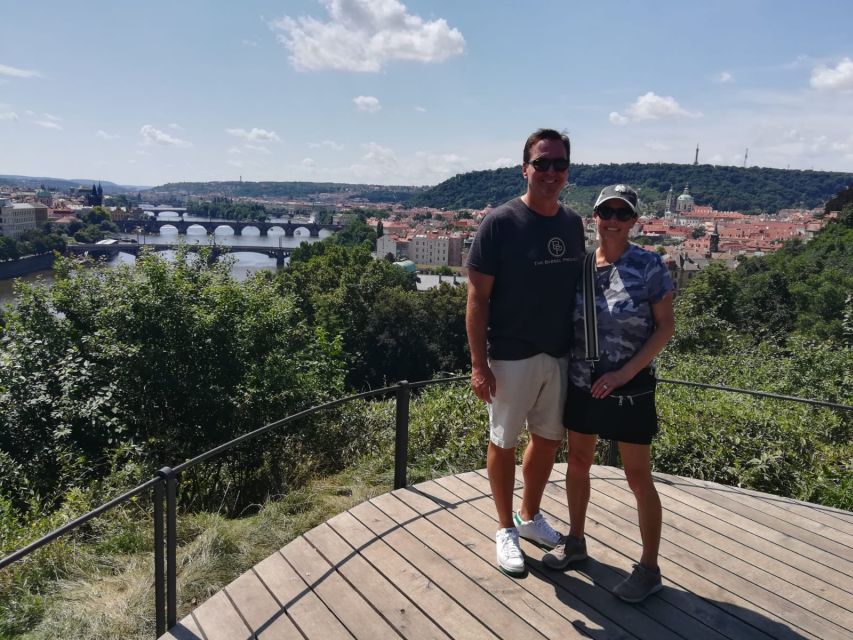
The tour includes free entrance to the Museum of Communism, and that’s a big deal for value and understanding. Many tours can feel like a blur of exteriors. This one adds an indoor chapter, giving you time to slow down and see how ideology was packaged and presented.
You’ll get time to explore museum rooms and exhibits that recreate communist-era settings, artifacts, and imagery. People often come away impressed with how the presentation turns abstract policy into tangible, lived feeling. The museum also makes the tour easier to digest mentally: you get a break from biking and the city noise while still staying on theme.
It’s a strong moment for photos too, but the bigger win is context. The museum is where the tour’s earlier street-level stops start to connect into a fuller picture.
You can also read our reviews of more tours and experiences in Prague

Guides, Pace, and the Small-Group Advantage (From Michal to Tatiana)
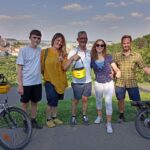
The tour runs with an English live guide, and groups are limited to 10 participants. That small size changes the vibe. You can ask questions, and you’re less likely to feel like you’re sprinting after a moving point in the middle of a crowd.
From recent experiences on this route, guides like Niam, Marek, Michal, Nayeem, and Tatiana have been praised for engaging delivery and clear explanations. You can also expect the guide to start with a broader WWII-and-communism overview before moving through landmark stops—useful if you’re new to Prague’s modern history.
There’s also evidence that guides flex when things go wrong. One tour reported a minor e-bike issue near the end, and the guide offered a bike switch. That’s the kind of reassurance you want on a short, story-heavy outing.
E-bike Comfort, Water, and the End-of-Tour Beer
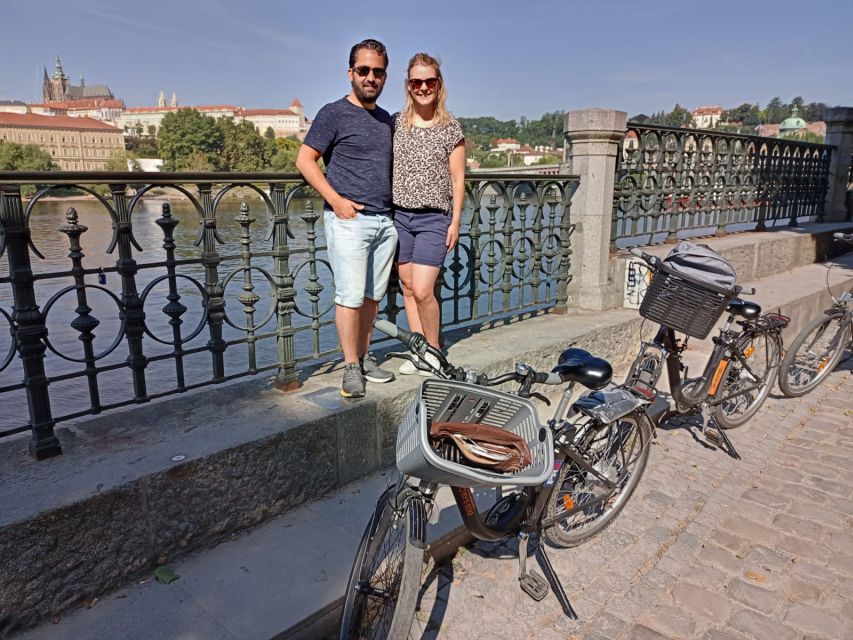
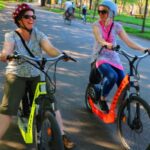
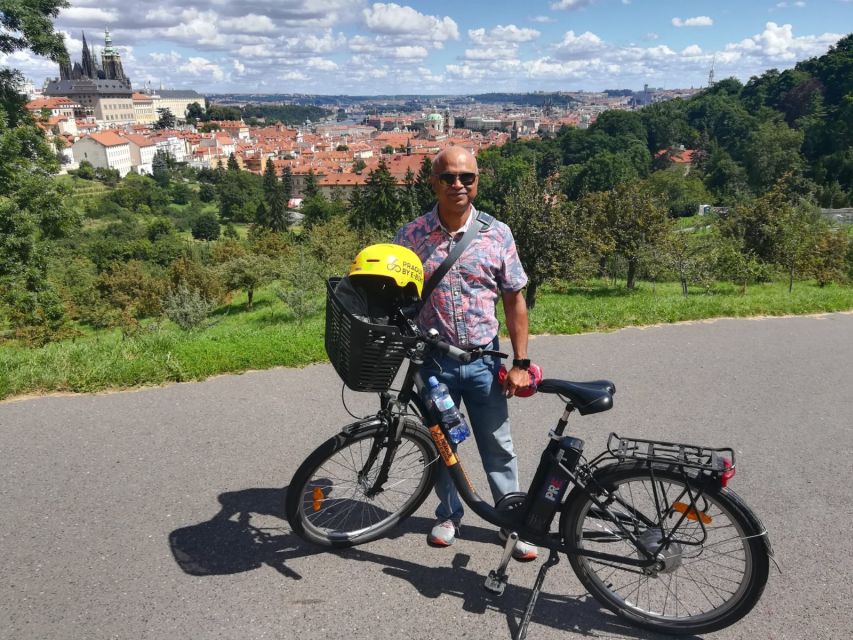
Prague’s center can be tiring fast, especially if you’re stacking other sights. Here, the e-bike keeps the tour from turning into a leg workout. It’s a smart approach for mixed ages and comfort levels, and it’s especially appealing on warmer days, when walking can feel punishing.
You’ll get a bottle of water during the tour, which sounds small until you’re halfway through a dense route. At the end, there’s one cold beer, which feels like a proper Czech-style finish: history lesson, then a reset.
If you’re sensitive to heavier themes, the structure still helps. You’re moving, stopping, and learning in manageable segments. It doesn’t linger forever in one grim topic, and the museum break helps break up the emotional load.
Price and Time: Is $74 Worth It?
At $74 per person for about 3.5 hours, the question is value-per-minute. This tour earns its price in three ways that matter on a short visit:
1) You’re paying for more than transport. The e-bike lets the guide cover 30+ sites without losing half the time to fatigue and detours.
2) The Museum of Communism is included. That free entrance turns the tour from an outdoor narrative into a more complete experience.
3) You get a real guide-led story. A strong guide matters here because the subject—WWII, occupation, and communism—is complex. You need someone to connect the dots so it doesn’t feel like random names.
So yes, it’s not cheap for Prague. But it’s also not a bare-bones “look and leave” tour. The included museum time and the stop density make it feel like a focused way to understand the city’s modern turning points.
Who Should Book This Tour (And Who Might Want a Different Plan)
This is a good match if:
- You want a guided, high-impact way to understand Prague’s WWII and communism story
- You like landmarks such as the Lennon Wall, Kafka Museum, memorials, and the Jewish Old Town
- You’d rather ride between places than fight crowds and hills on foot
- You appreciate a small-group format and an English explanation throughout
It may be less ideal if:
- You want lots of details specifically about day-to-day life under communism, not just the late era and the revolution
- You get very uncomfortable on cobblestones or don’t want any chance you’ll walk your bike in crowded stretches (the tour can require that)
Should You Book the 3–Hour Communism and World War 2 E-Bike Tour?
I’d book it if you’re trying to make sense of Prague beyond postcards. The combination of WWII occupation sites, communist-era memorials, and the Velvet Revolution thread gives you a coherent “how we got here” story—fast, guided, and paced with the help of e-bikes.
The part that makes the decision easier is the included Museum of Communism stop. That transforms the tour from “interesting stops” into “a fuller understanding you can carry into the rest of your trip.”
If the idea of politics and occupation topics feels heavy, plan to mentally pace yourself during the museum and WWII sections. But if you’re ready for a smart, moving history lesson in Prague, this one is a strong choice.
FAQ
How long is the Prague 3–Hour Communism and World War 2 E-Bike Tour?
The duration is listed as 3.5 hours. Starting times vary, so you’ll need to check availability for the exact start.
Where does the tour start?
The meeting point is Prague by E–Bike, Besední 440/2, 118 00 Praha 1-Malá Strana, close to tram station Újezd in Prague 1. The tour ends back at the meeting point.
What’s included in the tour price?
It includes a knowledgeable local guide, visits to 30+ sites, free entrance to the Museum of Communism, 1 bottle of water, and helmet and a poncho if requested. At the end, you also get 1 cold beer.
Is the tour offered in English?
Yes. The tour includes a live guide in English.
How big is the group?
This is a small group limited to 10 participants.
What do I need to bring?
You should bring a passport or ID card. You’re also advised to arrive 15 minutes before the tour starts.
What is the cancellation policy?
It offers free cancellation up to 24 hours in advance for a full refund. There’s also a reserve now & pay later option (you can book without paying today).