REVIEW · PRAGUE
Prague: 2-Hour Old Town and Jewish Ghetto Walking Tour
Book on GetYourGuide →Operated by McGee's Trips & Tickets · Bookable on GetYourGuide
Prague spires meet Jewish quarter details. In two hours, I like how this guided walk hits the big Old Town sights while also taking you into Josefov to see surviving synagogue landmarks, plus the Kafka connection and the stories behind the Czech lands. I love the way the guide explains the Astronomical Clock symbols and the life of Jan Hus at Old Town Square. I also like that the route links Czech culture and education sites with the former Jewish Ghetto story. One drawback to plan for: interior visits aren’t included, so you’re mainly learning and viewing from the outside rather than getting full inside access.
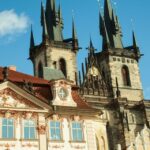
The tour is paced for a small group, capped at 15 people, and the meeting spot is clear: stand behind Týn Cathedral and find the big wooden door on building number 7. You’ll walk a lot in a short time, but the focus stays tight—major monuments, then Josefov’s synagogue quarter, then back into the center.
At $23 per person, it’s a solid value if you want a first-pass orientation fast: you’ll cover a big slice of central Prague in a short session and get context that helps everything make sense. If you already know Prague well and want a more specialized, deeper follow-the-footsteps day, this may feel a bit “great hits” rather than super detailed.
In This Review
- Key highlights worth showing up for
- Entering Prague’s Old Town: Týn Cathedral to Old Town Square
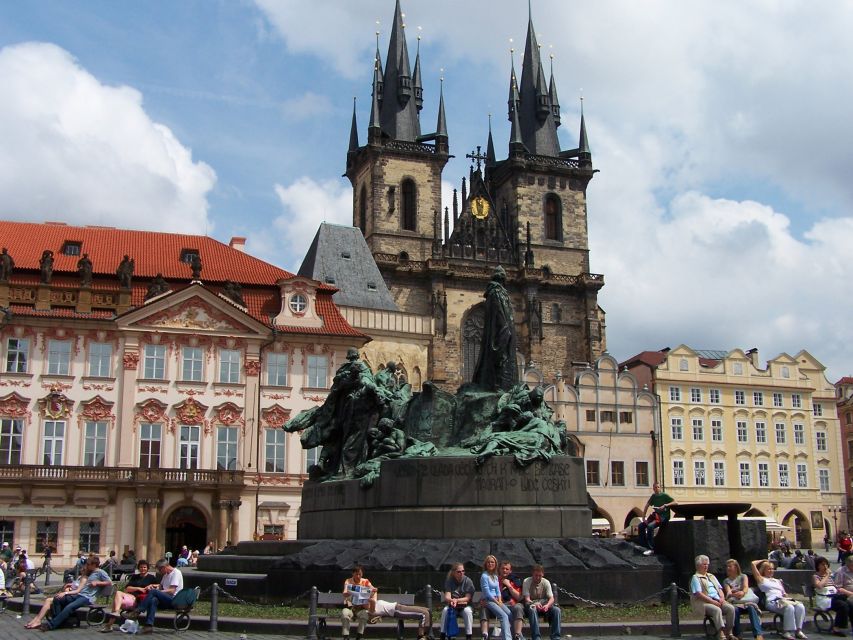
- Jan Hus at Old Town Square and the Astronomical Clock symbols
- Charles University and Karolinum: education in 15th-century Prague
- The Estates Theatre and St. James: Prague’s cultural face
- Josefov: surviving synagogue stops and the ghetto story
- Kafka’s connection: a stop at his birthplace area
- Price and time: what $23 buys in 120 minutes
- Who this tour suits best (and who might want another option)
- Quick practical tips for a smooth walk
- Should you book this Prague Old Town and Jewish Ghetto tour?
- FAQ
- How long is the Prague Old Town and Jewish Ghetto walking tour?
- Where do I meet the guide?
- Is the tour in English?
- How big is the group?
- What is included in the price?
- Are interior visits included?
- Does the tour include hotel pickup?
- Can I cancel for a refund?
- Is private group available?
- Is there free cancellation and pay later options?
Key highlights worth showing up for
- Astronomical Clock symbolism explained in plain terms, so you can look instead of just stare
- Jan Hus monument and Old Town Square tied to Czech identity and reform history
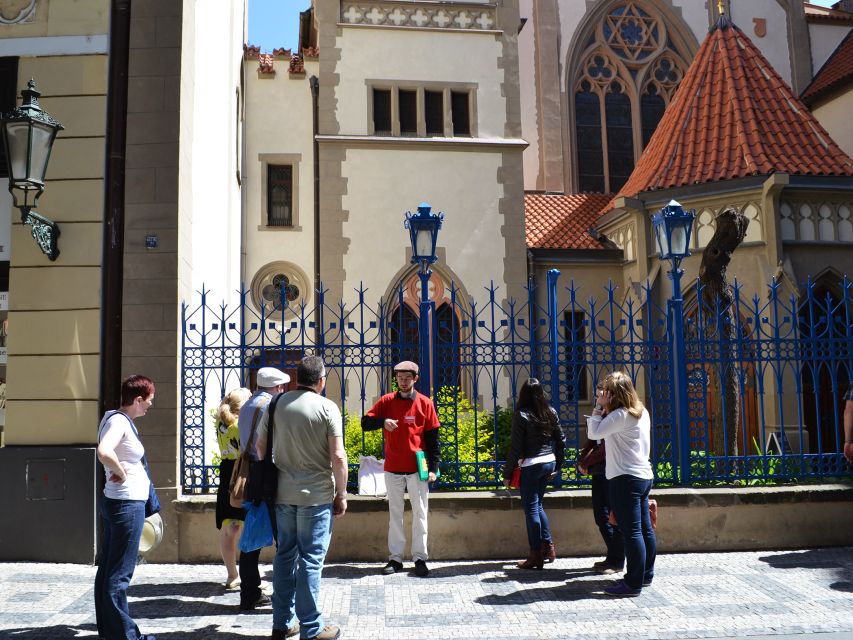
- Josefov synagogue quarter with multiple historic synagogue stops and ghetto context
- Franz Kafka’s birthplace area plus the literary layer of Prague’s center
- 15th-century Karolinum complex and the education story that connects the stops
Entering Prague’s Old Town: Týn Cathedral to Old Town Square
This tour starts right where you want to be if you’re new to Prague: near Týn Cathedral in the Old Town area. From there, you move toward the classic heart of the city and get a guided route that doesn’t waste time with vague “here’s a building” stops. You begin with a guided introduction around Dům U Kamenného zvonu, then you shift into the sites most people come for—because the tour’s whole point is to help you understand what you’re looking at as you walk.
One smart thing about the flow is that it’s not only about Christian-era landmarks. Even early on, the guide sets up the bigger story of Bohemia and the Czech Republic—so when you later reach Josefov, it doesn’t feel like a random side trip. Old Town Square becomes more than postcard scenery once you know why certain names and symbols mattered to local identity.
Another practical win: it’s built around the scale of a short tour. With only two hours, you don’t want long detours. This itinerary threads key points so you can see major monuments without spending the day on transportation or waiting around.
If you’re the type who likes to photograph first and ask questions later, you’ll appreciate the way the guide talks while you’re still standing in front of the scene. You end up learning what to notice while you still have the view.
You can also read our reviews of more walking tours in Prague

Jan Hus at Old Town Square and the Astronomical Clock symbols
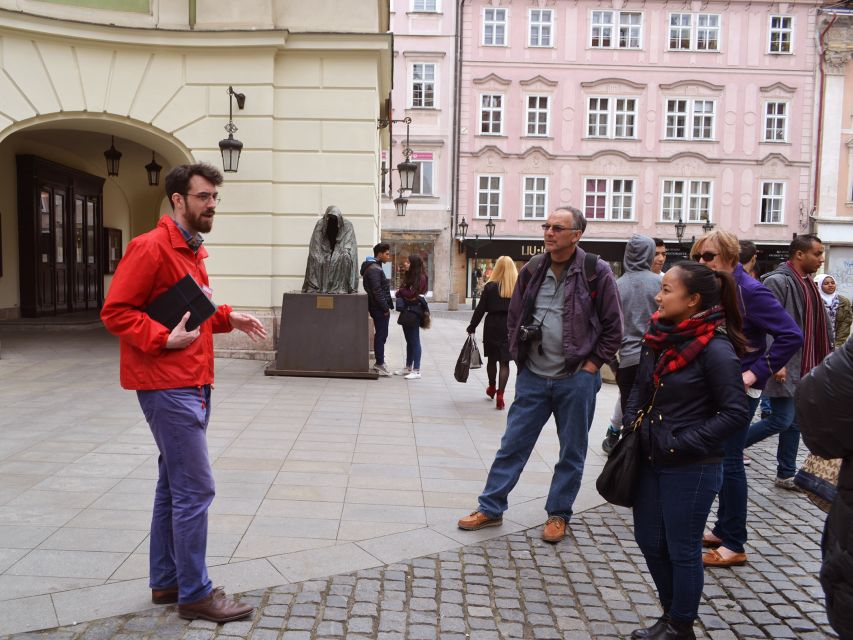
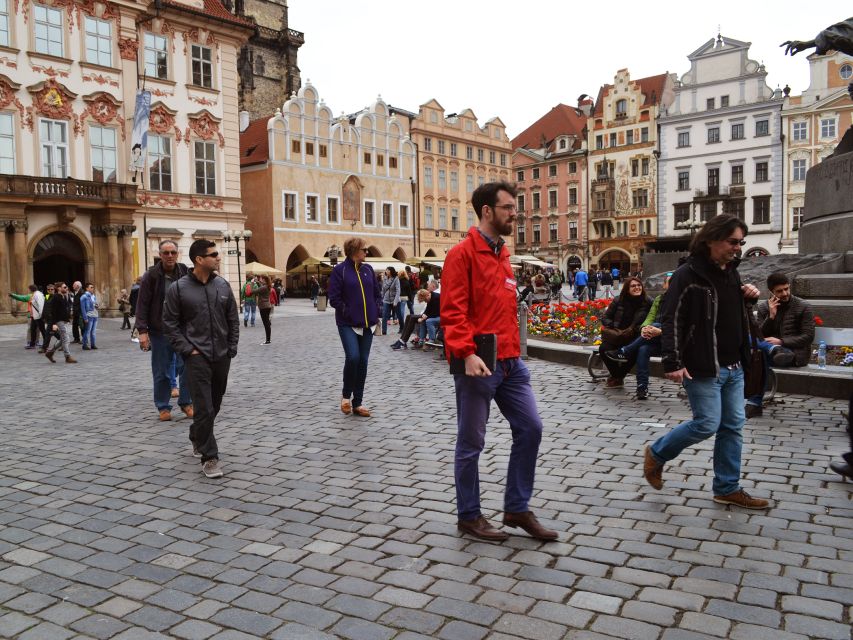
Old Town Square is the obvious headline, but what makes it work on this route is the narration. You’ll stop for the Jan Hus monument, and the guide explains why this figure mattered to the Czech people. That context changes how you read the space. Instead of seeing a statue, you start connecting it to the larger culture-and-faith story of the region.
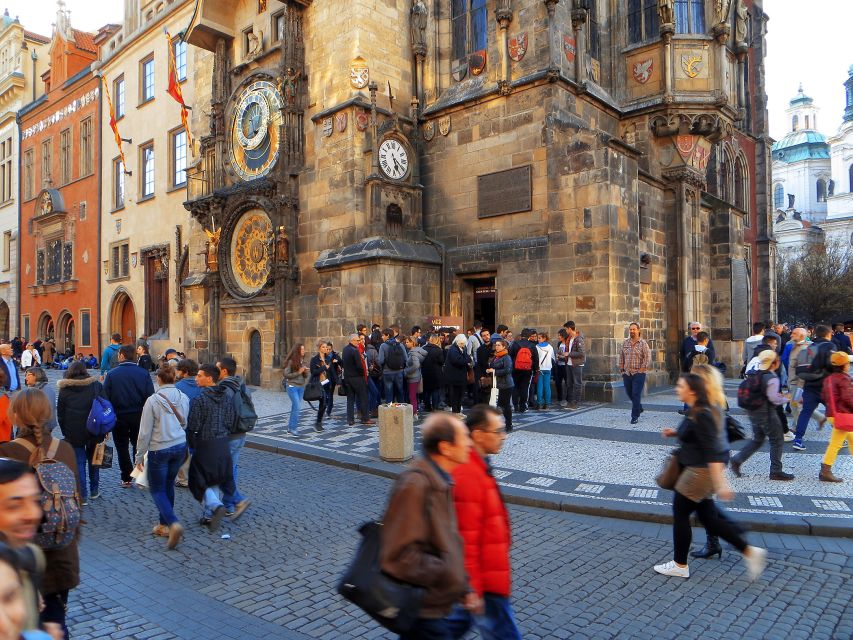
Then comes the Prague Astronomical Clock, one of the city’s most iconic sights. You don’t just glance at it. You get the meaning behind its curious symbols, the kind of explanation that helps you interpret what you’re seeing rather than treating it like a decorative mechanism. Even if you’ve heard general facts before, the guide’s focus keeps your attention on what the clock represents and why it became part of Prague’s public identity.
One thing to keep in mind: this is a walking tour that balances multiple stops. The guide will keep moving, so you’ll want to stay close if you want the clearest view of the details being explained. If you drift to the back every time the group pauses, you’ll miss some of the symbol-level talk that makes this stop special.
Charles University and Karolinum: education in 15th-century Prague
A big reason this tour feels worth doing is the way it connects landmarks to Czech culture and education. After the Old Town Square stops, you’ll pass by Charles University and the Karolinum complex buildings dating back to the 15th century.
This part is especially useful if you like understanding the city through its institutions. Prague isn’t only churches and towers—it’s also a place shaped by learning. When your guide frames Karolinum as part of education’s development, it gives the center a different meaning. The buildings stop being just architecture and start becoming evidence of how people organized knowledge and culture over time.
This also sets up the Josefov segment well. Josefov’s story is about community, resilience, and forced change. The education/culture angle helps you see that these neighborhoods weren’t isolated bubbles. They sat within the same historical ecosystem of Bohemia and the Czech Republic.
If you care about architecture, pay attention to what the guide points out about the university buildings as you walk by. The narration is what helps you catch the “why this matters” layer in a fast, efficient route.
The Estates Theatre and St. James: Prague’s cultural face
Next, the tour shifts into the area around Prague’s historic theater district. You’ll visit the Estates Theatre (Stavovské divadlo) and admire the façade of this 18th-century cultural venue. Even if you’re not a theater person, this is the kind of stop that adds variety to a walking day. You get a change of pace from square-and-clock intensity into a quieter, more refined cultural street scene.
From there, you’ll also pass by the Church of St. James, Prague, along with other landmark stops like the House of the Black Madonna. Not every stop comes with the same level of specific, named detail, but the guide ties each one back to the story of the Czech lands—so the architecture doesn’t feel random. You’re learning what each place represents in the broader sweep of Prague’s development.
Here’s where the tour’s short duration helps you. You see theater and church culture without losing half the day. That matters if you’ve only got one afternoon and you want both the landmark hits and the deeper context.
If you’re sensitive to crowds, aim to pause only when the guide finishes a point. During popular times, the central streets can get busy, and it’s easier to enjoy the façade and the explanation when you’re not trying to photograph from the tightest spot.
Josefov: surviving synagogue stops and the ghetto story
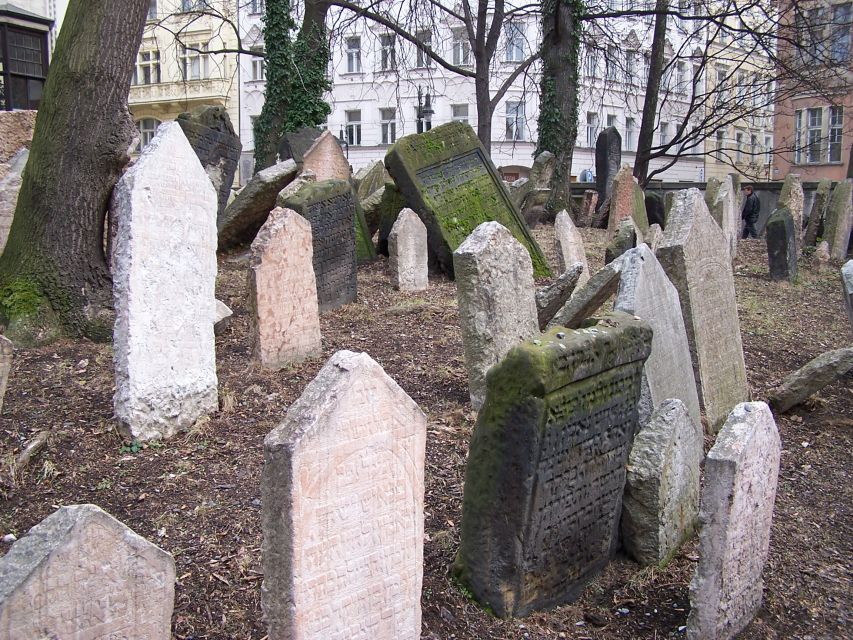
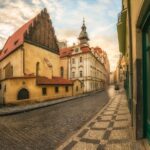
Now the tour’s most emotionally loaded segment: the Josefov quarter and the former Jewish Ghetto area. You’ll walk into this neighborhood that’s described as being surrounded by the Old Town, and the guide explains the conditions that shaped life there. You’ll also learn how the ghetto was destroyed in the early 20th century—so the area becomes a place where history is not abstract.
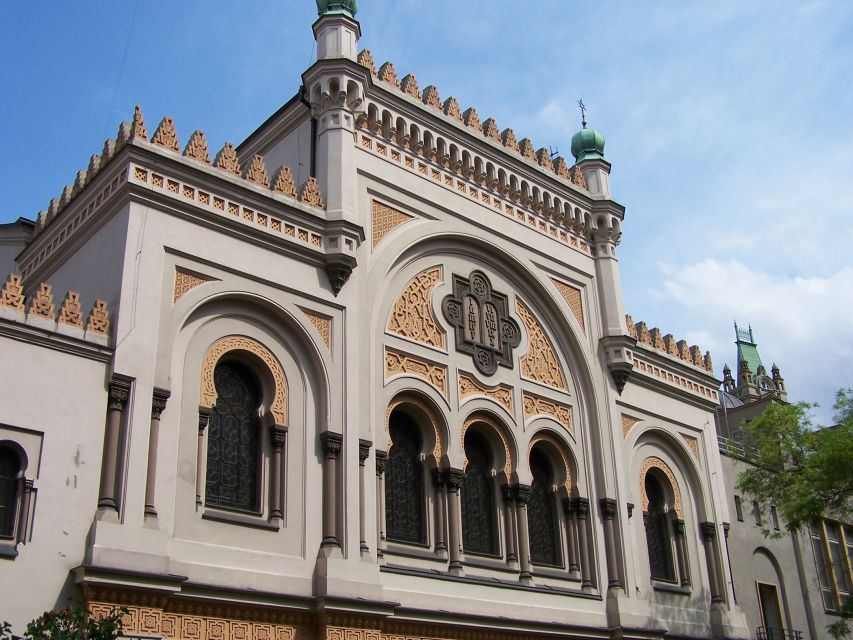
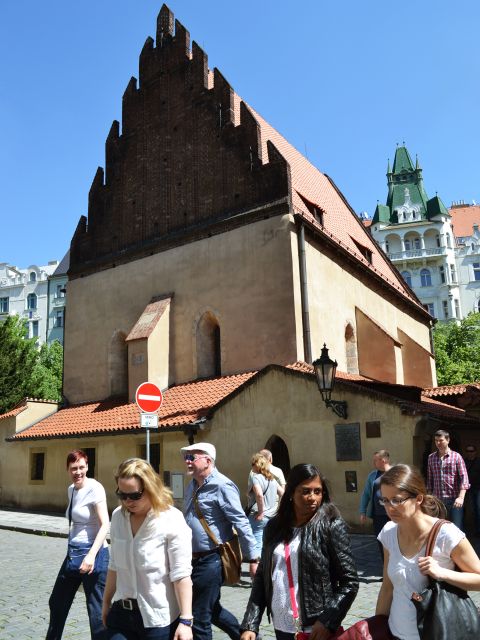
This part works best if you’re ready for context, not just sights. You’ll see remaining synagogues in the Josefov quarter—specifically stops that include Maisel Synagogue, the Old Jewish Cemetery, Klausen Synagogue, the Old-New Synagogue, and the Spanish Synagogue.
One review memory worth keeping in mind when you’re there: people remember how old these synagogue structures feel, with at least some described as built about 600 years ago. That’s a huge time gap, and the guide’s framing helps you grasp what it means that so much endured.
Because interior visits aren’t included, plan to rely on the outside views and the guide’s explanations for your learning. If you’re hoping for a full inside museum-style visit, you might need to add extra time separately. But even from outside, it’s powerful. The names alone—Old-New and Klausen, Spanish and Maisel—give you a sense that this was a real district with its own institutions and daily life.
Also, the guide is likely to make connections between communities. The tour aims to link Christian and Jewish storylines across the same central map, so you don’t treat Josefov as a standalone “other Prague.”
You can also read our reviews of more tours and experiences in Prague



Kafka’s connection: a stop at his birthplace area
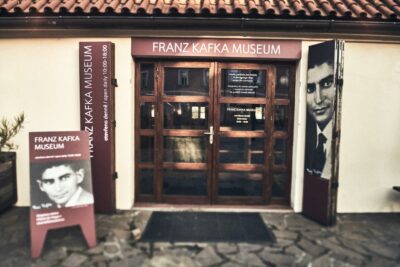
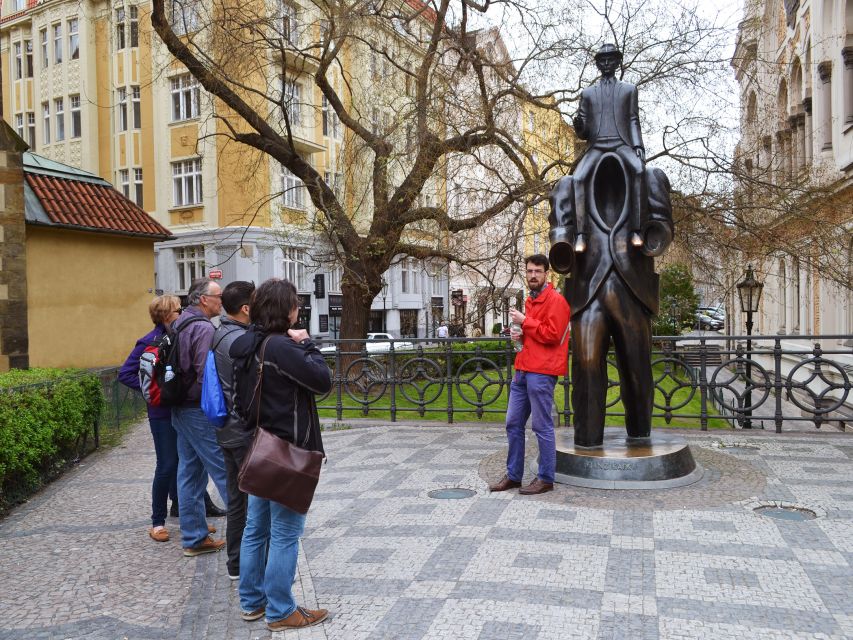
Prague’s literary identity shows up in the final stretch with a stop at the Franz Kafka Monument, plus a look at the birthplace of Franz Kafka. This is one of those sections that makes Prague feel personal, not just historical.
If you like walking cities where culture echoes in street-level details, this part is satisfying because it gives you a concrete place name to attach to a famous author. It also helps the tour finish without feeling like a hard stop after Josefov. You transition from community and historical survival into a story of creativity that still defines Prague today.
Keep an eye on how the guide closes the route at the end point in Staroměstské náměstí. The tour is only two hours, but by the time you reach the finish, you usually have a clearer mental map of how Prague’s center layers Christian reform, civic clocks, education buildings, and Jewish quarter remnants into one walkable story.
Price and time: what $23 buys in 120 minutes
Let’s talk value, because Prague tours can get pricey fast. At $23 per person for a 2-hour walking tour, you’re paying for two things: access to a live guide and a structured route that compresses a lot of major landmarks into a short window.
What you’re not paying for is interior access. Interior visits aren’t included, so the value is mainly in interpretation: the guide helps you understand the Astronomical Clock symbols, the life of Jan Hus, and why Prague’s education and culture mattered in Central Europe. In other words, this tour is more about learning what you see than about entrance tickets.
The small group size (max 15) also helps. In a smaller group, it’s easier to hear the explanations and keep your place during photo moments. If you’ve ever done a big bus tour where you barely catch the guide’s voice, this setup feels much easier to follow.
If your budget is tight and you still want both the Old Town headlines and the Josefov story in one afternoon, this price point makes sense. If you want deep interior access at multiple synagogues, you’ll likely want to pair it with additional time on your own.
Who this tour suits best (and who might want another option)
This tour fits best if you want a strong orientation and clear explanations without committing to a full day. It’s ideal for first-time Prague visitors who want to see the main monuments of Old Town, plus understand the Czech story beyond just castles and towers.
It also works well if you’re curious about how multiple cultures shaped Central Europe. The route is built to connect Bohemia and Czech history with both Christian landmarks and the Jewish quarter’s surviving synagogues.
A key note from experience style: people often talk about the guides being friendly, enthusiastic, and good at making connections. Different guides show up across time, including names like Krystoff, Allen, Radek, Dana, and Martin—and the common thread in their approach is clear, engaging storytelling. One guide (Allen) also offered solid restaurant recommendations, which is a nice bonus when you’re trying to eat well after a walk.
If you’ve already done multiple Prague tours and you want a more specialized deep dive into a single theme—architecture, Jewish history, or theater—this may feel a bit broad for your tastes.
Quick practical tips for a smooth walk
- Wear comfortable shoes. You’ll be walking through the center for about two hours.
- Keep your camera ready, but stay focused during pauses so you catch the details the guide is describing (especially at the Astronomical Clock).
- If you want the clearest Josefov synagogue views, position yourself with the group and don’t wander too far during the explanations.
Should you book this Prague Old Town and Jewish Ghetto tour?
I’d book it if you want an efficient, story-led introduction to Prague’s center. For $23 and a 2-hour walk, you get a lot of high-impact stops: Old Town Square with Jan Hus, the Astronomical Clock symbols, the education landmarks around Charles University and Karolinum, and then the Josefov quarter with multiple synagogue landmarks and the ghetto context. It’s also guided in English and kept to a small group, which makes the history easier to follow.
I’d skip it or add something extra if your main goal is interior access at museums and religious sites. Since interior visits aren’t included, you’ll rely on the outside viewing plus the guide’s explanations. And if you already know Prague well, you may prefer a more specialized tour that spends longer on one theme.
FAQ
How long is the Prague Old Town and Jewish Ghetto walking tour?
The tour lasts 2 hours.
Where do I meet the guide?
Meet at 7, Týnská 627/7. Once you’re standing behind Týn Cathedral, look for the big wooden door on building number 7.
Is the tour in English?
Yes, the guide provides the tour in English.
How big is the group?
The group is a small group with a maximum of 15 people.
What is included in the price?
What’s included is the guide.
Are interior visits included?
No. Interior visits are not included.
Does the tour include hotel pickup?
No, hotel pickup is not included.
Can I cancel for a refund?
Yes. You can cancel up to 24 hours in advance for a full refund.
Is private group available?
Yes, a private group option is available.
Is there free cancellation and pay later options?
Yes. You can reserve with pay nothing today, and you can cancel up to 24 hours in advance for a full refund.