REVIEW · PRAGUE
Private Half-Day Tour To Terezin Concentration Camp
Book on GetYourGuide →Operated by LucyTours Prague · Bookable on GetYourGuide
Prague to Terezin hits hard. This private tour helps the story land with clarity, as you move from the Small Fortress to the Big Fortress and back again through key places that explain how the system worked. I love the fact that it is fully guided by a local, and I also like that you do more than look at buildings: you see the museum, the hidden synagogue, and the crematorium as part of one logical route. The only drawback is that it is emotionally intense, so you’ll want to pace yourself and not treat it like a casual sightseeing stop.
One big strength is the human layer the guide brings. Guides such as Eva (praised for connecting Czech life before, during, and after the Velvet Revolution) and guides like Peter and Petr bring a tone that feels thoughtful, not just scripted. You’ll also see details that many people miss on a quick visit, including a short 10-minute Nazi propaganda film shown during the Small Fortress portion.
To make the trip easy from Prague, pickup is included, and a driver takes you in a car or minivan. It is also wheelchair accessible, so the day can work for more people than you might expect. Just note that 5 hours can feel like a lot on a serious itinerary, even when it is well run.
In This Review
- Key things I’d focus on before booking
- How the 5-hour private route from Prague really feels
- Small Fortress: Gestapo prison spaces, courts, tunnels, and the propaganda film
- Big Fortress ghetto: the museum for boys, children on the ground floor, and the numbers that explain scale
- Hidden chapel and Magdeburg barracks: religion and culture under censorship
- Crematorium and mass graveyard: why ending outside the walls matters
- Price and value: what $316 per person buys you
- Who this private tour suits best
- Should you book this Terezin private half-day tour
- FAQ
- FAQ
- How long is the Private Half-Day Tour To Terezin Concentration Camp?
- Is the tour private or shared?
- What is included in the price?
- Do I get picked up from Prague?
- What parts of Terezin will we visit?
- Will the guide speak my language?
- Is the tour wheelchair accessible?
- Do I need to buy the entrance ticket separately?
- What is the cancellation policy?
Key things I’d focus on before booking
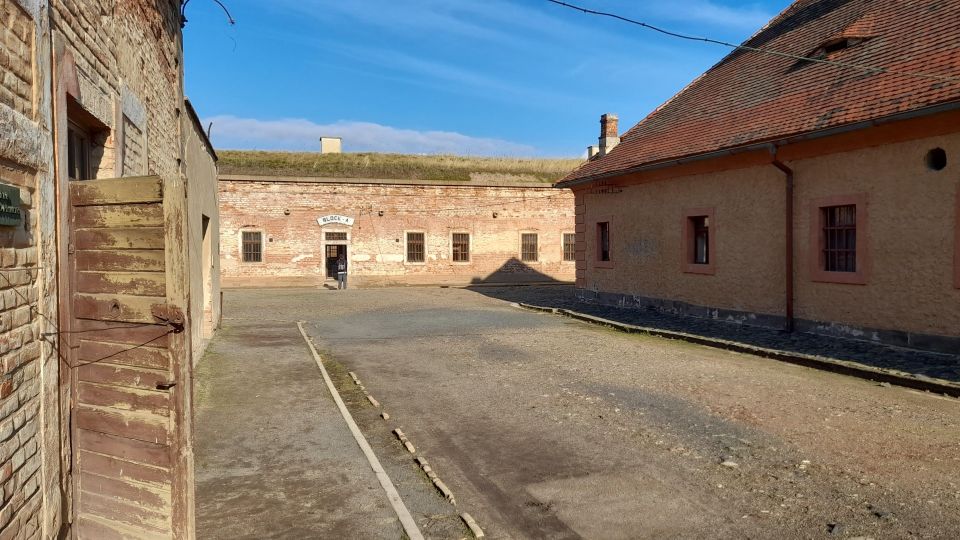
- Two fortresses, two functions: the Small Fortress as a Gestapo prison and the Big Fortress as the Jewish ghetto-concentration camp.
- A guided walkthrough of the prison spaces: court where prisoners arrived, commander’s office, mass cells, Jewish cell, solitary cells, tunnels, and the shooting range.
- The museum’s strong children-focused ground floor: the Museum of the Ghetto is housed in former boys’ barracks, with the first part dedicated to children.
- A hidden synagogue story you can actually see: the hidden chapel and synagogue are concealed because Jewish religious signs were banned.
- The tour ends at the crematorium and mass graveyard: the final stops explain what happened beyond the walls.
- Door-to-door comfort from Prague: private group, driver, and entrance fee included.
How the 5-hour private route from Prague really feels
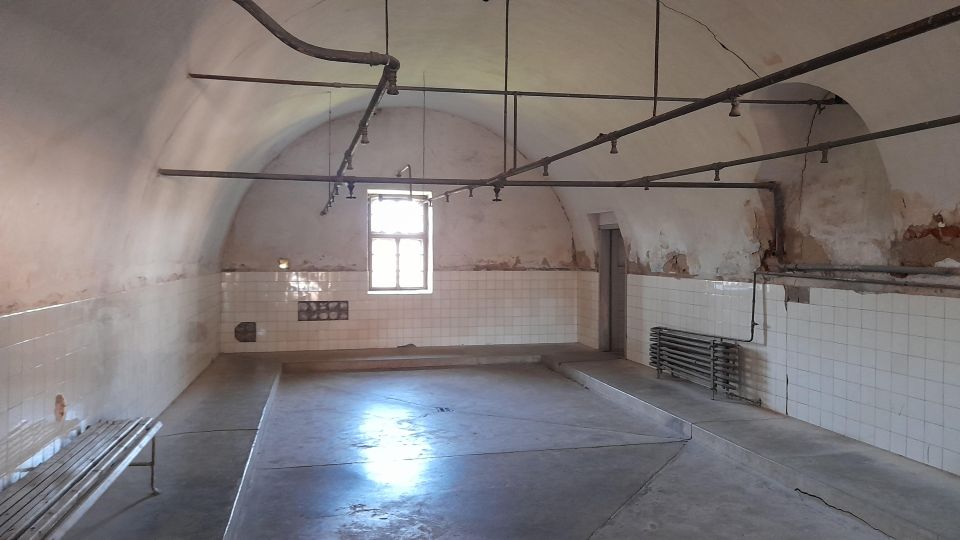
This is a true half-day format. You start with pickup included, meet your guide and driver where it suits you (hotel, square, airport, and similar spots), and then you head out of Prague with a private setup in a car or minivan. That matters because Terezin is not a “drop in whenever” kind of place. A guided plan helps you connect the dots between the Small Fortress, the Big Fortress, and what lies just outside the walls.
I like the private-group angle for one practical reason: it gives you room to ask questions without slowing everyone else down. With a topic this heavy, it is also easier to set the right pace. A good guide can decide when to pause, when to explain context, and when to keep moving so the route stays coherent.
The tour is designed around one clear idea: you’re not just touring one site. You’re seeing the machinery of the Holocaust as it was carried out in one place that shifted roles over time. The total time is about 5 hours, and that includes driving, guiding, and entrance to the Terezin Memorial.
Language options are broad—English, Spanish, French, Russian, Italian, Czech, and German—so it is realistic to get a guide who matches your comfort level. And because it’s listed as wheelchair accessible, it is worth considering even if you normally avoid long historical walks.
You can also read our reviews of more private tours in Prague



Small Fortress: Gestapo prison spaces, courts, tunnels, and the propaganda film
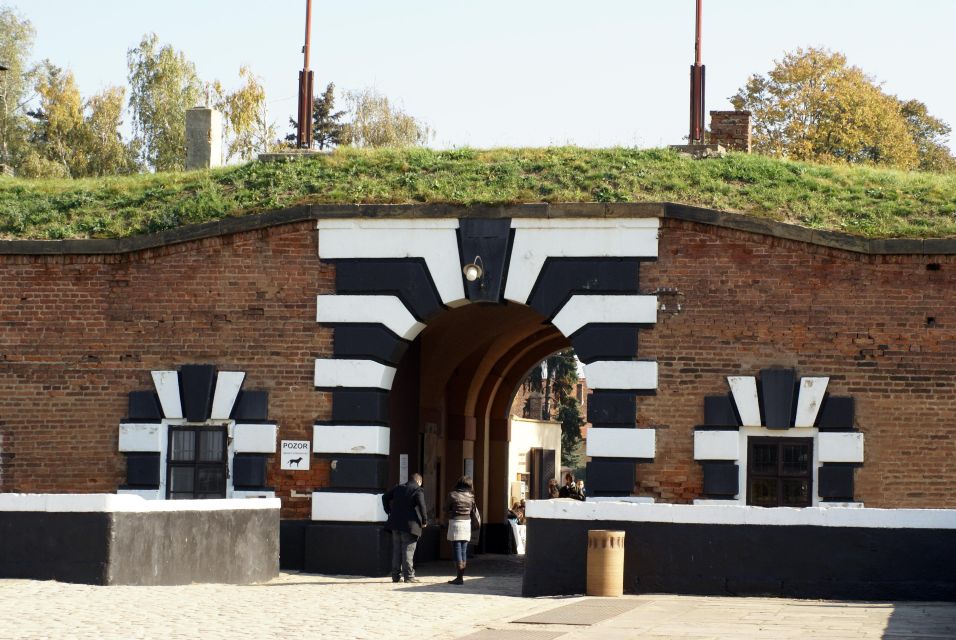
The Small Fortress is where the day becomes stark and concrete. This part of Terezin served as a Gestapo prison starting in June 1940, running until May 8, 1945. Over those years, roughly 35,000 prisoners passed through the gates. The mix included political prisoners and prisoners of war, along with Jews, Roma, people with disabilities, and others the Nazis targeted.
A private guide is crucial here because the prison layout can feel like a maze if you are not orienting yourself. You begin at the administrative court where prisoners arrived. From there, you’ll see the commander’s office, then move through the men’s section. This includes mass cells, a Jewish cell, and solitary cells—spaces that show how the system functioned at different levels of control and isolation.
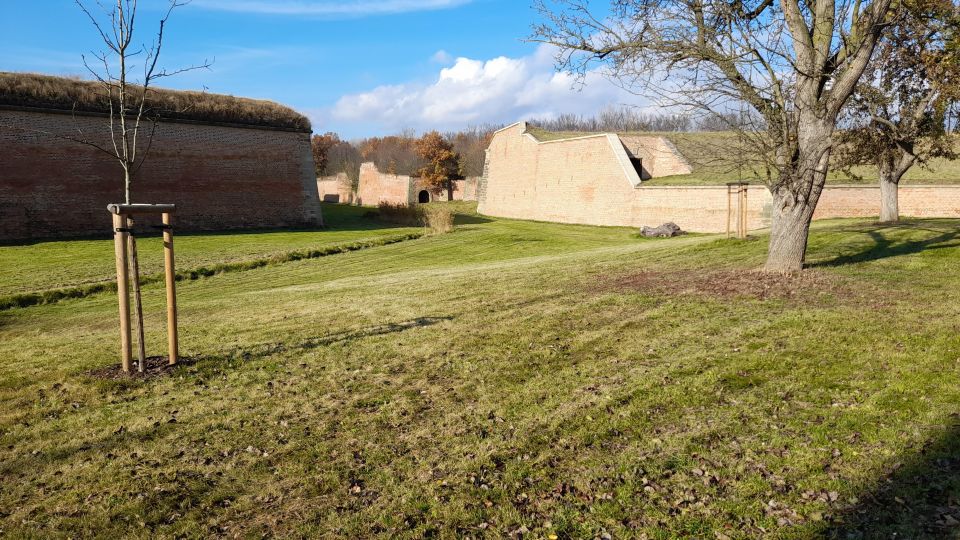
Then comes a set of stops that can be surprising if you only know Terezin from photos. You’ll walk through wall tunnels and see the shooting range. There is also the fourth courtyard, later built with bigger mass cells because the prison lacked space. Each detail adds another layer to the story, and the guide’s job is to connect the physical features to the purpose behind them.
One standout in the Small Fortress portion is that you watch a short 10-minute propaganda movie made by the Nazis for the International Red Cross. It is not there as a shock tactic. It helps you understand how deception and image management were part of the machinery, even while prisoners were suffering in real time.
If you tend to learn best by seeing the “how” as well as the “what,” you’ll appreciate how the tour is structured around the prison’s working spaces rather than only general descriptions.
Big Fortress ghetto: the museum for boys, children on the ground floor, and the numbers that explain scale
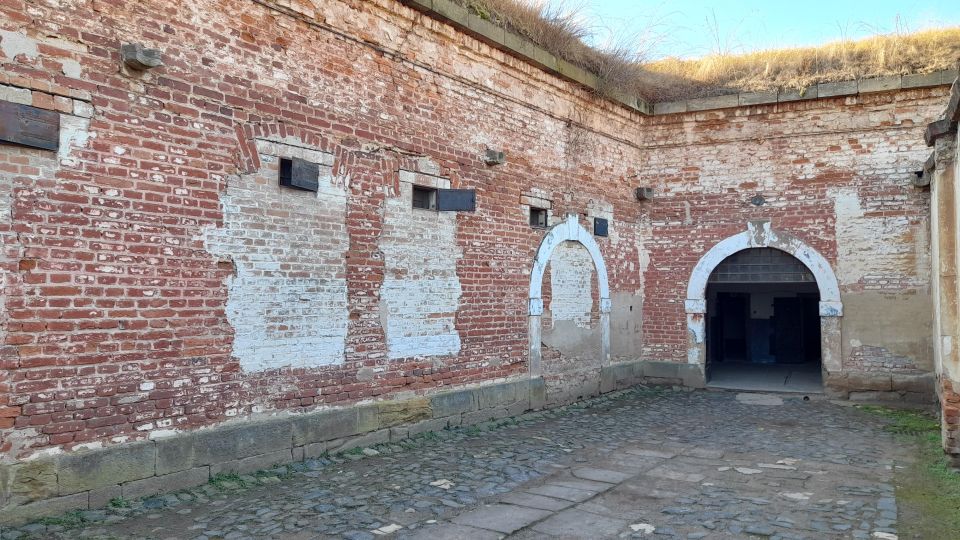
About a mile away from the Small Fortress, the Big Fortress operated as a ghetto-concentration camp for Jews starting on November 24. Over roughly 3.5 years, around 155,000 Jewish people passed through. The grim math continues: 63 transports left Terezin for extermination camps in Poland carrying about 87,000 prisoners, and only around 3,600 survived the war. Inside the ghetto itself, approximately 35,000 people died, largely from disease and lack of nutrition.
Walking into the Big Fortress section can feel like a shift in tone, but the structure of the place stays part of the message. You visit the Museum of the Ghetto in former barracks for boys. The ground floor focuses on the children who lived and perished in Terezin. That emphasis matters. It keeps the history from staying abstract or purely statistical, and it forces the scale into human scale.
The museum’s later sections focus on the extermination camps. This sequencing is helpful. You start with life and loss in Terezin, then move outward to what those transports meant. It makes it easier to understand how a place can be both a ghetto and a staging point within the larger system.
A private guide also helps with the emotional pacing. You can linger where you need to and move on when your brain needs a break from absorbing new facts. That is one reason I prefer guided tours here: they manage the rhythm, not just the route.
Hidden chapel and Magdeburg barracks: religion and culture under censorship
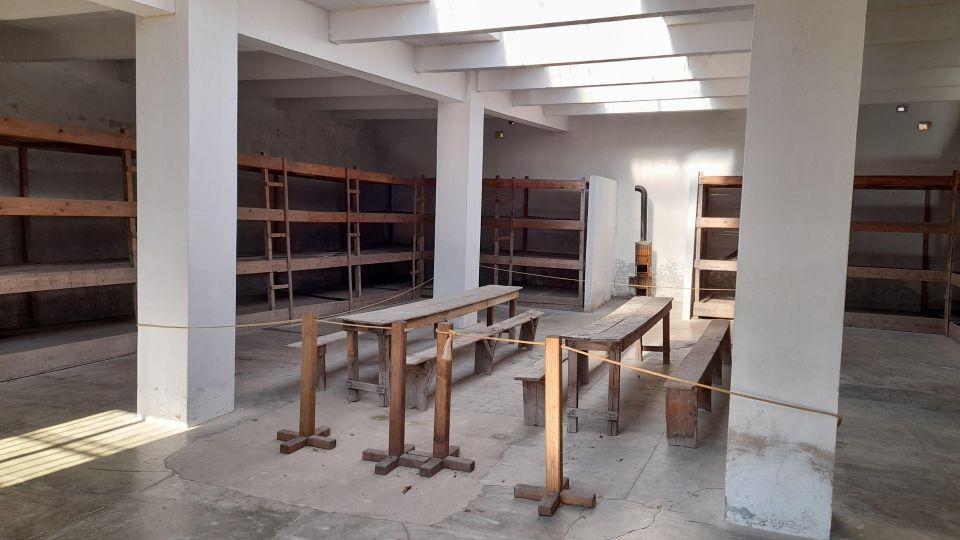
After the museum, you visit the hidden chapel. This includes the hidden synagogue in Terezin—one of six such hidden synagogues in the area. The one you’ll see is hidden in a storage room because signs of Jewish religion were banned by the Nazis.
This stop is powerful for a simple reason: it shows that faith and identity did not disappear just because the Nazis tried to erase visible religious life. The architecture and concealment explain the pressure people were under. You’re not just learning a concept; you are seeing the workaround that had to stay secret.
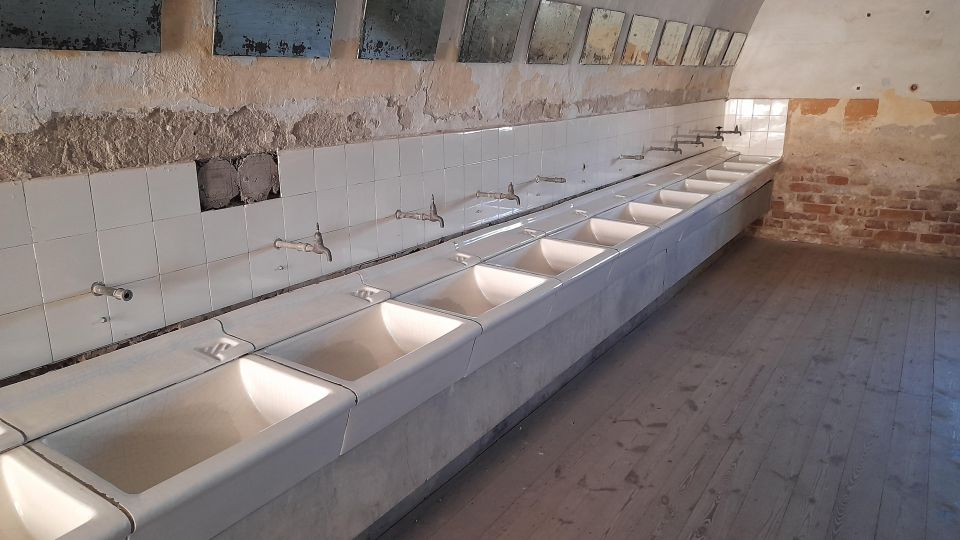
Then the tour continues to the Magdeburg barracks. Here, you’ll see what dormitories looked like and learn about culture in the ghetto. The point is not to romanticize conditions. It’s to show how Jewish prisoners included accomplished artists, and how creativity functioned even under confinement. A good guide ties these details back to daily life, so the story doesn’t stay trapped in “before/after war” language.
This section tends to be a relief for some visitors because it adds dimension beyond suffering. For others, it can be tough because it highlights how much was stolen. Either way, it helps you understand that Terezin was a place where cruelty and courage coexisted.
Crematorium and mass graveyard: why ending outside the walls matters
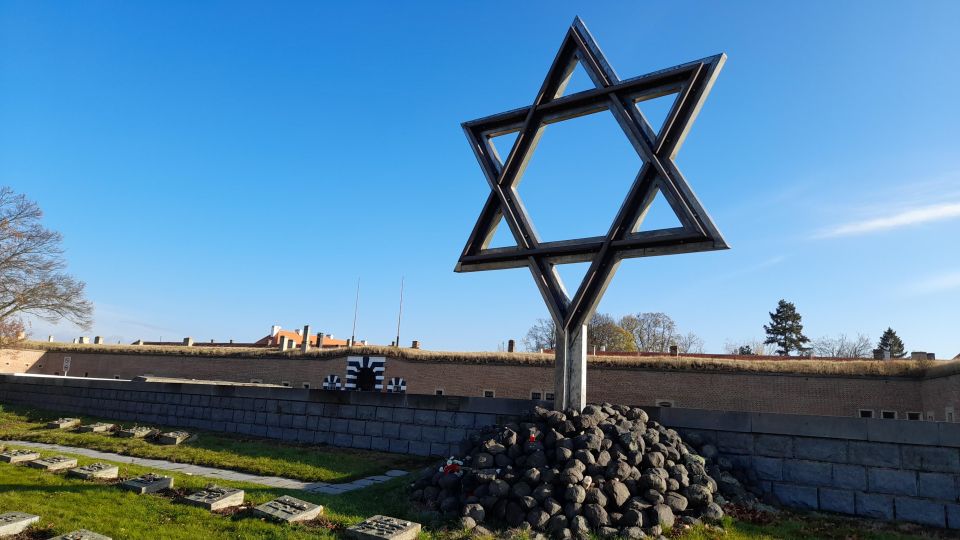
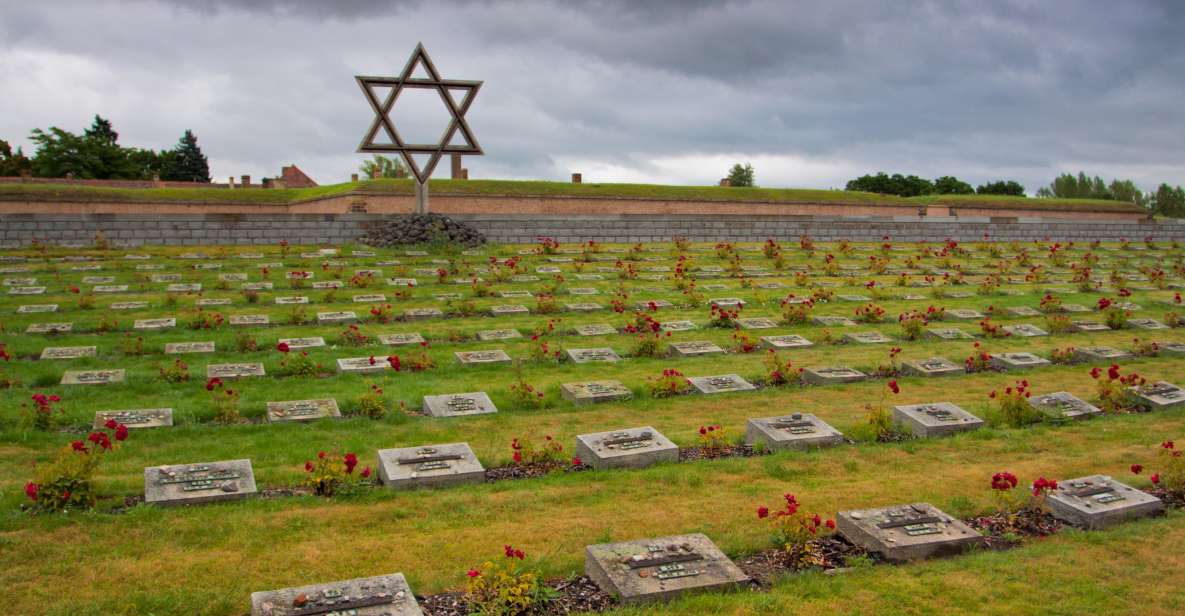
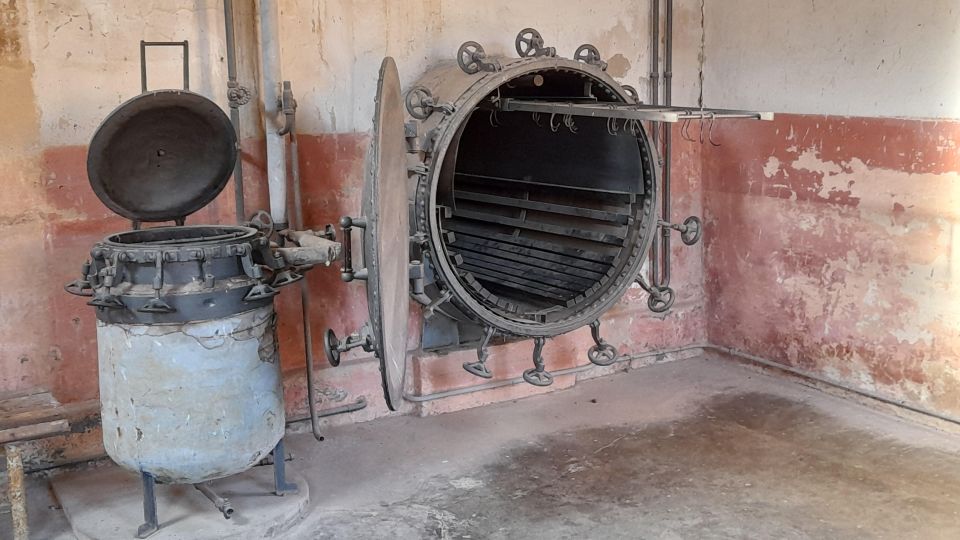
At the end of the tour, your guide takes you to the krematorium, located outside Terezin’s walls. It was built in 1942, and victims’ bodies were cremated there. Next to the crematorium lies a mass graveyard.
Ending here isn’t accidental. It closes the loop between what you saw inside (prisons, cells, ghetto life, transport context) and what happened after. The crematorium stop gives the last piece of the chain a physical place, so the story doesn’t stop at the museum door.
You also get a shift in atmosphere. Being outside the walls can feel like the world opens up again. That contrast is useful, because it makes it harder for your brain to file the experience as something that happened somewhere else. Even with a guide’s pacing, this part is usually the hardest to hold together emotionally.
If you plan the rest of your day, I’d treat it as an “aftercare” moment. Don’t schedule something rushed right after, because your mind will likely keep processing what it just saw.
You can also read our reviews of more tours and experiences in Prague

Price and value: what $316 per person buys you
At $316 per person for a 5-hour private tour, you’re paying for three big things: a private guide, transportation, and admission to the Terezin Memorial. That combination is often where value shows up for this kind of visit.
First, a private guide matters because the sites are complex. Small Fortress and Big Fortress are not just two stops; they are two systems. A local guide can explain why each courtyard, cell, tunnel, or barracks area matters, and that reduces the risk of getting lost in facts that don’t connect.
Second, the transportation saves time and stress. Pickup is included, and you don’t have to negotiate public transit for a route that takes you out of Prague and back within a tight half-day window.
Third, the entrance fee is included, which avoids add-on surprises at the gate. For a museum-heavy, memorial site, that can make planning easier.
For who this price makes sense: if you want a guided, door-to-door experience with a serious itinerary and you’re traveling as a small private group, the cost can be fair compared with piecing together transit plus a separate guide plus admission.
For who might hesitate: if you’re determined to self-guide with minimal assistance and you’re comfortable reading the sites on your own, you may be able to do it cheaper. But you would likely lose some of the linking context that helps the route feel coherent.
Who this private tour suits best
This tour fits you best if you:
- want the full Small and Big Fortress storyline in one run
- prefer a guide who can answer questions in your chosen language (English through German are listed)
- appreciate practical orientation: where you are, why the space looks the way it does, and how it ties to the timeline
- value a private-group pace, especially for emotional processing
It is also a good choice for mixed travelers. The tour is listed as wheelchair accessible, and the private format makes it easier for a guide to adjust to your group’s needs within the overall 5-hour structure.
If you’re someone who hates being rushed and wants time to understand rather than just “see,” this is the right kind of format.
Should you book this Terezin private half-day tour
I’d book it if you want a guided, structured visit that connects the prison system, the ghetto museum, hidden religious life, and the crematorium in one logical arc. The private approach is especially worth it here because the sites are dense, and context matters as much as location.
I’d think twice only if you know you struggle with emotionally heavy memorial visits or you strongly prefer self-guided travel with minimal guidance. This isn’t an itinerary where “winging it” tends to work well, because a lot of meaning sits in the spaces themselves.
If you do book, treat it like a purposeful day. Wear something comfortable, plan for quiet after, and give your guide permission to set the pace rather than forcing yourself to keep up with curiosity like it’s a checklist.
FAQ
FAQ
How long is the Private Half-Day Tour To Terezin Concentration Camp?
The duration is 5 hours.
Is the tour private or shared?
It is a private group.
What is included in the price?
Included are the private tour guide, a driver, a car/minivan, and the entrance fee to the Terezin Memorial.
Do I get picked up from Prague?
Yes. Pickup is included, and the guide can pick you up at a place that suits you, such as a hotel, square, or airport.
What parts of Terezin will we visit?
You will visit both the Small Fortress and the Big Fortress, including the museum of the ghetto, the hidden chapel, and stops such as the crematorium and mass graveyard.
Will the guide speak my language?
The tour offers live guiding in English, Spanish, French, Russian, Italian, Czech, and German.
Is the tour wheelchair accessible?
Yes, it is listed as wheelchair accessible.
Do I need to buy the entrance ticket separately?
No. Entrance to the Terezin Memorial is included.
What is the cancellation policy?
Free cancellation is available up to 24 hours in advance for a full refund.