REVIEW · PRAGUE
Prague Immersive Tour: Travel back in time with virtual reality
Book on Viator →Operated by Numinos Praga · Bookable on Viator
Prague changes fast—unless you freeze time. This virtual reality tour lets you move through Prague across different years while you’re standing in the heart of the city. I like the way the tour connects real streets—Stare Město, Charles Bridge, Josefov, and Staroměstské náměstí—to specific moments in history. One thing to keep in mind: a small number of people reported start-day problems, so I’d treat it like any ticketed activity and arrive early with your mobile ticket ready.
What I love most is the guided VR storytelling. You’re not just looking at a screen—you’re moving stop to stop with a guide who talks you through what you’re seeing and why it matters. In particular, guides such as Anna and Lara are repeatedly praised for making the different phases of Prague’s development easy to follow.
My main caution is weather. The experience notes it requires good weather, and if it gets canceled for weather reasons you’ll be offered a different date or a refund. Plan your afternoon flexibly if you can.
In This Review
- Key highlights to look for
- Prague VR time travel, but with real streets under your feet
- Price and logistics: is $18.15 worth it?
- Where the tour starts on Celetná (and why that location helps)
- Stop 1: Stare Město in 1377 Charles IV Prague
- Stop 2: Charles Bridge from 1342, with Judith Bridge and Malá Strana context
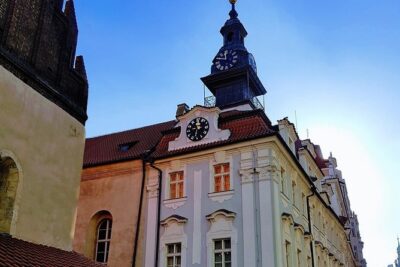
- Stop 3: Josefov in 1600, the former Jewish ghetto comes into focus
- Stop 4: Staroměstské náměstí in 1621 and the event that shaped Prague
- The guides: why narration makes the VR work
- Small group size and how it affects your experience
- Weather matters more than you’d think
- Who should book this Prague VR time-travel tour?
- Should you book the Numinos Prague VR tour?
- FAQ
- What is the duration of the Prague Immersive Tour?
- Where does the tour start and what time is it?
- How much does it cost?
- Is the tour offered in English?
- Do I need to bring a printed ticket?
- How far in advance should I book?
- How big are the groups?
- Is it weather-dependent?
- Is there free cancellation?
- Is the experience accessible to most people?
Key highlights to look for
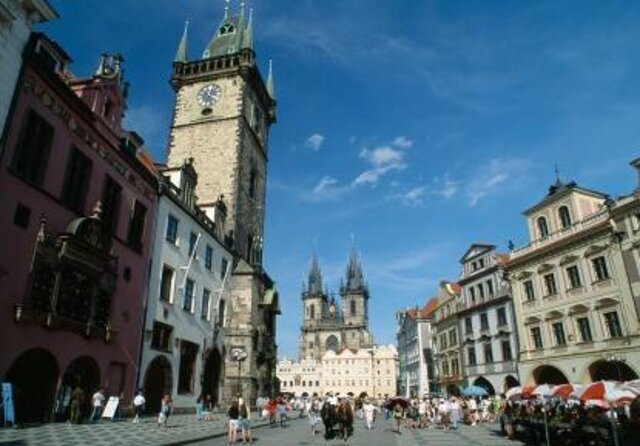
- Four time jumps in 1 hour 45 minutes: 1377, 1342, 1600, and 1621, each framed at a key Prague location
- Small group size (max 15): easier questions, less crowd pressure while you do the VR portion
- English-language guide narration that ties what you see to how Prague evolved
- Real-world starting point in Staré Město (Celetná 558/12) so you stay anchored in central Prague
- Judith Bridge and Malá Strana context woven into the Charles Bridge stop
- Josefov shown as a historical turning point tied to the former Jewish ghetto in 1600
Prague VR time travel, but with real streets under your feet
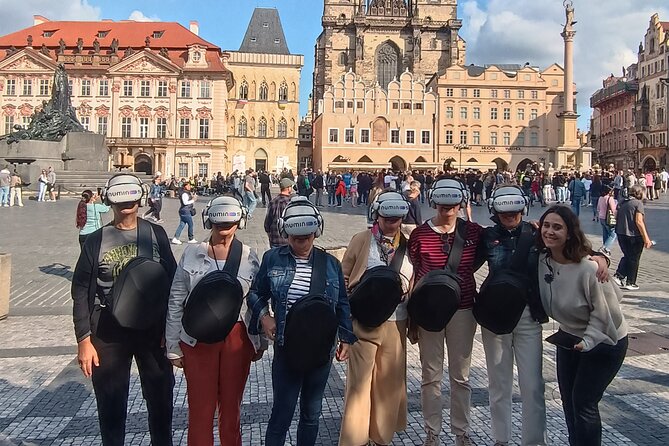
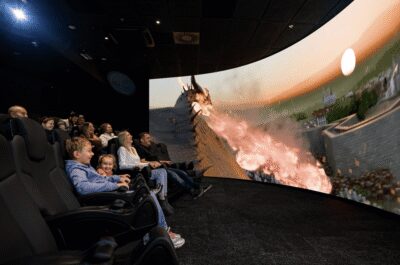
This is a guided “step into another century” experience that uses virtual reality to show Prague at multiple historical points. The format works because it’s not random history trivia. You’re at recognizable places, and the VR visuals are meant to line up with what the guide is explaining.
The tour runs about 1 hour 45 minutes. The pacing is built around four short segments—each stop is roughly 20 minutes—so you don’t feel like you’re stuck in one room for a long stretch. And since you’re in the Old Town area, it’s simple to pair with a walking afternoon elsewhere.
Two details matter for your comfort and expectations:
- It’s offered in English, so you’ll want to stick with that if language is your priority.
- You’re dealing with a technology-based presentation, so if you’re prone to motion or screen discomfort, consider taking it slow and using the guide’s cues.
You can also read our reviews of more tours and experiences in Prague.



Price and logistics: is $18.15 worth it?
At $18.15 per person, this is priced like an activity you can add without blowing your budget—especially in central Prague, where tours can climb fast. The real question isn’t only the dollar amount. It’s what you get per minute.
You’re paying for:
- Four distinct time periods tied to major locations
- Guided explanation in English
- A small-group setting (up to 15)
- A VR component designed specifically for historical time travel
That’s a lot of “story beats” for the cost. If you’re a person who likes history but gets bored with lectures, this format can work well. It turns the centuries into scenes you can track, and the guide helps you connect the dots so it doesn’t become just visual effects.
One value tip: because it’s a popular booking, the average booking window is listed as about 36 days in advance. If you’re traveling at peak times, try to lock in your slot earlier rather than betting on last-minute availability.
Where the tour starts on Celetná (and why that location helps)
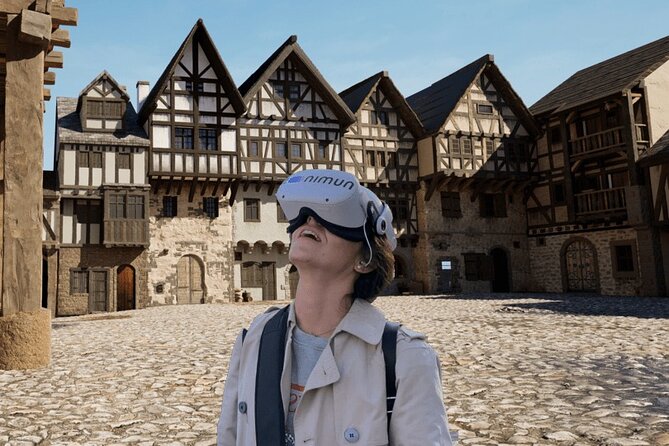
The meeting point is Numinos – Travel back in time with Immersive Tours, at Celetná 558/12, 110 00 Praha 1-Staré Město. The tour starts at 3:00 pm and ends back at the meeting point.
Why I like this setup for your planning:
- Central location: you’re not fighting transfers across town.
- It’s near public transportation, which helps if you’re juggling multiple bookings that day.
- You can treat it as a clean “anchor” in your itinerary. After it ends, you’re back where you started.
Also, the tour allows service animals, and notes that most travelers can participate. That’s a good sign for a broad range of visitors, though if you have specific mobility needs or health concerns, you should rely on the operator’s confirmation details at booking.
Stop 1: Stare Město in 1377 Charles IV Prague
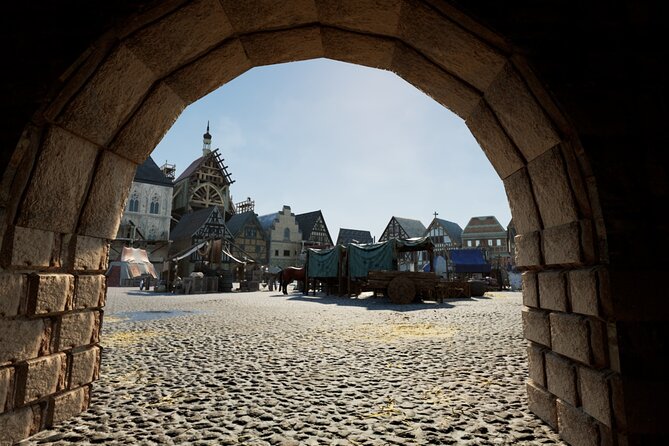
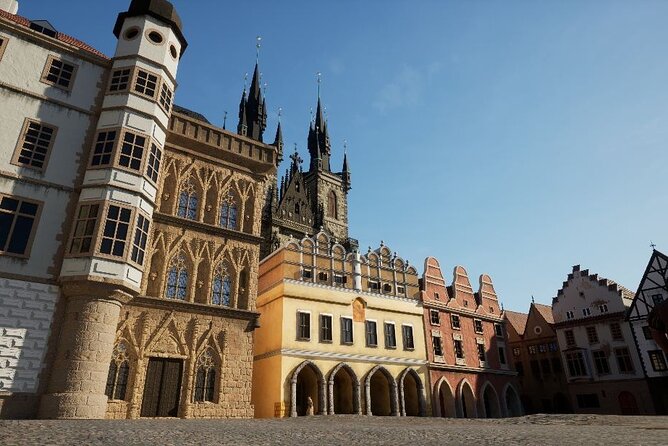
The tour begins at Stare Město with a time jump to 1377, centered on a very different Old Town Square under Charles IV. This is the kind of start that helps your brain calibrate: you’re dropped into the medieval version of a place you may later recognize.
What you’re likely to experience here is the contrast between “what the square looks like now” and “what it was meant to be centuries ago.” That makes later stops easier, because you learn to read the city as layers—not one fixed postcard view.
Practical consideration: this stop is only about 20 minutes, so don’t expect to linger and study like you would on your own. Treat it as your orientation. If the guide prompts you to notice specific landmarks or vantage points, listen closely—those are the details that usually make the VR scenes click.
Stop 2: Charles Bridge from 1342, with Judith Bridge and Malá Strana context
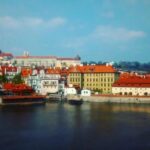
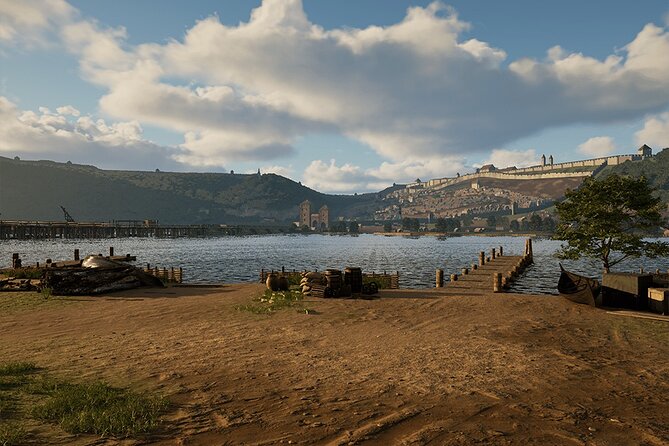
Next comes the Vltava River area and the Charles Bridge approach, where the time travel shifts to 1342. The VR story here includes:
- A panoramic view of both banks
- Reference to the Judith Bridge in its last moments
- A medieval Malá Strana setting, including its walls
This stop is strong because it’s geographically honest. Charles Bridge is a natural viewpoint: you’re on the bridge approach, facing the river, and the guide can connect what you see physically to what you’re seeing digitally.
Here’s how to get more out of it:
- Look for the “both banks” perspective. If the guide gives you landmarks to track, use them. It helps you map the past onto the real geography.
- Pay attention to the Judith Bridge detail. Even if you don’t know much about it beforehand, the stop is designed to make the mention feel specific, not random.
If you’re the type who loves a great view, you’ll likely enjoy this part most. And if you’re more into daily life or urban change, this stop also works because it frames the river crossings as the backbone of early Prague.


Stop 3: Josefov in 1600, the former Jewish ghetto comes into focus
Then you move to Josefov, with a time travel jump to Prague under Rudolph II and the former Jewish ghetto in 1600.
This part matters because it shifts the story from bridges and squares to a neighborhood identity shaped by policy, community life, and historical change. A VR time jump can turn a name on a map into a lived place—especially when a guide connects what you’re seeing to the historical moment you’re in.
What to watch for during this stop:
- The guide’s emphasis on how the ghetto area functioned in 1600. Even without deep prior knowledge, the narration should help you understand the context.
- Any moment where the VR helps you “place” buildings or street structure. When the city is shown as it was, you start noticing what still lines up today—and what doesn’t.
This stop is only about 20 minutes, so you may not get everything you’d want if you were doing a full historical walking tour. But for a VR format, it’s one of the most meaningful locations on the route.
Stop 4: Staroměstské náměstí in 1621 and the event that shaped Prague
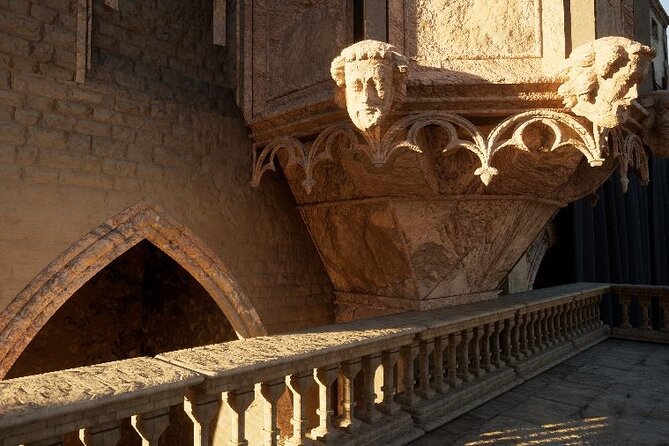
The tour ends by returning to the central square again—Staroměstské náměstí—but almost 250 years later, specifically in 1621. The guide will show you one of the events that conditioned Prague’s history forever.
Even without naming every historical term upfront, the value here is the timing. You’ve seen Prague in 1377, 1342, and 1600. Then the tour lands in 1621, turning the city from a sequence of “earlier versions” into a story with consequences.
To enjoy this stop, don’t treat it like a final recap. Treat it like a turning point:
- Watch how the guide connects changes in the city’s look or feel to the event in 1621.
- Let the ending do its job: it should leave you with a sense of cause-and-effect, not just a fourth date.
Also, because it’s the last stop, this is your moment to ask questions if your guide opens it up. Small-group tours tend to be more conversational, and you’ll have more personal attention near the end.
The guides: why narration makes the VR work
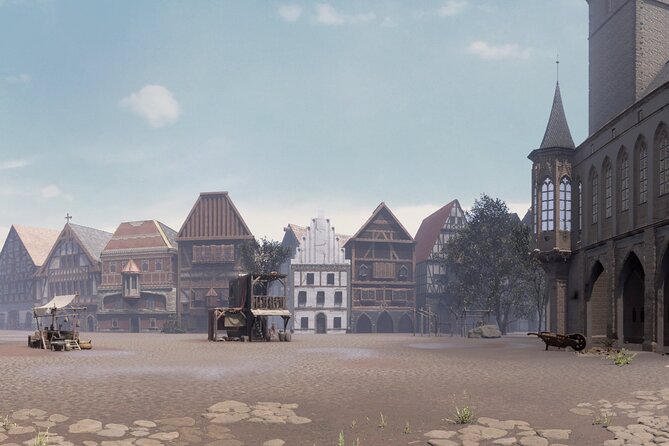
This kind of tour lives or dies on guidance. VR can be visually impressive but shallow if nobody explains what you’re looking at. The standout praise in this experience centers on guides who make the different periods easy to understand.
In the reviews, names like Anna and Lara come up as particularly strong—especially for their ability to explain Prague’s development across the centuries in a way that feels straightforward. If you care about learning while you’re entertained, this is where the tour earns its recommendation.
If you want to get the most value, here’s my practical advice: lean into the guide’s pacing. VR time travel can feel like switching channels. The guide’s narration gives you structure, and that’s what turns the experience into more than a fun tech demo.
Small group size and how it affects your experience
The tour caps at 15 travelers. That matters more than it sounds. With VR and timed stops, smaller groups usually mean:
- Less waiting in line
- More chance for the guide to notice if you’re confused
- A calmer rhythm while you’re listening
It also makes the experience feel more personal. Even though it’s a set route, the group size helps keep it from feeling like a conveyor belt through Old Town.
Weather matters more than you’d think
The experience states it requires good weather. That’s an important note for your planning because it can affect whether the tour runs as scheduled.
If you’re booking multiple activities that afternoon, build in a buffer. If the weather forces a cancellation, the policy says you’ll be offered another date or a full refund. In other words, you’re not stuck, but you might need flexibility.
A quick strategy: check the forecast the day before and the morning of. If weather looks iffy, it can be worth shifting your most weather-sensitive plans first.
Who should book this Prague VR time-travel tour?
I think this works best for you if:
- You want a history experience that doesn’t feel like a lecture
- You like visual learning, especially when it’s anchored to real locations
- You’re short on time but want multiple time periods in one afternoon
- You prefer a guided route with a small group over solo wandering
It may not be the best match if:
- You’re looking for deep, hours-long history detail at each stop
- You hate technology-based experiences
- You’re very inflexible about schedule changes due to weather
One more note from the spirit of the reviews: people often wish there were more scenarios. That tells me the core format is satisfying, but the number of time periods you get is finite. If you want tons of different eras, you might want to pair this with a standard walking tour afterward.
Should you book the Numinos Prague VR tour?
Yes, if you want a fast, guided way to see Prague as a changing city instead of a fixed monument. For $18.15 and a 1 hour 45 minute format, you get four major time jumps tied to major Prague locations, with English narration and a small group size.
Skip or reconsider if you’re planning during questionable weather, or if you’re the type who needs absolute certainty on day-of logistics. There is at least one report of a no-show situation, so I’d treat this like any scheduled ticket: keep your confirmation handy, show up with time to spare, and stay alert.
If you’re excited by the idea of standing in the Old Town and watching it shift into centuries past, this tour is a strong use of an afternoon in Prague.
FAQ
What is the duration of the Prague Immersive Tour?
It lasts about 1 hour 45 minutes.
Where does the tour start and what time is it?
It starts at Numinos – Travel back in time with Immersive Tours, Celetná 558/12, 110 00 Praha 1-Staré Město, and the start time listed is 3:00 pm. The tour ends back at the meeting point.
How much does it cost?
The price is $18.15 per person.
Is the tour offered in English?
Yes, it’s offered in English.
Do I need to bring a printed ticket?
No. The tour uses a mobile ticket.
How far in advance should I book?
The average booking time is listed as about 36 days in advance, which suggests it can fill ahead of time.
How big are the groups?
The tour has a maximum of 15 travelers.
Is it weather-dependent?
Yes. It requires good weather. If it’s canceled due to poor weather, you’ll be offered a different date or a full refund.
Is there free cancellation?
Yes, you can cancel for a full refund up to 24 hours in advance. If you cancel less than 24 hours before the start time, the amount paid is not refunded.
Is the experience accessible to most people?
The listing states most travelers can participate. It also notes that service animals are allowed.