REVIEW · PRAGUE
Medieval Prague Through a Nightwatchman’s Eyes
Book on Viator →Operated by Night Watchman of Prague · Bookable on Viator
Prague feels different when a watchman talks. This nighttime Old Town tour trades daytime landmarks for medieval street details, spooky stories, and a guide who performs the part from start to finish.
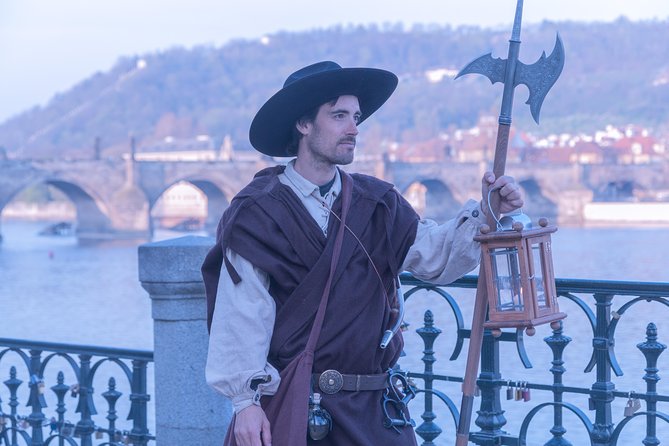
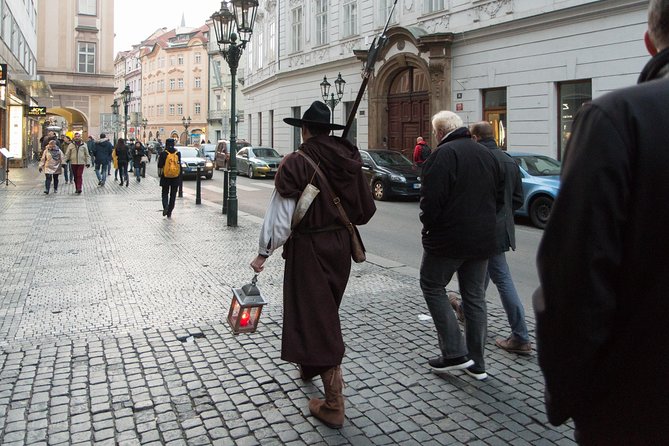
I love how the tour turns big-name places into daily-life scenes, from market food for ordinary people to grim punishments in the town square. I also like the small group size (max 15) and the extra atmosphere created by the guide’s props, like a lantern and halberd for photos.
One consideration: you’ll be walking on uneven cobblestones in the dark, and it runs in all weather, so plan for cold or rain and wear solid shoes.
In This Review
- Key takeaways before you go
- What this Nightwatchman tour is really good at
- Price and what you actually get for $26.62
- Where you meet and how the route flows
- Step-by-step: Prague in story order, from Powder Gate to Charles Bridge
- Stop 1: Prasna brana (Powder Gate) and why gates mattered
- Stop 2: Ovocný trh and the bread of common people
- Stop 3: Theatre Des Etats and the Mozart connection
- Passing the first Middle European university and Il Commendatore statue
- Stop 4: Old Town Hall and the Astronomical Clock area
- Stop 5: Jan Hus Monument and the Hussite presence
- Stop 6: Church of Our Lady before Týn (1368) and Gothic survival
- Stop 7: Rudolfinum and a quiet riverside break with Castle views
- Stop 8: Charles Bridge beginning and nobles from the other side
- The guide factor: what the best nights have in common
- Walking reality check: comfort, timing, and pace
- Who should book this nightwatchman-style tour
- A quick “should I book it?” decision
- FAQ
- How long is the tour?
- Is the tour offered in English?
- What is the group size limit?
- Where do I meet the guide?
- Where does the tour end?
- Does it run in bad weather?
- What is included in the tour price?
- Are there extra admission fees for the stops?
- Is hotel pickup or drop-off included?
- What is the cancellation policy?
Key takeaways before you go
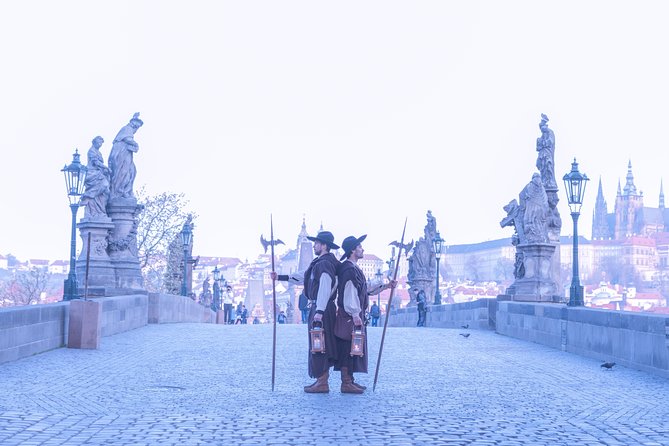
- A performer-in-character guide who keeps the story going the whole walk, including vivid street-level details
- Prague Old Town highlights in sequence: Powder Gate, fruit market, Estates Theater area, Old Town Hall, Charles Bridge
- Bread of the common people plus quick stops that feel like scenes, not just points on a map
- Small-group pacing that leaves room for questions and slower turns off the main route
- Perfect if you want the “what it felt like” version of Prague rather than a standard checklist
What this Nightwatchman tour is really good at
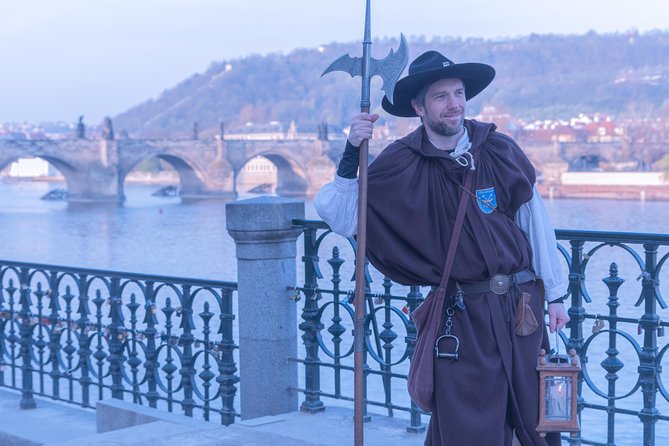
This is the kind of Prague tour that helps you see the city as people once did: after dark, under watchful eyes, and with rules you didn’t argue with.
The big idea is the perspective. Your guide frames stops around what a night watchman might notice, worry about, and report—so executions, mysteries, and public fear aren’t abstract history. They land as lived reality, including the social side of 1600s Prague.
You’ll also feel the payoff of doing it at night. The streets are quieter, and the stories match the setting. Even when it’s showery, the mood still works—because the guide builds an atmosphere on purpose.
You can also read our reviews of more tours and experiences in Prague.
Price and what you actually get for $26.62
At about $26.62 per person for roughly 1 hour 30 minutes, this isn’t a “pay for a seat” tour. The value comes from several things packed into a short walk:
- A costumed guide in historical dress (and full character performance)
- A route that links multiple Old Town areas so you don’t spend your evening only circling the same square
- A few story-driven “micro-stops” where you learn something specific before moving on
- At least one hands-on moment, like tasting bread of the common people at the fruit market
You’re also not paying extra for transportation. That keeps the cost focused on the guiding and storytelling portion.
Where you meet and how the route flows
You start at the Powder Tower area, at Nám. Republiky 5 (Staré Město). That’s a smart location because it sets you near the historic gate-and-square world fast, without burning time getting situated.
The tour ends at the Charles IV Statue area, right at the beginning of Charles Bridge. I like this finish because it drops you at a prime spot for photos and a natural transition to dinner or a late evening stroll—without making you backtrack across town.
Between these points, the route is designed to keep you moving while still stopping often enough to feel like a true story walk, not just a long march.
Step-by-step: Prague in story order, from Powder Gate to Charles Bridge
Stop 1: Prasna brana (Powder Gate) and why gates mattered
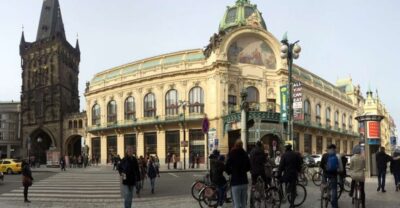
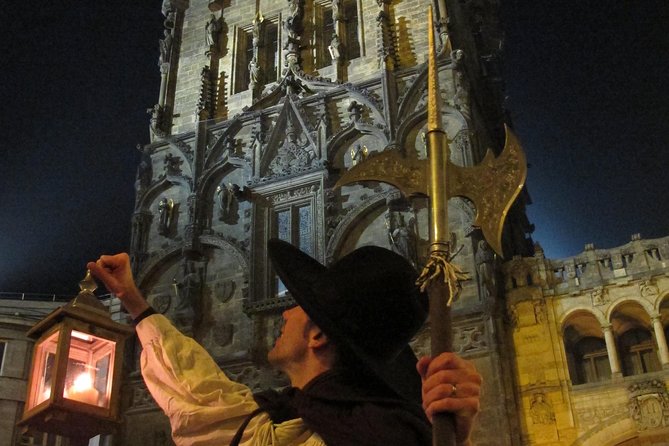
Your first stop is Prasna brana, the old Powder Gate. You’ll hear how it functioned as one of the city’s protective gates, and why its name connects to stored gun powder.
This start matters. A gate isn’t just a piece of stone. It’s where control, suspicion, and routine intersect—exactly the kind of tension that a night watchman story leans on. It’s also a good warm-up: you’re outdoors, the group gathers quickly, and the guide can set the tone before the darker tales begin.
One nice detail here is that the stop is brief, so you don’t get stuck standing in one spot before the walk starts.

Stop 2: Ovocný trh and the bread of common people
Next comes Ovocný trh, the fruit market area. This is where the tour shifts to daily life—what ordinary people ate, how markets worked, and why food tells you a lot about a city’s social ladder.
You’ll be offered the bread of the common people. I love moments like this because it turns the story from words into something you can taste, even if it’s a small amount. It’s quick, but it changes the vibe.
The practical side: this is also an easy place to orient yourself to Old Town street layout, since markets typically cluster around major paths.
Stop 3: Theatre Des Etats and the Mozart connection
Then you travel back in time again—this time toward the world of Mozart and Don Giovanni. You’ll connect the area with the Estates Theater, where the premiere of Don Giovanni happened, and you’ll also hear about a local hero tied into the story.
Why this fits the night watchman theme: cultural life and public unrest often lived close together in old cities. A watchman didn’t only think about crime and fires. He’d also notice crowds gathering for performances and what that meant for public order.
If you’re a music fan, this is a welcome “light” moment—still historical, but less grim than the execution stories that come later.
Passing the first Middle European university and Il Commendatore statue
Along the way, you pass the first Middle European university. The tour doesn’t just toss that fact at you—it frames it as part of how Prague’s intellectual life existed alongside its street-level realities.
You also pass the statue of Il Commendatore, which links to the first play of Don Giovanni in 1787. Even though this tour centers on earlier centuries, the guide uses these Mozart-era markers to stitch together Prague’s longer timeline.
For me, this is one of the smart moves in the route. It prevents the walk from feeling like a single-era museum. Instead, you get a sense of continuity—ideas and stories passing through centuries.
Stop 4: Old Town Hall and the Astronomical Clock area
The biggest “story square” stop is Old Town Hall and the Astronomical Clock at Old Town Square. Here, the guide talks about the market place, including defenestration and famous executions that took place.
This is the part of the tour that pushes into the darker side of Prague’s reputation. The way the guide tells it matters. If you’re expecting a cold history lecture, you might find it heavy. If you’re open to seeing how public punishment shaped daily life, it hits hard in a way that feels real.
I’d treat this as your mid-to-late evening anchor: you get a major landmark and then the story carries forward as you move away from the most tourist-filled spaces.
Stop 5: Jan Hus Monument and the Hussite presence
After the square, you stop at the Jan Hus Monument and pay honor to the Hussites of Prague, including the 14th and 15th century context.
This stop is valuable because it brings belief, dissent, and politics into the walk. Prague’s medieval streets weren’t only about trade and crime. They were also about ideas people fought for—and paid for.
It’s a short stop, but it adds a layer that makes the earlier grim stories feel less random.
Stop 6: Church of Our Lady before Týn (1368) and Gothic survival
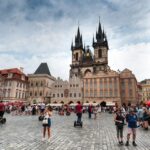
Next is the Church of Our Lady before Týn, described as one of the oldest churches you can still see today, dating to 1368.
I like this moment because the tour briefly slows down and lets the city’s architecture do some talking. You’re not just learning facts—you’re seeing how the physical city outlasted all the turmoil.
On a night walk, big stone churches also act like landmarks for your mental map. You start to feel like you’re moving through a place that has continuity.
Stop 7: Rudolfinum and a quiet riverside break with Castle views
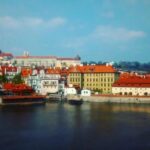
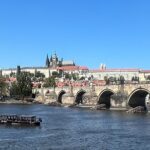
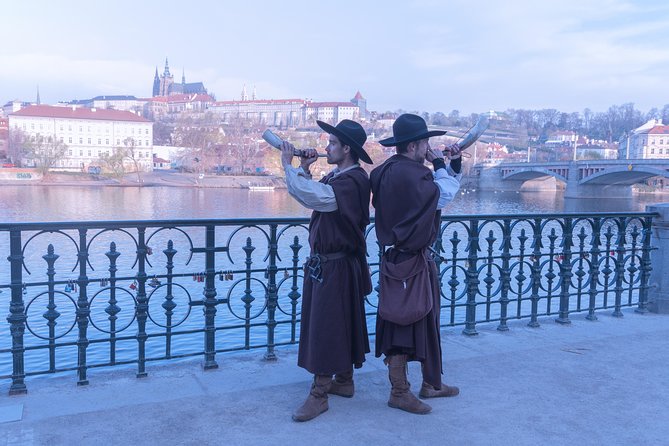
At Rudolfinum, you pass by and then take a break at a quiet spot along the riverside. This is where the tour gives you a reset—plus stunning views on Prague Castle.
This stop is not just for photos. It’s a chance to breathe, warm up a bit if you need to, and shake off the “dense story” feeling before the final stretch.
It also matters for your attention span. After squares, markets, and executions, your brain needs a visual break, and the Vltava river area provides it.
Stop 8: Charles Bridge beginning and nobles from the other side
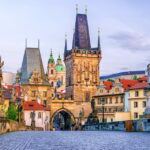
You finish at the beginning of Charles Bridge near the Charles IV Statue. The guide talks about nobles from the other side and Charles IV, using the bridge as the literal connector between worlds.
This ending works well because Charles Bridge can be a chaos zone later in the evening. Starting near the beginning gives you that “arrival” feeling without making you fight the most crowded point of the bridge right away.
If you’re planning what to do next, this is also ideal. You’re positioned for an easy route to dinner, dessert, or a night stroll back through Old Town.
The guide factor: what the best nights have in common
The tour’s heart is the performance. Multiple guides—like Thomas, Oscar, and David—have strong storytelling energy and stick to the night watchman character.
A few things that make the experience feel special when it’s done well:
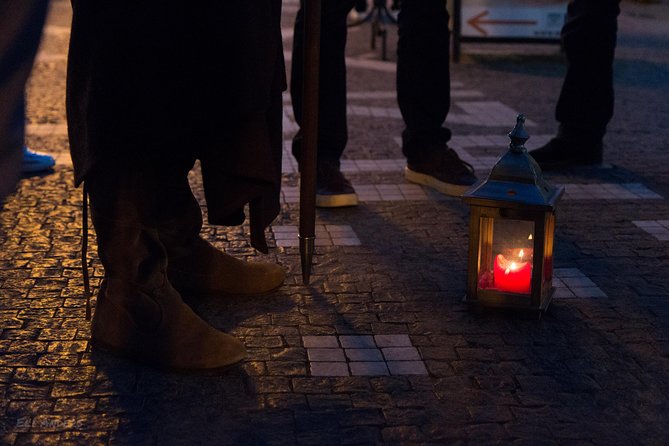
- The guide uses props, including a lantern and halberd, which turn photos into part of the show rather than a distraction
- The tone often mixes humor with darkness, so the grim bits don’t flatten the whole evening
- The smaller groups (again, up to 15) make it easier to address your questions clearly
Even if you’re not a history superfan, this format helps. You don’t have to memorize dates. You follow a narrative.
Walking reality check: comfort, timing, and pace
This is about 1 hour 30 minutes on foot, and the tour notes moderate physical fitness. On Prague’s cobbles, that usually means you should be prepared for a steady walk with turns and some uneven footing.
The tour also runs in all weather conditions, so I recommend bringing a rain layer even if the forecast looks mild. In cold or showery conditions, the tour mood can actually be better—just don’t let discomfort ruin your focus.
If you’re traveling with kids, plan around the requirement that children must be accompanied by an adult. The pacing and entertainment style can work for families, but you’ll still be outside and moving.
Who should book this nightwatchman-style tour
This is a great match if you want:
- A different angle on Old Town than the usual daytime circuit
- A night activity that feels like a story, not a lecture
- A guide who explains how ordinary people lived, not only rulers and monuments
- A route that combines major sights with quieter lanes and darker details
It’s also a smart “first week in Prague” move. Starting near the Powder Tower and ending near Charles Bridge helps you learn the city’s shape quickly.
If you want only gentle, light facts with zero grim material, you may find the execution and mystery stories more intense than you expect. For me, that’s part of the point—it makes Prague feel real.
A quick “should I book it?” decision
I’d book this tour if your ideal Prague night includes a costumed character, small-group storytelling, and a route that links Powder Gate to Charles Bridge without wasting time.
I’d think twice if you’re sensitive to darker public-historical topics or if you don’t handle nighttime walking on old streets well. But if you can handle a bit of gloom, this is one of the most memorable ways to understand how Prague used to work after dark—one vivid street at a time.
FAQ
How long is the tour?
It lasts about 1 hour 30 minutes (approx.).
Is the tour offered in English?
Yes, it is offered in English.
What is the group size limit?
The tour has a maximum of 15 travelers.
Where do I meet the guide?
You meet at the Powder Tower area, Nám. Republiky 5, Staré Město, Praha 1.
Where does the tour end?
The tour ends at the beginning of Charles Bridge, near the Charles IV Statue at Křižovnické nám., Staré Město.
Does it run in bad weather?
Yes, it operates in all weather conditions, so dress appropriately for cold or rain.
What is included in the tour price?
It includes all taxes, fees, and handling charges, local taxes, and a guide in historical dress (plus the tour itself).
Are there extra admission fees for the stops?
The listed stops are marked as admission ticket free in the tour details you’ll receive.
Is hotel pickup or drop-off included?
No. Hotel pickup and drop-off, plus transportation to and from attractions, are not included.
What is the cancellation policy?
You can cancel for a full refund up to 24 hours before the experience starts. If you cancel less than 24 hours before, the amount paid isn’t refunded.