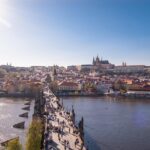
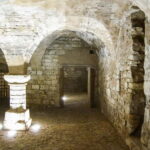
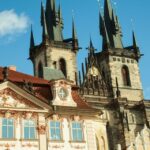
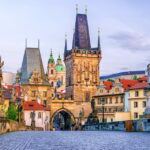
Prague turns into a story when you walk it. This 3-hour walking tour threads together Old Town and Vyšehrad with lesser-seen streets, gorgeous interiors, and guide-led context that makes the city click fast. I especially love the mix of big-name landmarks and smaller detours, and I like how the route stays focused on architecture and place-based history, not trivia dumps.
My favorite part is the way the guide links what you see to how Prague thinks about itself. Guides like Jack/Honza and Mike bring plenty of personality, and in at least one case the tour ran an extra hour because the questions kept coming. One thing to consider: it’s mostly walking, and Vyšehrad ends on a bit of a climb, so comfortable shoes and a moderate pace matter.
Key highlights I’d plan around:
- Small group size (max 15) means you get real time for questions.
- Church interiors and details are a big focus, including St. James and Emmaus Monastery.
- Cubism in the city center comes up through the House of the Black Madonna.
- Local-life detours include a quiet pause at the Franciscan Garden away from main streets.
- Vyšehrad viewpoints cap the tour with a wide river view and medieval context.
In This Review
- Why This Prague Walking Tour Works (Even If You’ve Seen the Usual Sights)
- Starting at Staroměstské náměstí: Get Your Bearings Fast
- Church of St. James the Greater: When Details Matter
- The House of the Black Madonna: Cubism in Plain Sight
- Wenceslas Square: A Quick History Lesson Without the Lecture
- Church of Our Lady of the Snows and the Franciscan Garden Break
- Vodičkova Street: Spot the Architecture You’d Otherwise Miss
- Karlovo náměstí (Charles Square): Stories, Not Just Space
- Emmaus Monastery: Frescoes, Survival, and a Paid Admission Worth It
- Vyšehrad Castle and the River View: How the Tour Lands
- Price and Value: Is $44.32 a Good Deal?
- What the Guides Are Like (And Why You Should Care)
- Who This Tour Is Best For
- Quick Practical Tips Before You Go
- Should You Book This Prague Hidden Sights Walking Tour?
- FAQ
- What time does the Prague Hidden Gems walking tour start?
- Where do I meet the guide, and where does the tour end?
- How much does it cost, and what language is offered?
- Is the tour entry fee included, or do I need separate tickets?
- What should I wear for this walking tour?
- Is food included, and what about cancellation?
Why This Prague Walking Tour Works (Even If You’ve Seen the Usual Sights)
Prague can feel like it has two cities: the postcard core and everything just around it. This tour is designed to keep you moving through the core, then slip you into the side streets where the city looks lived-in and specific. You’re not just ticking sights off; you’re learning how to read the streets.
The best value here is the pacing. Three hours is long enough to feel you got somewhere, but short enough that you won’t dread the next day. You also get a local guide and a route that balances major landmarks (Old Town Square and Vyšehrad) with quieter stops that most self-guided plans miss.
The other big plus is group size. With up to 15 people, it stays conversational, and the guide can slow down when you want to linger at a facade or ask why something was built that way. If your trip is short and you want to make Prague feel understandable, this is the type of tour that helps.
Starting at Staroměstské náměstí: Get Your Bearings Fast
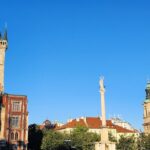
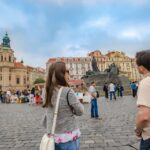
You meet at Staroměstské náměstí 1 near Old Town Square, with the session set to begin at 10:00 am. This opening matters because it gives you a quick Prague framework before you start turning corners—history, why certain areas matter, and what you’re about to see.
You also get a simple reality check: Prague is dense. If you start from a central point with context, you spend less time guessing and more time noticing.
You can also read our reviews of more walking tours in Prague

Church of St. James the Greater: When Details Matter
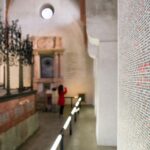
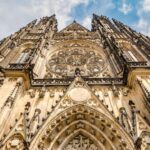
Next up is the Church of St. James the Greater, one of the stops that makes the tour feel more special than a standard “walk and point.” The guide brings you into the church and focuses on its history and interior, which is where Prague’s architecture starts to feel personal.
This is the part where a guide really earns their pay. A facade can be photographed in a minute, but interiors take time to understand. If you care about ornament, design, and how religious spaces express local identity, you’ll appreciate that the tour doesn’t rush past this.
One practical note: churches can be cooler than the street, so a light layer can keep you comfortable if you visit in warm or chilly weather.
The House of the Black Madonna: Cubism in Plain Sight
Then you hit the House of the Black Madonna, and this is where the tour turns from classic-to-famous into distinctly Prague. The guide explains how different architecture styles appear in the center, including Prague’s link to Cubism and why the House of a Black Madonna is the city’s best-known example.
Even if you’re not an architecture nerd, this stop helps you see Prague differently. You start noticing that the city isn’t only Gothic and Baroque. It also has later, modern answers—built into the streets you thought you already knew.
Wenceslas Square: A Quick History Lesson Without the Lecture
After the architectural detour, the tour reaches Wenceslas Square. This part isn’t about wandering for the sake of wandering; it’s about giving you a 20th-century lens so the place has meaning beyond crowds and shops.
You get a brief walk-through of major stories, with the guide connecting the past to what you can feel in the city today. If you’ve ever wondered why Czech history hits so deeply in everyday attitudes, this is the kind of stop that sets that up.
Church of Our Lady of the Snows and the Franciscan Garden Break
The Church of Our Lady of the Snows is another interior-focused stop, and the hook is the story behind it. The guide shares why it was originally intended to become one of the greatest churches in Central Europe, and why that plan didn’t turn into the final shape you see now.
From there, you get a small reset: a quiet off-the-main-path moment at the Franciscan Garden. This is exactly what I look for on city tours—one pause that feels like you stepped out of the loud version of Prague and into something calmer.
If your feet are getting tired, this is a good place to catch your breath and regroup.

Vodičkova Street: Spot the Architecture You’d Otherwise Miss
Next comes Vodičkova street, a stretch where architecture changes often enough to keep your eyes awake. The guide shows you where to look, and that small instruction changes everything—you start seeing details in doors, windows, and building rhythms that you’d normally walk past.
This stop is also useful if you’re a photo person. It’s not random shooting; it’s targeted looking, which usually means better shots and less time spent trying to decide what’s worth framing.
Karlovo náměstí (Charles Square): Stories, Not Just Space
You then reach Karlovo náměstí, which ties into what many people call Charles Square. The guide explains how it used to matter—this was once one of the biggest squares in the world—and then brings it forward toward what’s there now.
A fun detail here is the tour’s mention of an astronomical clock. You’re told there used to be another astronomical clock in Prague besides the one at Old Town Square, and the guide explains why that existed and where it fits into the city’s clock story.
This part is great if you like history that connects to everyday landmarks. A square might look like empty space until someone reminds you it used to be a major stage.
Emmaus Monastery: Frescoes, Survival, and a Paid Admission Worth It
One of the best stops on the route is Emmaus Monastery, and it’s also the only one in the list where admission is included. The reason it matters: the interiors are described as richly decorated with frescoes, and many of those survive.
The guide also covers the monastery’s deeper timeline—how it is one of the oldest monasteries in Prague, and that it was financed by the emperor himself. You’ll also hear that it was hit hard during the events of the 20th century, yet it still manages to feel special and worth your time.
This is the “slow down and look up” stop. If you rushed through churches earlier in the trip, this is where you can recover that sense of wonder with actual visual payoff.
Vyšehrad Castle and the River View: How the Tour Lands
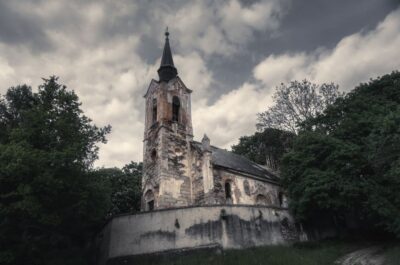
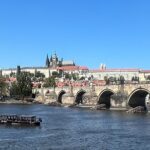
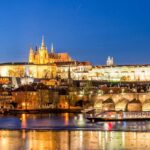
The final phase is Vyšehrad National Cultural Monument, and you walk up to the area tied to the early medieval role of Czech kings. The guide shares how it served as part of Prague’s defense system, then you finish at a viewpoint over the river.
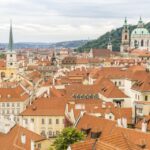
This ending is smart. Old Town is all about density and landmark crowds, while Vyšehrad gives you a wider frame. Even if you’ve seen photos, the final view helps you understand how the city sits in the landscape—and why the designers of earlier eras cared about high ground.
It’s also your last walking stretch, so plan to move at a comfortable pace. The tour ends here, so you’ll want to be ready for the return on your own afterward.
Price and Value: Is $44.32 a Good Deal?
At $44.32 per person for about three hours, this tour is priced like a mid-range walking experience. For me, the value comes from three things that matter in real life:
- You get a local guide for the full session, not just a “here’s a map, good luck” situation.
- Several stops are free to enter, and the one included admission (Emmaus Monastery) helps justify the price.
- The route is small-group style (max 15), which means more back-and-forth and less standing around.
If you’re trying to get serious value out of limited time in Prague, this checks a lot of boxes: multiple interiors, architecture-focused explanations, and a clear end-point at Vyšehrad.
What the Guides Are Like (And Why You Should Care)
The tour experience is heavily shaped by the guide. In the stories I heard, Jack/Honza shows up as friendly and candid, with a talent for connecting the past to modern Czech mindset. Mike is described as patient, full of interesting facts, and very willing to answer questions as they come.
You’ll also notice something practical: the guides don’t treat the tour as a rigid factory line. In at least one case, the guide stayed an extra hour because the group still had energy and questions. That’s a good sign if you like learning at your own speed.
Who This Tour Is Best For
This is a great fit if you:
- want a structured route that doesn’t just repeat the loudest landmarks
- like church interiors and architecture details
- enjoy hearing how history connects to the places you’re standing in
- are traveling with a moderate walking tolerance and want a small group
If you’re the type who hates being outside for long stretches, or you’re traveling with someone who needs frequent breaks, you might find the walking pace a bit much.
Also, it’s offered in English, with confirmation handled after booking. If your calendar is tight, the tour can still be booked close to travel date (with confirmation timing that depends on how soon you book).
Quick Practical Tips Before You Go
Wear comfortable walking shoes and plan on walking. Bring a light layer if you tend to feel cold in churches. Since the tour ends at Vyšehrad, think ahead about how you’ll get back to your hotel afterward.
If you’re a family traveler, note that children under 18 must be accompanied by an adult.
Should You Book This Prague Hidden Sights Walking Tour?
Book it if you want Prague to feel like a place you can actually read. This tour is strong when you care about architecture, church interiors, and the story behind city spaces. It also offers a good balance of well-known landmarks and quieter streets—so you don’t feel like you only saw postcard Prague.
Skip it (or pair it thoughtfully with other plans) if you’re purely in photo-snapping mode and don’t want guided history at all. Also, if climbing and walking are hard for you, consider whether the Vyšehrad ending will feel good.
For most people—especially first-time visitors who want more than the obvious route—this is a smart use of a morning.
FAQ
What time does the Prague Hidden Gems walking tour start?
The tour starts at 10:00 am. It’s scheduled for about 3 hours.
Where do I meet the guide, and where does the tour end?
You meet at Staroměstské nám. 1, 110 00 Praha 1-Staré Město. The tour ends at Vyšehrad Castle, 128 00 Prague 2.
How much does it cost, and what language is offered?
The price is $44.32 per person, and the tour is offered in English.
Is the tour entry fee included, or do I need separate tickets?
Most stops list admission free. Emmaus Monastery has admission included.
What should I wear for this walking tour?
Wear comfortable clothes and walking shoes. The tour involves walking and is best with moderate physical fitness.
Is food included, and what about cancellation?
Food and drinks are not included. There is free cancellation up to 24 hours in advance for a full refund.