REVIEW · PRAGUE
Prague Art Nouveau and Cubism Walking Tour
Book on Viator →Operated by Insight Cities · Bookable on Viator
Prague has two art styles arguing on its streets. This walking tour is a focused way to see Art Nouveau flourishes and Cubist geometry in the same morning route, with a historian guiding you through design details and the history behind them. I like that it trains your eye (hello gingko leaves, curvy lettering, and crystal-sharp forms), and I like the way it ties architecture to real life changes like construction tech and wartime turns. One thing to consider: it’s about 3 hours on foot, so if you dislike walking or you’re sensitive to rain/cold, pack accordingly.
A big plus for me is the small-group feel. You’ll start at Ovocný trh 19 and keep moving at a human pace (maximum 8 travelers), with a mobile ticket and English narration. Guides mentioned in participant feedback include Vadim, Betty, Matous, and Bonita—each bringing real enthusiasm for how these movements worked in Prague, not just how they looked.
By the time you finish near Café Louvre, you won’t just see pretty buildings—you’ll know what to look for next time. You’ll connect Eastern influences to Art Nouveau aesthetics, understand why Prague became a major Cubist hub, and see how optimism collided with war and politics.
In This Review
- Key highlights you should care about
- Why Prague’s Art Nouveau and Cubism belong in the same walk
- Meeting at Ovocný trh and keeping a smart 3-hour pace
- House of the Black Madonna: Cubism starts with attitude
- Obecní dům: the Art Nouveau landmark that teaches the whole style
- K+K Hotel Central and Café Imperial: where Art Nouveau went inside
- Czechoslovak Legion Bank: Cubism with a wartime heart
- Prague Main Train Station dome: Art Nouveau plus real engineering
- Wenceslas Square and Lucerna Music Bar: style changes with the city mood
- The upside-down King Wenceslas: symbols you can’t unsee
- Where you finish near Café Louvre (and why it’s a nice landing)
- What you actually learn to notice (so the city keeps teaching you)
- Price and value: is $126.71 worth it?
- Who this tour suits best (and who might not)
- Should you book it? My practical recommendation
- FAQ
- FAQ
- How long is the Prague Art Nouveau and Cubism Walking Tour?
- What does the tour cost?
- How big is the group?
- Is the tour offered in English?
- Is there a morning or afternoon departure?
- Where do I meet the guide?
- Where does the tour end?
- What’s included in the price?
- Are food and drinks included?
- Are hotel pickup or drop-off included?
- What if I need to cancel?
Key highlights you should care about
- You get a historian guide who explains the design logic, not just dates and names
- Art Nouveau details that are easy to spot like gingko leaves, ornate lighting, and curved typography
- Cubism landmarks with meaning, including the House of the Black Madonna and Cubist civic buildings
- Engineering and daily-life tech stories that make façades feel practical, not decorative
- A route with contrasts, from Wenceslas Square to Lucerna’s arcades and interiors
- Small group size (max 8) that leaves room for questions
Why Prague’s Art Nouveau and Cubism belong in the same walk
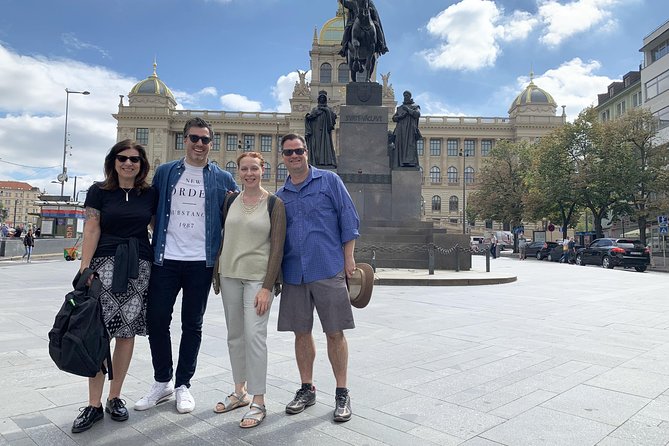
Prague in the early 1900s was a city of ideas. Art Nouveau brought a love of nature shapes, flowing lines, and decorative patterning. Cubism, in contrast, pushed toward angles, planes, and a kind of crystalline order. What makes this tour special is how it treats those styles like competing ways of thinking, not just visual trends.
You’ll also hear why Eastern art and aesthetics mattered to Art Nouveau—things like ornamental rhythm and stylized forms show up in the architecture details. Then the guide flips the lens to Cubism’s distinct look: curving ideas giving way to pyramids, crystal-like structure, and sharp geometry. Prague’s role as one of Europe’s greatest Cubist centers gives the whole route extra weight, because you’re not just visiting random buildings—you’re seeing a local visual language.
You can also read our reviews of more walking tours in Prague


Meeting at Ovocný trh and keeping a smart 3-hour pace
The tour meets at Ovocný trh 19 (Staré Město), a central starting point that’s easy to reach using public transport. Expect a walking rhythm of about 3 hours total, plus short stops where the guide sets up what you’re about to see.
This matters more than people think. Art-architecture tours fail when they feel rushed. Here, the stop times are short and purposeful, so you get a clear idea of what to notice before the group moves on. The small size (maximum 8 travelers) also helps you actually ask questions, which is a big deal on a subject this detail-driven.
If you’re planning for weather: there’s enough street time that a rain jacket is smart. One participant specifically praised how the tour still worked even during rainy conditions, with the guide adapting to keep the sights and explanations coming.
House of the Black Madonna: Cubism starts with attitude
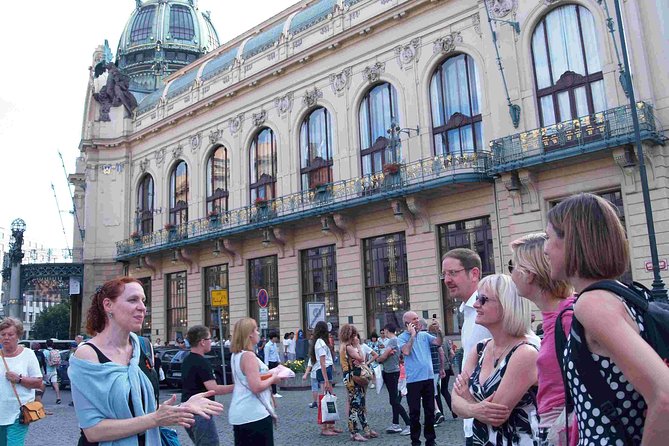
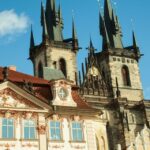
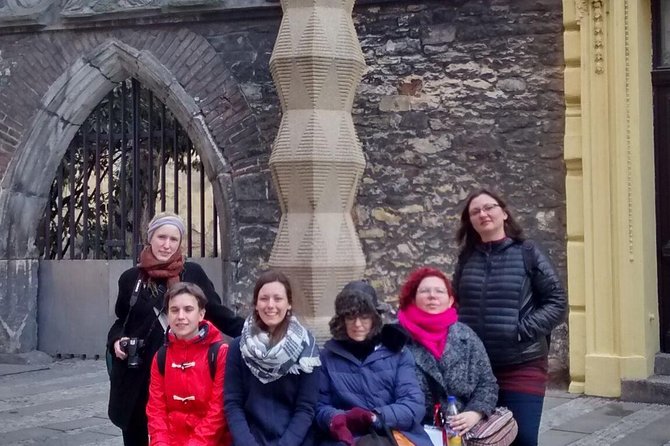
The tour’s first stop is the House of the Black Madonna, a Cubist-style building. Even if you only know Cubism as a museum word, this is where it becomes real: the façade’s shapes and strong visual structure communicate the Cubist mindset fast.
You’re there for about 10 minutes, and the goal isn’t to “finish studying” the building. It’s to learn how to read it. After this stop, you’ll start seeing how Prague’s Cubism isn’t stuck in one neighborhood or one famous monument—it shows up as a system of forms.
Admission here is listed as free, so you’re not burning time on ticket lines. That makes the first impression smoother and keeps the energy up for the rest of the route.
Obecní dům: the Art Nouveau landmark that teaches the whole style
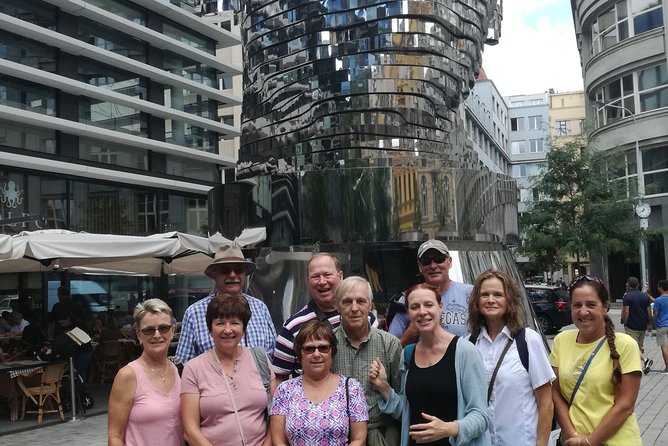
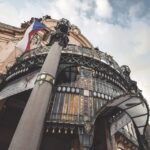
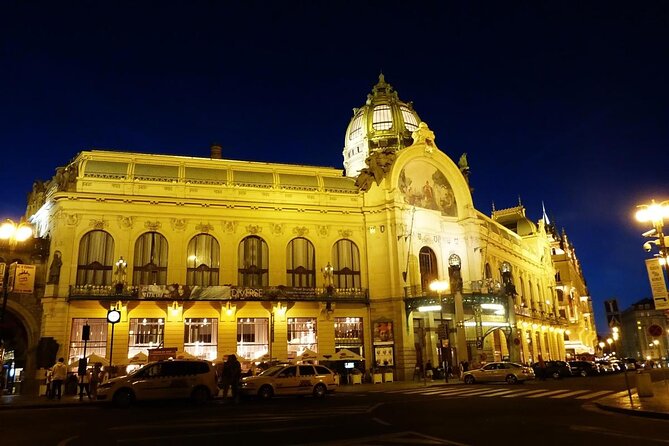
Next comes Obecní dům, one of Prague’s iconic Art Nouveau anchors. This stop is about 15 minutes, which is enough time to notice multiple layers: decorative structure, façade rhythm, and the way the building uses curves without looking soft or vague.
What I like about this stop (and what you’ll likely appreciate) is that it’s a direct lesson in Art Nouveau vocabulary. You’ll be guided toward specific features tied to the movement—things like nature-inspired motifs (including gingko leaves) and ornamental design that feels like it belongs to architecture, not glued on afterward.
If you only remember one thing from your first Art Nouveau building, make it this: the style is intentional. The details are part of a visual argument—an effort to bring art, nature, and modern city life into the same frame.
K+K Hotel Central and Café Imperial: where Art Nouveau went inside
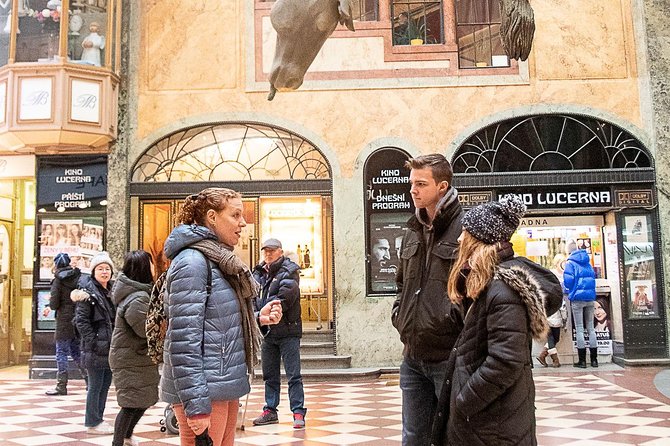
Two short stops follow that help you understand Art Nouveau beyond the outside walls.
First is K+K Hotel Central, described as the first Art Nouveau building in Prague. You spend around 10 minutes here. Even in a limited time window, the point is clear: Art Nouveau wasn’t only for churches or grand civic structures. It also shaped how a modern city presented itself—especially through hotels and public-facing spaces.
Then you’ll shift to Café Imperial for about 5 minutes. The emphasis is on the interior vibe and the sense of turn-of-the-century Czech optimism, where avant-garde taste meets everyday life. It’s brief, so don’t expect a full museum-length visit. Do expect a snapshot of how design can make a room feel like a statement.
If you like photography, this is where it tends to pay off—bright ornamental details and strong lines give you lots to shoot without needing a long sit-down.

Czechoslovak Legion Bank: Cubism with a wartime heart
At the Czechoslovak Legion Bank, you’re looking at Cubist architecture and interior space dedicated to the Czechoslovak Legion connected to the First World War. The stop is about 10 minutes, and that’s a useful contrast to the earlier “beauty first” mood.
This is where the tour’s bigger theme shows up: design didn’t exist in a vacuum. A guide can point to wartime history and show how it changed the course of Prague life, and this stop gives that story a physical location. Cubism here isn’t only a style choice—it becomes part of national memory and public identity.
If you enjoy when architecture meets politics and society, this stop is likely to be one of your favorites.
Prague Main Train Station dome: Art Nouveau plus real engineering
Then you head to Praha hlavni nadrazi (Prague Main Train Station) for around 10 minutes, focusing on the striking Art Nouveau dome inside the magnificent station setting.
Stations are great for architecture walks because you get scale and function in one place. This one also adds a practical thread: the tour talks about groundbreaking construction technologies used at the time—central heating and ventilation, drinking water systems, hydraulic elevators, steam-powered laundry, and even an intercom system.
You might not spot every one of those systems on the spot, but knowing they existed changes how you look at the building. It turns the architecture from decorative fantasy into early modern infrastructure—how a city tried to move, clean, heat, and communicate.
Wenceslas Square and Lucerna Music Bar: style changes with the city mood
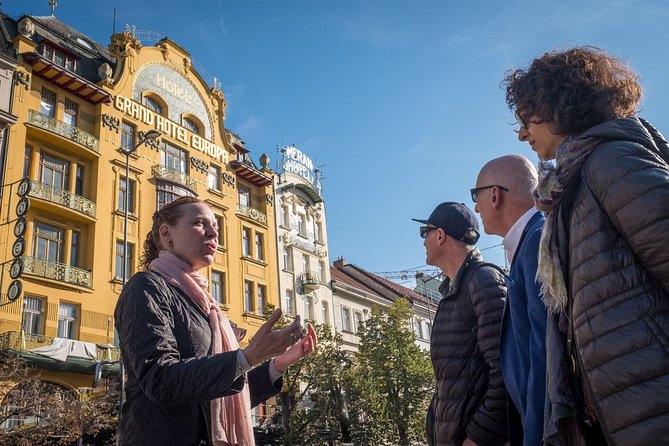
You’ll spend about 15 minutes at Wenceslas Square, with the guide discussing Art Nouveau and Art Deco architecture in that area. This is a smart inclusion because it shows you that styles overlapped. Prague didn’t switch overnight from one look to another. You’ll start noticing how the city’s decorative language evolved while still carrying echoes of earlier forms.
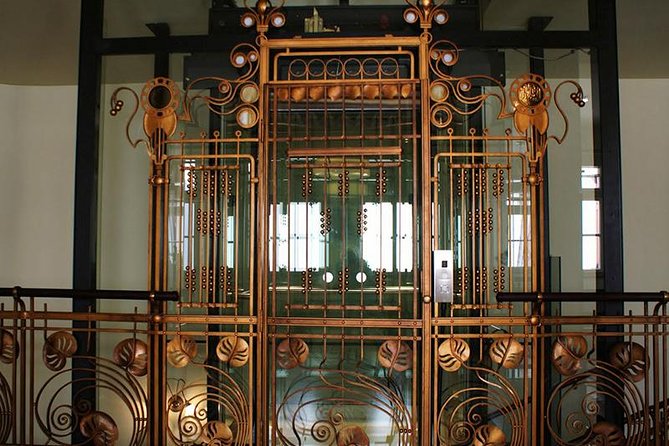
After that, you move to Lucerna Music Bar for about 10 minutes. The focus is on the Art Nouveau interior and the impressive arcades, described as some of the most beautiful of Prague. This stop is less about one single façade detail and more about atmosphere—how the interior space uses light, structure, and ornament to create a strong early-1900s mood.
Turn-of-the-century design optimism shows up in both Wenceslas Square discussions and Lucerna’s arcades. Then the guide ties the mood back to how fierce European wars changed Prague history—so your visual impressions land with context, not just aesthetics.
The upside-down King Wenceslas: symbols you can’t unsee
The tour ends with the Upside-Down Statue of King Wenceslas riding a Dead Horse, with about 10 minutes of discussion. The guide connects the contemporary symbolism to Czech history and the Czech National Revival.
This stop works because it’s not just architectural. It’s about how a society re-reads its own past. You’ll get prompted to think about why that image matters now, and how National Revival ideals shaped cultural memory in Czech lands.
It’s a good final lesson after all the buildings: it reminds you that art in Prague often carries political meaning, even when it looks like pure sculpture.
Where you finish near Café Louvre (and why it’s a nice landing)
The tour wraps near Café Louvre on Národní 22, a café opened in 1902. It’s famous for its grand atmosphere, and the details provided in your tour materials note that major figures like Kafka, Albert Einstein, and T. G. Masaryk were associated with the place.
That makes the ending feel more than just “we’re done.” It’s a natural pause point. You’ll be right in the center of things, close to restaurants and attractions, so you can keep exploring right away.
One practical note: food and drinks aren’t included unless specified. But you’ll likely want a coffee or a snack after a few hours of looking up at façades and down at typography details.
What you actually learn to notice (so the city keeps teaching you)
The best architecture tours change how you look after you leave. This one is built for that, with repeated emphasis on how to spot the language of each movement.
Here are a few “spot it next” items you’ll be primed for:
- Gingko leaves and nature motifs on Art Nouveau façades
- Elaborate light fixtures and decorative rhythm meant to feel modern and alive
- Curvy typography used as part of the design identity
- Crystal-like forms and pyramids associated with Cubist visual structure
- The way Prague’s buildings reflect Eastern influences and local style leadership
The result is that you won’t just see buildings. You’ll see arguments—about nature versus geometry, ornament versus structure, optimism versus the hard turns history forced.
Price and value: is $126.71 worth it?
At $126.71 per person for about 3 hours, this isn’t a bargain-basement walking tour. What you’re paying for is a combination that usually makes the difference between a forgettable stroll and a useful one:
- A historian guide who can explain architecture as a cultural system
- Small-group size (maximum 8 travelers), which supports questions
- A concentrated route with landmark stops that matter for both Art Nouveau and Cubism
- Free admission noted at each listed stop, so your time stays focused on seeing and learning
- A route that covers both visual style and historical context, including wartime consequences and construction-era technology
If you love architecture but hate wandering with no direction, this price tends to feel fair. If you’re only casually interested in design, you might feel the tour is more explanation-heavy than you want. Still, the strong landmark mix gives you plenty of eye candy even if you skip every bit of background.
Who this tour suits best (and who might not)
This is a great fit if you:
- Want a guided way to learn Art Nouveau and Cubism side by side
- Like your history mixed with real places, not just dates in a classroom
- Prefer small groups where you can ask questions and keep a conversational pace
- Are visiting for the first time and want a framework for later self-guided exploring
You might want to think twice if you:
- Strongly dislike walking routes that take you between multiple city stops in a few hours
- Only care about one style and hate contrast (this tour intentionally compares them)
- Expect long interior visits at every location (the focus is short, targeted stops—though the route includes interiors like Café Imperial and Lucerna)
Should you book it? My practical recommendation
Book this tour if you want to leave Prague with a mental checklist for what to notice in the buildings around you. The combination of small-group guidance, style-specific features (like gingko motifs and Cubist geometry), and historical context (including wartime change and construction tech stories) makes it the kind of experience that pays off all week, not just for a couple of photos.
If you’re on the fence because of price, consider doing this early in your trip. Getting your eye trained sooner makes every later walk feel smarter.
FAQ
FAQ
How long is the Prague Art Nouveau and Cubism Walking Tour?
It runs for about 3 hours.
What does the tour cost?
The price listed is $126.71 per person.
How big is the group?
The maximum group size is 8 travelers.
Is the tour offered in English?
Yes, it’s offered in English.
Is there a morning or afternoon departure?
Yes, you have a choice of morning or afternoon departure. (A start time of 10:00 am is shown.)
Where do I meet the guide?
The meeting point is Ovocný trh 19, Staré Město, 110 00 Praha-Praha 1.
Where does the tour end?
The tour ends near Café Louvre, Národní 22, 110 00 Praha 1-Nové Město.
What’s included in the price?
The tour includes a historian guide.
Are food and drinks included?
No. Food and drinks are not included unless specified.
Are hotel pickup or drop-off included?
No, hotel pickup and drop-off are not included.
What if I need to cancel?
You can cancel for a full refund if you cancel at least 24 hours before the experience starts (local time applies).