REVIEW · PRAGUE
Private Former Concentration Camp Terezin Tour from Prague
Book on Viator →Operated by Eva Prague Tours · Bookable on Viator
A private day at Terezin demands the right guide. This outing is built for a personal guide and included skip-the-ticket-line entry, so you can focus on what the sites are really saying. I like that the pace is yours, with time built in for reflection instead of racing through with strangers.
I also like the practical side: comfortable round-trip transportation from central Prague, plus a clear plan that still lets your guide adjust as questions come up. That combo matters in Terezin, because the place is emotionally heavy and the details are not optional.
One possible drawback: you should be ready for a lot of walking and for tough subject matter, from prisons to forced cremation. Even with the best guide, this is not a light “sightseeing” day.
In This Review
- Key points at a glance
- Private Terezin from Prague: why the format matters
- Getting there: 9:00 am pickup and stress-free transport
- Stop 1: Mala Pevnost (Small Fortress) and the Joseph II origin story
- National Cemetery: the work of memory after liberation
- Ghetto Museum and Magdeburg Barracks: culture under control
- The prayer hall of František Bubák: a hidden room with a long secret
- Jewish Cemetery crematorium: when details become unbearable
- Guides, translation, and why Eva-style storytelling helps
- Price and value: what $356.42 per person covers
- Should you book this private Terezin tour from Prague?
- FAQ
- How long is the Private Former Concentration Camp Terezin Tour from Prague?
- What’s included with entrance tickets?
- Is pickup from Prague included?
- Is this a private tour?
- What language is the tour offered in?
- Can I cancel for a full refund?
Key points at a glance
- Private guide, private group: It’s just your group, not a mixed crowd.
- Skip the ticket line: Included entrance saves time at multiple venues.
- Your pacing: You can take in rooms, exhibits, and outdoor areas at a human speed.
- Round-trip comfort: Pickup and transport keep the day manageable from Prague.
- Smart, specific stops: Small Fortress, Ghetto Museum, Magdeburg Barracks, prayer hall, and the Jewish Cemetery crematorium each add a different piece.
Private Terezin from Prague: why the format matters
Terezin (also known as Theresienstadt) is one of those places where the layout and the story can overwhelm you fast. What you want is not only facts, but the ability to ask questions and slow down when something lands. That’s exactly why a private guide format works so well here.
I like that this tour is structured like a guided route, yet it’s not rigid. Your guide can steer you toward the most important rooms and exhibitions and still give you breathing room between them. In a place like this, breath is part of understanding.
Also, the “seriousness” of Terezin can get lost when you’re stuck in a loud group rhythm. With a private setting, it’s easier to keep the tone respectful—quiet when you need quiet, and clear-headed when you want to work through the history step by step.
You can also read our reviews of more private tours in Prague



Getting there: 9:00 am pickup and stress-free transport
The day starts early, around 9:00 am, with pickup from either the Prague Marriott Hotel (V Celnici 8, Nové Město) or your own hotel/Airbnb address in Prague. That pickup detail is more than convenience. It prevents the classic day-trip mistake: showing up harried, late, or exhausted.
You’ll get round-trip transportation back to the same meeting point at the end. The tour also uses a mobile ticket, which is helpful when you’re moving between venues and need quick access without rummaging through paper tickets.
Dress code is smart casual. That’s practical—think comfortable shoes first, then plan for the reality of a memorial day: some outdoor areas and some walking. If you’re the type who likes a plan, this day gives you one. If you’re the type who likes room to think, your guide gives you that too.
Stop 1: Mala Pevnost (Small Fortress) and the Joseph II origin story
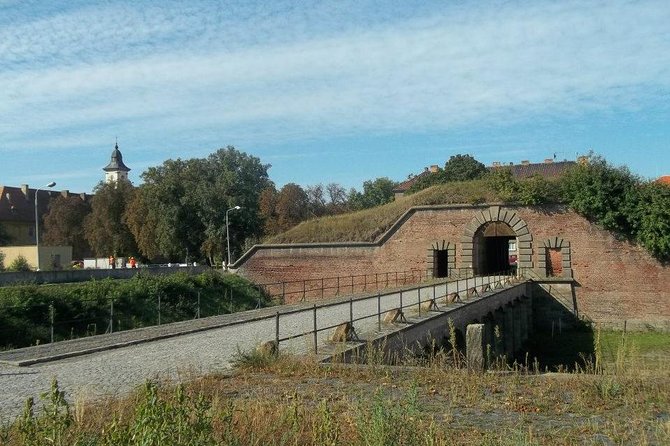
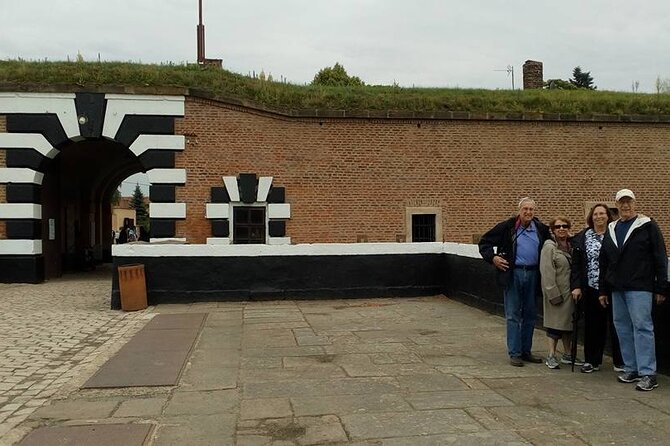
Your first major stop is Mala Pevnost, the Small Fortress. The name sounds like a simple building, but the story is anything but small. This fortress was built in the late 1700s as a “proud and impregnable” stronghold, surrounded by walls and protected by a system of flood trenches. The first cornerstone was laid by Emperor Joseph II, and the town’s name ties to Maria Theresa through her mother’s line.
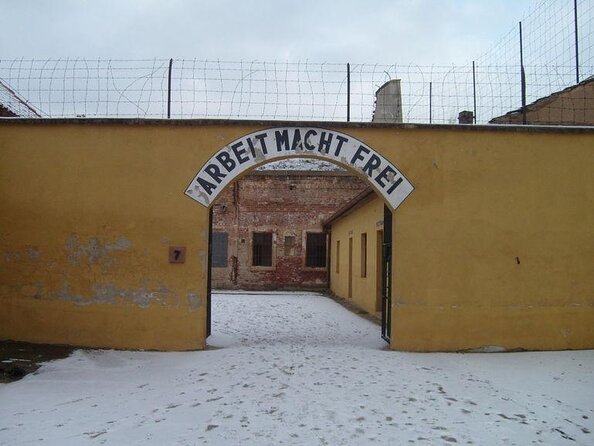
Here’s the pivot that makes the place so disturbing: it never protected anything from anyone in the way it was meant to. Instead, it was pushed toward a different purpose. Terezín began to function as a jail by the mid-1800s, and later—during World War II—it became a prison network tied to the Nazi regime.
A detail your guide should bring to life is how layered the prison history is. In 1940, the Small Fortress became a prison for the Prague Gestapo, sending especially political prisoners there. Then, about a year later, the entire town shifted into a collective and pass-through camp for Jews.
One of the most memorable historical threads is about Gavrilo Princip, the man who fired the shot in Sarajevo and helped set off World War I. Princip was held here in 1914. That fact doesn’t make the Holocaust story smaller—it underlines how this location kept being repurposed for state violence across decades.
At this stop, you’ll want to go slowly. Outdoor ramparts and the fortress layout can be confusing without context, and the emotional weight is higher when you understand the “why” behind each space.
Practical note: the time allocation is about 1 hour here. That’s enough for the main story, but not enough for a leisurely re-read of every label. This is where a private guide helps, because they can point you to the most meaningful sections first.
National Cemetery: the work of memory after liberation
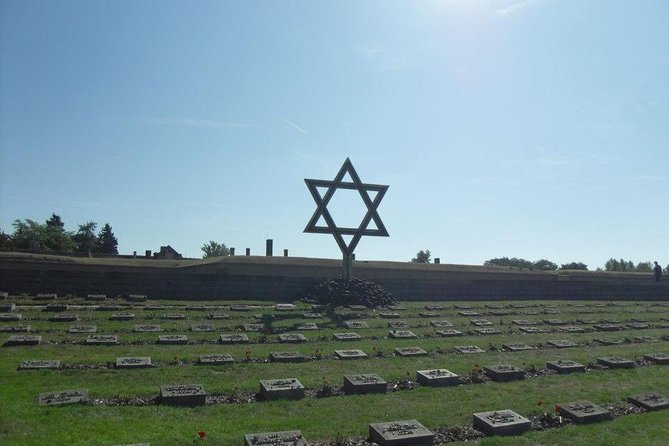
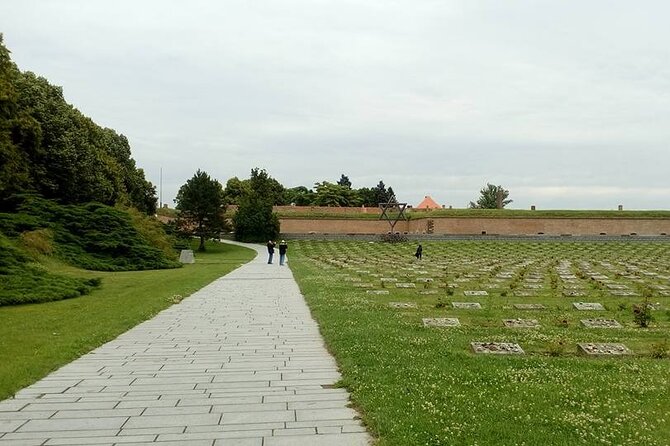
Next is the Terezín Memorial – National Cemetery, created artificially after liberation in 1945. This is a calmer setting than the fortress grounds, but it’s not “easy.” The calm comes from the fact that this was made to honor people when survivors and families demanded answers.
Here’s what’s important: remains were exhumed from six mass graves located in the ramparts of the Small Fortress. Those graves were used during a very specific window—March 1 to May 7, 1945—and included victims from death marches that arrived at the Small Fortress in May.
That means your visit isn’t just a memorial moment. It’s a reminder of how even after liberation, the story had to be reconstructed through physical evidence—digging, identifying, and reinterring.
The cemetery stop is short, around 15 minutes, and it works best if you treat it like a pause rather than a “must-see checklist.” Let the setting do what it’s designed to do.
Ghetto Museum and Magdeburg Barracks: culture under control
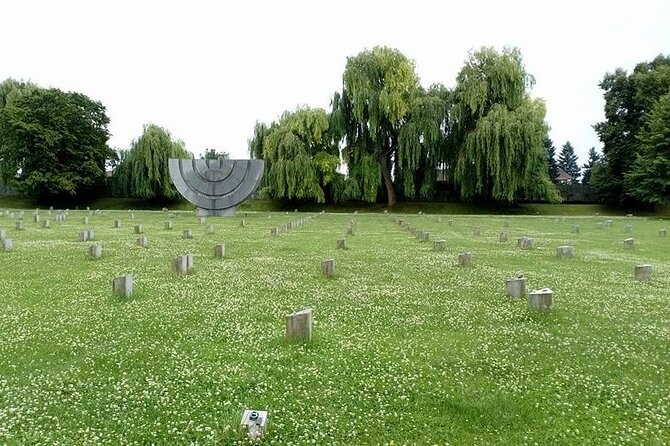
After the cemetery, you move into the heart of the ghetto story with the Terezín Memorial – Ghetto Museum (about 45 minutes). This museum opened in 1991 in the former municipal school. That detail matters: it’s not just an exhibit space; it’s a repurposed civic building tied to daily life and forced schooling.
The museum’s permanent exhibition has a specific focus: Terezín in the Final Solution of the Jewish Question (1941–1945). You’ll also find a Memorial Hall devoted to the ghetto’s children, plus a selection of drawings made by children from the ghetto. The presence of children’s artwork is one of the hardest and most important contrasts you’ll see that day: creativity and awareness continuing under terror.
Two more “help you understand” features are worth noting. There’s a scale model of the ghetto with an electronic orientation system, so you can connect the exhibits to the physical place. And there’s space for a local reading room and documentary screenings, which gives you a different way to process the history than text panels alone.
Then you’ll likely continue to Magdeburská kasárna (Magdeburg Barracks) (about 30 minutes). This building served as the headquarters for the ghetto’s local government, but the key reality is that important decisions remained under the camp SS command. That tension is a theme you’ll want your guide to keep pointing out: “local life” existed, but it was crushed inside an external system.
Today, the Magdeburg Barracks functions as an exhibition space, including a replica of prison barracks from the ghetto period and artifacts about artistic and cultural life—music, visual arts, literature, and theater. The goal is not to romanticize culture. It’s to show how people tried to hold onto humanity, hope, and meaning even inside a machine designed to destroy them.

The prayer hall of František Bubák: a hidden room with a long secret
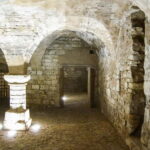
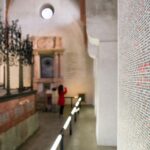
One of the most quietly powerful stops is the small Jewish prayer hall. It was founded during the ghetto period and served spiritual needs for prisoners housed nearby.
The story here includes personal ownership and a long afterlife of secrecy. The prayer room was owned by František Bubák. Before World War II, it served as part of a funeral parlor. During the war, Bubák’s family had to leave Terezín in 1942, but after the war he reclaimed the property. Because the Communist regime created fear, the existence of the room was kept secret, used as storage instead of a public place of prayer.
That silence lasted until after the 1989 Velvet Revolution, when Bubák’s descendants notified the authorities. Visitors have been able to see the room since the late 1990s.
This stop is about 30 minutes, and it’s best when you treat it as a small pause inside a huge story. The meaning isn’t only religious—it’s about how people protect what they can, even when they have to hide it.
If you’re the kind of visitor who likes meaning over motion, this is one of the stops where you’ll feel the tour earns its place.
Jewish Cemetery crematorium: when details become unbearable
The final major stop is the Terezín Jewish Cemetery, including the crematorium structure itself (about 30 minutes). This is the place where the “how” of terror is unavoidable, and your guide’s pacing matters a lot.
The crematorium was built by ghetto prisoners under order from the SS commanders. Operation began at the start of October 1942. The central part included four oil-powered incinerators, supplied by Ignis Hüttenbau from Teplice-Šanov.
The building design also reflects the procedure. There was a front section for unloading corpses from coffins. On one side it bordered the autopsy room. On the other side there was an annex that housed guards made up of Czech police officers and prisoners working at the crematorium.
At the peak mortality rate, there were up to 18 prisoner workers rotating in permanent shifts. When mortality dropped, that number decreased to four. The structure of staffing is one of the grimest “evidence details” you’ll encounter: the system changed as the victims changed.
Supervision came from SS-Scharführer Heindl, described as one of the camp’s feared top officers. Routine checks were also carried out by camp commanders.
If you want this day to stay coherent, hold onto the idea that each stop has a different angle: fortress → memory → museum/culture → faith/private life → industrial death. The route forces you to see the whole system as a system, not isolated horror scenes.
Guides, translation, and why Eva-style storytelling helps
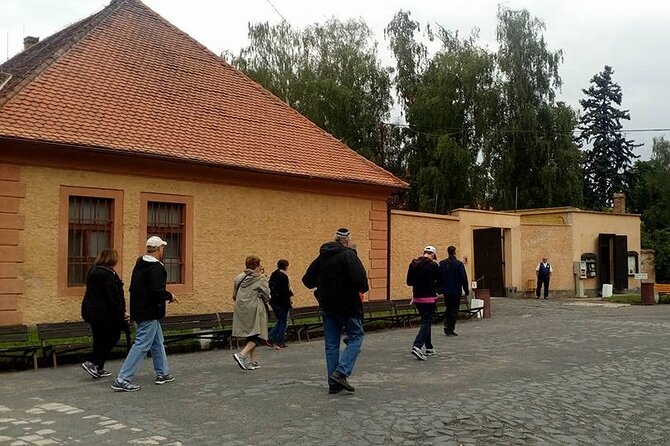
The people who lead this tour matter as much as the sites. In the names shared from past trips, Eva appears repeatedly as the guide who helped visitors find the right tone—sharing history with tact, answering questions, and keeping the experience emotionally grounded instead of chaotic.
There are also names of other team members that show how the day can run smoothly: Felix Vonssek is referenced as part of one group experience, and Jindra appears as an attentive driver in another. Even if you don’t meet the same people, the pattern matters: a good team keeps you moving on schedule while letting the guide do the storytelling.
What I’d look for—regardless of who your guide is—is their ability to connect details without turning the day into a lecture. Terezin isn’t just a sequence of buildings. It’s a layered set of decisions: political imprisonment, then broader deportation systems, then forced labor and mass death. When a guide can explain that layering clearly, you feel less lost.
And because this is private, you can ask the questions you actually have. That turns the day from “I saw places” into “I understand what I saw.”
Price and value: what $356.42 per person covers
At $356.42 per person, this is not a cheap tour. But it’s also not just “a ticket and a bus.” You’re paying for:
- a private guide experience
- round-trip transportation from Prague
- included entrance and skip-the-ticket-line access across multiple venues
- the ability to set a pace that fits you
Because the price is per person, your best value usually comes when you have at least a couple of people splitting the private-day cost logic. If you’re traveling solo, you’re paying for the personalization more directly. Either way, Terezin is the kind of destination where a small difference in guide quality can change how you carry the day afterward.
Also, the tour is commonly booked well ahead—on average 108 days in advance. That’s another value signal: it’s a popular day trip, and early booking gives you more date choices.
Should you book this private Terezin tour from Prague?
I think this tour is a strong fit if you want a guided, respectful, structured day without rushing. The private setup, skip-the-line entry, and focused route through the Small Fortress, Ghetto Museum, Magdeburg Barracks, the prayer hall, and the Jewish Cemetery make it easier to understand the whole system in one day.
I’d reconsider if you’re looking for something light, short, or casual. This is heavy history, with walking and with scenes that deal directly with persecution and cremation. If that doesn’t match your current emotional bandwidth, you might want to plan a different kind of day in Prague.
If you do book, go in prepared: comfy shoes, smart casual clothes, and a willingness to slow down. And if you can, ask your guide to explain the connections between stops—so the day feels like one coherent story, not separate exhibits.
FAQ
How long is the Private Former Concentration Camp Terezin Tour from Prague?
The tour is about 6 hours, approximately.
What’s included with entrance tickets?
Entrance tickets are included for most stops: Mala Pevnost (Small Fortress), the Ghetto Museum, the prayer hall, Magdeburg Barracks, and the Jewish Cemetery crematorium. The National Cemetery stop is listed as admission ticket free.
Is pickup from Prague included?
Yes. Pickup is offered from the Prague Marriott Hotel or from your hotel/Airbnb in Prague, as long as you provide the exact name and address.
Is this a private tour?
Yes. It’s a private tour/activity, meaning only your group participates.
What language is the tour offered in?
The tour is offered in English.
Can I cancel for a full refund?
Yes. You can cancel up to 24 hours in advance for a full refund. Cancellation cutoff times are based on the experience’s local time.