REVIEW · PRAGUE
Prague Old Town tour and external Jewish Quarter
Book on Viator →Operated by GUIDA di PRAGA · Bookable on Viator
Prague turns into a plotline in three hours. This small-group walk strings together story-led history across Nove Mesto and Old Town—Wenceslas Square, the Art Nouveau Municipal House, the Astronomical Clock zone, and then the Jewish Quarter sidelong, with context that connects Prague to Terezín.
I especially like two things: the pace stays personal in an up to 8 private group, and the guide keeps the mood moving from art and architecture to real-world politics. One consideration: parts of the Jewish Quarter are mostly exteriors (synagogue exteriors and the Jewish cemetery), so if you want lots of inside museum time, plan to add a follow-up stop.
In This Review
- Key things to know before you go
- Meeting at Rudolfinum: how the tour starts strong
- Wenceslas Square and the Wenceslas Monument: power, resistance, and memory
- Obecní dům (Municipal House): Art Nouveau you can actually read
- Old Town Square and the Astronomical Clock zone: Prague’s busiest stage, managed
- Celetná Street and the art of Prague’s in-between spaces
- Church stops: San Giacomo and Church of Our Lady before Týn
- Old Town Hall and the Astronomical Clock moment: what to focus on
- Kafka in Bronze and the quiet power of street icons
- Republic Square and Parizská Street: transitions that matter
- Jewish Quarter with Terezín context: synagogue exteriors and the cemetery story
- Price and value: what $116.29 per group buys you
- Timing and pacing: 3 hours in the real center of Prague
- The guide factor: what the best departures tend to deliver
- Who should book this tour
- Should you book this Prague Old Town and external Jewish Quarter tour?
- FAQ
- How long is the tour?
- How much does it cost?
- Is it a private tour?
- Is pickup available?
- Do I get a mobile ticket?
- Which stops include admission tickets?
- Are any parts free?
- What’s the meeting point?
- Is the tour affected by weather?
- What is the cancellation policy?
- Who guides the tour?
Key things to know before you go
- Up to 8 people, private feel: you’re not fighting for space around the big sights.
- Tickets are partly covered: admission is included for key landmarks like Wenceslas Monument, the Municipal House, and the Astronomical Clock area.
- A history lesson tied to street corners: you connect WWII-era invasion and Communist-era events to the exact places you’re standing.
- Jewish Quarter focus without heavy museum time: synagogue exteriors and the cemetery area get context, with Terezín included in the story.
- A guide who mixes facts with social details: Alessandro is repeatedly praised for being punctual, engaging, and full of useful local tips (including where/how to move and where to eat).
Meeting at Rudolfinum: how the tour starts strong
You’ll meet and finish at Rudolfinum on Alšovo nábř., which is a good anchor point for orienting yourself in central Prague. The meeting spot is in the Old Town area, and the tour notes that it’s near public transportation, so you’re not stuck trying to solve the city first.
If you’re the type who likes to get your bearings fast, this start helps. In a few minutes you’ll already understand the logic of the route: first Nove Mesto’s grand political landmarks, then Old Town’s medieval-and-baroque heart, and finally a more reflective turn into the Jewish Quarter.
You can also read our reviews of more tours and experiences in Prague.

Wenceslas Square and the Wenceslas Monument: power, resistance, and memory
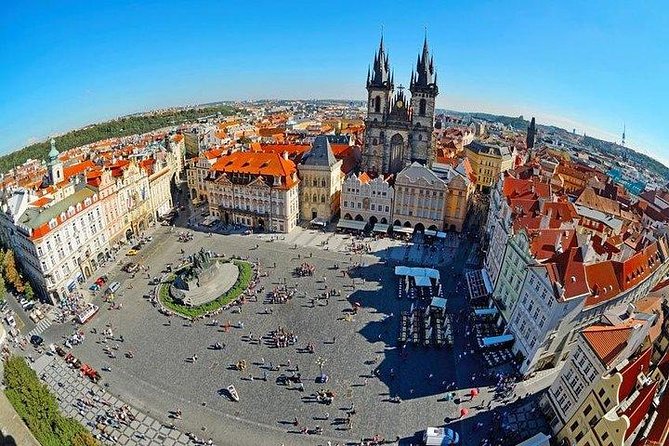
The tour kicks off at Wenceslas Square with the Wenceslas Monument area. This is not just a photo stop. Expect the guide to frame St. Wenceslas and the Kingdom of Bohemia, then step into the Nazi invasion period and later Communist-era events like the Prague Spring and the Velvet Revolution.
Why it works on the street: these aren’t abstract dates. Standing in front of a major public monument, it’s easier to see how power gets displayed—and how Prague keeps rewriting its own story after each era. The tour schedule gives about 30 minutes here, and admission for this stop is included.
A practical tip: this part can feel emotionally heavy if you’re not expecting political history. If you prefer lighter commentary, set your expectations that the tour uses big history to explain the city you see.
Obecní dům (Municipal House): Art Nouveau you can actually read
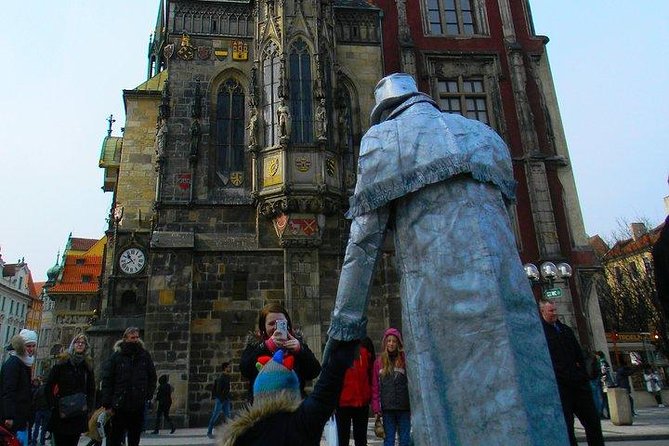
Next you head to Obecní dům, the Municipal House. This is where the tour shifts gears from national politics to architecture you can look at slowly. You get roughly 15 minutes, and admission for this stop is included.
Municipal House is the kind of landmark that makes you notice details you’d miss on your own—ornamental design, the statement-making style of Art Nouveau, and the way major civic buildings look designed to last. If you’re the sort of visitor who enjoys cracking the visual language of a city, this is one of the most satisfying parts of the route.
Possible drawback: if you’re hoping for long interior time, the Municipal House is handled as a focused stop. It’s more about impact per minute than soaking in every room.
Old Town Square and the Astronomical Clock zone: Prague’s busiest stage, managed
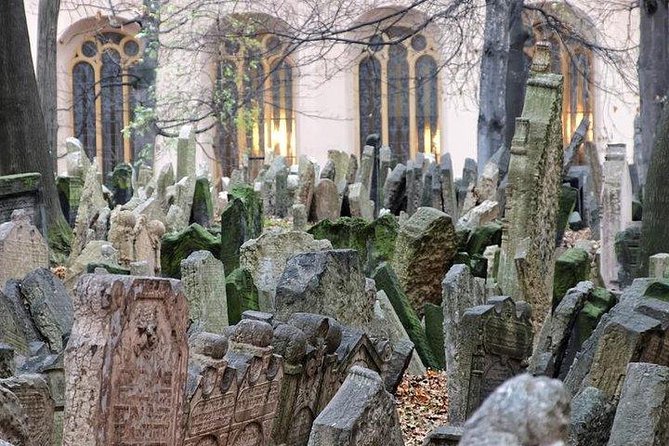
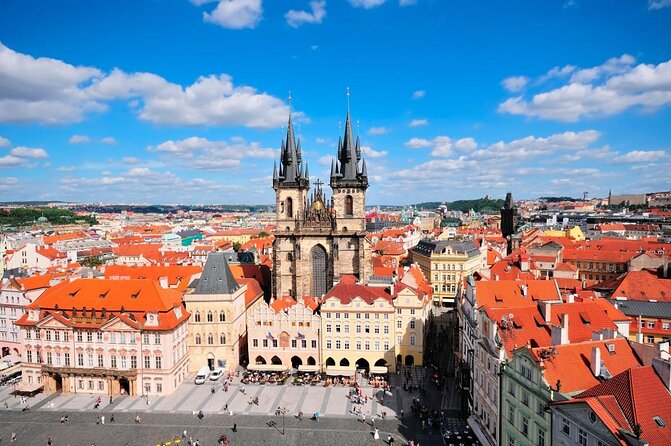
Then you move into Staroměstské náměstí—Old Town Square—for the Astronomical Clock area. This is the heart of the postcard Prague most people come for, with about 30 minutes on the ground and admission included for the clock-related stop.
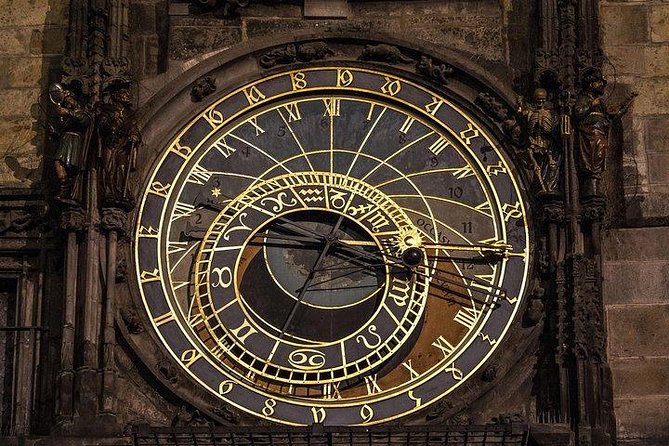
Here’s what makes this part valuable: the guide connects the clock and surrounding buildings to what makes this city feel theatrical. You’re not just looking at a machine; you’re seeing why it became a civic symbol—why crowds gather and why it still matters after centuries.
One reality check: Old Town Square is popular. A small private group with a guide means you’re more likely to understand what to look at first, and when to pause without getting swallowed by the noise.
Celetná Street and the art of Prague’s in-between spaces
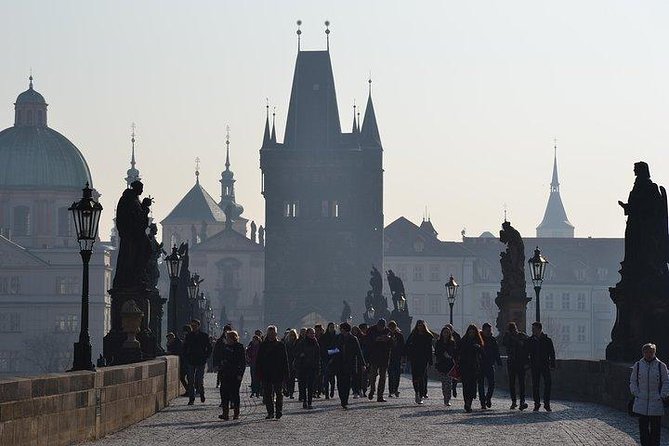
A quick stop follows on Celetná Street, about 10 minutes. It’s one of those streets that shows you Prague isn’t only big squares and major churches. This is where you notice the “in-between” lanes: the way buildings line up, how light moves along facades, and how the city feels walkable.
I like this kind of stop because it breaks the tour into digestible chunks. You get a sensory reset before returning to bigger sights.

Church stops: San Giacomo and Church of Our Lady before Týn
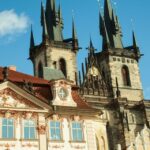
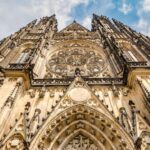
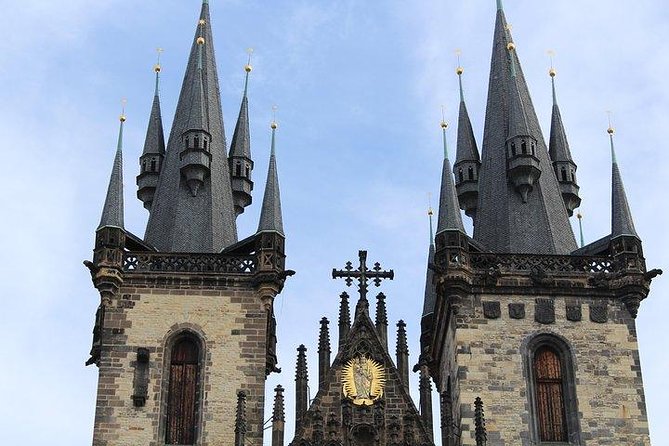
In the Old Town area, you’ll encounter two major church-related moments: mention of Basilica of San Giacomo and the Church of Our Lady before Týn (the Gothic church stop on the schedule). The time is short—around 10 minutes—and the stops are listed as free.
Even with limited time, these are useful anchors. They help you “read” the Old Town style: Gothic shapes, baroque-era influence in the broader atmosphere, and the way religious buildings sit inside civic life. If you’re visiting for just a day or two, this kind of quick orientation to architecture makes later self-guided walking more rewarding.
If you’re planning to do a church crawl, don’t treat these as your full visit. Use this as the roadmap.
Old Town Hall and the Astronomical Clock moment: what to focus on
The schedule also includes Old Town Hall with the Astronomical Clock (about 10 minutes). Even if you’ve seen clock photos before, there’s something different about seeing it in person, because your eye picks up layers—timing, design, and the crowd’s choreography around it.
It’s brief, but that can be a plus. You’ll get the significance and the “what to watch for” framing, then you can choose what to do next on your own.
Kafka in Bronze and the quiet power of street icons
A modern stop comes with the Franz Kafka Statue (about 10 minutes, free). Kafka is one of Prague’s most internationally recognized names, but the statue is also a reminder that Prague isn’t stuck in the medieval lane.
This brief moment helps you connect the city to 20th-century literature and identity. It’s also a nice pacing tool: after monuments and historic squares, you get a modern cultural reference that doesn’t require a ticket or a long stand.
Republic Square and Parizská Street: transitions that matter
You’ll also pass through Republic Square (about 15 minutes, free) and spend around 20 minutes along Parizská Street, which the tour frames in connection with the Jewish Quarter area.
These are not the only famous streets in Prague, and that’s the point. They show the city as a network, not a list of isolated sights. They help you understand how different neighborhoods connect, and they set up the final historical turn into Jewish Prague themes.
Jewish Quarter with Terezín context: synagogue exteriors and the cemetery story
The tour’s final act is the Jewish Quarter focus, with history tied to Terezín. You’ll look at the exterior of the main synagogues and the Jewish cemetery area (about 20 minutes), and that part is free.
This isn’t presented like a purely museum-focused experience. It’s more of a guided historical walk that gives meaning to what you can see from the street: the synagogues as landmarks, the cemetery as memory, and Terezín as a wider context for the story of Prague’s Jewish community.
Why I think it’s a good use of time: many visitors leave Prague with the Astronomical Clock and nothing else. This tour gives you a second Prague, one that forces you to slow down and understand how history lives in physical places.
One consideration: because much of this section is exterior-focused, you won’t get the same depth as a fully ticketed museum day. If this subject deeply interests you, you’ll probably want to do a longer Jewish history visit after this walk.
Price and value: what $116.29 per group buys you
The price is $116.29 per group (up to 8) for about 3 hours. At first glance, that’s not “cheap.” But consider what’s included:
- Admission is covered at three major stops: Wenceslas Monument, the Municipal House, and the Old Town Square/clock-related stop.
- The rest are listed as free stops, meaning you’re mostly paying for a guided route, context, and time management through central Prague.
Here’s how I’d think about value for you: if your group fills up close to 8 people, the per-person cost drops a lot compared to buying separate entrances and trying to stitch together a meaningful route yourself. If you’re traveling as a smaller group, the price is still paying for the guide’s ability to connect the dots—politics to architecture, art to everyday life, Prague to Terezín—without wasting time.
Also, the tour is described as private (just your group), which matters around the busiest sights. You’re not stuck waiting your turn or trying to hear over other languages.
Timing and pacing: 3 hours in the real center of Prague
This is about 3 hours total. That length is a sweet spot if it’s your first trip or you want history with structure instead of a free-for-all.
Expect a walking route through central Prague: square to square, street to church, then back into a more reflective Jewish Quarter segment. Because some stops are short (10 to 15 minutes), you’ll do best if you come with curiosity and willing legs.
If you want to linger, you can. The tour ends back at the meeting point, which makes it easier to branch out for lunch or your next self-guided stop.
The guide factor: what the best departures tend to deliver
The name Alessandro appears again and again in the praise, and the pattern is consistent: punctuality, engaging storytelling, and a way of getting the whole group involved—even when teenagers are in the mix. People also mention the guide sharing practical tips like where to eat and how to get around efficiently.
That combination is hard to fake. A good guide doesn’t just recite dates. They explain why a building matters, what a square symbolizes, and what you should notice while you’re standing there.
If you’re deciding between a generic Old Town walk and something with stronger narrative, this guide-led style is the differentiator.
Who should book this tour
This works especially well if:
- it’s your first time in Prague and you want a structured route through Old Town + Nove Mesto
- you want more than landmarks, including how WWII and Communist-era events shaped Prague’s identity
- the Jewish Quarter matters to you, but you want an guided, exterior-focused introduction tied to Terezín
- you’re traveling with a small group and like a private setting (up to 8)
If you prefer only museums and long indoor stays, you may find the stops short. In that case, treat this as a first orientation, not your entire Prague history plan.
Should you book this Prague Old Town and external Jewish Quarter tour?
Yes, if you want a tight, meaningful route that connects big events to visible places. You’ll get the classic Prague hits—Wenceslas Square, Municipal House, Old Town Square with the Astronomical Clock—then you’ll get a second layer through the Jewish Quarter with Terezín context. The price makes sense when you factor in the included admissions and the private, small-group format.
Don’t book it if you’re looking for a long, museum-heavy day. This tour is designed for story and orientation, with some key stops handled from the outside.
FAQ
How long is the tour?
The tour is approximately 3 hours.
How much does it cost?
It costs $116.29 per group (up to 8).
Is it a private tour?
Yes. It’s a private tour/activity where only your group participates.
Is pickup available?
Pickup is offered.
Do I get a mobile ticket?
Yes. The tour includes a mobile ticket.
Which stops include admission tickets?
Admission tickets are included for Wenceslas Monument, the Municipal House (Obecní dům), and the Old Town Square/Astronomical Clock area.
Are any parts free?
Yes. Several stops are listed as free, including the Jewish Museum in Prague for the exterior/main synagogues and Jewish cemetery, plus Church of Our Lady before Týn, Old Town Hall with the Astronomical Clock, Kafka statue, Republic Square, and Parizská Street.
What’s the meeting point?
The tour starts and ends at Rudolfinum, Alšovo nábř. 79/12, Staré Město, Prague 1.
Is the tour affected by weather?
Yes. The experience requires good weather, and if it’s canceled due to poor weather you’ll be offered a different date or a full refund.
What is the cancellation policy?
You can cancel up to 24 hours in advance for a full refund.
Who guides the tour?
The experience provider is GUIDA di PRAGA. The guide name Alessandro appears in the provided feedback, and Julia is also mentioned in one of the comments.