REVIEW · PRAGUE
Prague: Modern Architecture and Design Guided Tour
Book on GetYourGuide →Operated by DH Travel s.r.o. · Bookable on GetYourGuide
Prague isn’t only medieval towers. This short guided walk connects the city’s modern architecture to the forces that shaped everyday life—politics, design thinking, and later experiments in public space.
I like two things most. First, you get a live guide who doesn’t just point and move on. Second, the tour is built around how Prague evolved across the 20th and 21st centuries, not just how it looks.
One watch-out: this is not a strict, style-by-style lecture. It’s more personal and story-driven, so if you want a systematic checklist of architectural categories, you may leave a bit hungry for structure.
In This Review
- Key things that make this tour work
- Why Prague’s modern buildings deserve your attention
- Your 10-stop, 2-hour plan (and what the pace means)
- The architectural story you’ll actually follow on the street
- Socialist realism stops: what to look for and why it matters
- Brutalism moments: the “harsh” look with a purpose
- Experimental installations and Prague’s later design attitude
- Meet the guide: why Michael’s approach gets praise
- What makes each stop feel different on a 2-hour circuit
- Value check: is $35 for modern architecture a good deal?
- Who should book this tour (and who might skip it)
- Practical tips so you get more from the 2 hours
- Should you book this Prague Modern Architecture and Design Guided Tour?
- FAQ
- How long is the Prague Modern Architecture and Design Guided Tour?
- How many points of interest are included?
- What is the price per person?
- Is the tour guided or self-paced?
- What language is the tour offered in?
- Is the tour wheelchair accessible?
- What’s included and not included?
- Can I cancel for a full refund?
Key things that make this tour work
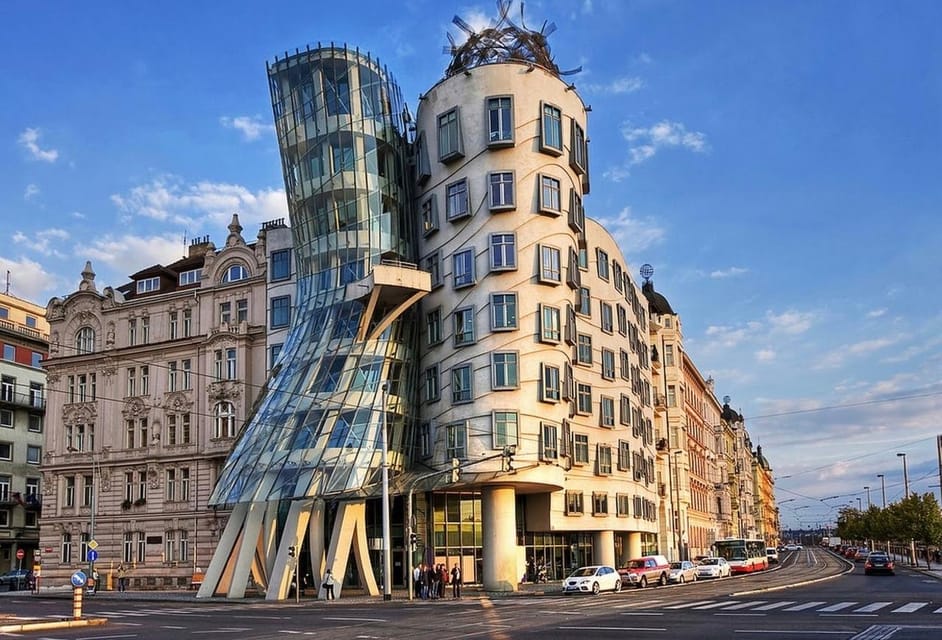
- 10 points in 2 hours means you get quick, high-impact stops without turning it into an all-day project
- Modern-prague focus helps you see past the classic postcard view
- The guide connects design choices to cultural influences like the communist era and later shifts
- You’ll encounter a range from socialist realism and brutalism to experimental installations
- The experience can feel intimate, including very small groups with the guide leading closely
- You also get practical on-the-ground ideas for seeing more of Prague after the walk
Why Prague’s modern buildings deserve your attention
Prague is famous for old streets and pretty facades. But it also has a serious modern side that many first-time visitors walk right past. This tour is a good nudge in the right direction.
What makes it interesting is the angle. Instead of treating modern architecture as a separate category, the tour treats it as part of the same living city. You’ll learn how buildings reflect what people believed in at the time, and how that thinking still shows up today—sometimes in bold forms, sometimes in everyday, practical details.
You can also read our reviews of more guided tours in Prague

Your 10-stop, 2-hour plan (and what the pace means)
Two hours sounds short. With 10 stops, you’re averaging roughly 10 minutes per point. That’s actually useful. You’ll get a clear sense of “what to look for” at each moment, then move on before you start tuning out.
The timing also helps if you’re trying to fit this into a sightseeing schedule that already includes the historic center. This works well as either:
- an early tour to reset how you see Prague, or
- a later tour when you’re ready to look beyond the obvious.
The tour is led by a live English-speaking guide, and it’s described as wheelchair accessible. Since the route is built for access, it’s a solid option if you want modern architecture without the usual hassle of long, uneven detours.
The architectural story you’ll actually follow on the street
The tour’s core promise is simple: you’ll learn design principles and cultural influences that shaped Prague’s modern architectural landscape (the modern era, not just the historic core). It also explicitly covers major styles and movements you’ll recognize as you walk through the city.
You should expect the guide to connect visuals to context, like:
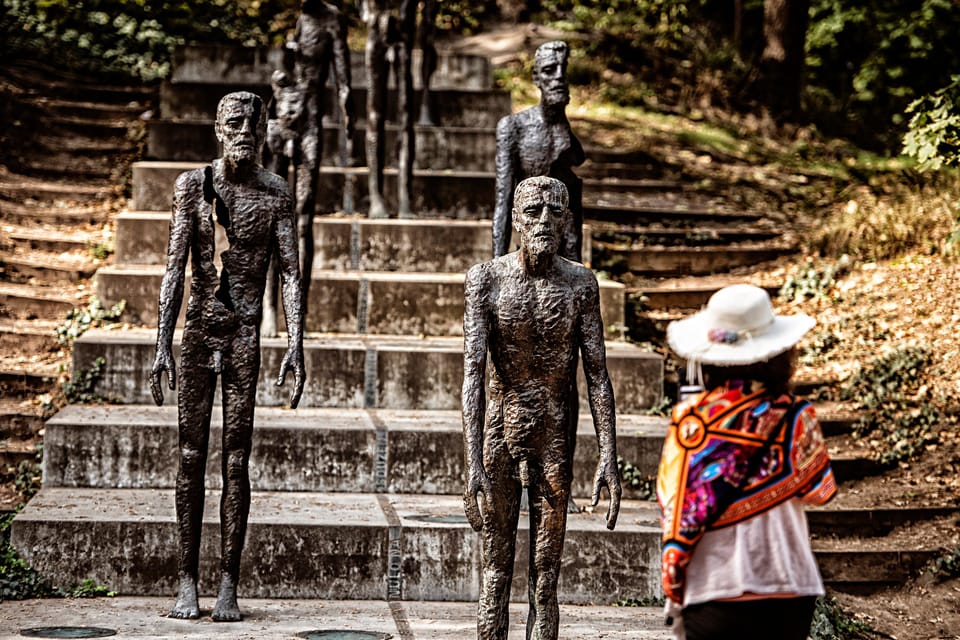
- how socialist-era thinking shaped public space and building expression,
- why brutalism can feel harsh but also logical,
- and how later decades shifted toward experimentation and smaller-scale interventions.
That context matters. If you only look at style, you miss why the city built the way it did. If you look at why, the details start to make sense fast.
Socialist realism stops: what to look for and why it matters
Socialist realism is one of those terms that can feel like an abstract history label. On the tour, it’s treated more like a set of visual habits—what the style wanted to communicate, and how it tried to shape public life.
At stops tied to this era, I’d pay attention to two things:
- How form sends a message: the style often aims for clarity and authority, not subtlety.
- How public buildings function socially: design isn’t only about beauty; it’s about collective identity and visibility.
A potential drawback here, if you’re expecting “best-looking” Prague highlights, is that some of these structures won’t win beauty contests. The value is the reasoning behind them. If you like architecture with a backstory, you’ll get more out of it.
Brutalism moments: the “harsh” look with a purpose
Brutalism gets a bad reputation from people who only react to the surface. This tour helps you do better than a first impression.
In brutalism-focused stops, the guide’s design-principles approach is key. You’ll likely spend time noticing:
- the emphasis on raw materials and strong geometry,
- the way structure becomes part of the visual language,
- and the relationship between function and appearance.
Brutalism often looks like it was made to be noticed from far away. That’s part of the story. It also connects to how cities handled density, public needs, and the politics of the era. Once you understand the logic, the blocks and angles start to feel less random.




Experimental installations and Prague’s later design attitude
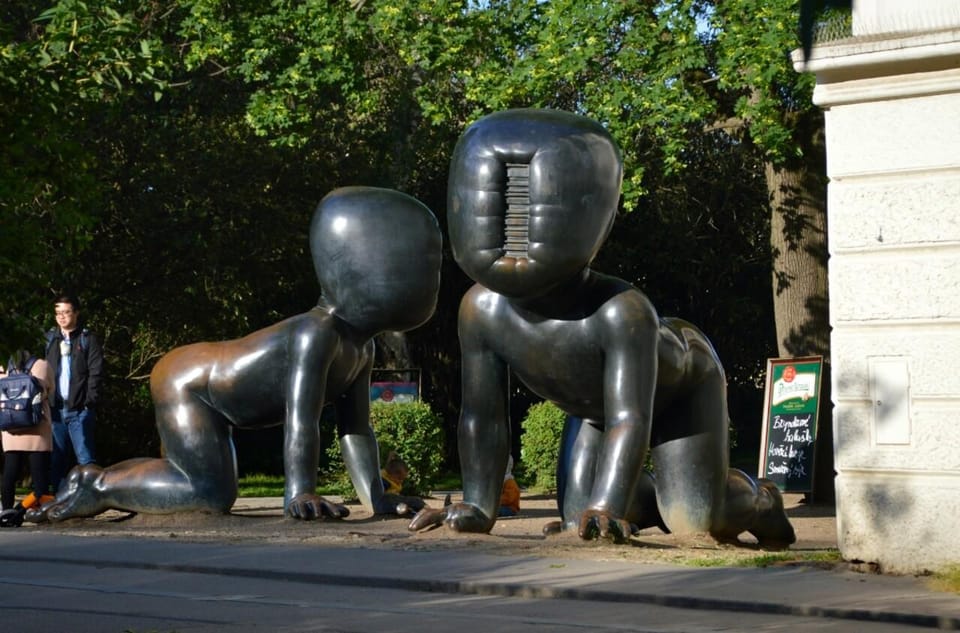
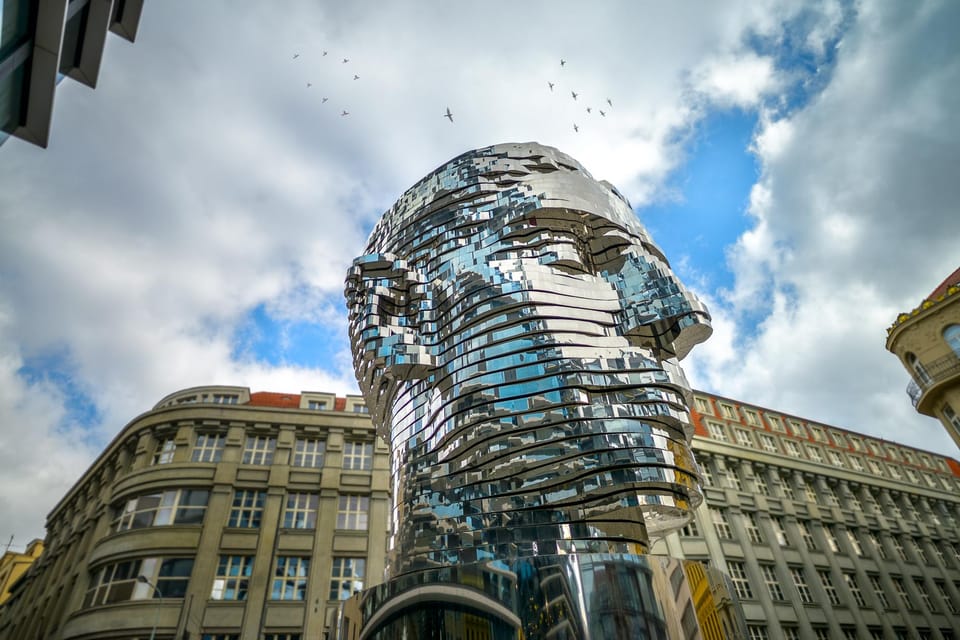
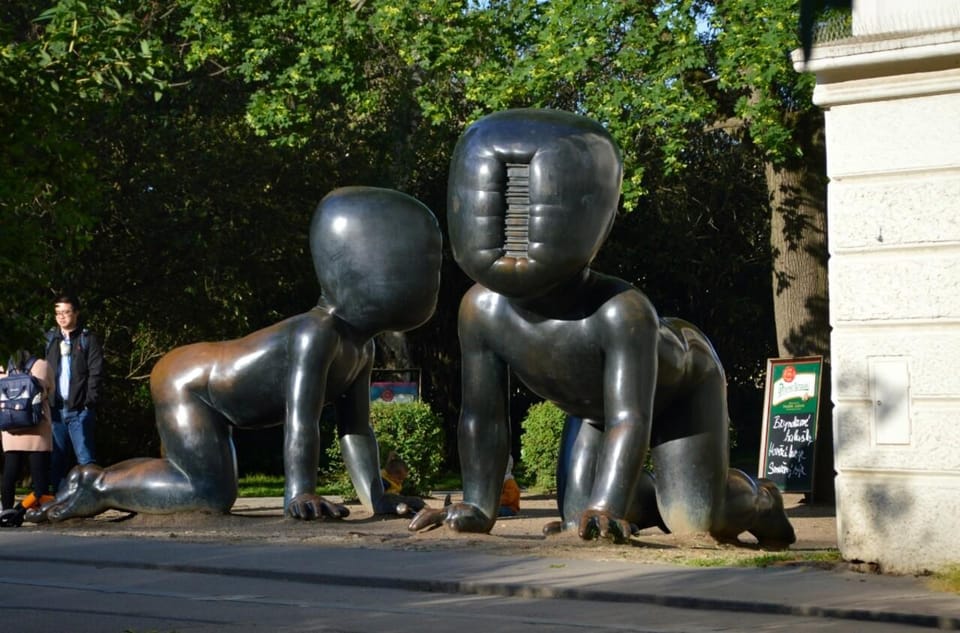
The tour doesn’t stop at mid-century architecture. It includes references to experimental installations too. That shift is important, because it shows how Prague moved from heavy, ideology-driven building language toward more flexible, idea-driven public expression.
For these later stops, I’d watch for how the city uses space differently:
- whether the “architecture” is also art-like in its concept,
- whether the emphasis is on interaction, surprise, or interpretation,
- and how small design choices can change what a place feels like.
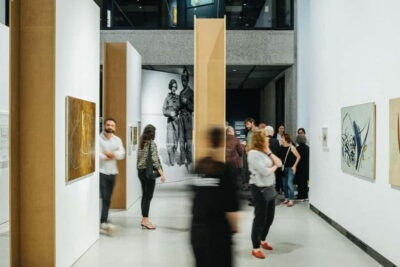
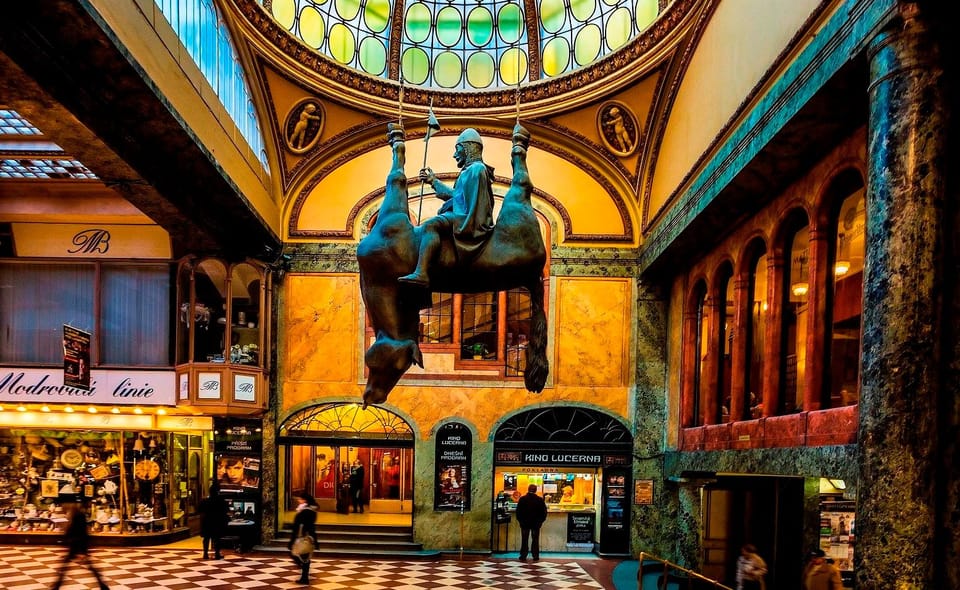
This part of the walk is where many people start noticing details they usually miss. One booking I read described seeing art installations that stood out precisely because they were explained in context, including who made them and why. If you like learning how to see, this is the payoff zone.
Meet the guide: why Michael’s approach gets praise
The tour is run by DH Travel s.r.o., and the name Michael shows up in feedback, including how the guiding felt and what you learned. That matters because the tour experience seems to depend more on the guide’s storytelling than on ticking off famous façades.
Here’s what you can take from the most praised comments:
- Explanations come with real-world tips, not just architecture talk.
- The guide can point out works and details you’d likely overlook on your own.
- Questions after the tour are encouraged, and the guide stays available rather than vanishing immediately.
Group size also seems to vary. One reported booking described an intimate setup with Michael plus just two other people. That kind of small group can make the tour feel like a focused conversation, where your interests can shape how you notice things.
Still, remember the earlier caution: while you’ll get plenty of information, the tour is not positioned as a strictly structured style course.
What makes each stop feel different on a 2-hour circuit
Because the tour hits 10 points, the biggest challenge is not getting bored. The best way to keep it fresh is variety: different eras, different design priorities, different visual languages.
Even without a single “start here, end there” style lecture, you can mentally track the tour like this:
- Early stops set the frame: what Prague looked like as modern ideas started taking hold and how city needs changed.
- Middle stops concentrate on two big eras—socialist realism and brutalism—so you can compare their messages and visual strategies.
- Later stops lean toward newer thinking, including experimental installations, so the city feels like it keeps evolving rather than freezing in one period.
Possible drawback: since you’re moving quickly, you won’t get long, slow contemplation at every building. If you’re the type who likes to sketch and linger for 30 minutes, you may want extra free time after the tour at whichever stops really grab you.
Value check: is $35 for modern architecture a good deal?
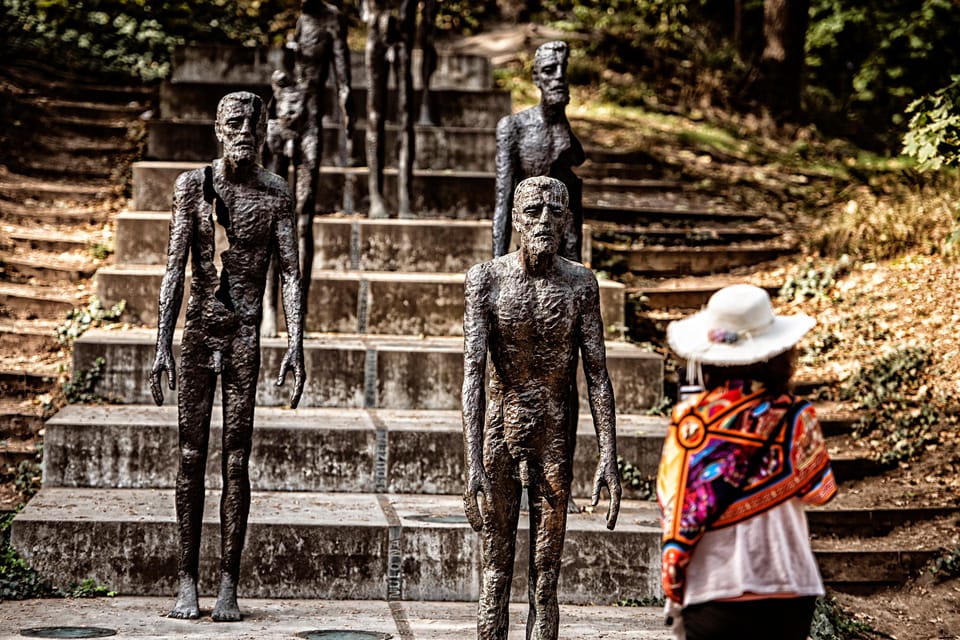
At $35 per person for 2 hours, this is priced like a standard city guided walk, but with a sharper theme than many generic tours. The value comes from two things you don’t get easily on your own:
- a guide who explains the design principles and cultural influences behind what you’re seeing, and
- the ability to notice installations and modern details that don’t announce themselves like the major historic landmarks do.
If your goal is to get your bearings and add meaning to what you’re looking at, you’ll probably feel it’s worth it. If your goal is a checklist of famous buildings with lots of free time to wander, you might feel the tour is a bit constrained by the schedule.
Who should book this tour (and who might skip it)
I’d point this tour toward you if:
- you already enjoy architecture, design, and how cities change,
- you’re curious about the 20th and 21st century side of Prague,
- or you want a guide to help you see modern works you’d otherwise miss.
It’s less ideal if:
- you want a strict, systematic survey of Prague architectural styles with a predictable lecture structure,
- or you only care about the most photogenic historic landmarks.
If you’re somewhere in the middle—curious but not obsessed—this still works. The tour is short enough to be low-risk, and the guide-led storytelling is built to make modern architecture feel less intimidating.
Practical tips so you get more from the 2 hours
These are small things, but they affect your enjoyment:
- Come with a flexible mindset. Modern architecture can be polarizing. The tour is designed to help you interpret it.
- Bring questions. This is the type of tour where follow-ups can add a lot, especially with a guide who stays available after the walk.
- Plan for walking. Even though it’s wheelchair accessible, it still needs your body to keep moving for 2 hours.
And if you’re taking photos: modern buildings can look flat in pictures unless you get the right angle. If something clicks, ask the guide where to stand for a better view.
Should you book this Prague Modern Architecture and Design Guided Tour?
Yes, if you want a fast, guided way to understand why Prague’s modern side exists and how it reflects the city’s changing culture. The strongest reason to book is the combination of 10 points, live English guiding, and an approach that ties buildings to history and design logic—especially when installations and overlooked details get explained.
I’d skip it if you want a rigid, academic-style survey of every architectural category in order. This walk sounds more like story-driven street interpretation than a strict syllabus.
If you like learning how to see, this is an efficient way to spend $35 and come away with a Prague that feels bigger than the old-town postcards.
FAQ
How long is the Prague Modern Architecture and Design Guided Tour?
The tour lasts 2 hours.
How many points of interest are included?
The tour visits 10 points of interest.
What is the price per person?
The price is $35 per person.
Is the tour guided or self-paced?
It includes a live tour guide.
What language is the tour offered in?
The tour is offered in English.
Is the tour wheelchair accessible?
Yes, the tour is wheelchair accessible.
What’s included and not included?
Included: live guide. Not included: food and drinks.
Can I cancel for a full refund?
Yes. You can cancel up to 24 hours in advance for a full refund.