REVIEW · PRAGUE
Prague Graffiti Workshop For Groups & Team-Building Groups
Book on GetYourGuide →Operated by Prague Alternative Tours · Bookable on GetYourGuide
Color sprays, legal walls, and real instruction in Prague. This 150-minute graffiti workshop turns a group outing into hands-on street-art training, starting with a chat about Prague’s scene and ending with your own colorful piece on a legal wall. I like that you work in a safe, structured way, guided by real artists such as Tomáš, Kryštof, Matêj, and Sany. I also love the practical focus on spray techniques and tools, not just waving a can around.
One thing to consider: if you’re expecting a long, detailed history lecture, plan for a shorter culture-and-rules intro before you get moving. In some group formats the creative part can feel like the priority, so you’ll want to lean into the hands-on learning and ask questions during the process. And yes, dress for painting.
In This Review
- Key things to know before you go
- A Legal Wall Where You Can Leave a Real Mark
- Who You Meet: Artists Like Sany, Matêj, Tomáš, and Kryštof
- From Sketchbook to Spray Can: How the 150 Minutes Runs
- The Tools Make a Difference: Caps, Nozzles, and Spray Control
- Technique Lessons You’ll Actually Use Again
- Team-Building Without the Usual Group-Activity Chaos
- Materials and Inclusions That Affect Real Value
- Price for $388 Per Group Up to 4: Is It Worth It?
- Timing, Pacing, and Expectations Around History
- What to Wear and What to Bring (Comfort Wins)
- Accessibility and How Groups Are Managed
- Who This Prague Graffiti Workshop Suits Best
- Should You Book? My Practical Take
- FAQ
- How long is the Prague graffiti workshop?
- What does the price include for groups?
- Do I need any art supplies or protective clothing?
- Can I join if I’m a complete beginner?
- Is this workshop suitable for different group sizes?
- What languages are spoken during the workshop?
- Is the workshop wheelchair accessible?
- Will I be able to create my own graffiti piece?
- Is there free cancellation?
Key things to know before you go
- Meet a working graffiti artist who explains local rules and how Prague street art works
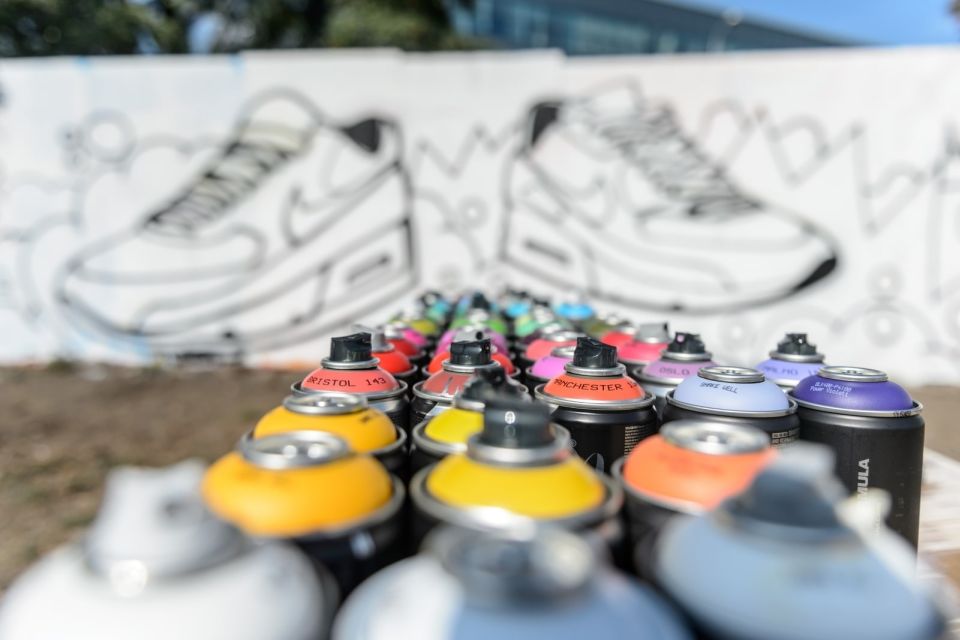
- Black-paint wall + pro supplies means you can start strong without hunting for gear
- Learn technique, not just spraying with fades, shadows, outlines, and fills
- Work together on one big piece with guidance, even if your team has mixed skill levels
- Safety gear is provided (jackets, shoe covers, gloves, masks)
- Photos included, so you leave with more than just memories
A Legal Wall Where You Can Leave a Real Mark
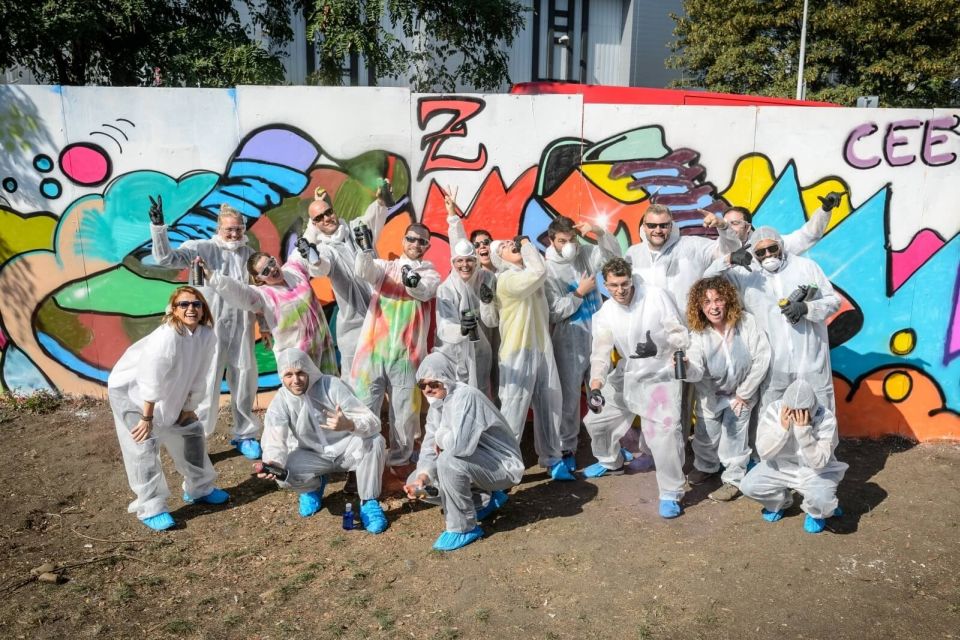
Prague graffiti gets discussed a lot, but this workshop gives you the part people actually want: the chance to make art in a fully legal, controlled space. That changes the vibe. You can focus on line, color, and layout without that awkward feeling of doing something you shouldn’t.
You also start with the right canvas. The wall is pre-painted black, which is a smart choice because it instantly makes colors pop. It’s also easier to see your planning come to life as you sketch, then transfer the idea into something bigger and bolder.
For groups, this is one of those rare activities where everyone leaves with something. Even if your first sketches are rough, the session is built around building confidence fast and finishing strong.
You can also read our reviews of more tours and experiences in Prague



Who You Meet: Artists Like Sany, Matêj, Tomáš, and Kryštof
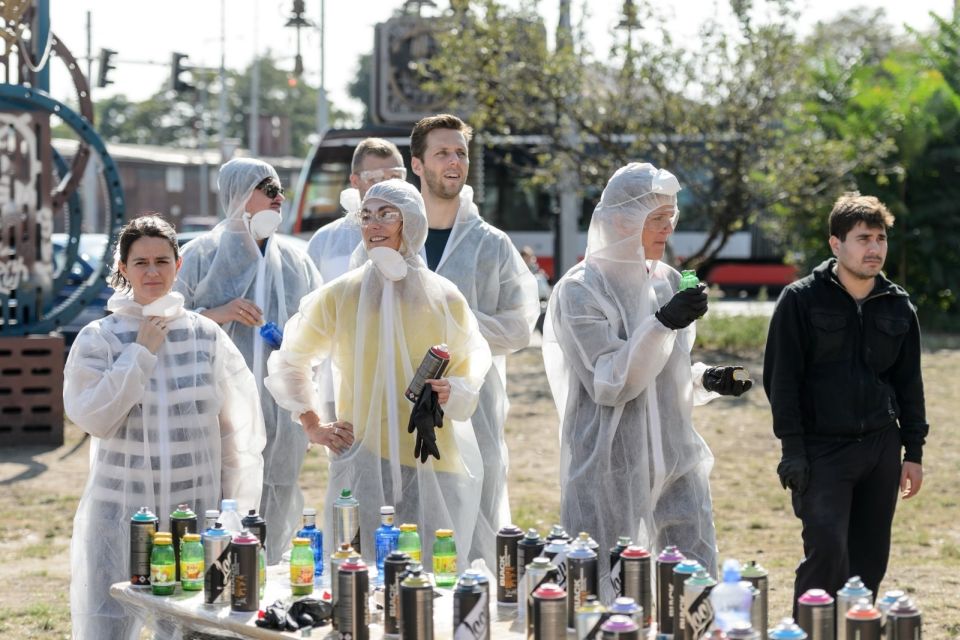
This isn’t a “watch a video and copy a template” class. You meet an instructor who teaches you the background and the how-to from a working street-art perspective.
In the experience reports, names come up again and again. You might work with Tomáš or Kryštof for group guidance, Matêj for a step-by-step, coaching style, or Sany (including a note as Sanababy) when you want patience and real advice on using paint effectively. Those are great signs because they point to teaching that’s interactive, not just performative.
The best part is that the instruction is tied to the Prague context. You’ll get history, rules, and local specifics, then you’ll immediately apply that knowledge as you plan your piece. That combo helps the activity feel more meaningful than a generic art class.
From Sketchbook to Spray Can: How the 150 Minutes Runs
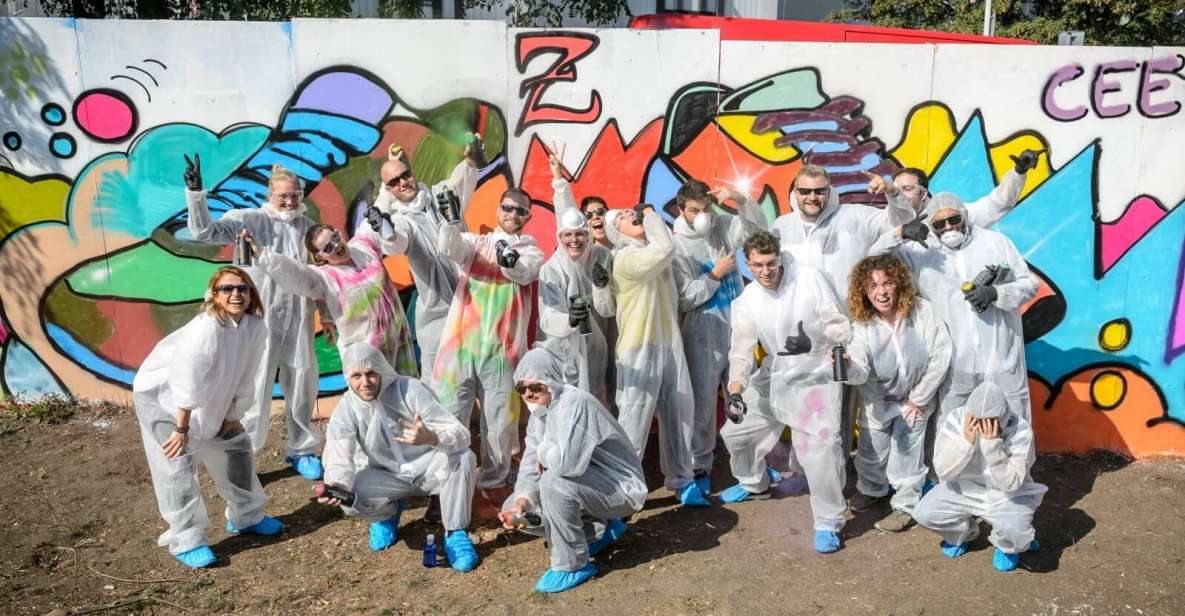
You’ll spend about 150 minutes total. The rhythm is usually: warm-up context → plan your design → prep the surface → practice key moves → build the final piece together.
It helps to know what “prep” means here. You’re not just walking in and painting. The wall comes with its starting point (black background), but you still learn how to approach the artwork: sketching ideas on paper first, then planning where outlines, shadows, and fills will go. This matters because graffiti is visual structure, not only color.
Once you have your concept, the workshop shifts into technique. You’ll practice core effects like:
- Fades (smooth transitions)
- Shadows (depth and separation)
- Outlines (clean definition)
- Fills (solid color impact)
Then you put it together on the wall with guidance. Some people come in expecting to just spray. What they actually get is the process of making choices—where to simplify, how to improve readability, and how to make your design look intentional rather than accidental.
The Tools Make a Difference: Caps, Nozzles, and Spray Control
One reason this workshop gets strong feedback is the focus on proper supplies. You’re not stuck with random paint. You get professional spray cans and a variety of spray caps/nozzles designed for graffiti work.
That detail changes everything for beginners. A good cap controls line width and spray behavior, which affects how your letters look and how clean your edges are. When instructors explain what to do with those tools, you can see progress quickly.
It also makes the teamwork smoother. When everyone has similar gear, your group piece has more consistent texture and brightness. That’s important when you’re building something large-scale together.
Safety gear is provided too: protective jackets, shoe covers, gloves, and masks. Even if you’re careful, spray art is messy by nature. This setup helps you enjoy the session without worrying about ruining clothes or getting paint where it shouldn’t go.
Technique Lessons You’ll Actually Use Again
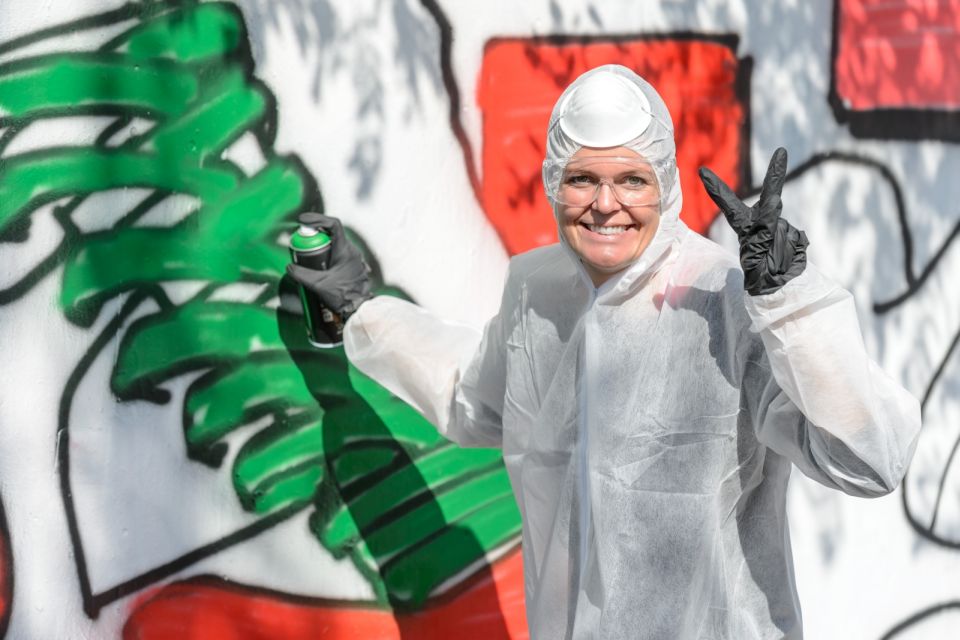
This is the kind of workshop where the techniques feel practical because you use them immediately. You’re taught the moves, then you apply them to your own design before the session ends.
If you’re new, you’ll likely appreciate how the coaching stays hands-on. One highlight from a group experience: instruction didn’t just mean doing it for you. You were guided to figure out implementation yourself, which is exactly what you want if you’re learning a skill, not collecting a souvenir.
If you have experience, you’ll still benefit. You can refine your choices—especially around outlines and shadows, where tiny adjustments can make a mural look finished rather than rushed.
Also, there’s a bigger creative lesson baked in: graffiti isn’t only about style. It’s about planning for readability on a real wall. That’s why sketching and structure are part of the process, even when the final output looks spontaneous.






Team-Building Without the Usual Group-Activity Chaos
This workshop is set up for groups and private sessions. The price is per group, and larger groups get split into smaller crews so you’re not left waiting while someone else gets attention. Each crew gets its own tutor, which is a big deal for keeping momentum.
For team building, this format works because it forces collaboration with a shared outcome. People contribute to one mural, and you quickly see how different roles connect—someone handles layout, someone tests colors, someone improves outlines, and the final piece becomes a group effort.
It also creates easy conversation. When your hands are busy, you talk about technique naturally. And when the artist asks you to make choices, you get a real sense of leadership and communication without awkward icebreakers.
One group example stood out: a multi-generational family mural where everyone contributed. That’s a clue this doesn’t require everyone to be the same age or skill level. Mixed groups can do well because the instruction is broken into steps.
Materials and Inclusions That Affect Real Value
The inclusions aren’t just “nice to have.” They remove barriers.
Here’s what you can count on:
- plenty of professional spray cans
- wall pre-painted black
- hands-on guidance from a professional graffiti artist for about two hours
- a variety of professional spray caps
- protective gear: jackets, shoe covers, gloves, masks
- sketchbook and pens
- photos taken throughout the workshop
If you’ve ever done a creative activity that charged extra for basics, this one is more straightforward. You don’t need to bring supplies, and you’re not wasting time during the session figuring out what cap works for what line.
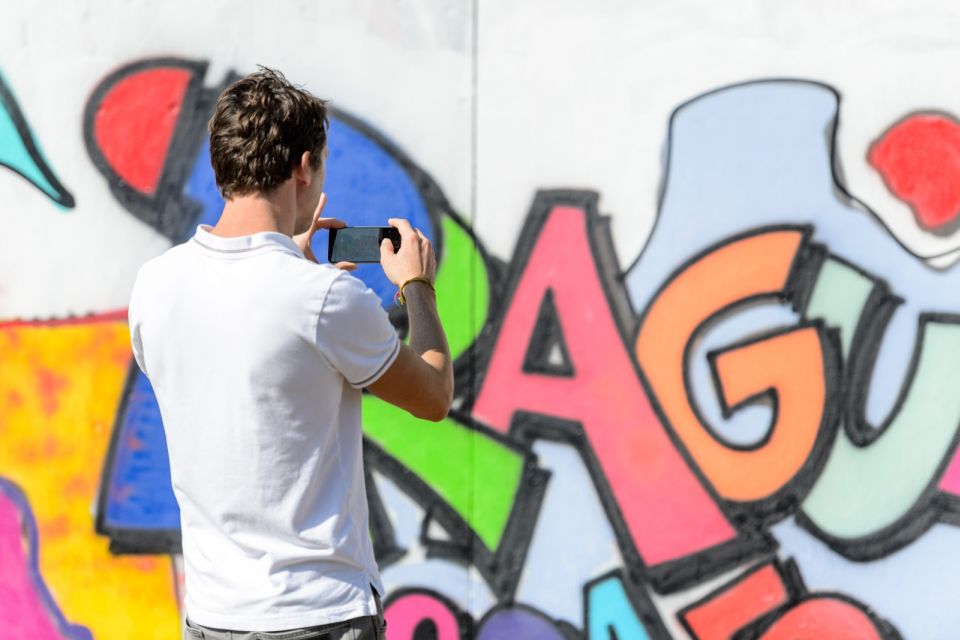
The photos are also practical. Graffiti can be hard to document because the best results happen quickly. Having someone capture the process helps you remember the steps, not only the final wall.
Price for $388 Per Group Up to 4: Is It Worth It?
The price is $388 per group up to 4, for 150 minutes. On paper, it’s not cheap. But it’s also not a “per person” craft class where you pay for the same thing repeatedly.
You’re paying for:
- a professional artist tutor,
- a private group format,
- the wall and prep setup,
- real graffiti tools (cans plus caps),
- safety gear,
- and photos.
For a group of four, the value swings more positive fast because the instruction and supplies scale across your whole crew. For couples or small families, it can feel like a premium activity, but you’re getting more than “try graffiti.” You’re learning techniques with guidance and producing a mural on a legal wall.
One fair consideration: if you book for a small number, you might feel the cost more than you would on a per-person bargain. That’s when it helps to treat it as a shared experience—something you’d otherwise pay to do with private instruction.
Timing, Pacing, and Expectations Around History
This is where you should calibrate expectations. The workshop includes history, rules, and Prague-specific context, but the centerpiece is skill-building and finishing a piece. In at least one group experience, the session felt faster than expected and history coverage felt lighter than hoped for.
So, what should you do?
- Assume you’ll get a brief, useful cultural grounding, then get busy.
- Use the artist’s explanations as living context while you paint.
- If history depth matters, ask your tutor directly during the intro. The best time to get your questions answered is when they’re already building examples.
If you want a long lecture day, this probably isn’t the right fit. If you want a short, effective lesson that ends with visible results, this format usually delivers.
What to Wear and What to Bring (Comfort Wins)
You don’t need special art clothes, but you do need comfort. Wear comfortable clothes and be ready to paint outdoors or in a workshop space where you’ll likely move around.
You might also want something warm. One instructor-led experience explicitly suggested bringing warm clothes, which makes sense if Prague temperatures dip or if your session includes any waiting time during setup.
You won’t need to bring a sketchbook, pens, or spray tools. Those are included, along with protective gear.
Accessibility and How Groups Are Managed
This workshop is marked wheelchair accessible, which is a key plus if your group includes someone with mobility needs.
Group size is private, and larger crews are split into smaller teams for more hands-on support. That structure matters because spray control and technique feedback require attention. When you keep groups smaller per tutor, you spend less time watching and more time doing.
Language support includes English and Czech, so you can plan accordingly if you prefer one over the other. If your group is mixed-language, you can still benefit from the visual instruction and hands-on coaching.
Who This Prague Graffiti Workshop Suits Best
I’d point you here if you want:
- a hands-on creative activity that ends with something finished on a wall,
- a fun way to do team-building that doesn’t feel like a forced challenge course,
- an experience for mixed ages and abilities,
- and instruction that focuses on how graffiti techniques work.
It also makes sense for solo travelers who want a social day without doing a big city tour all morning. You’ll be guided step by step, and the group mural structure makes it easy to contribute even if you’re shy.
If you’re a graffiti die-hard seeking very advanced technical training, you might find the session short for deep specialization. But for learning core effects and leaving with a solid piece, it’s a strong use of time.
Should You Book? My Practical Take
If your goal is to learn real graffiti basics—sketching into structure, controlling fades and shadows, and using the right caps—then I think this workshop is a smart booking. The combination of professional tools, safety gear, and tutor guidance makes it more reliable than most “creative experiences” that stay too vague.
If your top priority is a deep, long history lesson, you may feel underfed on the storytelling side. That’s not the workshop’s main engine. Still, you’ll get context and rules, then you’ll apply them right away on a legal wall.
For groups planning a Prague team day, it’s also hard to beat the value logic. You’re paying for an artist-led session with supplies and documentation, not just for time in a room.
FAQ
How long is the Prague graffiti workshop?
The workshop lasts about 150 minutes.
What does the price include for groups?
It’s priced at $388 per group up to 4, and it includes professional spray cans, a black pre-painted wall, guidance from a professional graffiti artist, caps/nozzles, protective gear, a sketchbook and pens, and photos.
Do I need any art supplies or protective clothing?
No. Spray cans, caps, a sketchbook, pens, and protective jackets, shoe covers, gloves, and masks are included. You just need comfortable clothing.
Can I join if I’m a complete beginner?
Yes. The workshop is designed for complete beginners and also supports people with some experience. You’ll learn the process and techniques rather than only copying a final design.
Is this workshop suitable for different group sizes?
Yes. It’s a private group experience, and for larger groups the group is split into smaller crews with additional tutors.
What languages are spoken during the workshop?
The instructor provides instruction in English and Czech.
Is the workshop wheelchair accessible?
Yes, the workshop is listed as wheelchair accessible.
Will I be able to create my own graffiti piece?
Yes. You’ll create a colorful graffiti piece and learn techniques such as fades, shadows, outlines, and fills.
Is there free cancellation?
You can cancel up to 24 hours in advance for a full refund.