REVIEW · PRAGUE
Prague Art Nouveau Tour
Book on GetYourGuide →Operated by TOMAS TOUR · Bookable on GetYourGuide
Prague’s Art Nouveau hides in plain sight. This tour is a smart, easy way to spot it, with a guide who connects the details to how Prague grew and changed. I especially like the focus on real Art Nouveau structures and the chance to understand the style through the architects behind it, like Antonín Balšánek and Osvald Polívka. I also like that the route isn’t just random photos; it ties metro-entry ironwork and street façades to a bigger story of the city.
You’ll get a lot out of it even if your Art Nouveau knowledge is basic. But do keep expectations realistic: it’s only 2 hours, so you’ll see key highlights rather than a full, building-by-building encyclopedia. Wear comfortable shoes, because the walking (plus occasional tram/metro travel depending on the plan) adds up.
In This Review
- Key points to know before you go
- Prague Art Nouveau in two hours: what you’re really buying
- Your route is the story: Republiky Square to Wenceslas Square
- Spotting the metro lettering and wrought-iron style fast
- Republiky Square: your starting point for the style thread
- Na Příkopě street: the walk where details start talking
- Wenceslas Square: where style meets the big-city beat
- The architects you’ll hear about: Balšánek and Polívka
- Tomas Tour and the guide style that makes it work
- Price and value: why $34 per group can feel like a steal
- What to bring (and how to make the most of the 2 hours)
- Who this Prague Art Nouveau tour suits best
- Should you book the Prague Art Nouveau Tour?
- FAQ
- How long is the Prague Art Nouveau tour?
- Where does the tour start and end?
- Is hotel pickup included?
- What languages is the tour offered in?
- Is this a private group?
- How much does it cost?
- Do I need to reserve in advance?
- What should I bring?
- Is there free cancellation?
- Are the tour times fixed?
Key points to know before you go
- You’ll learn to “read” Art Nouveau: curving lines, decorative ironwork, and lettering that signals the style fast
- A hotel pickup makes it simple: the guide meets you in the reception area with a name desk
- Focused architecture attention: the tour centers on Antonín Balšánek, Osvald Polívka, and other Prague contributors
- A clear route: Republiky Square → Na Příkopě street → Wenceslas Square
- French live guide: the tour is specifically in French, which matters for comfort and Q&A
Prague Art Nouveau in two hours: what you’re really buying
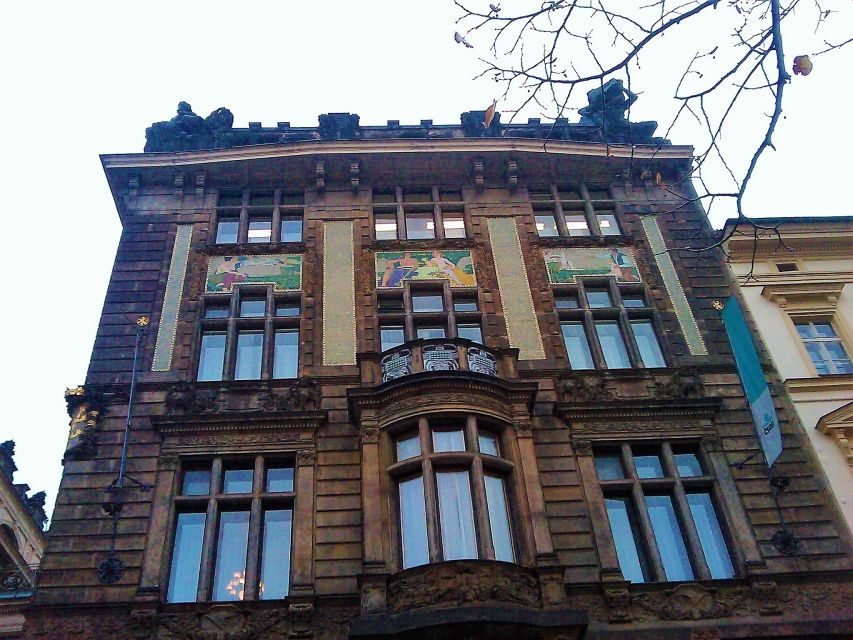
This Prague Art Nouveau tour is built for people who want pattern recognition fast. You’ll come away knowing what to look for next time you’re wandering on your own. Art Nouveau can feel decorative at first glance, but once you start seeing the same design habits again and again—especially the swirling, plant-like motifs and the confident typography—you stop viewing it as random ornament and start seeing it as a language.
Two things make the experience feel worthwhile. First, it’s not only about pretty façades. You also get general history of Prague, so the buildings make sense in time, not just in style. Second, the tour stays tightly focused on the architecture scene—guided attention is a gift in a city where you could easily spend hours chasing the next photo spot with no thread.
The only real drawback is time. Two hours is enough for a high-impact highlights tour, not enough for deep restoration-level details on every stop. If you want that kind of heavy research, you’ll likely need a longer specialized visit later.
You can also read our reviews of more tours and experiences in Prague.
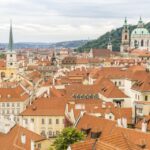
Your route is the story: Republiky Square to Wenceslas Square
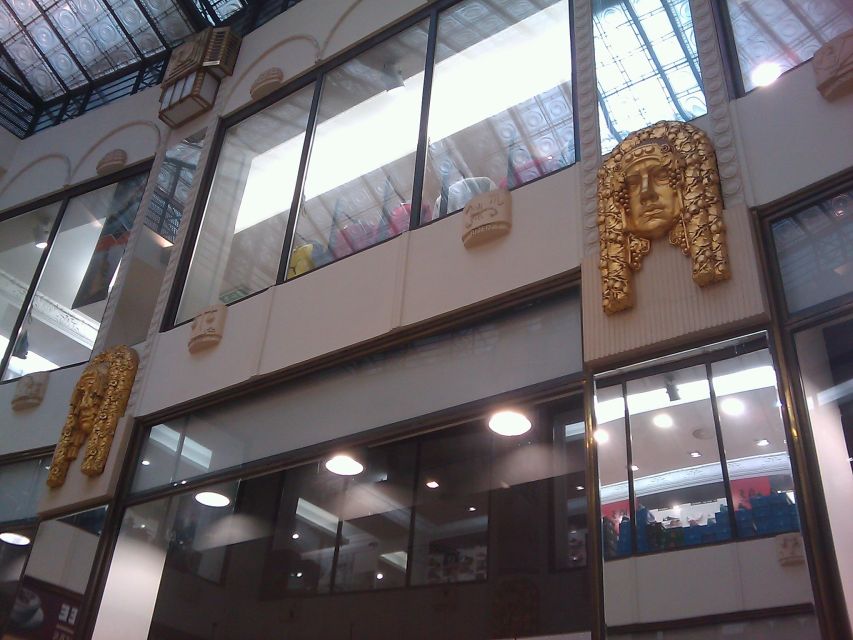
The flow is easy to follow. The visit starts in Republiky Square, then continues along Na Příkopě street, finishing in a major hub: Wenceslas Square. Even if you’ve never used this route before, it works because it links places that help you understand how Prague communicates through design—streets, crossings, and public spaces all act like stages.
Your guide will pick you up at your hotel reception. They’ll hold a desk with their name in front of the hotel, then you’ll move to the starting point and between sights. The travel method can be on foot, by tram, or by metro, depending on the plan. In practice, this is a plus. Walking gives you detail time; public transit keeps things efficient.
What I like for your planning: it’s a compact format. You don’t need an entire morning or afternoon to enjoy it. You can fit this into a busy Prague itinerary and still feel like you learned something real.
Spotting the metro lettering and wrought-iron style fast
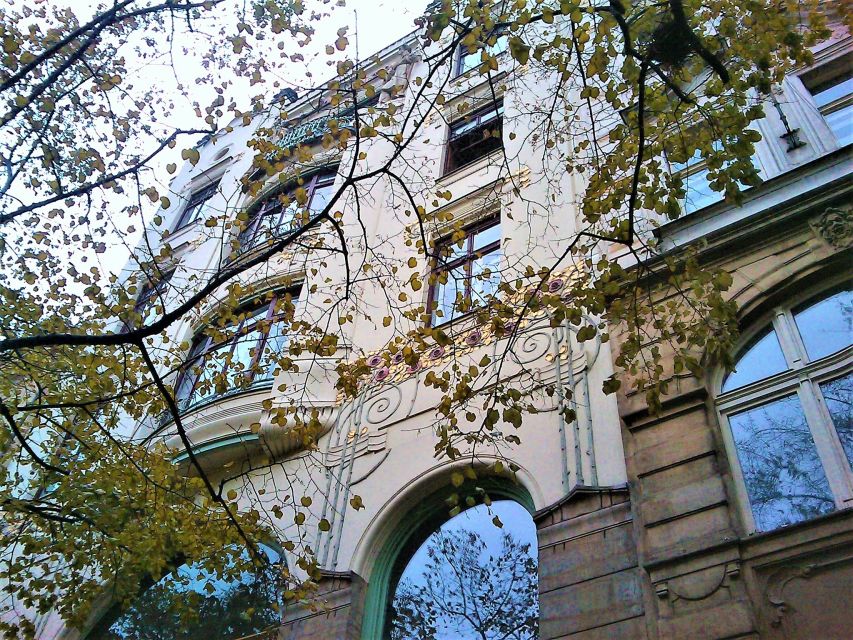
Here’s one of those “aha” moments that makes Art Nouveau tours fun. If you’ve been in Paris, you’ll recognize the look: swirling, plant-like gates and distinctive lettering used as entryways to the metro. The tour leans into that visual link because it helps you understand how a design idea travels—and then gets adapted locally.
In Prague, you’ll start noticing that Art Nouveau isn’t only on fancy buildings behind the glass. It shows up where daily life happens: street corners, entry points, and the way metalwork frames movement through the city. When you connect those details to the broader Art Nouveau wave, the whole place clicks into focus.
I’d suggest you keep your eyes at three levels as you go:
- At eye level for lettering and decorative patterns
- Slightly above for façade rhythm and curved ornament
- At street level for how entrances and ironwork guide you into the urban flow
This tour is good at training your attention without making you feel like you’re doing homework.
Republiky Square: your starting point for the style thread
Republiky Square is a logical first stop because it puts you in a public, city-scale mindset immediately. From there, your guide can set up the bigger context—how Prague’s architecture developed and why Art Nouveau took hold during the right moment in the city’s growth.
Expect the guide to ground you in basics before moving into the details. That matters because Art Nouveau can look chaotic if you don’t know what you’re looking at. Once you understand what “counts” as the style—curves, floral motifs, and expressive decorative forms—the buildings feel less random.
This is also where you’ll likely get an orientation for what comes next: the walk and the shift toward Wenceslas Square. Think of it as the tour’s map in architectural form.
Na Příkopě street: the walk where details start talking
Na Příkopě street is one of those Prague corridors where the city feels like it’s moving. For an Art Nouveau tour, that’s perfect. As you travel along, you’re not just viewing buildings in isolation—you’re seeing how they line up across a street and how design helps control the look and rhythm of an urban area.
This is where a strong guide earns their fee. The tour is oriented for people who care about general Prague history and especially the Art Nouveau structures, so you should expect explanations tied to what you’re seeing. The design details—curving forms, plant-inspired patterns, and typographic elements—become easier to spot when you’re moving through the street rather than standing still in one place.
One practical tip: don’t only look straight ahead. Glance left and right as you pass façades. Art Nouveau often rewards the quick side look because the ornament is placed to be noticed as you walk by, not as you stare at one section for five minutes.

Wenceslas Square: where style meets the big-city beat
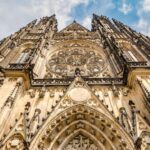
Wenceslas Square is the finishing hub, and it’s a strong way to close the loop. Even if you’re already familiar with the square, ending here helps you understand why Art Nouveau mattered in Prague beyond niche collectors and design fans. Art Nouveau became part of the city’s public visual identity—something people would see during everyday routes, not only in private residences.
As you arrive, you’ll likely feel the contrast between neighborhood-scale detail and big-city atmosphere. That contrast is useful. It highlights a point your guide can help you interpret: Art Nouveau wasn’t just decoration. It was about turning architecture into a statement—about progress, identity, and modern design at the time.
If you want a quick “take with you” from this stop, it’s this: look for how the earlier street details and metro-entry style connect to the larger urban experience at the end. The tour gives you that thread so you’re not just collecting images.
The architects you’ll hear about: Balšánek and Polívka
This tour is organized around names, not just general vibes. You’ll focus on the work of architects Antonín Balšánek and Osvald Polívka, plus other contributors connected to Prague’s Art Nouveau scene. That’s a meaningful difference.
When you learn the architects behind the look, you stop describing Art Nouveau as one flat style and start seeing it as a set of choices—composition, ornament style, and how different designers shaped what Prague recognized as modern.
Here’s how to use this info during your visit:
- When a building detail looks especially ornate or expressive, think about the architect’s role in the style you’re seeing
- Notice how ornament feels integrated into the façade, not pasted on afterward
- Pay attention to the “signature” look your guide points out, then see if you can spot it elsewhere on your own
Even if you can’t name every structure afterward, you’ll keep the mental framework.
Tomas Tour and the guide style that makes it work
This experience is provided by TOMAS TOUR and your live guide is French, with the tour guide meeting you with a name desk at the hotel reception. One of the standout notes from the experience is that the guide has a friendly, approachable delivery. Another is how the explanations stay practical and easy to follow while still packing in fun facts.
The vibe from the tour’s feedback lines up with what you want in a short architecture walk: clear explanations, room for questions, and a guide who can connect design details to Prague’s broader history without turning it into a lecture.
If your French is solid, you’ll get extra value from the back-and-forth. If your French is basic, you’ll still pick up plenty from the visuals and the guide’s focus, but Q&A may be limited.
Price and value: why $34 per group can feel like a steal
The listed price is $34 per group up to 25, with a duration of 2 hours. That’s the kind of pricing that can make sense for families or small groups who don’t want to juggle guide costs.
The key point for value: you’re not just paying for someone to point at buildings. You’re paying for a guide who:
- filters the highlights so you don’t waste time
- connects Art Nouveau details to Prague history
- keeps the route efficient across Republiky Square → Na Příkopě → Wenceslas Square
If you’re traveling with more than one person, the per-group structure can make it easier to justify than a per-person tour in busy tourist seasons. Just double-check the exact cost and starting time when you book, since duration is fixed but departure times vary.
What to bring (and how to make the most of the 2 hours)
You’ll want comfortable shoes. That sounds obvious, but it’s the difference between enjoying details and just surviving the route. Even with tram/metro segments, this is still a walking-focused architecture experience.
Also consider bringing a camera or phone charger, because Art Nouveau rewards close-looking. Try not to spend the first 20 minutes taking photos of everything. Instead, let the guide show you what matters, then start capturing the patterns you’ve learned.
If you like design and city history, you’ll get more out of the tour. If you’re only interested in broad landmarks, you might find it a little more specific than you expected—but the guide’s mix of general Prague history and Art Nouveau structure is built to keep it accessible.
Who this Prague Art Nouveau tour suits best
This one is especially good for:
- people who enjoy architecture and want a fast orientation in a new city
- visitors who have already seen some major sights and want a deeper design angle
- anyone curious about how a style travels and localizes, like the metro entrance link to the Paris look
It may not be ideal if:
- you want a long, ultra-detailed building-by-building study
- you’re not comfortable with French as the tour language (the guide is French)
Should you book the Prague Art Nouveau Tour?
Yes, if you want a focused, high-value taste of Prague Art Nouveau without spending your whole day researching. I’d book it when you have two hours to spare and you like learning how to notice design instead of just seeing photos.
Do it especially if you’re the type who enjoys the “why” behind what you’re looking at. The tour’s structure—Republic Square to Na Příkopě to Wenceslas Square—gives you a clean path and a clear payoff. And if you’re traveling with a small group, the per-group pricing format can make it feel like excellent value for a private guided experience.
FAQ
How long is the Prague Art Nouveau tour?
The tour lasts 2 hours.
Where does the tour start and end?
It starts at Republiky Square and continues via Na Příkopě street to end in Wenceslas Square.
Is hotel pickup included?
Yes. The guide includes pickup from your hotel reception and meets you holding a desk with a name in front of the hotel.
What languages is the tour offered in?
The live tour guide speaks French.
Is this a private group?
Yes. The tour is listed as a private group.
How much does it cost?
The price is listed as $34 per group up to 25.
Do I need to reserve in advance?
You can reserve your spot. The listing also offers a reserve and pay later option.
What should I bring?
Wear comfortable shoes.
Is there free cancellation?
Yes, free cancellation is available up to 24 hours in advance for a full refund.
Are the tour times fixed?
Starting times can vary. Check availability to see what times are offered.