REVIEW · PRAGUE
Enigma – Spy Mission
Book on Viator →Operated by MindMaze Prague · Bookable on Viator
A ticking clock in WWII Prague. Enigma – Spy Mission puts you in a 60-minute interrogation where every clue matters. I like that it’s built for team problem-solving, not solo wandering.
I also enjoy the WWII-era story: you move behind enemy lines by getting your team arrested, then you have one hour to find classified submarine blueprints and escape. One possible drawback is that it’s a single-room experience, so it won’t feel like a multi-stop tour.
In This Review
- Key things to know before you go
- Stepping into Enigma: a spy mission, not a museum visit
- Getting to MindMaze Prague: where the mission starts
- How the 60-minute mission works (and why the timer feels real)
- The puzzle style: logic, ciphers, and real hands-on problem-solving
- Hints: helpful, but sometimes easy to spot
- The WWII setting: Prague tension without a lecture
- Gamemasters and the English-speaking experience
- Who Enigma fits best: friends, couples, and family groups
- How hard is it, really?
- Price and value: what $70 buys in a 60-minute mission
- Practical tips so you don’t waste minutes
- Should you book Enigma – Spy Mission in Prague?
- FAQ
- How long is Enigma – Spy Mission?
- Where do I meet for Enigma – Spy Mission?
- What’s the group size limit?
- What’s included in the ticket price?
- What’s not included?
- Is free cancellation available?
Key things to know before you go
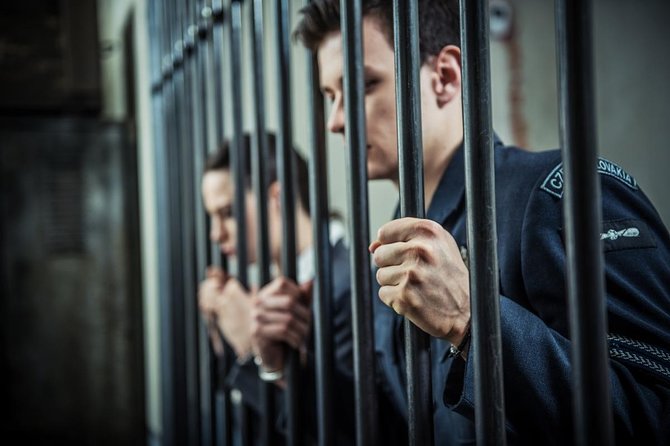
- 60-minute interrogation timer: the whole game is paced like a real mission clock.
- WWII spy plot: stealing submarine plans in Czechoslovakia-era Prague gives the puzzles a purpose.
- Small group cap (max 5): this is ideal for tight teams and clear communication.
- Manual, logic-style puzzles: expect physical problem-solving, not just screen effects.
- English-speaking gamemasters: guides like Renča, Teresa, and Anna get mentioned for helping without taking over.
- Difficulty varies: some puzzles feel straightforward at first, others can turn seriously tough.
Stepping into Enigma: a spy mission, not a museum visit
If you’re in Prague looking for something active, Enigma is a smart break from walking and sightseeing. It’s a story-driven escape game set in a World War II-era setup, specifically Czechoslovakia of 1940. The scenario is simple and punchy: you’re on a military mission behind enemy lines to steal classified submarine blueprints.
What makes this kind of game work well in a city like Prague is that you don’t just learn history from a poster. You’re acting inside the tension. You’re thinking like a team under pressure, and the mission wording nudges you to scan, decode, and coordinate instead of guessing at random.
And yes, it’s still an escape game. But the best version of this experience is when you treat it like an hour-long group challenge. Bring people who will talk to each other. If your group is good at puzzles plus teamwork, you’ll likely have a far easier time than you expect.
You can also read our reviews of more tours and experiences in Prague.



Getting to MindMaze Prague: where the mission starts
The meeting point is MindMaze Prague, Tyršova 9, 120 00 Praha 2-Nové Město. The activity starts there and ends back at the same spot, so you don’t have to plan transportation changes mid-game.
A couple practical notes that matter on the ground:
- It’s near public transportation, which helps if you’re bouncing around Prague by tram/metro.
- You’ll have a mobile ticket, so you don’t need to print anything.
- Service animals are allowed, and most people can participate.
This matters because one-hour activities can be time-sensitive. If you’re cutting it close, your biggest risk isn’t the game. It’s showing up without enough time to get settled.
How the 60-minute mission works (and why the timer feels real)
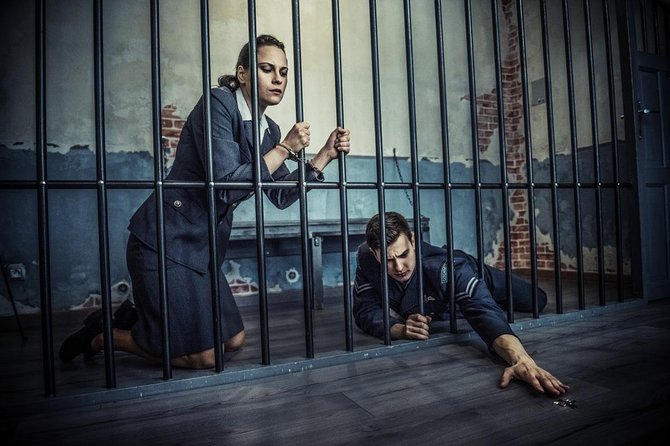
The core structure is straightforward: you get into a role-play interrogation situation, and the clock starts with a 60-minute window to find the plans and escape. The mission premise adds a clever twist: you get into the enemy headquarters fast by letting your team be arrested. Then the interrogation begins, and you’re trying to outthink the system before time runs out.
From a player point of view, this does two things:
- It forces focus. You can’t treat this like a slow “check around the room.” You’re always deciding what to try next.
- It turns collaboration into a strategy. In a timed setting, one person trying everything alone usually stalls the team. You want roles: who reads clues, who tests options, who watches for the next step.
You also get guidance during the mission. The gamemaster support is part of how these games stay fun for different group skill levels. Some groups solved it with minimal help, while others needed a few hints to keep momentum.
The puzzle style: logic, ciphers, and real hands-on problem-solving
This isn’t a game that relies on clever lighting tricks alone. The puzzle accounts emphasize logic tasks and manual puzzles, meaning you’re interacting with physical elements and working through steps rather than just tapping screens.
That’s good news if you like puzzle games with tangible mechanics. It also makes the experience more “human-scale.” You’re not waiting for a controller to load. You’re standing close as a team, talking through options out loud.
One room means every puzzle is competing for your attention. The layout needs to do a lot of work. In this case, that’s why communication matters so much. When your team is spread in attention—one person reading, another trying a mechanism, another watching for patterns—you tend to move faster than a group that’s all stuck in one place.
Hints: helpful, but sometimes easy to spot
There’s a potential friction point. One account mentions hints weren’t hidden in a way that kept everything truly secret until the end. If you prefer a pure, clue-by-clue experience where nothing gives itself away, you might find that aspect a little less satisfying.
On the flip side, in a timed mission, hints can be what keeps a group from turning frustration into a slow spiral. So this is really about your personal puzzle style: do you want maximum discovery, or do you want the fun of staying in the game?



The WWII setting: Prague tension without a lecture
The storyline is what gives the room its flavor. You’re surrounded by a spy mission scenario tied to WWII-era Prague and the specific idea of classified submarine blueprints. The game is also marketed as a way to learn more about Prague’s tense past through acting it out.
Even if you already know some Prague history, a role-play puzzle game tends to add a different kind of memory. You’ll likely remember not facts from a guide, but moments: the feeling of the interrogation setup, the push of the timer, the way your team finally connects the clue chain.
One theme note from the accounts: the setup is described as having strong atmosphere, including a basement-like feel for at least some versions of the experience. That sort of setting can make the story click faster because it changes how you move and think in the room.
Gamemasters and the English-speaking experience
A big part of any escape room is the gamemaster—the person who sets the tone and provides just enough support.
In the accounts you provided, specific names show up: Renča, Teresa, and Anna. They’re praised for things that matter in practice:
- Speaking English well
- Being accommodating
- Helping the team without ruining the puzzle fun
- Bringing an enthusiastic, mission-like vibe
That’s a win for mixed groups. If your team is some people who love puzzles and some who are new, a good gamemaster can nudge the slower members toward the right kind of participation (spot clues, test ideas, keep track of steps) instead of letting everyone freeze.
Who Enigma fits best: friends, couples, and family groups
This game works best when you have a small team and you’re ready to talk. With a maximum of 5 travelers (as stated), you can expect a compact group dynamic. That’s ideal for:
- Friends on a short Prague visit who want one memorable activity
- Couples who enjoy cooperative problem-solving
- Families with older kids who can handle logic tasks and stay engaged for an hour
One key detail from the accounts: family groups with kids around 6 and 11 have had a great time. That doesn’t mean the puzzles are simple, but it suggests the gamemaster support and puzzle design can handle a range of ages if the group stays cooperative.
Difficulty is the main wildcard. Some groups solve it without help; others run close to the edge of finishing. That’s not a flaw. It’s how you know the game has real puzzle teeth. Just come with patience.
How hard is it, really?
The honest answer: it can be challenging, and it’s not uniform from start to finish. Some puzzles may feel clear right away, while later steps can slow you down.
If your group is strong at ciphers and logic, you might move quickly. If you’re newer, you’ll still likely enjoy it—just don’t expect the game to hand you easy wins for the entire hour. You’re here to work.
Price and value: what $70 buys in a 60-minute mission
At $70 for an approximately 1-hour escape room slot, the value depends mostly on two things: who you go with and how you like to spend your time in Prague.
Because the experience is capped at a small group size (max 5), you get a lot of interactive “time on task.” You’re not paying for scenery or passive entertainment. You’re paying for an organized hour of puzzles, a timed challenge, and a themed mission setup.
If you’re splitting the cost across a group and you want a hands-on activity, this can feel like a solid deal compared to many other paid experiences in a big-city center. If you’re solo or you want something that’s mostly for watching, it may not feel as worth it. This one is designed for teamwork.
Also, it’s not a full “day” activity. It’s a short hit. That can be a plus: you can fit it between other Prague plans without wrecking your schedule.
Practical tips so you don’t waste minutes
These are small things, but in a one-hour mission they matter.
- Wear comfy clothes and shoes. You may be crouching, leaning, or moving around the room.
- Agree early on how you’ll work. One person should handle reading and clue tracking. Another should test. Everyone should call out what they try.
- Don’t get stuck on one puzzle too long. If nobody can make progress, it’s better to request a hint and keep the team moving than to spend 15 minutes on one dead end.
- If your group hates any hint-like shortcuts, you can still play fully “for real”—just treat guidance as a last resort, not a first move.
And a gentle reality check: with puzzles that vary in difficulty, your goal isn’t perfection. Your goal is forward progress with your team.
Should you book Enigma – Spy Mission in Prague?
Book it if you want an hour of Prague time that feels like an actual mission. The WWII spy scenario, the clock-driven challenge, and the strong team puzzle design make it a memorable activity—especially for groups that enjoy talking through problems.
Skip it or reconsider if you dislike escape games with mixed difficulty, or if you really want multiple rooms and lots of movement around different spaces. Because it’s a compact, single-room style experience, you’ll feel everything that’s happening there.
If you’re traveling with friends, family (especially older kids), or you just want a structured way to bond and laugh while you solve, Enigma is a very easy “yes” for Prague.
FAQ
How long is Enigma – Spy Mission?
It lasts about 1 hour.
Where do I meet for Enigma – Spy Mission?
You meet at MindMaze Prague, Tyršova 9, 120 00 Praha 2-Nové Město, Czechia. The game ends back at the same meeting point.
What’s the group size limit?
The experience has a maximum of 5 travelers.
What’s included in the ticket price?
Your ticket includes entrance to the escape game.
What’s not included?
Food and drinks and alcoholic beverages are not included, and there is no hotel pick-up or drop-off.
Is free cancellation available?
Yes. You can cancel for a full refund if you cancel at least 24 hours in advance. If you cancel within 24 hours, the amount paid is not refunded.