REVIEW · PRAGUE
Taste your way through Czech food history
Book on Viator →Operated by Local Food Tour · Bookable on Viator
One taste can explain a whole country. This Prague walking tour strings together Czech food history and real, local bites in a tight 3.5-hour route. What I like most is the mix of places you’d probably skip on your own and how the guide ties meals to the story of Prague. You also get plenty of food, not tiny samples that feel like a warm-up.
I also like that the food isn’t limited to the usual tourist list. You’ll try classics like chlebíček (open sandwich) and bramboračka (Czech potato soup), then move on to smaller plates, drinks, and dessert at standout settings. The only catch: this experience clearly leans toward people who enjoy beer and meat, and it includes alcoholic beverages—so if you avoid those, the value may feel lower.
In This Review
- Why Czech Food History Tastes Like Prague
- The 3:00 pm Start: From Náměstí Republiky to Wenceslas Square
- The Tour’s Sweet Spot: Small Tastings, Real Stops, No Guesswork
- Stop 1: Gourmet Passage Snacks and the Modern Czech Bite
- Stop 2: A Starter at a Restaurant Plus the Czech Cuisine Map
- Stop 3: Walking the Melting Pot of Prague History
- Stop 5: Former Bank Restaurant Small Plates and Local Flavors
- Stop 6: First-Republic Café Dessert and Recent History
- Price and Value: What $132.76 Buys You (Besides Food)
- Who Should Book This (And Who Might Not Love It)
- How to Get the Most Out of the Afternoon (No Regrets Tips)
- The Right Guide Makes It Work
- Should You Book This Prague Czech Food History Tour?
- FAQ
- How long is the Prague Czech food history tour?
- What’s included in the price?
- What’s the meeting point and end point?
- Is the tour offered in English?
- What kinds of food will I try?
- How big is the group?
Why Czech Food History Tastes Like Prague
Prague has always been a crossroads. Trade routes, shifting borders, empires coming and going—plus rules about what people could afford—show up in how Czech food evolved. On this tour, you don’t just learn dates. You learn why certain dishes got popular, what changed over time, and how everyday meals reflected bigger changes.
A big part of the appeal is that the tour is built around food you can connect to real life. It starts with snacky, on-the-go Czech culture and gradually shifts into proper sit-down tastings. That pacing matters. You don’t get knocked out by one heavy meal right at the start. And because the guide keeps the story moving, every stop feels like a new chapter instead of a random restaurant hop.
The tour also keeps things practical. It’s in English, capped at a small group size (max 10), and it runs in the afternoon. That’s ideal for a first evening in town, when you want to get your bearings and still eat well.
The 3:00 pm Start: From Náměstí Republiky to Wenceslas Square
You meet at Náměstí Republiky 656/8 in Prague 1 (Staré Město) at 3:00 pm. You finish at Wenceslas Square (Václavské nám.) in Prague 1 (Nové Město). That end point is handy. Wenceslas Square is a natural place to continue your night—either toward more food, a drink, or a late tram.
The walking is part of the deal. The tour is designed so you can experience different sides of Prague history without committing to a long full-day trek. It also means you’ll likely get something you can use later: mental markers for where things are, and a sense of which neighborhoods are best for food.
One small tip from the tour guidance: bring an umbrella if it’s raining. Prague weather can flip fast, and you’ll be outside during the strolls.
You can also read our reviews of more food & drink experiences in Prague

The Tour’s Sweet Spot: Small Tastings, Real Stops, No Guesswork
This isn’t a buffet. It’s a guided set of tastings that keeps you moving through Prague’s food culture stop-by-stop. You’ll get all tastings and drinks, plus lunch, and there are snacks too. Alcoholic beverages are included, which makes the experience more than just a history lesson.
The best value is how the tour helps you choose wisely. If you like beer, eat meat, and want to understand what shaped Czech cooking, the structure makes it easy. Instead of spending your first day wandering with a hunger headache, you’re fed and informed in the right order.
The small group size also helps a lot. You hear the guide well. People can ask questions. And the pacing stays human, not rushed to keep a big bus moving.
Stop 1: Gourmet Passage Snacks and the Modern Czech Bite
The first stop is set up for momentum: you visit a gourmet passage and then head to a place where modern snacks are served. This is where the tour makes a smart choice. You start with something lighter and current, so you can settle in before you hit the heavier classics.
Think of it like Prague’s “today” meets its “how did we get here.” Gourmet passages and snack counters in central areas show the shift toward casual eating—while still using Czech flavors and familiar ingredients. It’s a good way to understand that Czech food isn’t stuck in one era.
Practical note: since this tour includes food and drinks throughout, you’ll feel better if you don’t arrive already stuffed. The tour suggests you skip the main meal right before it starts. That’s solid advice. Save your appetite for the tastings.
Stop 2: A Starter at a Restaurant Plus the Czech Cuisine Map
Next you sit down at a restaurant for a local starter and an overview of Czech cuisine. This is where the tour gives you the “what am I looking at?” framework. You’ll understand the big categories—how Czech meals are built, what people usually eat together, and why certain flavors show up again and again.
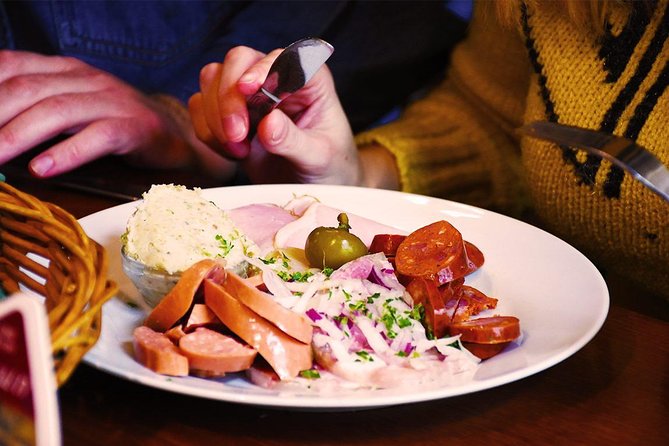
In the sample menu, this stop aligns with classics like chlebíček and bramboračka:
- Chlebíček: a Czech-style open sandwich, usually with a careful balance of toppings and sauces.
- Bramboračka: Czech-style potato soup, comforting and straightforward but deeply rooted in everyday eating.
This is a great combo for travelers. It’s not “exotic for exotic’s sake.” It’s food that locals recognize. And because it’s a starter, it keeps you moving toward the later tastings without slowing the pace.
Stop 3: Walking the Melting Pot of Prague History
Then you switch gears into history on foot. You stroll through a “melting pot of Prague history” and connect local food and historical forces. This part matters because Czech cuisine didn’t evolve in a vacuum. It evolved alongside changing social rules, cultural influence, and the reality of daily life.
The tour’s strength here is that it doesn’t treat history like a separate museum display. It links what you’re eating to why it exists. You get a sense of how Prague’s identity shaped what ended up on tables—then, how later periods changed cooking habits and dining culture.
If you like context, this is where the tour tends to click. You stop seeing dishes as isolated recipes and start recognizing them as social signals—what different eras valued, what was affordable, and what became comfort food.
You can also read our reviews of more tours and experiences in Prague




Stop 5: Former Bank Restaurant Small Plates and Local Flavors
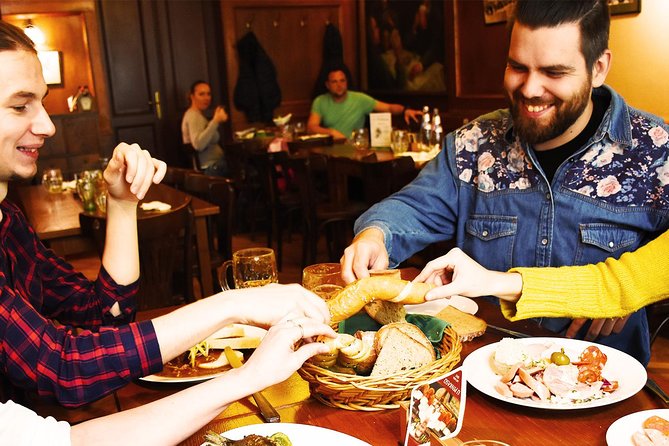
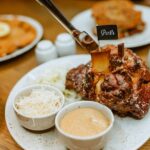
Later comes a highlight setting: a restaurant located in a former bank. That’s a fun contrast—architecture and money history meeting everyday eating. You’ll share a mix of local flavors served on small plates, so you can sample more than one style without committing to one huge dish.
This stop also fits the tour’s “taste your way through the story” format. Small plates are ideal for a guided experience because they keep variety high. You’ll likely notice how Czech cuisine often works in layers—meat, sides, sauces, and beverages—rather than one single dramatic centerpiece.
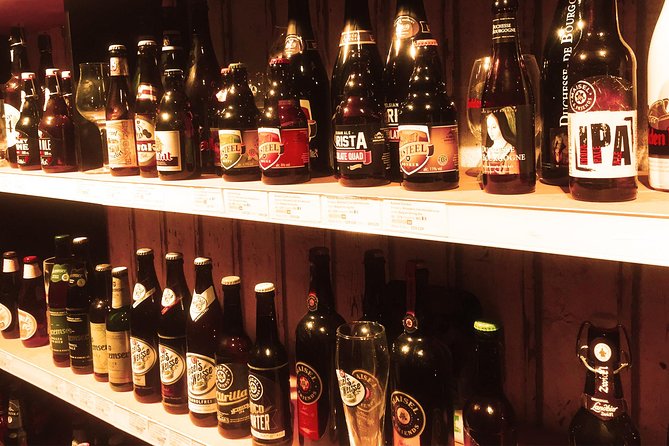
The included offerings also include main dish served on small plates and sampling of local drinks as part of the sample menu. So this stop is where the tour starts feeling like a full-on meal, not just a sequence of snacks.
One consideration: because the tour includes alcoholic beverages, you’ll want to pace yourself. If you plan to walk after, keep it moderate so you still enjoy the city when the tasting part ends.
Stop 6: First-Republic Café Dessert and Recent History
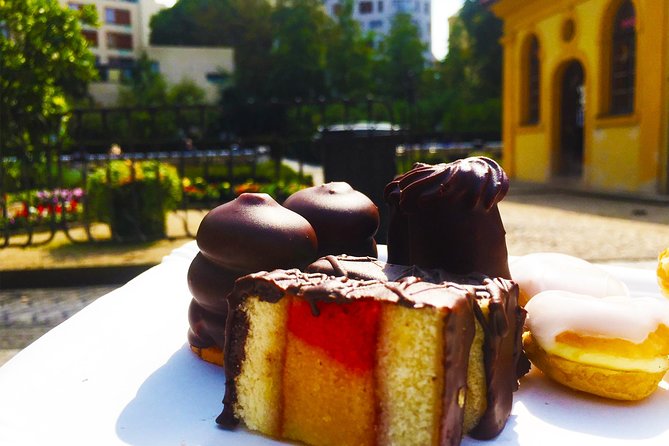
The final stop is dessert at a first-republic café, finishing the tour with something sweet and coffee. On the historical side, you get clarity about what the “recent history” part means in Czech life and how it affects identity and culture. On the food side, you get the relief valve after meat, soup, and drinks.
The sample menu lists typical Czech dessert and coffee. That final pairing is a smart close. Coffee gives you the clean finish you need, and dessert lets the tour end on a warm, comforting note instead of a heavy landing.
This stop also gives the day a clear theme: you end with a place that represents a particular historical vibe, then you tie it back to what you learned earlier. It feels like a full arc—from “Prague and food today” toward “Prague and food through time.”
Price and Value: What $132.76 Buys You (Besides Food)
At $132.76 per person, you’re paying for three things:
1) access to multiple local tastings rather than one restaurant meal,
2) a guide who connects food to Czech history in a way that helps you remember it, and
3) drinks included, which matters in Prague where a beer or two can quickly change the math of a food-only plan.
You also get an efficient time investment: about 3 hours 30 minutes, in a capped maximum of 10 travelers. That small group is part of the value. It’s easier to ask questions, and it doesn’t feel like you’re being processed.
Compared with doing this on your own, the biggest value is that you don’t need to guess which places are worth your time. The tour is set up to take you to multiple stops—gourmet passage snacks, a restaurant starter, a history walk, a former bank restaurant, and then a first-republic café. That mix is hard to assemble confidently without local guidance.
Also, there’s an easy practical advantage: you get a mobile ticket, which keeps your day lighter. No paper scavenger hunt.
Who Should Book This (And Who Might Not Love It)
This tour is a great fit if you:
- like beer and don’t mind alcoholic drinks being part of the experience,
- eat meat and want classic Czech flavors,
- enjoy a mix of food and history, not just one or the other,
- want a small-group food plan that works well on your first day.
It may not be the best choice if you:
- don’t drink alcohol and hate the idea of drinks being included,
- avoid meat completely (the tour guidance suggests enjoyment is strongest when you eat meat),
- prefer fully self-paced sightseeing where you choose every stop.
One more fit note: the tour is in English, and it’s a walking experience. It sounds doable for most people, but if you have mobility issues, it’s worth thinking through the walking portion before you book.
How to Get the Most Out of the Afternoon (No Regrets Tips)
Here’s how I’d set yourself up so the tour feels effortless:
- Arrive a bit hungry. The tour even suggests skipping a main meal first.
- Wear comfortable shoes. You’ll be walking between stops and doing history on foot.
- Pace your drinks. It’s included, so you can enjoy it without feeling pressured to go fast.
- Ask questions about the dishes. When the guide explains how ingredients connect to Czech life, you’ll remember what you ate and why it mattered.
- If it rains, deal with it with one smart move: bring your umbrella. That’s the tour’s own weather advice, and it’s right.
And if you want a win for the rest of your trip: after the last stop near Wenceslas Square, you’ll know what kind of Czech food to look for—so you can repeat your favorites later.
The Right Guide Makes It Work
The tour’s quality often comes down to how well the guide connects the dots. Reviews highlight a host named Christian, often shown as Kristian or Christopher in different write-ups, and they consistently praise the same thing: the food choices feel authentic and the history feels well-timed rather than lecture-y.
You can feel the difference between a guide who only knows the menu and a guide who can explain why the menu exists. This tour aims for that second type, and the structure supports it.
Should You Book This Prague Czech Food History Tour?
I’d book this if you want a first-day-friendly food plan that teaches you why Czech cuisine looks the way it does. The route makes sense: starters early, history while walking, small plates later, then dessert with coffee to close strong. With drinks included and a group size that stays small, it’s a high-satisfaction setup.
I wouldn’t book it if you don’t eat meat or avoid alcohol, because the experience is clearly designed around those tastes. Also, if you hate walking or want total freedom, this guided format may feel too structured.
If you’re the type who likes eating your way through a city’s identity—Prague’s laws, borders, and everyday life turned into soup, sandwiches, beer, and dessert—this is an excellent way to do it in one afternoon.
FAQ
How long is the Prague Czech food history tour?
It lasts about 3 hours 30 minutes.
What’s included in the price?
The tour includes all tastings and drinks, lunch, snacks, and alcoholic beverages.
What’s the meeting point and end point?
You start at Náměstí Republiky 656/8, 110 00 Praha 1-Staré Město, and end at Wenceslas Square (Václavské nám., Nové Město, Praha-Praha 1).
Is the tour offered in English?
Yes, it’s offered in English.
What kinds of food will I try?
The sample menu includes chlebíček (Czech-style open sandwich), bramboračka (Czech-style soup), a main dish served on small plates, typical Czech dessert with coffee, plus snacks and local drink sampling.
How big is the group?
The tour has a maximum of 10 travelers.