REVIEW · PRAGUE
Psychiatric Hospital & Abandoned Cemetery
Book on Viator →Operated by McGee's Trips & Tickets · Bookable on Viator
Prague gets haunting after dark. This 3-hour guided walk through Bohnice pairs a functioning psychiatric hospital with a cemetery people call the Cemetery of Fools, plus a quiet viewpoint over the Vltava valley. It’s not a light stroll, but it is one of the more memorable dark-history tours you can do in Prague.
I really like the way this tour is structured around a guide-led story, so the topic stays understandable even when it turns grim. I also like that you get variety: long time inside the hospital complex, then a colder change of pace at Bohnicky cemetery of fools, and finally an outdoor lookout that lets your brain reset.
One thing to consider: the hospital is fully operational, so you shouldn’t expect to wander through truly abandoned buildings or do unlimited photo stops inside every space. And if dark themes around past treatments and patients’ stories aren’t your cup of tea, this tour can feel heavy.
In This Review
- Key takeaways before you go
- Prague’s Bohnice after dark: what makes the timing work
- Meeting at Ústavní 7 and what “near public transport” really means
- Stop 1: Psychiatric Hospital Bohnice—history you can walk through
- What to expect during the walk
- The one expectation to manage
- Stop 2: Bohnicky cemetery of fools—quiet, lonely, and genuinely different
- Photography expectations
- Stop 3: Bohnické údolí viewpoint—why the view stop matters
- Stop 4: Ending back at Bohnice—with an easy exit
- Price and value: what $33.64 buys you in Prague
- Who should book this psychiatric hospital and cemetery tour?
- A few practical tips so you enjoy the experience more
- Should you book this tour?
- FAQ
- FAQ
- What is the duration of the tour?
- Where is the meeting point?
- What time does the tour start?
- Is the tour in English?
- Is hotel pickup included?
- Are admission tickets included?
- Is it suitable for children?
- Can I cancel for a full refund?
Key takeaways before you go
- After-dark mood: You visit the cemetery later in the day, when the setting feels lonelier and more intense.
- Long, guided hospital time: You spend about 1 hour 40 minutes at Psychiatric Hospital Bohnice, not a quick “look and leave.”
- Former patients’ stories: The guide shares accounts connected to people once treated there.
- Cemetery of Fools stop: A short walk brings you to one of Prague’s most mysterious hospital-cemetery areas.
- Vltava viewpoint break: A short stop at Bohnické údolí gives you fresh air and a big valley view.
- Hospital access expectations: It’s not an abandoned-building free-for-all; access is limited to what the tour route allows.
Prague’s Bohnice after dark: what makes the timing work
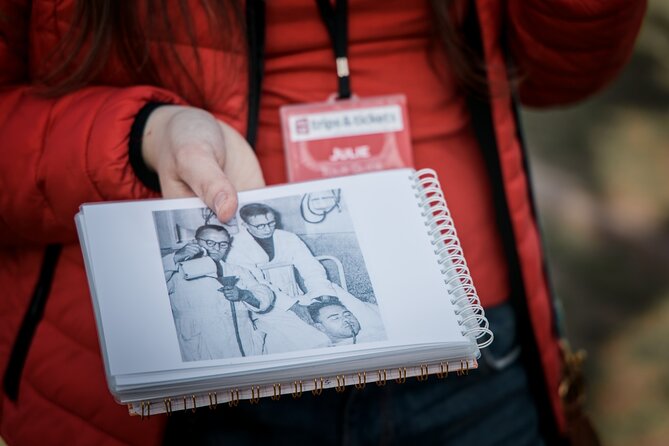
This tour is built around evening atmosphere. You start at 2:00 pm and you end a bit later, so the light changes as you move from the hospital complex toward the cemetery. That matters. Daytime makes almost anything look like a building with hallways. After dark, you feel the isolation more, especially at places like a cemetery tucked into the hospital grounds.
Also, Prague nights can be chilly and damp even when the forecast says mild. If you’re the type who gets cold quickly, plan for that. The tour is only about 3 hours total, but the “dark and quiet” segments can make time feel longer.
You can also read our reviews of more tours and experiences in Prague.



Meeting at Ústavní 7 and what “near public transport” really means
You meet at Ústavní 7, 181 00 Praha 8, Czechia. That’s helpful because it’s easy to reach without hiring a private ride. The tour does not include hotel pickup or drop-off, so you’ll do this one point-to-point.
One more practical detail: the walk ends back at the meeting point area, and the guide heads to the metro. So if you plan to keep exploring afterward, you can smoothly switch from tour mode to transit mode without having to re-orient yourself.
Group size is capped at 30 people, so it won’t feel like a cattle herd, and you should still be able to hear the guide’s explanation as you move through the stops.
Stop 1: Psychiatric Hospital Bohnice—history you can walk through
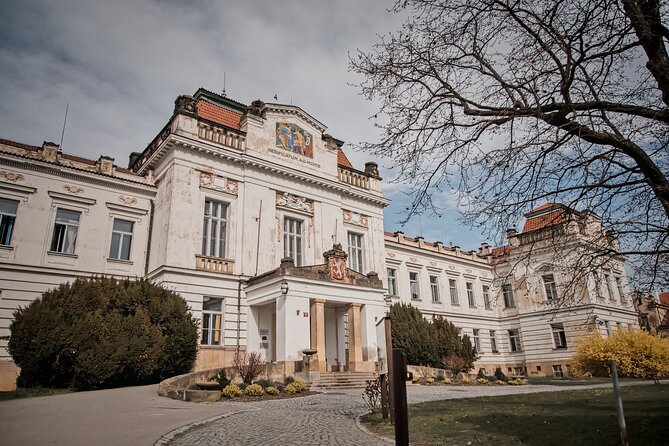
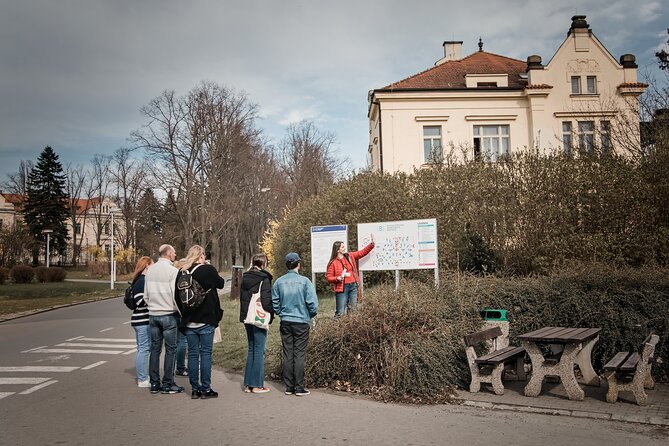
You begin at the gate of Psychiatric Hospital Bohnice and get an introduction right away. The guide sets the tone fast: psychiatry in Europe has a complicated past, and you’ll hear about that with frank, uncomfortable context. This is the heart of the experience, with 1 hour 40 minutes on site.
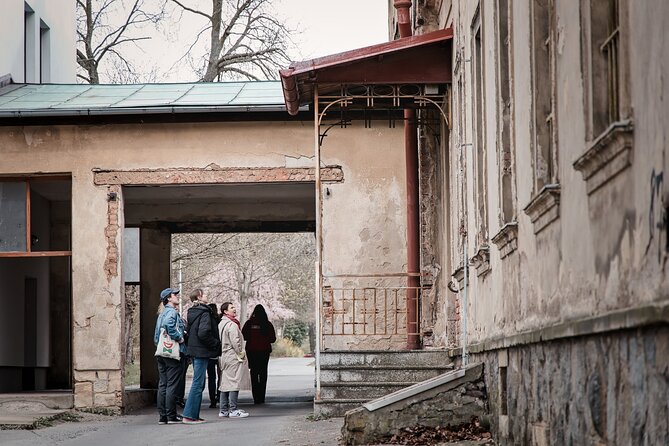
What I like about the hospital segment is the “maze” approach. You’re not just standing in one courtyard while someone reads facts at you. You’re led through multiple building areas, so you get a sense of how large institutions functioned—and how easily people could become lost inside systems. The tour description also signals that you’ll encounter controversy and that some of the treatments connected with the field’s history were deadly or torturous. That’s a heavy message, and the guide’s role is to frame it clearly instead of letting it turn into horror-story shock.
What to expect during the walk
- You’ll follow a set route through the hospital grounds and buildings that are linked to the topic.
- You’ll hear stories connected to former patients.
- You’ll get historical facts explained as part of a guided narrative, not random bullet points.
The one expectation to manage
Because the hospital is fully operational, don’t treat this like an urban-exploration experience. The earlier dark-history framing can make people assume you’ll enter and photograph abandoned spaces. Instead, think “guided access inside a working institution.” That’s also why this tour tends to feel more real: you’re seeing how institutional life continues alongside its past.



Stop 2: Bohnicky cemetery of fools—quiet, lonely, and genuinely different
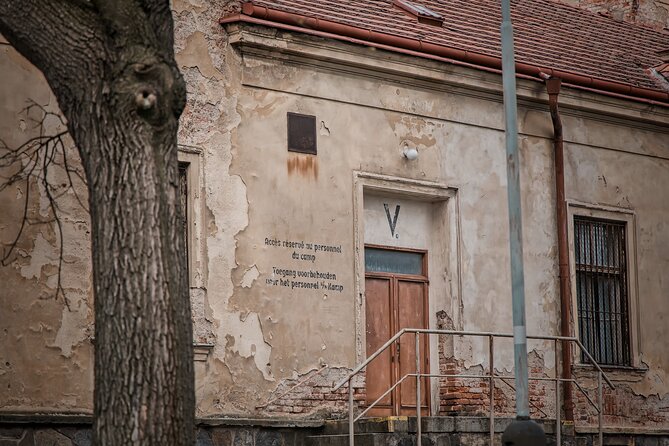
After a short walk, you visit Bohnicky cemetery of fools. The setting is described as mysterious, desperately lonely, and dark, and that matches the way you’ll likely feel walking through a hospital cemetery area. This stop has 40 minutes, which is long enough to take it in without rushing, but not so long that it becomes numb.
What makes this cemetery stop valuable is the contrast with the hospital itself. The hospital segment focuses on the institution and the history of psychiatry. The cemetery segment makes the emotional cost harder to avoid. Even if you’re not a “dark tourism” person, this is the part where the tour becomes about people—not ideas.
Photography expectations
Some people hope for the kind of photo access you’d get from true abandoned buildings. Based on the kind of disappointment that comes up with this tour, I’d treat this as a guided viewing experience, not a photo mission. You may be able to take pictures, but you shouldn’t expect to get into every area you see or to stage dramatic shots in places that aren’t intended for that.
If you want a safer photo plan, focus on what you can shoot from allowed routes: angles of the grounds, headstone textures, and the contrast between the hospital setting and the cemetery’s silence.
Stop 3: Bohnické údolí viewpoint—why the view stop matters
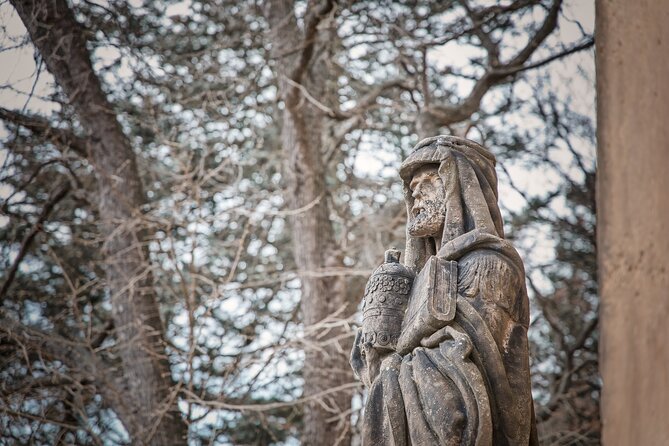
Between dark history and darker atmosphere, you get a breather: Bohnické údolí, a viewpoint overlooking the valley and the Vltava River. It’s only about 20 minutes, but it plays an important role.
After a hospital and cemetery, your brain can feel overloaded. A viewpoint forces a different kind of attention. You go from “thinking about suffering” to “noticing space.” You also get a sense of where this part of Prague sits geographically—how the valley opens out, how the river threads through the wider scene.
I like these short reset stops on any walking tour because they keep the experience from becoming emotionally stuck in one tone. Here, you get the chance to look far instead of staring at walls and stone up close.
Stop 4: Ending back at Bohnice—with an easy exit

The tour wraps by returning to the main hospital area and ending back at the starting meeting zone. There’s a 20-minute final segment after the viewpoint, and then the guide moves on toward public transport—typically the metro.
This matters for your planning. You don’t have to build the rest of your evening around complicated logistics. You can head back toward central Prague, grab dinner, or pair this with other history stops on your own schedule.
Price and value: what $33.64 buys you in Prague
At $33.64 per person, this isn’t a “budget-only” tour, but it also isn’t priced like a private, high-end experience. The value comes from a few specific things:
- It’s guided: You’re paying for interpretation and a route through a complex, sensitive setting.
- The main stops are admission-free within the tour plan: The hospital and cemetery segments show admission tickets as free, so you’re not adding extra entry fees on top.
- You get time, not just a drive-by: Roughly 3 hours total, with a long 1 hour 40 minutes at the hospital.
If you’re deciding between a quick evening “see-and-go” tour versus something with real walking time and guided context, this one leans toward the second option. And for many people, that’s the difference between a tour that feels like trivia and a tour that leaves an aftertaste.
Also, booking uses a mobile ticket, which tends to make last-minute logistics simpler than printing paper tickets.
Who should book this psychiatric hospital and cemetery tour?
This tour is best for adults who want serious history and can handle uncomfortable topics. It’s also explicitly noted as not recommended for small children, because the content includes dark history linked to psychiatry and stories connected to patients and treatments.
You’ll also want moderate physical fitness. The tour includes walking between stops and a short walk to the cemetery. It’s not a hike, but it isn’t “sit down for all of it” either.
If you’re someone who likes your Prague sightseeing to feel grounded in real places—even the heavy ones—this fits your style. If you want only pretty views and light stories, you’ll probably find it too intense.
A few practical tips so you enjoy the experience more
- Dress for evening. Even if Prague feels okay in the afternoon, it can get cooler and darker quickly.
- Expect limited roaming. Because the hospital is operational, you follow the guide’s route; this isn’t a do-what-you-want exploration.
- Keep your expectations realistic for photos. You might capture scenes, but don’t assume full access to every interior or abandoned-looking area.
- Bring a calm mindset. This is one of those tours where the mood matters. If you’re looking for a carefree stroll, pick something else.
And if you’re the type who likes to understand how history shapes institutions today, you’ll likely appreciate the guide’s framing. The best part of this tour isn’t shock value. It’s how the story is told in a way that helps you process what you’re seeing.
Should you book this tour?
Book it if you want a guided, after-dark Prague experience focused on psychiatry’s history in Europe, with time inside Psychiatric Hospital Bohnice and a standout cemetery stop at Bohnicky cemetery of fools. The price feels fair for a 3-hour guided route with free admissions built in, and the viewpoint at Bohnické údolí gives you a needed visual reset.
Skip it if you’re sensitive to dark subject matter, or if you’re mainly hunting for photo access to abandoned interiors. Since the hospital is fully operational, you won’t get the fantasy of roaming through empty, broken buildings.
FAQ
FAQ
What is the duration of the tour?
The tour runs for about 3 hours.
Where is the meeting point?
You meet at Ústavní 7, 181 00 Praha 8, Czechia.
What time does the tour start?
The start time is 2:00 pm.
Is the tour in English?
Yes. The tour is offered in English.
Is hotel pickup included?
No. Hotel pickup and drop-off are not included.
Are admission tickets included?
Admission is listed as free for the stops included in the tour.
Is it suitable for children?
It is not recommended for small children due to the historical facts and dark subject matter.
Can I cancel for a full refund?
Yes, you can cancel for a full refund if you cancel at least 24 hours before the experience’s start time.