REVIEW · PRAGUE
Prague, St. Martin: The Best of World & Czech Music
Book on GetYourGuide →Operated by Agency Artistic International s.r.o. · Bookable on GetYourGuide
Prague’s St. Martin in the Wall turns a classical concert into a close-up experience, especially with a string quartet performing Czech favorites. I really like the way the program blends Smetana and Dvořák with widely loved works by Bach, Mozart, and more, so you get instant recognition without losing musical variety.
My other big plus is the venue itself: Romanesque roots from the 12th century, later Gothic and Baroque changes, and acoustics that make strings feel clear and present. The main catch to keep in mind is that, in a small, echo-friendly church, pacing matters—if the group plays a bit fast, some of the delicate details can blur.
In This Review
- What you get from this concert (quick hit list)
- St. Martin in the Wall: the 12th-century church that’s basically next door
- The concert lineup: Czech heart, plus crowd-pleasers you’ll recognize
- Old Prague Music Ensemble: why a quartet works so well in a small church
- What it feels like once the music starts: intimacy, not a spectacle
- The venue’s visual charm: Romanesque bones with Gothic and Baroque details
- Getting there smoothly from Old Town Square and Wenceslas Square
- Price and value: $28 for a historic venue and a real quartet
- Rules that affect comfort (and how to prepare)
- Who this concert is best for (and who should skip it)
- Should you book The Best of World & Czech Music?
- FAQ
- How long is the concert?
- Where does the concert start?
- What music is included in the program?
- Who performs the concert?
- Is flash photography or video recording allowed?
- Is the venue wheelchair accessible?
- Is there a dress code?
- What’s included in the price?
- Where can I park, if I’m driving?
- Is it suitable for young children?
What you get from this concert (quick hit list)
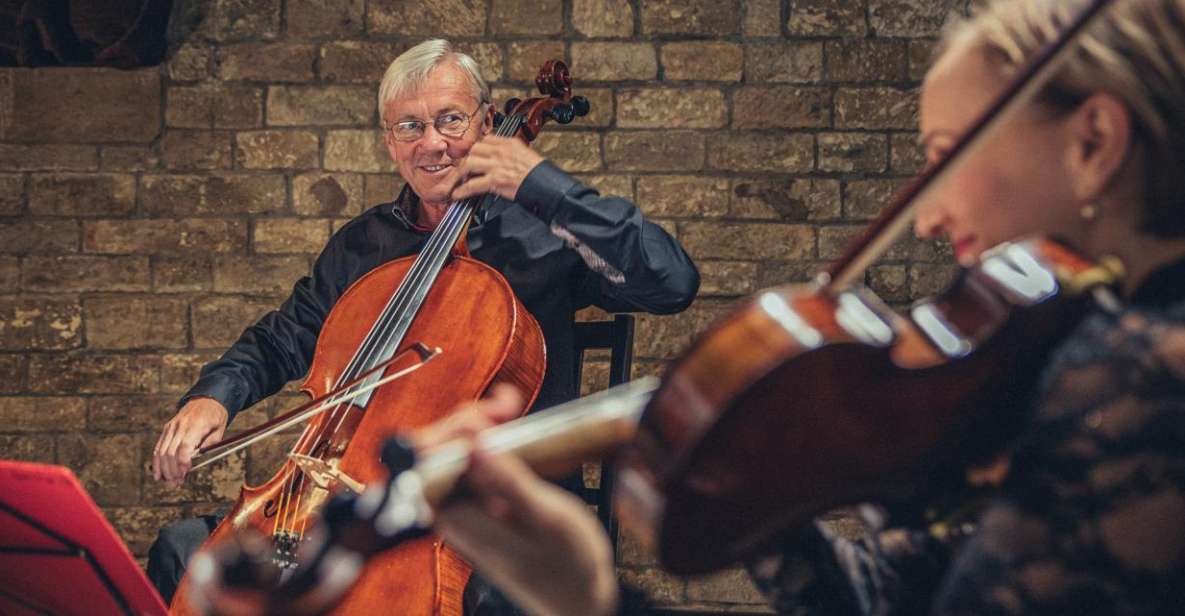
- Smetana + Dvořák as the backbone, with Czech color running through the whole evening
- A string quartet format that keeps melodies crisp and easy to follow
- A venue with 12th-century Romanesque structure plus Gothic and Baroque modifications
- Familiar favorites across eras: Bach, Mozart, Vivaldi, Bizet, and more
- A practical, one-shot plan: arrive at Martinska 8 near Old Town Square and Wenceslas Square
St. Martin in the Wall: the 12th-century church that’s basically next door
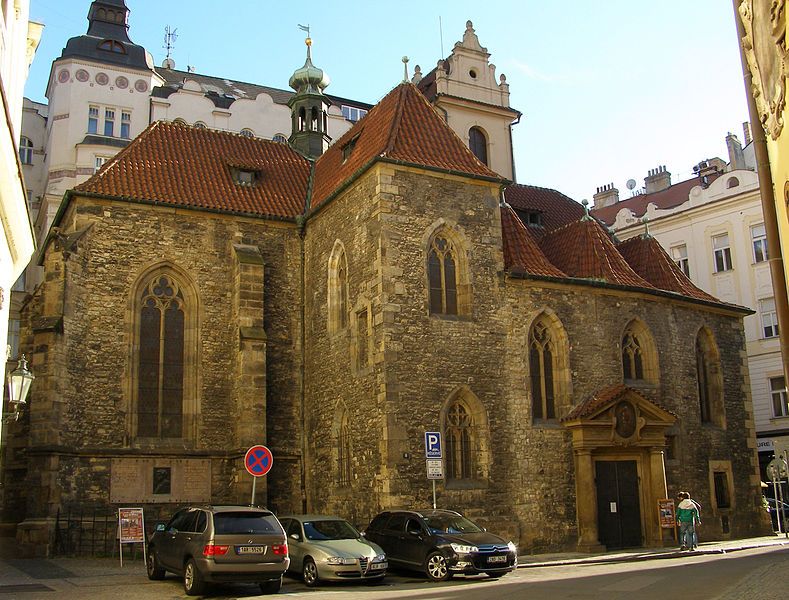
If you like your Prague culture with a real sense of place, this is a smart choice. The Church of St. Martin in the Wall sits in the Central Bohemian Region and is named for a very literal reason: one of its walls borders an adjacent house. That odd detail gives the church a “how is this even possible?” feeling the first time you see it.
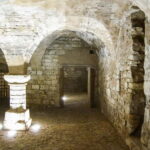
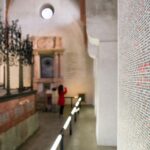
The building starts with a Romanesque base from the 12th century, then it was modified later in Gothic and Baroque styles. So you’re not just listening in a historic setting—you’re visually surrounded by layers of Czech architectural change. When you’re ready to focus on the music, that mix of shapes, stone textures, and changing time periods keeps your eyes busy even if you drift for a moment. It’s the opposite of a generic concert hall.
One more history note that adds weight to the space: the church was once connected with the Utraquist Church, and it received support from wealthy burghers. Also, Baroque sculptor Ferdinand M. Brokoff is buried there. Even if you don’t know his work, it’s a good reminder that Prague’s music scenes and art scenes are tangled together.
You can also read our reviews of more tours and experiences in Prague.


The concert lineup: Czech heart, plus crowd-pleasers you’ll recognize
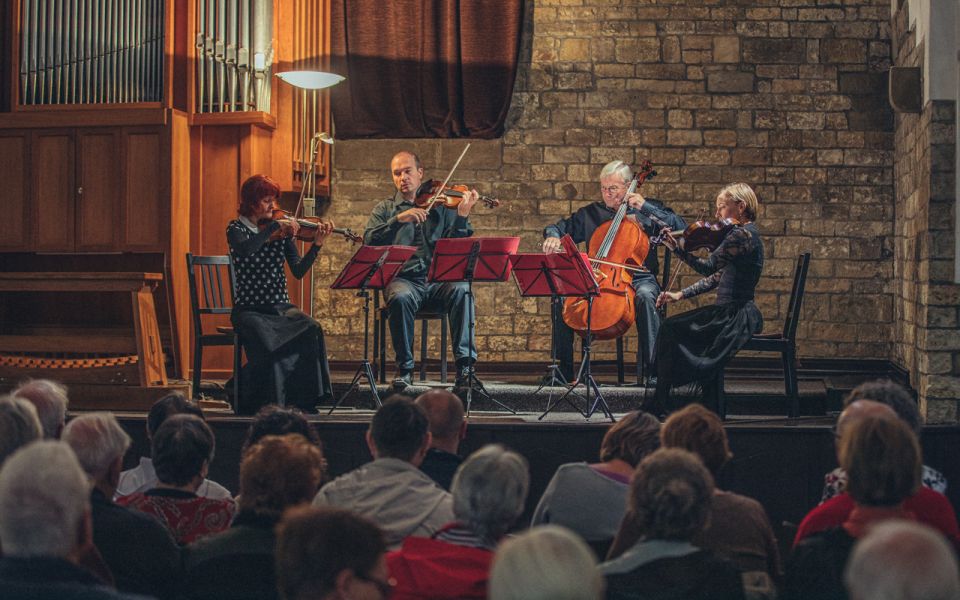
This concert is titled The Best of World & Czech Music, and the program follows through. Expect about 70 minutes of classical pieces performed in one continuous flow, led by the Old Prague Music Ensemble (a string quartet).
Here’s the core program you’ll hear:
- Smetana: Moldau
- Dvořák: Humoresque, Largo, Walses
- Pachelbel: Canon in D
- Bizet: Intermezzo and Overture from Carmen
- Vivaldi: The Four Seasons (Winter)
- Bach: Air
- Mozart: Divertimento in F
- Albinoni: Adagio
- Brahms: Hungarian Dances Nos. 5 and 6
What I like about this mix is how well it balances Czech identity with international familiarity. Smetana’s Moldau is one of those pieces that can feel like it’s describing a place even when you don’t know the backstory. Dvořák keeps that Czech feel but adds different moods—Humoresque for charm, Largo for stillness, and the waltz-like sections for motion.
From there, you’re in “recognizable classics” territory. Pachelbel’s Canon in D gives you an instant musical anchor. Bizet’s Carmen selections bring drama and rhythm. Vivaldi’s Winter is crisp and energetic, and Bach’s Air and Mozart’s Divertimento in F offer moments where the quartet can show off clean phrasing. Albinoni’s Adagio and Brahms’s Hungarian Dances round everything out with emotion and bite.
The practical takeaway: you don’t need to be a classical expert to enjoy this. If you know even a handful of these themes from films, radio, or old family memories, you’ll be able to track the performance and feel rewarded quickly.
Old Prague Music Ensemble: why a quartet works so well in a small church
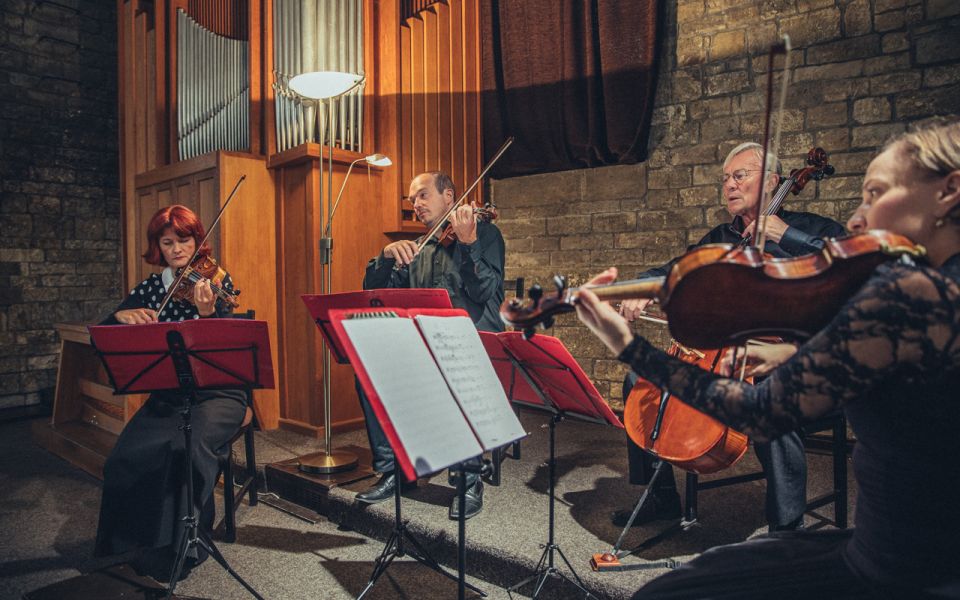
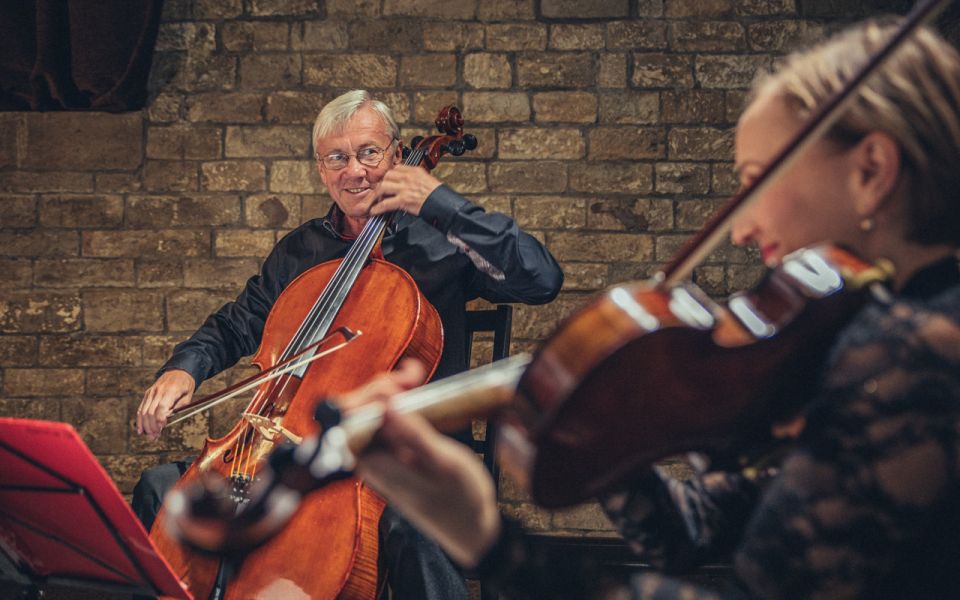
The performers are the Old Prague Music Ensemble, and you’ll hear them as a string quartet. That matters more than it sounds. Quartet music tends to keep parts distinct—melody stays understandable, harmony doesn’t smear into one wall of sound, and you usually catch inner lines even in a compact venue.
In a place like St. Martin in the Wall, that clarity helps. The church’s acoustics are a major selling point, and the reviews strongly point to that same idea: the instruments come through, and the music feels like it’s being spoken directly rather than thrown across a huge room. In other words, you don’t have to lean forward mentally. The room and the format do the work for you.
Also, the program is varied, and a quartet is a good match for variety. Fast passages can still sound controlled. Slow sections don’t lose shape. Even if you’re not chasing technical detail, you’ll likely notice that the musicians play together tightly—another theme that shows up in the feedback.
What it feels like once the music starts: intimacy, not a spectacle
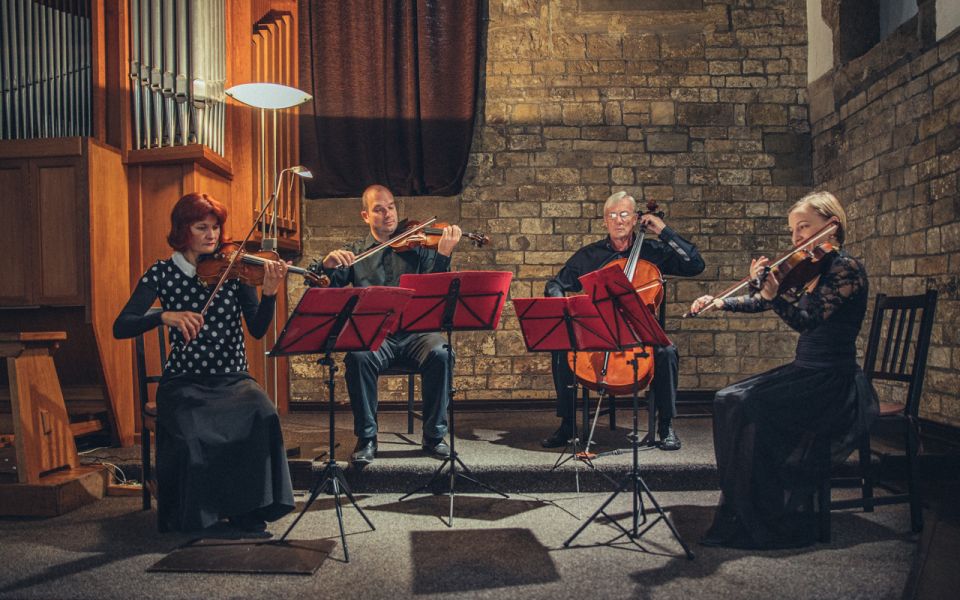
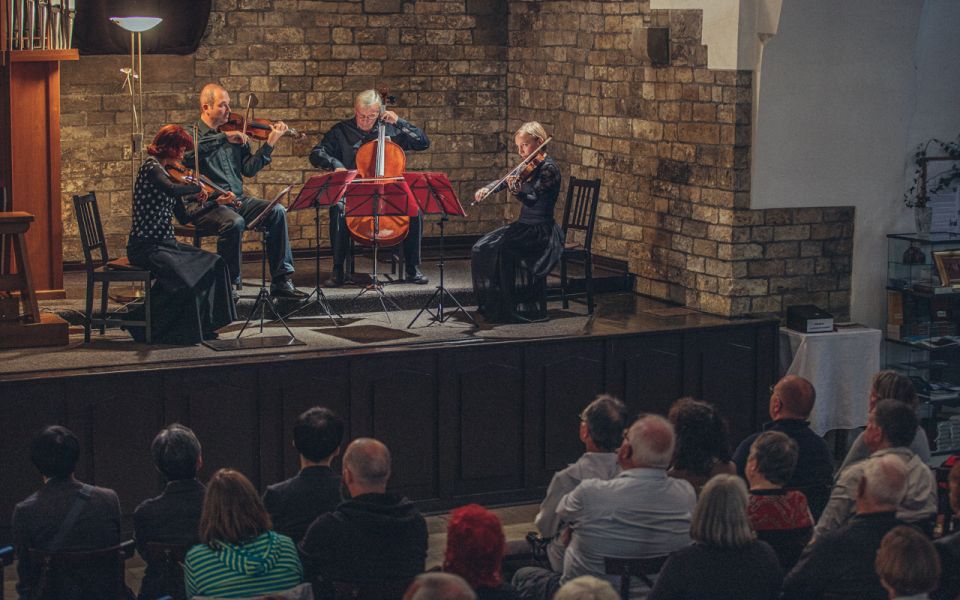
A recurring theme in the experience is that it feels small and intimate, mostly because the venue is not trying to handle thousands of people. That can be a real plus. You’re close enough to sense phrasing and ensemble timing. The sound also tends to stay “in the room” rather than turning into background noise.
At the same time, you should know how timing affects perception here. One downside worth considering: in a church with noticeable echo, if the group plays with a very brisk tempo, you may miss some of the fine, intricate details. The good news is that even when something isn’t perfect, many listeners still find the setting and selection worth it. And when the tempo lands well, the acoustics can make the music feel almost three-dimensional.
Another small practical reality: there isn’t a long wait-around period built into this. The concert is basically one focused block of music, so plan to arrive on time and settle in. No wandering required once you’re inside.
The venue’s visual charm: Romanesque bones with Gothic and Baroque details
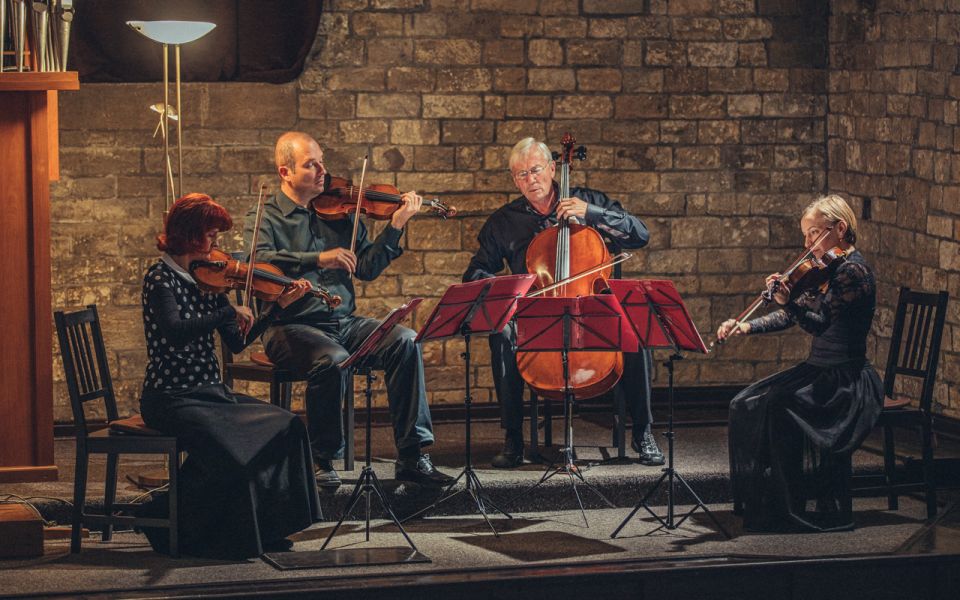
Before you even hear a note, the church gives you something to notice. The Romanesque base from the 12th century is part of the atmosphere—thick, grounded, and older than the surrounding city grid you might be used to seeing. Then you have the later Gothic and Baroque modifications, which can feel like stylistic “layers” on top of the original structure.
There’s also the practical charm of location. The church is near two of Prague’s biggest anchors: Old Town Square and Wenceslas Square. The address is Martinska 8, 11000 Prague. That means you can turn this into a simple plan even if you’re staying in central Prague and don’t want to do extra transit games.
One important note: there’s no mention of a dress code, but elegant dress is welcomed. You don’t have to go formal, but you’ll likely feel more comfortable if you dress like you’d attend an evening performance rather than casual sightseeing shorts and a hoodie.


Getting there smoothly from Old Town Square and Wenceslas Square
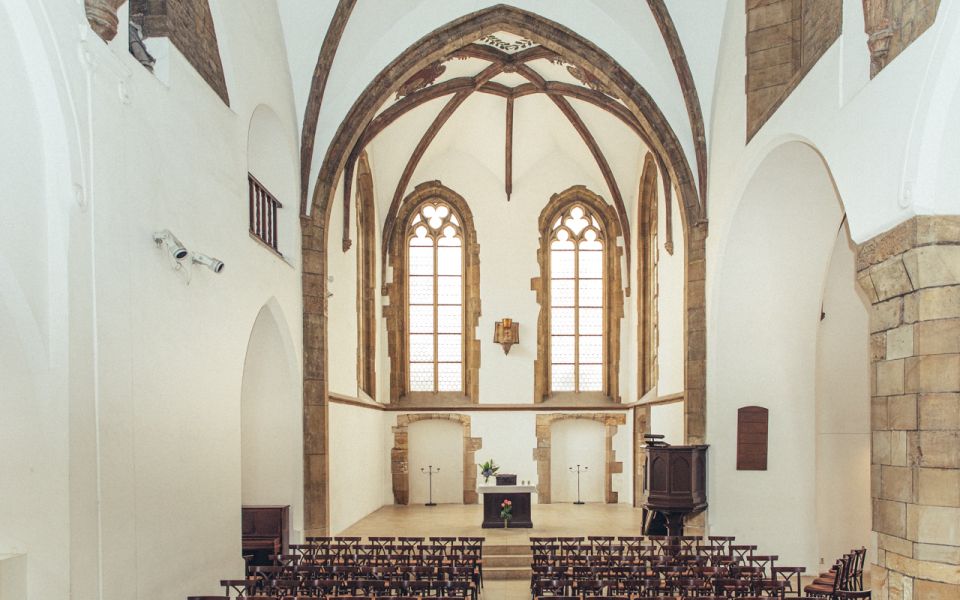
This is the kind of activity you’ll want to reach with minimal fuss. Your start point is St. Martin in the Wall Church at Martinska 8, near Old Town Square and Wenceslas Square. From Old Town Square, it’s about a 15-minute walk.
Public transport options are straightforward:
- Underground: Metro Mustek (lines A green and B yellow)
- Underground: Metro Národní třída (line B yellow)
- Trams: 6, 9, 18, 22, 91 with a stop at Národní třída
If you’re driving, the nearest parking listed is at National Theatre, Ostrovni 1, Praha 1.
My practical advice: if you’re doing this after a day of walking, take the metro one stop closer rather than forcing the last mile. Prague’s streets are charming, but stone + cobbles can add up.
Once the concert ends, the activity finishes back at the same meeting point.
Price and value: $28 for a historic venue and a real quartet
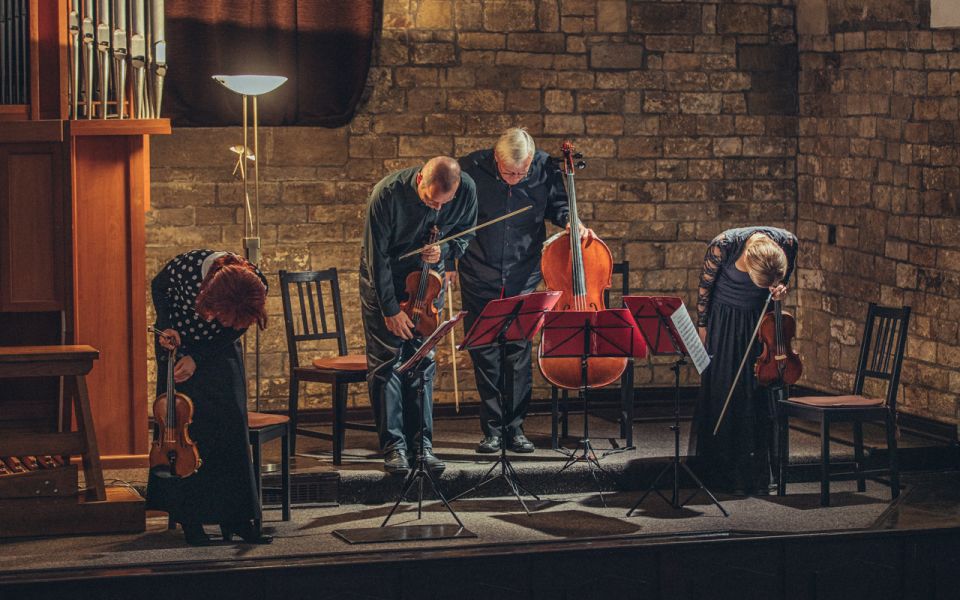
At $28 per person, this sits in a reasonable mid-range band for a one-hour concert experience. The value comes from three things you can’t easily replicate on your own:
- A specific, high-quality chamber performance by the Old Prague Music Ensemble
- A historic church venue with acoustics that are part of the show
- A focused program that includes both Czech staples and widely known works
Also, admission is included in the ticket price. There’s no extra add-on required to see the music itself.
One small “budget reality” to plan for: the cloakroom isn’t included. If you’re carrying a bulky coat or big daypack, you’ll want to keep it minimal. The setting is intimate enough that you probably won’t enjoy being stuck with extra stuff.
On the other hand, you’re not paying for travel time, transfers, or a complex itinerary. It’s a direct, single-stop experience.
Rules that affect comfort (and how to prepare)
The experience has a few clear constraints:
- No flash photography
- No video recording
That’s common for classical concerts, but it does matter in a small church where interruptions would be noticeable. Arrive ready to watch with your eyes, not your phone.
It also notes wheelchair accessibility, which is reassuring if mobility is a concern. And the concert is not suitable for children under 5. If you’re traveling with little kids, plan accordingly.
If you want the smoothest experience, keep your expectations simple: this is a one-time musical program in a historic room. The goal isn’t sightseeing during the concert; it’s listening.
Who this concert is best for (and who should skip it)
This works well for you if:
- You want Czech classical music without building a whole agenda around it
- You enjoy hearing famous themes like Canon in D or Carmen, but still want a “real” classical concert format
- You prefer intimate venues where the musicians sound present, not distant
You might want to look elsewhere if:
- You’re extremely sensitive to timing and want every detail at the slowest pace possible
- You’re looking for a guided tour with stops and long explanation. This is mostly about the performance in one location
- You’re traveling with children under 5
Should you book The Best of World & Czech Music?
If you’re in Prague and you want one evening that feels both cultural and efficient, I’d book it. For the price, you’re getting a string quartet tackling a smart mix of Czech and world-famous pieces, in a church with real architectural character and strong acoustics.
The only reason to pause is if you’re chasing maximum musical granularity at a slow, ultra-precise pace. Even then, the combination of the venue plus the program is likely to be worth your time, especially if you like recognizable melodies performed with care. If your ideal Prague night is simple: arrive, listen, and leave with music in your head—this fits.
FAQ
How long is the concert?
The concert lasts about 70 minutes (listed as 1 hour to 65 minutes, with exact starting times depending on availability).
Where does the concert start?
It starts at St. Martin in the Wall Church, Martinska 8, 11000 Prague.
What music is included in the program?
The program includes works by Smetana (Moldau), Dvořák (Humoresque, Largo, Walses), Pachelbel (Canon in D), Bizet (Intermezzo and Overture from Carmen), Vivaldi (The Four Seasons, Winter), Bach (Air), Mozart (Divertimento in F), Albinoni (Adagio), and Brahms (Hungarian Dances Nos. 5 and 6).
Who performs the concert?
The performers are the Old Prague Music Ensemble, presented as a string quartet.
Is flash photography or video recording allowed?
No. Flash photography and video recording are not allowed.
Is the venue wheelchair accessible?
Yes, the activity is wheelchair accessible.
Is there a dress code?
There is no strict dress code, but elegant dress is welcomed.
What’s included in the price?
Admission ticket is included.
Where can I park, if I’m driving?
The nearest parking listed is National Theatre, Ostrovni 1, Praha 1.
Is it suitable for young children?
It is not suitable for children under 5 years.