REVIEW · PRAGUE
Prague Old Town New Town and Jewish Quarter Morning Tour
Book on Viator →Operated by Explore Prague · Bookable on Viator
Three hours, and Prague starts making sense. This morning route strings together Old Town, New Town, and the Jewish Quarter with the kind of on-foot pacing that helps you connect streets to stories. It’s a smart pick if you want the highlights without turning your day into a scavenger hunt.
I especially like two things: the time-saving way it groups big landmarks with smaller, quieter stops, and the fact you’re with a professional licensed guide who keeps the walk clear and organized. You also get a mix of architecture, politics, theater, and synagogue life, not just postcard scenery.
One possible drawback: it is a lot of walking on uneven streets, so cold weather or bad shoes can turn the morning into a chore. Also, the Jewish Quarter portion is meaningful, but it shares time with the rest of the city, so it is not a deep dive that stays put only in that area.
In This Review
- Key highlights I’d plan around
- Wenceslas Square: where Prague shows its power
- Lucerna Arcade and David Černý’s upside-down horse
- Franciscan Garden to Church of Our Lady of the Snows: quiet, then grand
- Estates Theatre and Karolinum: Mozart, resistance, and Charles IV
- House of the Black Madonna, Prasna brana, and the art nouveau Municipal House
- Church of St. James: baroque drama in the Old Town
- Jewish Quarter essentials: Spanish Synagogue, Old-New Synagogue, Old Jewish Cemetery
- Old Town Square and the Astronomical Clock hourly show
- Price and value: why $32.65 can be a smart move
- Who should book this morning tour
- Practical tips that make the tour easier
- If you get Petra, Jack (Honza), or Mikal, you’re in good hands
- Should you book this Prague Old Town, New Town, and Jewish Quarter tour?
- FAQ
- How long is the Prague Old Town, New Town, and Jewish Quarter morning tour?
- Where does the tour start and end?
- Is the tour offered in English?
- Is admission included for all stops?
- How big is the group?
- Does the tour run in bad weather?
Key highlights I’d plan around
- Wenceslas Square viewpoint: the starting point that ties together 20th-century power and public spectacle
- David Černý’s upside-down horse at Lucerna Arcade: modern Prague art in a classic setting
- Franciscan Garden pause: a rare pocket of calm before you head back into major landmarks
- Estates Theatre + Karolinum: Mozart-era intrigue meets Charles University origins
- Jewish Quarter essentials: Spanish Synagogue, Old-New Synagogue, and the Old Jewish Cemetery
- Old Town Square + Astronomical Clock timing: finish while the Old Town is still waking up
Wenceslas Square: where Prague shows its power
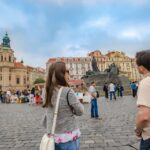
You start at the top of Wenceslas Square, right by the Statue of Saint Wenceslas. It’s a perfect way to open, because the square is both famous and easy to understand fast. A good guide here can explain why this space kept showing up during major revolutions and big military parades throughout the 20th century.
Think of it as your orientation map in human form. Once you grasp why the square mattered, the rest of the walk feels less like random sightseeing and more like Prague doing what Prague does: using public space to make history visible.
You can also read our reviews of more tours and experiences in Prague

Lucerna Arcade and David Černý’s upside-down horse
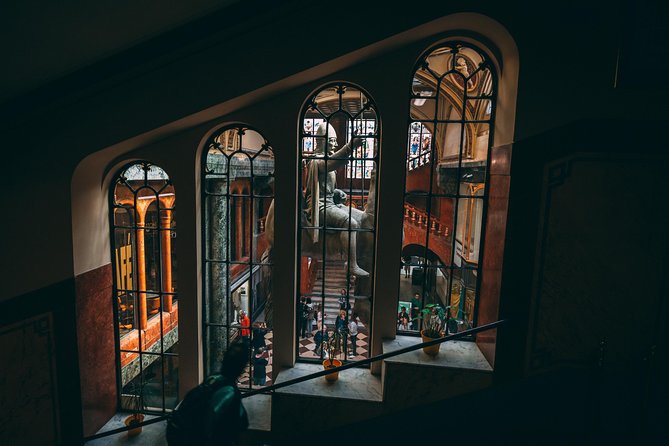
Next you move toward Lucerna Arcade and the nearby Lucerna Palace. This stop is worth it for one very specific reason: the famous statue of an upside-down horse by Czech modern designer David Černý. Even if you normally skip modern art, this one tends to grab attention because it is playful but unmistakable.
The value here is context. Prague isn’t only medieval roofs and baroque churches. This is a city that keeps changing its look, and a guide can connect that change to the Czech creative spirit.
Franciscan Garden to Church of Our Lady of the Snows: quiet, then grand
From the main streets, you get a breather at the Franciscan Garden. It’s the kind of place where you feel the switch flip: from traffic and crowds to locals slowing down. On a morning like this, that calm is not a luxury. It helps your brain reset so the next historical stops land better.
Then you walk right toward the Church of Our Lady of the Snows. The surprise is the story: it was planned to become one of Prague’s greatest churches, but it was never finished. Inside, you also get a standout detail the guide will point out, including the tallest altar in Prague. Even if churches aren’t your thing, this one tends to work because the “never finished” angle makes it feel human, not untouchable.
Estates Theatre and Karolinum: Mozart, resistance, and Charles IV
The Estates Theatre is next, and it’s a smart add for first-time visitors. It is the oldest theatre in Prague city centre, and it once hosted W.A. Mozart. The guide also explains the local resistance angle—why some people objected to the theatre’s construction. That tension adds texture. It turns the building from a name on a map into a real controversy.
Right next door you hit Karolinum, tied to Charles University. This is one of the oldest universities in Europe, and the stop gives you a clean way to understand the importance of Charles IV in Czech history and how university culture fits into that story. If you care about how cities produce ideas, this pairing works well.
House of the Black Madonna, Prasna brana, and the art nouveau Municipal House
This stretch covers three very different flavours of Prague design, and it helps you see how the city layers styles.
First, you’ll stop at the House of the Black Madonna. The pitch here is simple: Czech Republic has a unique architectural style you won’t find elsewhere, and this building is part of that identity. You’ll also connect it to the House’s famous figure and why it became a cultural talking point.
Then you pass Prasna brana, the Powder Tower. It started as one of the most representative entrances into the Old Town, later shifting to more practical use as a storage facility. That change in function is a great theme for Prague: buildings often outlive their original role.
Finish this mini-cluster at Obecni Dum (the Municipal House), one of Prague’s art nouveau showpieces. The guide explains when it was built and how it is used today now. Even if you only see it from the right angles outside, it helps you balance the older styles you’ve already seen with a “modern city” layer.

Church of St. James: baroque drama in the Old Town
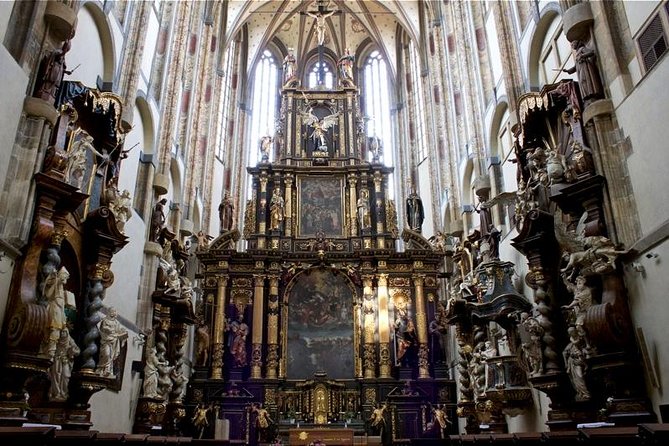
You’ll also have time for the Church of St. James, the biggest baroque church in the Old Town. This stop is a nice reminder that Prague’s religious architecture isn’t one-note. A good guide typically helps you look past the obvious façade and toward the interior details, especially if you tend to glance and move on.
If you want a single sentence takeaway for this part: it’s where the morning stops feeling like a route and starts feeling like a mood shift.
Jewish Quarter essentials: Spanish Synagogue, Old-New Synagogue, Old Jewish Cemetery
This is the heart of the tour’s title, and it’s handled in stages so you don’t feel rushed.
You begin with the Spanish Synagogue area. Your guide explains why Prague had large Jewish communities and how the Jewish quarter story runs from medieval times to the present. There’s also a visual anchor: the statue of Franz Kafka nearby, linking Prague literature to Jewish life in a very direct way.
Next is the Old-New Synagogue, described as Prague’s oldest synagogue. The guide connects it to a network of neighbouring synagogues, including the High Synagogue, Klausen Synagogue, and the Ceremonial Hall. That matters because it helps you understand the Quarter as an ecosystem, not a single building.
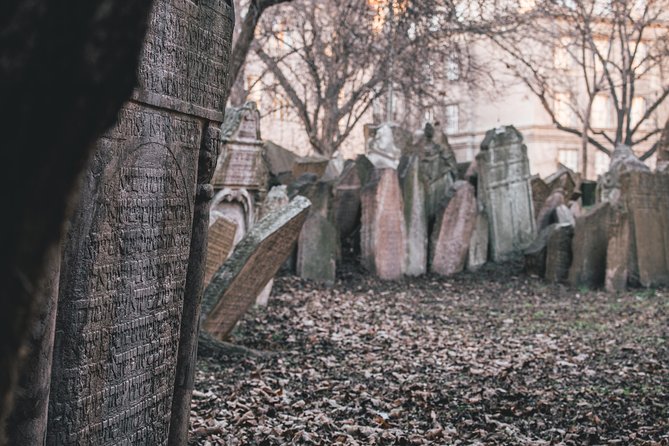
Then you move to the Old Jewish Cemetery, often described as one of the most enchanting cemeteries in central Europe. The standout point your guide should emphasize is its size and why it survived WWII when so many other places did not. You end this segment with a stronger sense of continuity and loss—exactly the kind of emotional context that makes the history feel real.
Practical note: several of these synagogue/cemetery stops list admission as not included. In other words, you should expect to pay separately if you want to go inside.
Old Town Square and the Astronomical Clock hourly show
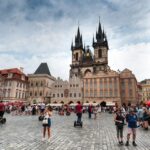
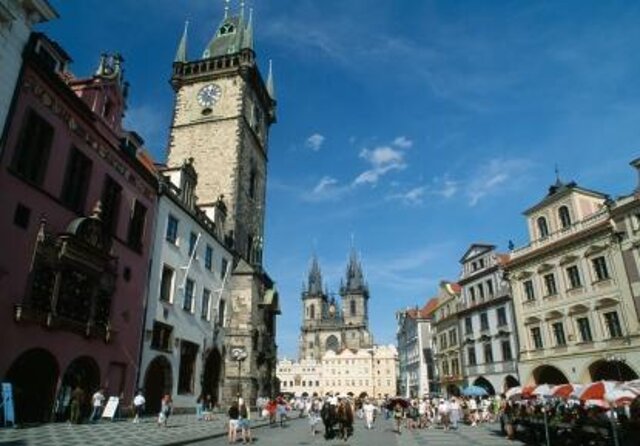
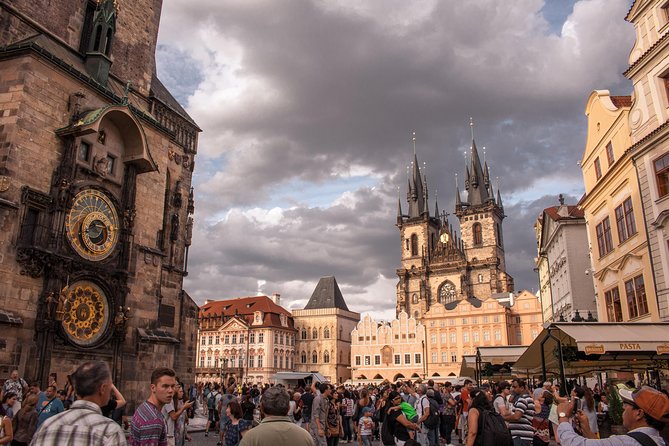
You finish in Staromestske namesti (Old Town Square), which is the city’s central stage. What you’ll get here is the “why this square works” explanation: it contains multiple architectural styles in one place, and that mix is part of Prague’s identity.
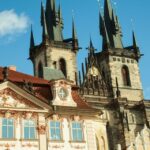
Your guide should point out major landmarks around the square, including the Church of St. Nicholas, Týn Church, the statue of Jan Hus, and the column of St. Mary. This is also where you get to ask questions and get practical next-step advice for your afternoon.
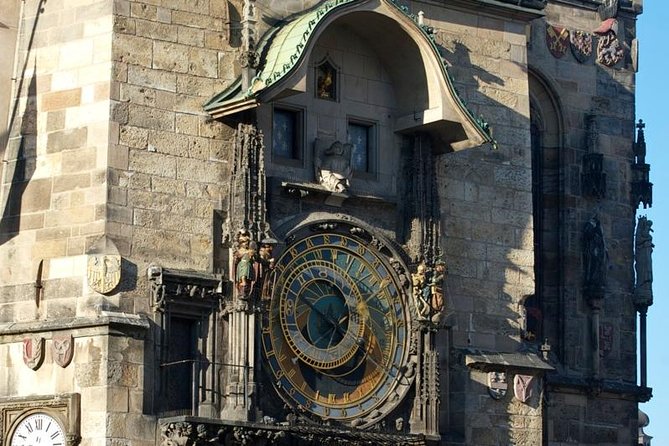
Finally, you end at the Old Town Hall with the Astronomical Clock. The plan includes time around the clock show at the full hour. Even if you think you already know what an astronomical clock is, the guide’s explanation typically helps you understand how it works and why locals treated it as something more than decoration.
Price and value: why $32.65 can be a smart move
At $32.65 per person for about 3 hours, the value comes from structure. This isn’t just a walk past famous objects. You’re paying for someone to connect each stop to a theme—politics in public squares, architecture that reflects identity, and Jewish life through buildings and survival.
You also get a licensed guide, a mobile ticket, and a group capped at 20 people. Smaller groups usually mean fewer “wait around and guess what you’re looking at” moments.
One more value point: multiple stops are marked as free for admission tickets, which can reduce extra costs compared with a tour where everything is pay-as-you-go. Still, there are also stops where admission is not included, so treat those as separate optional costs if you want interior time.
Who should book this morning tour
This one fits best if:
- You’re in Prague for a short stay and want an organized way to connect Old Town and Jewish Quarter sights
- You care about architecture, street history, and how cultural communities changed over time
- You want a first-pass overview that helps you choose what to revisit later
If you only want one narrow topic, like synagogues only, or you hate walking, you might prefer a shorter, more focused option. But for most first-timers, this route is a strong “get your bearings fast” move.
Practical tips that make the tour easier
- Wear comfortable shoes. You’re walking between many stops, and the streets around major sights can be rough on the feet.
- Dress for weather. The tour operates in all weather conditions, so bring a layer for wind and cold mornings.
- Plan for separate admissions in some places. The itinerary clearly marks several stops as not included, so decide in advance if you’ll budget for interiors.
- If you’re sensitive to group audio, stand where you can see the guide. This is a street tour with varying distances and background noise.
- Ask questions during slower moments, especially near churches and synagogues. Those are where guides can turn a quick fact into something you’ll remember.
If you get Petra, Jack (Honza), or Mikal, you’re in good hands
A big reason this tour scores so high in practice is the way guides pace information. In past groups, guides like Petra, Jack (Honza), and Mikal have been singled out for friendly, clear explanations and a pace that keeps families and first-timers engaged.
That doesn’t mean every guide will feel identical, of course. But it does suggest this tour style tends to work when the guide focuses on storytelling and practical context, not just reciting names.
Should you book this Prague Old Town, New Town, and Jewish Quarter tour?
I’d book it if you want a morning that helps you understand Prague as a layered city—royal squares, theater politics, university beginnings, art nouveau façades, and Jewish Quarter sites that shaped centuries of life. The walk format is ideal for first-time visitors who want to stop guessing and start seeing patterns.
Skip it or consider a different format if you:
- Can’t handle a 3-hour walking route
- Expect the tour to be exclusively Jewish Quarter-focused
- Don’t want to plan for separate admission fees at some stops
For most people, though, this is a well-priced way to get a clear, memorable overview while the city is still quiet enough to actually hear the stories.
FAQ
How long is the Prague Old Town, New Town, and Jewish Quarter morning tour?
It runs for about 3 hours.
Where does the tour start and end?
It starts at the Statue of Saint Wenceslas on Václavské náměstí, Prague 1-Nové Město. It ends at Old Town Square (Staroměstské náměstí) in front of the Astronomical Clock.
Is the tour offered in English?
Yes, it is offered in English.
Is admission included for all stops?
No. Some stops are listed as free for admission tickets, while others list admission as not included.
How big is the group?
The tour has a maximum of 20 travelers.
Does the tour run in bad weather?
Yes. It operates in all weather conditions, so you should dress appropriately.