REVIEW · PRAGUE
Back In Time: Zážitkové muzeum historie
Book on GetYourGuide →Operated by Máj - House of Fun · Bookable on GetYourGuide
History, but make it hands-on.
Back In Time Prague is a 1-hour experience museum built around interactive exhibits and authentic scenes that translate key moments of Czech history into something you can actually follow. I like the way the stories are organized by eras and characters, and I especially like the inclusion of a 5D cinema that turns history into a physical, adrenaline-ready show. One thing to consider: it’s not designed for deep, lecture-style storytelling, so if you want lots of detail per topic, you may feel the pace moves on quickly.
You’ll walk through themed sections covering the Middle Ages, Renaissance, and major turning points of Prague’s past—built with modern tech and scene-setting that keeps kids engaged and adults oriented fast. The museum also includes set pieces tied to big ideas people associate with Prague: the legend of the golem, the founding by Libuše, the life of King Charles IV, the astronomical clock’s story, and the Prague Uprising. Just keep in mind the rules for epilepsy and claustrophobia, plus the height/age limits, because the experience includes effects and tighter environments.
In This Review
- Key highlights at a glance
- Where the hour goes: pace, setting, and who this fits best
- The museum layout: interactive exhibits and authentic scenes
- A small content note to plan for
- Middle Ages to Renaissance: how the eras feel in motion
- The golem legend: Prague’s darker folklore in an interactive way
- Founding of Prague with Libuše: turning a myth into context
- King Charles IV and the real-life angle
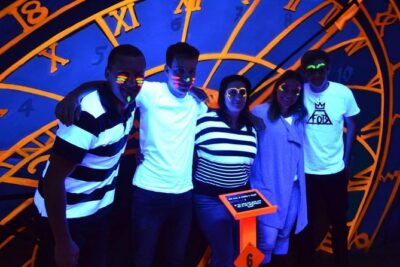
- The astronomical clock story: learning the real meaning behind a landmark
- Prague Uprising: a heavier theme in a format built for groups
- The 5D cinema: adrenaline, effects, and safety considerations
- Timing and planning: how to fit the visit into a Prague day
- Price and value: is $18 per person a good deal?
- Practical tips so you get the most out of the hour
- Should you book Back In Time Prague?
- FAQ
- How long is Back In Time Prague?
- What does it cost?
- Is the museum wheelchair accessible?
- What are the age and height limits?
- Who should not enter?
- Can I get a full refund if I cancel?
Key highlights at a glance
- Interactive exhibits that turn names into scenes
- Time machine element that sets the mood and helps you switch eras
- 5D cinema experience with a noticeable adrenaline factor
- Prague legends and founding myths including Libuše and the golem
- Big historical anchors like Charles IV and the astronomical clock story
- Works well for families and schools with an easy, group-friendly format
Where the hour goes: pace, setting, and who this fits best
At about one hour, Back In Time is the kind of stop that fits neatly into a day of Prague sightseeing without swallowing your whole schedule. The format is built for movement through different rooms and sections, so you’re not stuck in one spot reading labels for the entire visit.
This is a smart choice if you’re traveling with kids (or if you’re the adult who ends up as the unofficial “classroom helper”). The museum is explicitly framed as fun and educational, and the age guidance centers on children from 6 years old, plus a height requirement of more than 110 cm. That tells you the creators are aiming at a particular attention span and learning style.
If you’re an adult who enjoys history, you’ll still get value—especially from the “real story” framing around major Prague landmarks—but you should know the museum’s strength is momentum and storytelling through scenes, not long-form scholarship.
You can also read our reviews of more tours and experiences in Prague.



The museum layout: interactive exhibits and authentic scenes
The core of the experience is the interactive exhibit flow. Each section is designed to bring a slice of Prague history to life using modern technology and authentic scenes. In practice, that means you’re not just hearing facts—you’re seeing recreated moments and getting guided context that helps you place them on a timeline.
The included time machine element matters more than it sounds. It’s basically your “switch” into the right mindset: instead of thinking, Okay, what’s the next topic? you start operating like you’re stepping between eras. That’s helpful for families because it reduces the friction of keeping everyone focused.
There’s also a hall of fame component. Even if you’re not expecting a traditional museum feature, this kind of section usually works as a quick way to link characters and events together—something kids can remember later when they see real sites in the city.
A small content note to plan for
One downside you might notice is that the presentations can feel a bit light on explanation. If you prefer a slow, detailed walkthrough, this might feel more like a fast, high-energy highlight reel than a deep textbook. You’ll still leave with context, just not every nuance.
Middle Ages to Renaissance: how the eras feel in motion
The museum intentionally covers life in the Middle Ages, the Renaissance, and other major periods. That matters because Prague’s historical “big picture” can be confusing when you’re walking around outside—gothic churches, baroque buildings, and medieval streets all coexist. Inside, the museum organizes that complexity into digestible chunks.
The “authentic scenes” approach helps your brain build connections. You don’t just learn that the era existed—you get a visual and interactive nudge toward what daily life might have felt like. For children, that’s the difference between remembering a single name and understanding why a story matters.
For you as an adult, the value is orientation. After the museum, it’s easier to look at Prague and think, Oh, this is the kind of place where those events would have made sense.
The golem legend: Prague’s darker folklore in an interactive way
One included highlight is the legend of the golem. This is a strong choice for a history museum that wants to hold attention, because folklore gives you drama without requiring technical background.
In this section, you’re not just told a spooky story—you experience it through museum storytelling and scene-based presentation, which typically helps kids remember the theme. It also gives you a cultural lens: Prague isn’t only stones and dates. It’s also myths that grew around the city.
If you’re going with younger kids, this is likely one of the “favorite moments,” because it’s easy to grasp and naturally interesting.


Founding of Prague with Libuše: turning a myth into context
The museum includes the founding of the city of Prague by Libuše. This is one of those topics that outsiders hear about, then quickly forget—unless someone ties it to why it’s meaningful.
Here, the value is that the museum treats it as a story with presence: you get context through modern tech and authentic scene elements rather than relying on a quick sentence on a wall label. It also helps you connect the myth to what you’ll see in Prague later, since the city’s identity is tied up with origin stories.
If you like getting your bearings fast, this type of included founding narrative is useful. You’ll understand what people mean when they reference Libuše while sightseeing.
King Charles IV and the real-life angle
Another included section focuses on King Charles IV and what his real life was like. This is a great bridge topic because Charles IV is one of those historical figures many people recognize by name, but few visitors know how his life connects to the broader timeline.
The museum’s “real life” framing suggests the goal is human-scale context, not just a list of accomplishments. In an interactive museum setting, that usually means you’ll walk out with a clearer sense of who he was and how he fits into Prague’s story.
For adults, this is one of the best ways to avoid the classic Prague trap: seeing impressive architecture and not knowing which ruler or era shaped it. For kids, it’s a straightforward character anchor.
The astronomical clock story: learning the real meaning behind a landmark
The museum also includes the founding of the astronomical clock and the real story. This is a smart pick because the clock is one of Prague’s most famous sights, yet most people leave with only a vague impression of what it is.
Even without getting lost in technical details, learning the “real story” behind the clock helps you look at it with fresh eyes later. You’ll better understand why it’s more than decoration—because the museum ties it to a narrative of craftsmanship and historical context.
If you’re the type who likes a payoff moment—like finally “getting it” when you see a landmark in person—this section sets you up for that.
Prague Uprising: a heavier theme in a format built for groups
The Prague Uprising is included, and this is where the museum adds seriousness to the experience. Even if the format stays family-friendly, including an event like this reminds you the city’s story includes real conflict and consequences, not just legends and rulers.
This section is best for families that don’t mind short, guided moments of heavier content. If you want your kids to connect Prague’s history to real human events, this gives you a starting point.
As always with any time-limited museum experience, you’ll likely get the big picture rather than detailed timelines. Still, that’s often what you need before you go exploring on your own.
The 5D cinema: adrenaline, effects, and safety considerations
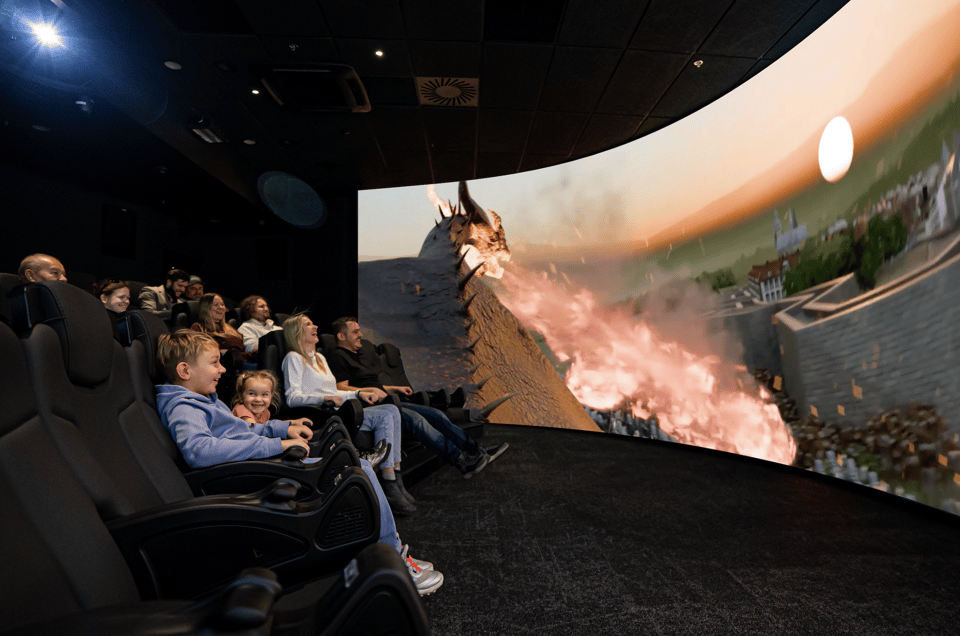
One of the standout inclusions is the 5D cinema experience, described as delivering a good dose of adrenaline as the screen comes to life. This is the part that makes the museum feel modern and “event-like,” not like a standard museum stop.
Two practical considerations matter here:
First, if you’re prone to claustrophobia, entry is prohibited for that condition. The film and effects can also be a sensory load for some people, so only go if you know your body handles immersive experiences well.
Second, the safety note also flags epilepsy and heart disease as conditions where entry is prohibited. If any of these apply to you, don’t try to reason it out on the spot—follow the rule.
If you’re going with kids, this is often the moment that makes the whole hour feel like an attraction, not a lesson. Just make sure you bring your expectations into line: the movie is about feelings and impact, not quiet reflection.
Timing and planning: how to fit the visit into a Prague day
With a 1-hour duration, the museum works best as a focused stop rather than an “in-between” wander. If you can, plan around it when your group’s energy is stable, especially if you’re traveling with children.
Also note the age and height rules: it’s not suited to children under 6 years old, and entry is prohibited for people 110 cm or less. That’s a key planning detail because kids can hit that cutoff unexpectedly.
If your goal is to use the museum to guide your sightseeing, consider timing it earlier in your day. The museum’s purpose is to give you context and inspiration for further exploring Prague afterward.
Price and value: is $18 per person a good deal?
At $18 per person for about an hour, Back In Time lands in the category of “pay for the experience, not for a long museum visit.” Here’s how I’d judge value:
- If you want something interactive that keeps kids engaged, the price feels more reasonable because you’re buying attention and effort, not just information.
- The included 5D cinema adds a major “event” component. That type of production tends to cost more than a typical exhibit-only museum.
- The list of themes—Libuše, Charles IV, the golem, the astronomical clock story, and the Prague Uprising—means you get broad coverage in a short visit.
If you’re someone who wants deep, detailed history per topic, $18 may feel like you’re paying for highlights rather than depth. In that case, consider pairing this with guided walking tours or extra time at traditional sites.
Practical tips so you get the most out of the hour
To make the visit smoother, I’d do three things:
- Go in with a simple goal: pick two themes you care about most, then let the rest be “bonus learning.”
- For kids, focus on the memorable characters: Libuše, Charles IV, and the golem are the easiest hooks to keep a conversation going afterward.
- Expect sensory content in the 5D cinema portion. If you’re sensitive to strong effects, plan accordingly.
Also, it’s listed as wheelchair accessible, so if mobility is part of your planning, you’re not taking an unknown risk with access.
Should you book Back In Time Prague?
Book it if you want a family-friendly, guided-by-scenes way to get Prague history context quickly—especially if your group includes children aged 6+ and you’re comfortable with the 5D cinema element. The themes are recognizable, the pacing is designed for an hour-long visit, and the interactive format makes it less likely everyone tunes out.
Skip or reconsider if you need deep historical explanations, because the presentation can feel more like a fast-moving highlights show than a detailed course. Also don’t take chances if you fall under the museum’s safety restrictions for epilepsy, claustrophobia, or heart disease, and note that it’s not recommended for pregnant women.
If you’re hoping for an easy, structured history hit without the grind, this one is a solid match.
FAQ
How long is Back In Time Prague?
The experience lasts about 1 hour.
What does it cost?
It costs $18 per person.
Is the museum wheelchair accessible?
Yes, it’s wheelchair accessible.
What are the age and height limits?
Children are admitted from age 6, and entry requires a height over 110 cm. People under 110 cm and children under 6 are not admitted.
Who should not enter?
Entry is prohibited for people with epilepsy, claustrophobia, and people with heart disease. It’s also not suitable for pregnant women.
Can I get a full refund if I cancel?
Yes. You can cancel up to 24 hours in advance for a full refund.