REVIEW · OLD TOWN PRAGUE
Prague: Highlights Walking Tour to the German embassy 1989
Book on GetYourGuide →Operated by David Klaus Travel Manager Service Prag · Bookable on GetYourGuide
A balcony can change a city’s mood. This walking tour strings together Prague landmarks with the story of the fall of the Iron Curtain, including the moment tied to Hans-Dietrich Genscher’s famous speech. I like that you’re not stuck in one era—you’re walking through 1968 and 1989 in the same morning-hour rhythm, with real places to point at.
Two things really land for me. First, I love the stop that orients the whole story: standing near the German embassy exterior and learning how refugees from East Germany ended up at the West German Embassy in Prague. Second, I like the mix of political and cultural “memory stops,” especially the John Lennon Wall and the Jan Palach sites. One drawback to know up front: it’s a walking-focused experience and it’s not suitable for people with mobility impairments.
In This Review
- Key Highlights You’ll Care About on This Walk
- Why 1989 in Prague Hits Harder When You Walk It
- Starting at Charles University: Getting to the Faculty of Law
- Charles Bridge Photo Stops and the View Angle That Makes Sense
- Old Jewish Cemetery and Josefov: Quiet Places With Loud Meaning
- Jan Palach Square and the Velvet Revolution Memorial: Protest With a Name
- John Lennon Wall: When Dissent Turns Into Art
- Wenceslas Square and the National Museum Area: Prague’s Big Stage
- Malostranské Square and the Walk On Foot: Setting Up for the Embassy
- Outside the German Embassy: The Balcony You Can’t Forget
- Price and Value: What $32 Buys in 150 Minutes
- Who This Tour Fits Best (And Who Should Skip It)
- Should You Book the Prague Highlights Walking Tour to the German Embassy 1989?
- FAQ
- How long is the tour?
- How much does it cost?
- What language is the tour guide?
- Where do I meet the group?
- Is hotel pickup available?
- Can I visit the German embassy interior?
- What main stops can I expect?
- Is the tour suitable for people with mobility impairments?
Key Highlights You’ll Care About on This Walk
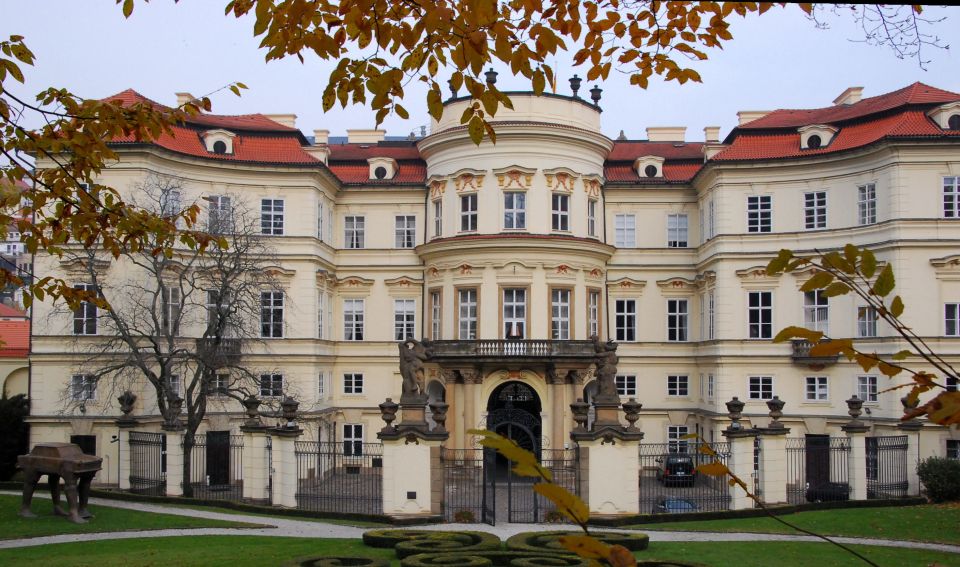
- The Hans-Dietrich Genscher balcony moment tied to the 1989 news that spread hope
- A guided walk through central Prague that connects major landmarks with Cold War turning points
- John Lennon Wall for contemporary protest art next to older political sacrifice
- Jan Palach Square and a Velvet Revolution Memorial for the human side of 1968 and 1989
- Charles Bridge for the classic postcard view plus the German embassy sightlines
- German embassy exterior only since the interior is not open to the public
Why 1989 in Prague Hits Harder When You Walk It
There’s a difference between reading about the Iron Curtain and standing where the story mattered. This tour is built around the idea that big political events still leave footprints in everyday city space. You’ll move through places tied to East-West pressure, protest, and the people caught in the gears.
I also appreciate the way the guide keeps the facts connected. You’re seeing Prague’s main sights, sure. But the guide keeps asking you to notice what changed—and what didn’t—between the Prague Spring era and the late-1980s turning point.
And because the focus includes the refugee crisis, you don’t just get speeches and slogans. You get the human reason some doors opened when they did—East German citizens fleeing through Poland and Hungary toward the West German Embassy in Prague.
Starting at Charles University: Getting to the Faculty of Law
You meet in front of the Faculty of Law at Charles University (nám. Curieových 7, Old Town). If you’re arriving by metro, get off at Staromětká, about 550 meters away. If you’re coming by tram, take tram 17 and stop at Pravnicka Fakulta.
This matters more than you’d think. Meeting early in Old Town helps you avoid that late-day scramble when the sidewalks get busy and you start losing time to crowd flow. Plus, you’ll begin already surrounded by the “student and ideas” atmosphere that later connects to Jan Palach.
Pickup is optional if you’re staying in Prague 1–3 or around the Můstek area. If you don’t need it, you can just show up at the Faculty of Law and start walking.
Charles Bridge Photo Stops and the View Angle That Makes Sense
You’ll start near Charles Bridge with a photo stop and guided orientation. Even before you’re fully “on the bridge,” you’ll learn why the route is designed the way it is—sightlines, walking distance, and how the German embassy shows up in the broader picture.
Later, you’ll cross Charles Bridge on foot. The timing is useful: you get the classic bridge experience, but you also get context for what you’re looking at. That’s a key detail. Without the story, Charles Bridge can feel like just another beautiful crossing. With the story, it becomes a stage.
If you’re the type who likes to look around while walking (I am), this part is perfect. You’ll have moments to pause, take pictures, and listen without feeling trapped in a single location.
Old Jewish Cemetery and Josefov: Quiet Places With Loud Meaning
From Charles Bridge you’ll move into the old city lanes toward Josefov and the Old Jewish Cemetery area. Expect short stops that still feel meaningful. This is where the tour’s “memory geography” becomes clear: Prague isn’t only about 20th-century politics. It’s also about older communities and how they’re remembered in the city.
A photo stop here works because you’ll be walking through tight spaces with signs of history close to the ground. You’re not just looking up at monuments; you’re noticing place and layers.
One practical note: these streets can be uneven and busy. Wear shoes that can handle cobbles without drama. Your tour is 150 minutes total, and you’ll want your feet ready for the second half.
Jan Palach Square and the Velvet Revolution Memorial: Protest With a Name
Then the walk turns more human and more intense. You’ll stop at Jan Palach Square, where you’ll hear about Jan Palach as a student from the Faculty of Philosophy during the Prague Spring in 1968.
This isn’t presented like a distant textbook event. It’s framed through his specific place in that year and what happened afterward. For me, that’s one of the tour’s best strengths: the guide doesn’t treat history like a list. It treats it like people making impossible choices in the middle of pressure.
Next comes the Velvet Revolution Memorial stop. The value here is that you can feel the shift. The tour moves from the 1968 sacrifice and atmosphere into the late-1980s momentum that led into 1989. Even with only a brief stop, you come away with a sense of how protest can change from desperation into collective action.
If you want a tour where the emotional weight has structure, this section is the backbone.
John Lennon Wall: When Dissent Turns Into Art
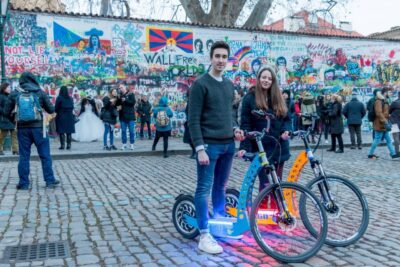
After the memorial stop, you’ll reach the John Lennon Wall for a guided visit and sightseeing time. This is one of those Prague places that feels alive, even when you’re standing still. It’s homage, messages, and the idea that writing can be a kind of stubborn refusal.
What I like here is the contrast the route creates. You’re moving from sacrifice and revolutionary momentum into a space where expression takes a more creative form. The guide helps you connect the dots between eras without making it feel forced.
You’ll have enough time to look closely—take in the layers of messages and the way people keep adding to the wall’s voice over time. It’s also a good spot to pause and just let the atmosphere do its work.
Wenceslas Square and the National Museum Area: Prague’s Big Stage
You’ll continue on toward Wenceslas Square, stopping for sightseeing and a guided visit. This is Prague’s major public stage—wide spaces, lots of movement, and an easy feeling of being at the center of something.
The tour also includes a short stop near the Prague National Museum area. These quick moments aren’t about deep detours. They’re more about helping you understand where you are in the city’s “movement system,” and how major squares fit into political life.
This is also a good time for photos. The lighting and open space make it easier to frame shots without fighting crowds at street level.
Malostranské Square and the Walk On Foot: Setting Up for the Embassy
You’ll reach Malostranské Square with another short photo/sightseeing stop. Then you’ll spend some time walking on foot as you connect the dots between the earlier parts of the city center and the German embassy area.
This “in-between” stretch matters because it gives your brain a chance to catch up. After places tied to protest and refugee stories, you start thinking about the specific symbol you’ve been aiming toward.
If you’ve ever felt that historical tours rush the climax, you’ll appreciate this pacing. It doesn’t blow past the emotional center. It positions you to arrive ready to pay attention.
Outside the German Embassy: The Balcony You Can’t Forget
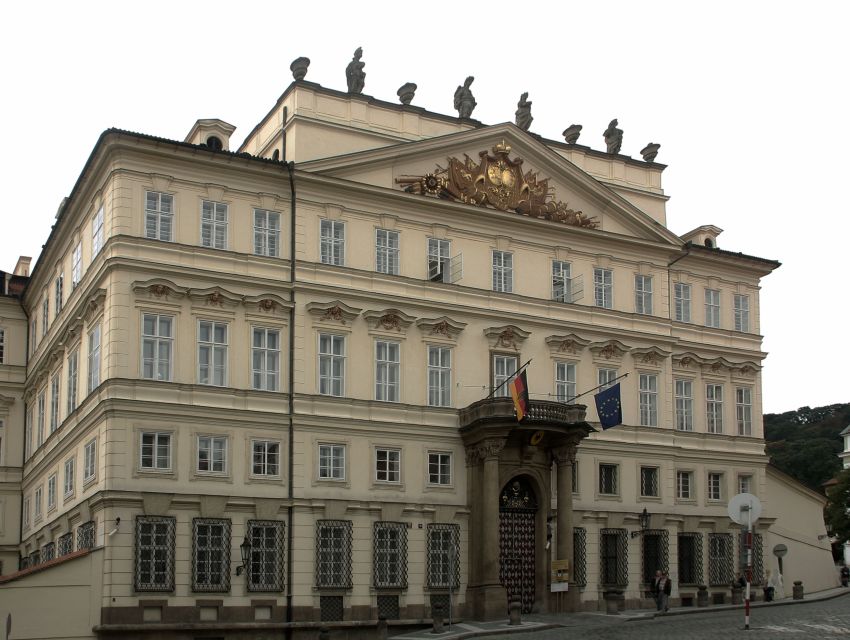
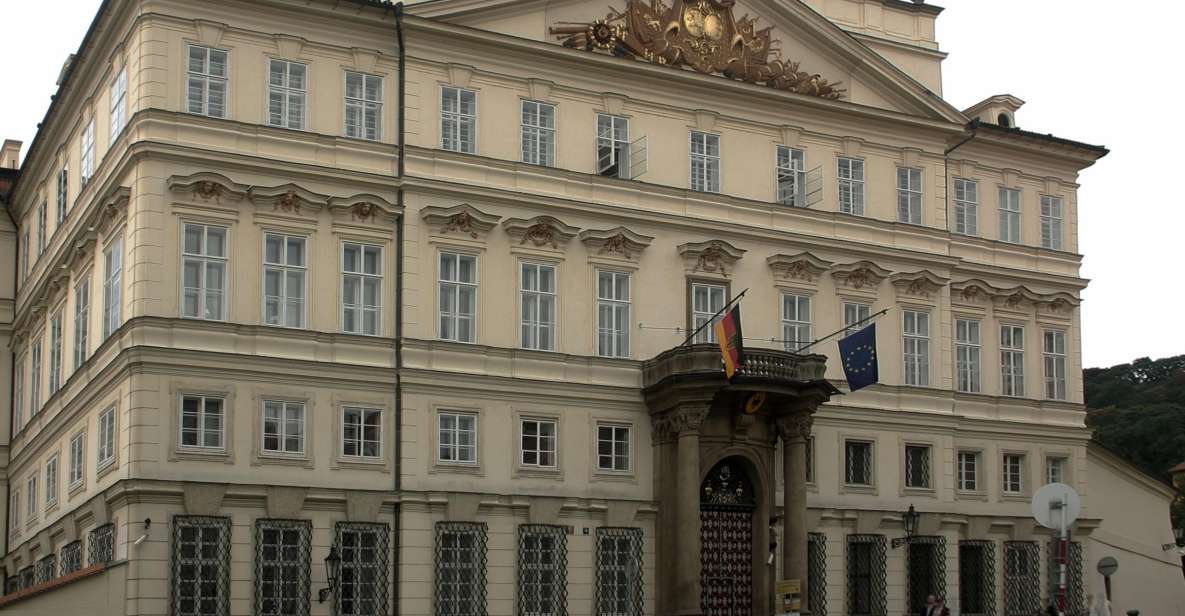
Here’s the highlight that explains the whole route. You’ll stop at the Embassy of Germany, Prague for a photo stop and guided sightseeing. From outside, you’ll learn about the balcony associated with Hans-Dietrich Genscher’s famous speech.
The interior isn’t open to the public, so your focus stays where it should: on the building, the exterior view, and the way the message from the balcony became part of the refugee story. The route also makes sure you see the connection to the Charles Bridge sightlines, so the area starts to make spatial sense rather than feeling like a random stop.
This is where the tour can feel personal. One emotional thread you’ll likely understand quickly: people remember standing in the vicinity of that balcony decades later, because the news carried something beyond politics. It carried the promise that they could leave and live. When the guide points out the significance of the location, you start seeing why the balcony matters as much as the speech itself.
Also note the guide’s role here. A licensed German-speaking guide does more than recite facts—they help you understand what you’re looking at and why it mattered.
Price and Value: What $32 Buys in 150 Minutes
At $32 per person for about 150 minutes, this walk is a practical value if you want context with your walking. You’re paying for two main things: a licensed German-speaking guide and a route that combines Prague classics with specific 20th-century story points.
Compared with paying for individual entry tickets, this is more “guide-powered sightseeing.” That’s a good fit if you prefer to spend your money on interpretation, not line-standing. It’s also budget-friendly for a short window in Prague, because you get multiple central areas in one go.
What you’re not buying is food or drinks (you’ll need to handle that separately). And the embassy interior isn’t part of the experience, so don’t expect a museum-style visit.
Who This Tour Fits Best (And Who Should Skip It)
This is a strong match if you:
- like walking through Prague’s center with a story that connects eras
- want major landmarks plus specific Cold War-era context
- enjoy moments like the John Lennon Wall and the Jan Palach sites, where emotion and ideas overlap
It’s not the best choice if you:
- have mobility challenges, since it’s a walking-focused tour and not suitable for people with mobility impairments
- need a low-step, slow-paced experience with frequent long rests
Also, this tour is German-language only, so plan for that. If you’re comfortable listening in German, you’ll likely get more out of every stop.
Should You Book the Prague Highlights Walking Tour to the German Embassy 1989?
If you’re the type who wants more than pretty views, I’d book this. The German embassy balcony story tied to Hans-Dietrich Genscher’s famous speech gives the route its center. Then the stops at Jan Palach Square, the Velvet Revolution Memorial, and the John Lennon Wall keep the experience from becoming a single-topic lecture.
The pace is short enough to fit into a day, but you’ll still cover a lot of central Prague. If you can walk comfortably and you understand the tour is German-speaking, this is one of those trips that makes the city’s political past feel concrete instead of abstract.
FAQ
How long is the tour?
The tour lasts about 150 minutes.
How much does it cost?
It costs $32 per person.
What language is the tour guide?
The tour is guided in German by a licensed guide.
Where do I meet the group?
You meet in front of the Faculty of Law at Charles University (nám. Curieových 7, 116 40 Old Town). The metro stop is Staromětká, and tram 17 stops at Pravnicka Fakulta.
Is hotel pickup available?
Pickup is optional. It may be available at hotels in Prague 1, 2, 3 or near Můstek in the city center.
Can I visit the German embassy interior?
No. The interior is not open to the public. You’ll view it from the outside.
What main stops can I expect?
You’ll see Charles Bridge, the Old Jewish Cemetery area and Josefov, Jan Palach Square, the Velvet Revolution Memorial, the John Lennon Wall, Wenceslas Square, the Prague National Museum area, Malostranské Square, and the German Embassy exterior.
Is the tour suitable for people with mobility impairments?
No, it’s not suitable for people with mobility impairments.