REVIEW · PRAGUE
Prague Castle St. Vitus Cathedral, Royal Palace, St. George’s Basilica
Book on GetYourGuide →Operated by Robert Procházka · Bookable on GetYourGuide
Prague Castle is a museum you can’t just wander. This 3-hour guided circuit by historian Mr. Robert Procházka strings together the most important spots in one smooth route. I especially love how the tour turns big monuments into stories you can picture, not just facts you forget.
Two stand-out wins for me: the St. Vitus Cathedral focus on coronations and relics, and the late-day payoff with views over the whole city from the castle grounds. One thing to consider: it’s a German-only tour, and separate entrance tickets for the sites are not included in the price.
In This Review
- Key Points to Know Before You Go
- Starting at Pražský hrad: How You Begin This Prague Castle Loop
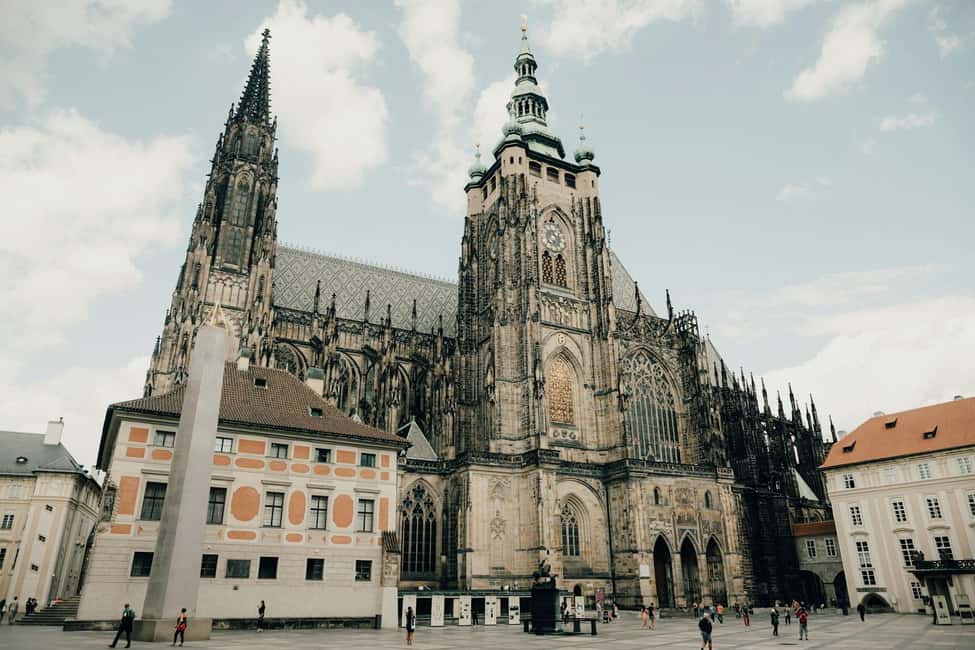
- St. Vitus Cathedral: From Roman Roots to Gothic Coronations
- Old Royal Palace: Crown Jewels, a Late Gothic Throne, and a Plot Twist
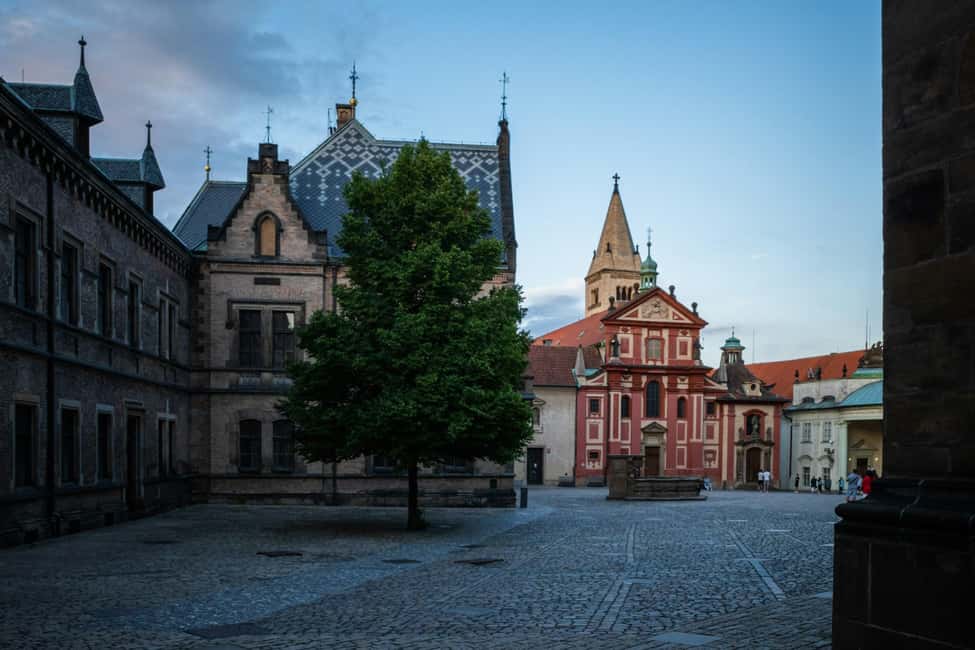
- St. George’s Basilica: A 10th-Century Tomb With a Shocking Backstory
- Golden Lane: Rudolf II’s Alchemists, Kafka, and the “Small Houses” Time Travel
- The Castle Grounds View: Why This 3-Hour Tour Feels Worth It
- Price and Value: What You’re Actually Paying For
- Who This Tour Suits Best (and Who Might Want Something Else)
- Booking Logic: Timing, Tickets, and a Smooth Day
- Should You Book This Prague Castle Historian Tour?
- FAQ
- Is the tour in German?
- How long is the tour?
- Where do I meet the guide?
- Where does the tour end?
- Are entrance tickets included in the price?
- How much are the entrance tickets?
- What is included in the tour price?
- Is it suitable for children?
- What’s the cancellation policy?
Key Points to Know Before You Go
- Historian-led storytelling with lots of information and nice theme-linked stories from Mr. Robert Procházka
- One efficient route: St. Vitus Cathedral, Old Royal Palace, St. George’s Basilica, and Golden Lane in about 3 hours
- Entrance tickets are separate, but your guide helps you buy them with minimal hassle
- Castle grounds viewpoint: the Prague Castle grounds are listed in the Guinness Book as the largest enclosed castle grounds in the world
- Golden Lane back to the 16th century, including Rudolf II’s alchemists and Kafka’s connection
Starting at Pražský hrad: How You Begin This Prague Castle Loop
Your tour meets right at the streetcar stop named Pražský hrad (Prague Castle). Take streetcar lines 22 or 23, direction Bílá hora. The guide, Mr. Robert Procházka, is waiting for you at that stop. This is helpful because Prague Castle can feel confusing at street level. With this start, you go straight to the right place and get moving.
The tour duration is 3 hours, and it’s in German. That matters for your planning. If you’re not comfortable in German, you may miss some of the thread that ties the stops together. If you are comfortable, you’ll get a more complete version of the castle, because the guide isn’t just pointing at architecture. He’s explaining why these buildings exist and how power, belief, and politics shaped them.
You can also read our reviews of more tours and experiences in Prague.

St. Vitus Cathedral: From Roman Roots to Gothic Coronations
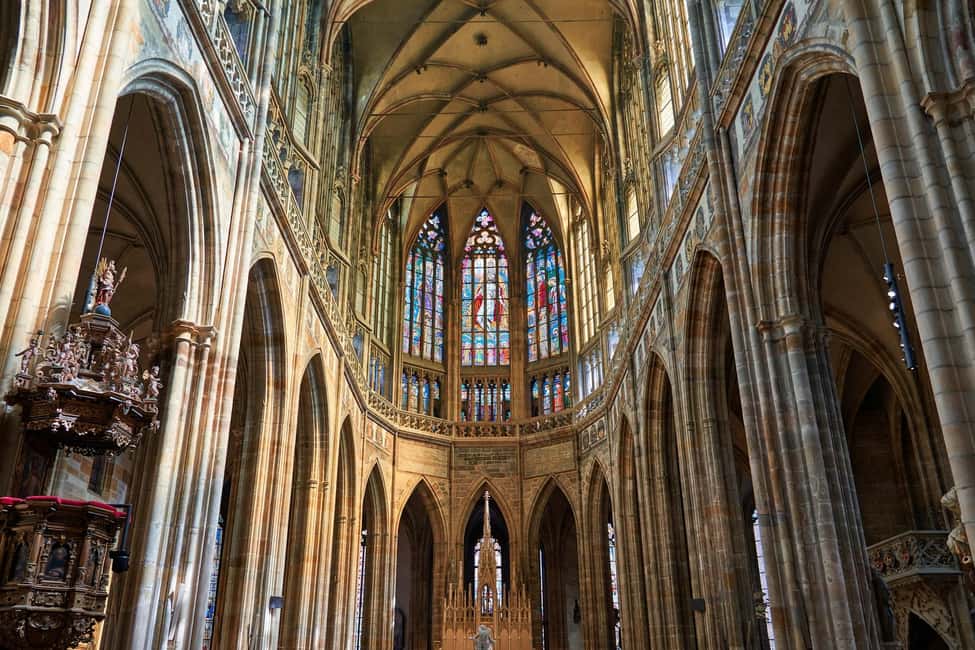
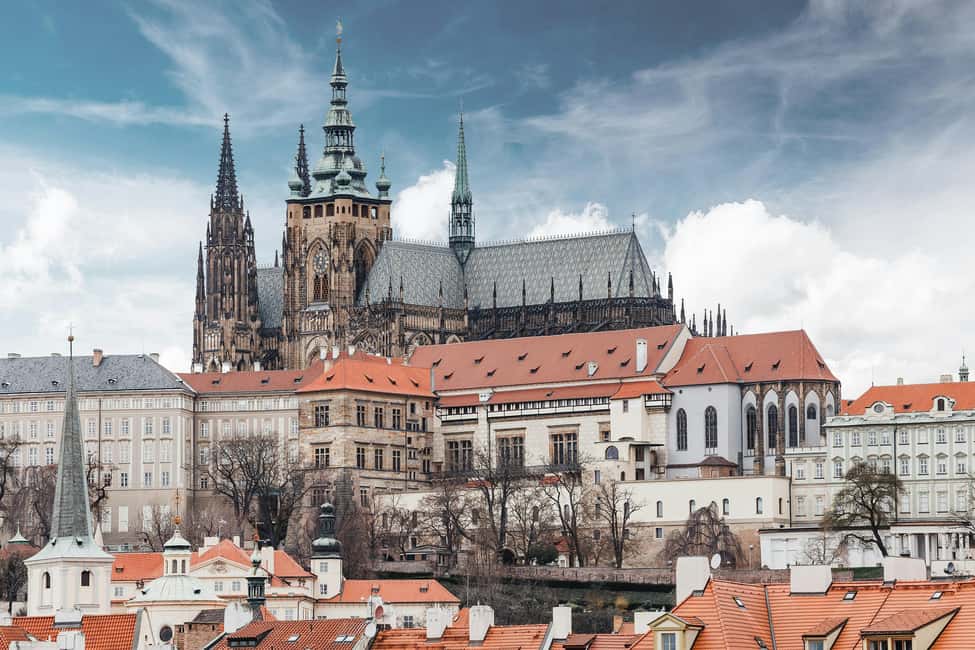
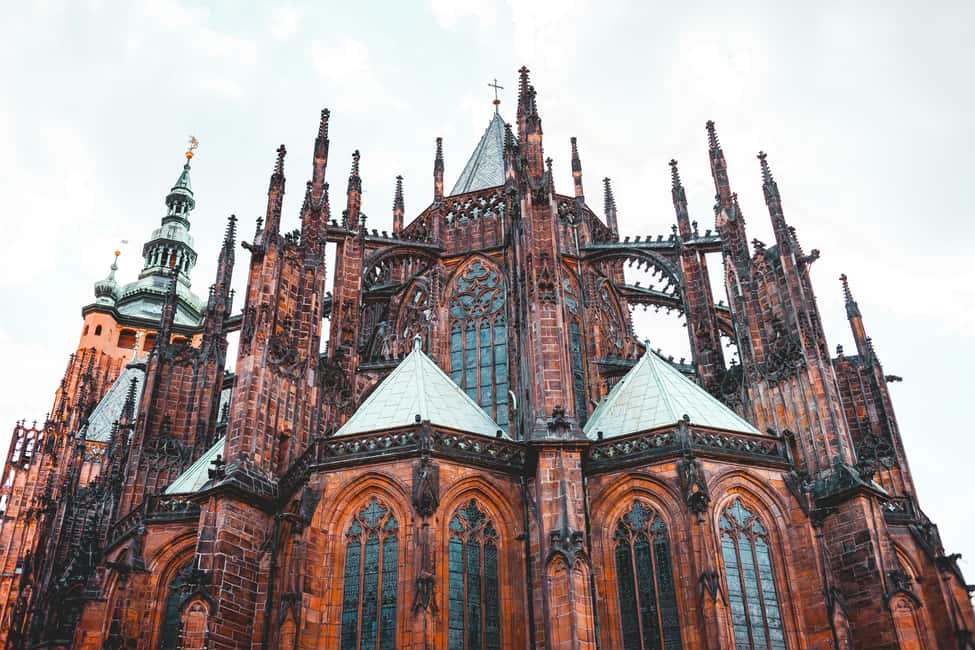
St. Vitus Cathedral is the heart of the story. This is where Bohemian kings were buried and where coronations happened. It’s not just a pretty church. It’s a place meant to make authority feel sacred, permanent, and official.
The cathedral includes a very old origin point: the oldest predecessor building, a Romanesque rotunda, founded around 925. That detail helps you understand the cathedral as something built on top of older layers, not a single moment in time. Then the main show comes in the 14th-century Gothic design, which is the cathedral’s signature.
When you focus on the person-centered parts, St. Vitus gets even more memorable. The cathedral houses the burials of key Czech patron saints, including St. Wenceslas and St. Adalbert. Even if you’re not a “religion-history” traveler, these names are the kind of anchors that help you decode Czech history without a headache.
A highlight is the Wenceslas Chapel, decorated with semi-precious stones. From there, a spiral staircase leads up to the crown chamber. St. Wenceslas’ remains rest in a Gothic shrine, and the crown chamber is where the coronation regalia are kept. If you like seeing how symbols are physically housed, this is the part that makes the medieval world click.
Practical note: St. Vitus Cathedral is a major site. Plan for typical temple/cathedral vibes: walking, looking up, and a bit of standing time.
Old Royal Palace: Crown Jewels, a Late Gothic Throne, and a Plot Twist
Next up is the Old Royal Palace, and this is where the tour shifts from sacred authority to political drama. You’ll see a replica of the Bohemian crown jewels, which is still valuable even if you’re expecting the real thing. Replicas can actually help more than you think because the guide can explain what those regalia meant, how they were used, and why they mattered to the people in charge.
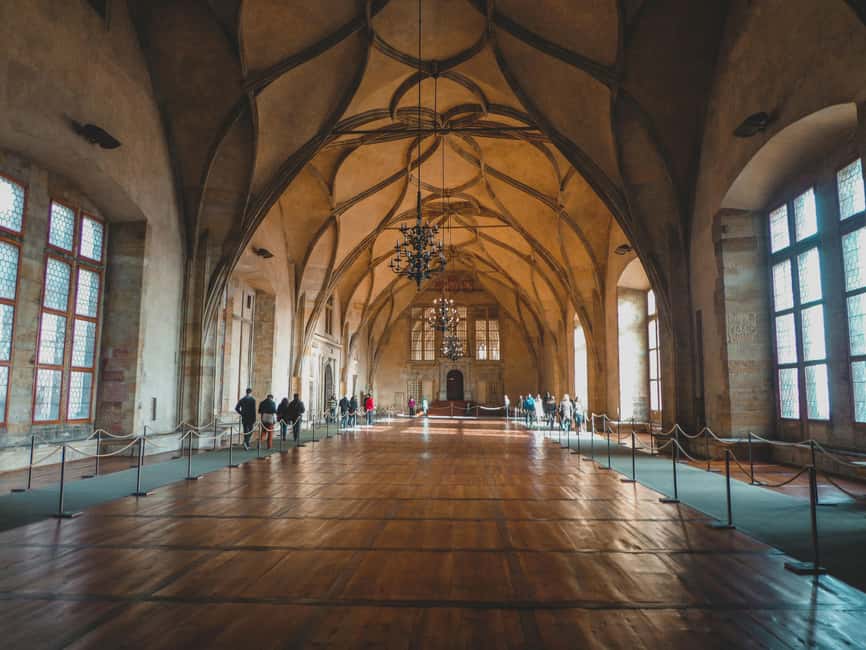
The palace also gives you a big architecture moment: the largest late Gothic throne room in Central Europe. That’s the kind of claim that can sound like marketing until you’re standing where the throne would have dominated the room. Gothic design is built to direct your eyes upward and inward toward power. This throne room is made for that effect.
Then comes one of the most dramatic historical facts in Prague Castle: the site of the Third Defenestration of Prague at the State Chancellery, an incident that helped ignite the Thirty Years’ War. “Defenestration” is a word you’ll remember afterward. It literally points to being thrown out of a window, and connecting that moment to the start of a huge European conflict makes the palace feel dangerously real.
If you like history that has consequences, you’ll appreciate how the guide uses the palace spaces to connect personal power struggles to national and international outcomes.
St. George’s Basilica: A 10th-Century Tomb With a Shocking Backstory
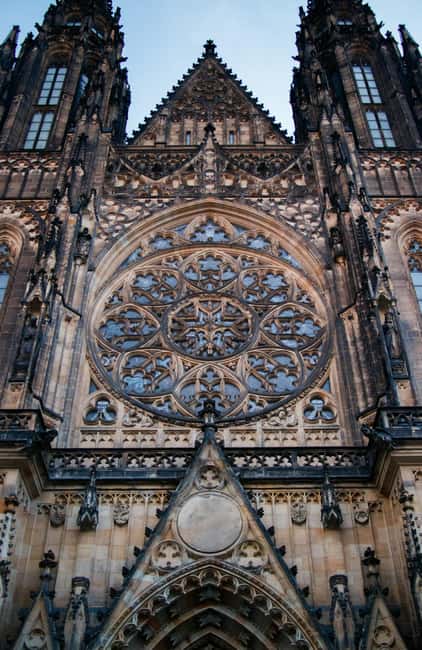
At St. George’s Basilica, the focus turns to the earliest layers of the story. The basilica dates back to the 10th century and it houses the tomb of St. Ludmila, grandmother of St. Wenceslas.
Here’s the detail that makes this stop memorable: St. Ludmila was strangled to death by Viking warriors on behalf of her daughter-in-law. The basilica becomes more than a calm church interior. It becomes a physical reminder of how brutal political and religious conflicts could be, even in places that look timeless from the outside.
If your interest leans toward human stories behind buildings, this is a great counterweight to the heavier coronation and palace drama. You get a different angle on the same medieval web: family ties, faith, and power colliding in a very direct way.
Golden Lane: Rudolf II’s Alchemists, Kafka, and the “Small Houses” Time Travel
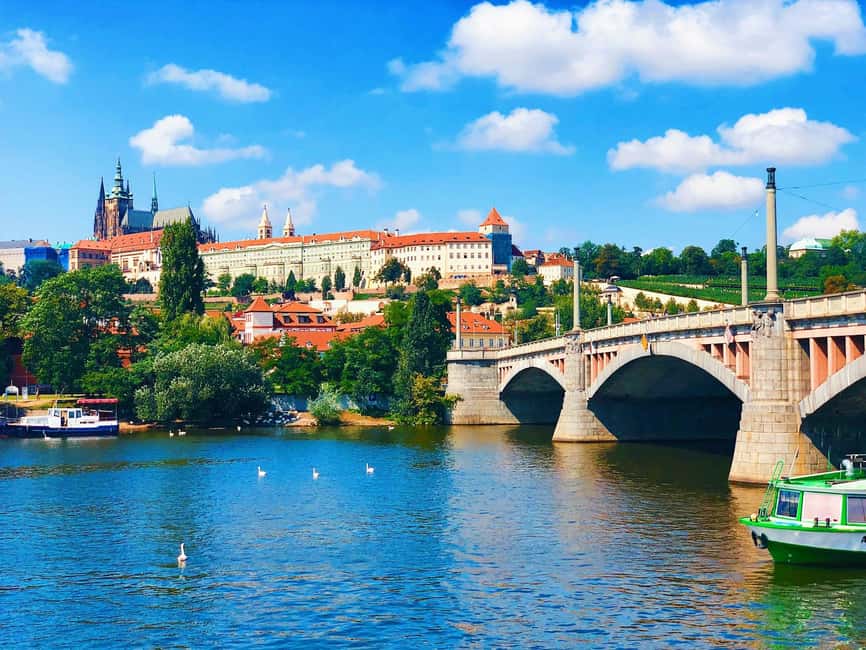
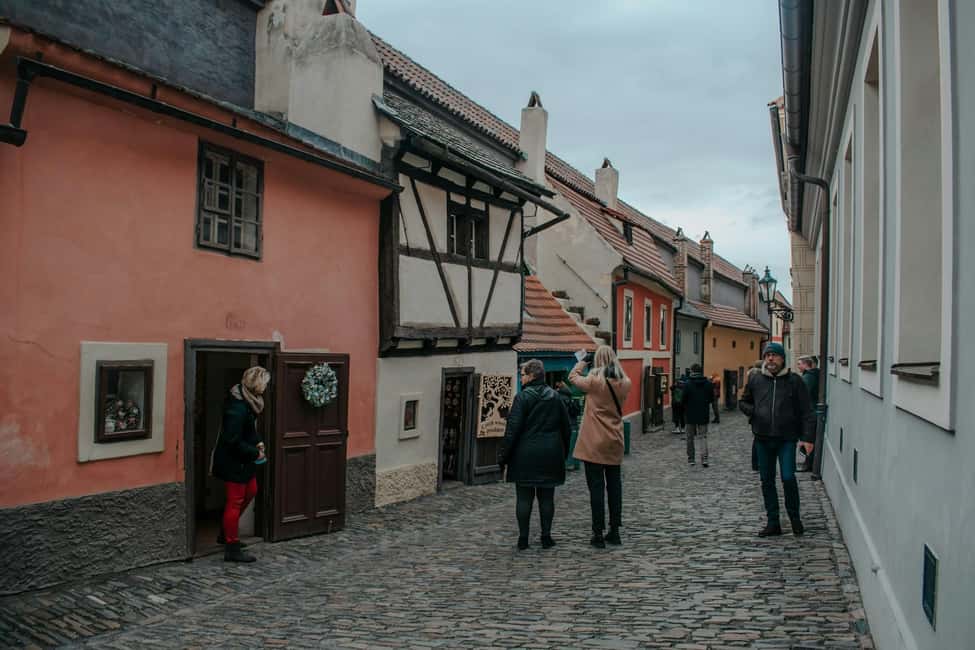
After the major monuments, the tour flows into Golden Lane, which brings the timeline back toward the 16th century. This is where the castle complex starts to feel human-scale.
Emperor Rudolf II’s alchemists worked here, searching for an elixir of life. They also tried to produce gold from lead. That’s the kind of ambition that sounds like fantasy until you remember it’s tied to real early science, real patronage, and real money. The guide’s job is to make it make sense in the context of the period.
Then you get a literary thread: Franz Kafka lived in one of the little houses on Golden Lane. Even if you’re only a casual reader, Kafka’s connection adds a modern emotional layer. The lane isn’t just a medieval reenactment spot. It’s a place where different eras left their fingerprints.
The tour ends in Golden Lane, and since this area sits inside the Prague Castle grounds, you also get a natural transition into browsing on your own afterward if you want. Just remember: Golden Lane is a small area, so expect lots of close-up looking and photos.


The Castle Grounds View: Why This 3-Hour Tour Feels Worth It
You’re also treated to time on the breathtaking Prague Castle grounds. These grounds are listed in the Guinness Book as the largest enclosed castle grounds in the world, and that fact isn’t there just to sound impressive. It helps you understand why you can’t “do Prague Castle” casually in an hour.
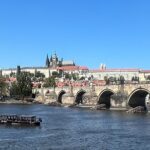
The good news: with this tour, you’re not left guessing where to go for the best perspective. The highlights include the chance to enjoy breathtaking views of the whole of Prague from the castle grounds.
This matters because views can be a trap. If you wander without a plan, you might miss the best sightlines or you’ll spend time walking to places that aren’t worth your effort. Here, the route is built to hit the cathedral, the palace, the basilica, and then Golden Lane, so you end in the part that feels most atmospheric—while still getting the viewpoint payoff.
Price and Value: What You’re Actually Paying For
The tour price is $41 per person for a 3-hour guided experience in German. That cost covers the historian guide service through the castle grounds and the interiors of historic buildings.
What’s not included: entrance tickets. The site tickets are listed as:
- Adults: 18 EUR
- Seniors (from 65 years): 14 EUR
Your guide accompanies you to the ticket office, and you can pay with a payment card there. You can also hand the amount in EUR directly to the guide, who will obtain the tickets. Tickets are purchased at a counter exclusively for guides, so you typically won’t have to queue for long.
So is it good value? For me, the math works because you’re buying two things at once: access plus interpretation. St. Vitus Cathedral and the Royal Palace are big places where meaning is easy to miss if you’re just reading plaques. Mr. Procházka’s job is to connect the architecture and the objects (like coronation regalia and the crown jewel replica) to the historical moments that shaped Czech identity. In other words, you’re not paying only for walking. You’re paying for someone to help you see.
Also, the price includes a guided circuit that covers four major stops. That’s a strong use of limited time when Prague Castle is on your “must-do” list.
Who This Tour Suits Best (and Who Might Want Something Else)
This tour is a great match if you:
- want German narration and can follow a guide comfortably in that language
- care about the “why” behind buildings, not just what they look like
- like a route that moves you from cathedral to palace to basilica to Golden Lane without extra planning
- appreciate dramatic history, like the Third Defenestration of Prague and its link to the Thirty Years’ War
It’s not suitable for children under 10, based on the tour’s stated policy. If you’re traveling with younger kids, you may want a different format.
If you’re short on time but still want the main Prague Castle highlights, this 3-hour structure is exactly the right length.
Booking Logic: Timing, Tickets, and a Smooth Day
You’ll see different starting times depending on availability, and the tour runs about 3 hours. You’ll want to plan your day so you have enough room before and after for getting oriented at the Prague Castle stop.
Bring what you need for tickets. Entrance tickets aren’t included in the tour price, but the guide handles the ticket-office step with a guides-only counter. For payment, you can use a card at the office or pay the guide in EUR.
And don’t overlook the meeting point detail: you start at streetcar stop Pražský hrad, lines 22/23 toward Bílá hora. Get that right, and the rest is easy.
If you’re flexible, you can book and pay later, and cancellations are allowed up to 24 hours in advance for a full refund.
Should You Book This Prague Castle Historian Tour?
Book it if you want a guided “best of” that makes the castle’s spiritual and political sides feel connected. This is the kind of tour where the facts stick because they’re spoken through a narrative lens. The historian-led approach and the specific stops—St. Vitus Cathedral, Old Royal Palace, St. George’s Basilica, and Golden Lane—turn Prague Castle from an overwhelming complex into a story you can follow.
Don’t book it if you need an English tour, or if you prefer to wander without a tight route. Also, if you don’t want to pay additional entrance fees, remember that tickets are separate.
Overall? For the time you spend, this is a strong value because you’re not just seeing famous places. You’re getting the threads that tie them to Czech identity, power, and legend.
FAQ
Is the tour in German?
Yes. The tour is conducted in German.
How long is the tour?
The duration is 3 hours.
Where do I meet the guide?
Meet at the streetcar stop Pražský hrad (Prague Castle), streetcar line 22 or 23 direction Bílá hora. The guide will wait at that stop.
Where does the tour end?
The tour ends in Golden Lane, and the activity is listed as ending back at the Prague Castle meeting point area.
Are entrance tickets included in the price?
No. Entrance tickets to St. Vitus Cathedral, the Old Royal Palace, St. George’s Basilica, and the Golden Lane are not included.
How much are the entrance tickets?
Adults pay 18 EUR, and seniors (from 65 years old) pay 14 EUR.
What is included in the tour price?
The tour price covers the 3-hour guided tour in German by a historian through the castle grounds and the interiors of the historic buildings.
Is it suitable for children?
No. It is not suitable for children under 10 years.
What’s the cancellation policy?
Free cancellation is available up to 24 hours in advance for a full refund.