REVIEW · PRAGUE
Prague Castle Interiors & Changing of the Guard-Small group
Book on GetYourGuide →Operated by ArtKonzultant · Bookable on GetYourGuide
Prague Castle feels calmer when you can ask questions. I like this tour because it keeps a small-group pace, and the guide puts history into plain language as you move from interior to interior. One thing to keep in mind: you’ll handle uneven surfaces and some gentle uphill walking, so comfortable shoes matter.
You start smart. You don’t waste time figuring out where to enter or what to do first. The tour includes your Prague Castle entry tickets for the key interiors, plus a short tram ride up from Malostranská, so the day runs like a plan instead of a scavenger hunt.
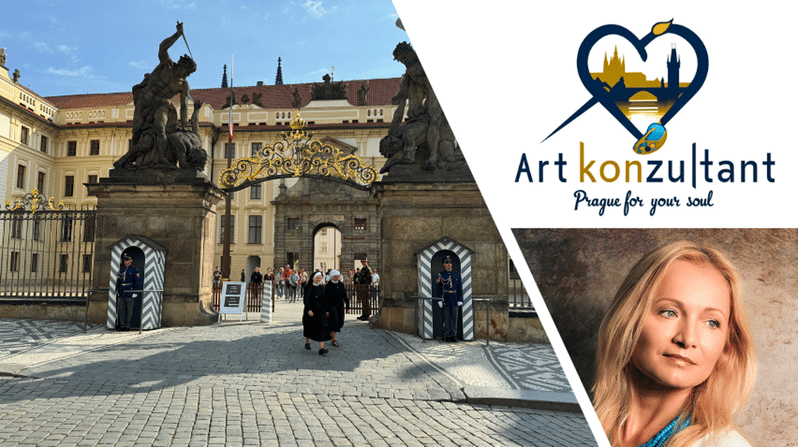
The payoff is big. You cover St. Vitus Cathedral (including St. Wenceslas Chapel), the Old Royal Palace spaces like Vladislav Hall, Golden Lane, and St. George’s Basilica, and you end at Hradčany Square for the Changing of the Guard ceremony.
In This Review
- Key things that make this tour worth your time
- Getting your bearings fast: how the small-group pace helps at Prague Castle
- Meeting at Malostranská station and riding the tram to the Castle
- St. Vitus Cathedral and St. Wenceslas Chapel: the inside story of Czech rulers
- Old Royal Palace and Vladislav Hall: power, drama, and a famous window
- St. George’s Basilica and Golden Lane: the contrast between grand power and everyday life
- Hradčany Square and the Changing of the Guard: a short ceremony with real atmosphere
- Price and value: what 150 minutes for $87 really buys you
- Practical tips that make the day smoother
- Who should book this tour, and who might prefer another style
- Should you book Prague Castle Interiors and Changing of the Guard (small group)?
- FAQ
- Where is the meeting point for the tour?
- How long is the tour?
- How many people are in the group?
- What Prague Castle interiors are included?
- Is the Changing of the Guard included?
- Are entrance tickets included?
- What languages are the tours offered in?
- What should I wear or bring?
- What if parts of Prague Castle are closed?
Key things that make this tour worth your time
- Small group (max 8) so you can actually ask questions without feeling rushed
- Prague Castle interiors focus on the rooms that explain power, not just the photo stops
- Vladislav Hall + the Defenestration Window gives you a dramatic historical hook
- Golden Lane + St. George’s Basilica adds a human-scale contrast to the grand cathedral
- Changing of the Guard at Hradčany Square closes the tour with a short, memorable ceremony
- Blue umbrella meeting point at Malostranská station keeps logistics simple
Getting your bearings fast: how the small-group pace helps at Prague Castle
Prague Castle can feel like a theme park of stone. That’s not a dig—there’s just a lot to see, and it’s easy to get lost in the crowd and the noise. What I like here is the size: up to 8 people. That small number changes everything. You get a calmer flow, and when you’re curious, the guide can slow down and answer instead of waving you along.
The pace also matters because the Castle is not flat. You’ll be on uneven surfaces at times, and there are gentle uphill sections. You can enjoy the views without constantly checking your footing. And because the tour is designed around a steady rhythm, you’re less likely to feel like you’re sprinting from one entrance to another.
A second quiet benefit: the guide can explain connections between places. Instead of treating St. Vitus Cathedral, Vladislav Hall, and Golden Lane as random stops, you’ll see how the Castle complex shaped Prague over centuries. That makes the whole day feel like one story instead of a checklist.
You can also read our reviews of more tours and experiences in Prague.



Meeting at Malostranská station and riding the tram to the Castle
You meet at MALOSTRANSKÁ metro station. Quick note that saves headaches: it’s not Malostranské Square. Look for the brown sign that says Meeting Point, and watch for the guide holding a blue umbrella.
Then you take a short tram ride (about 5 minutes) to get you into the Castle area. I like this because it helps you start where the story makes sense. You’re not climbing immediately without context, and you’re not spending your first minutes trying to figure out the easiest route uphill.
The tour also includes the public transport ticket with the tram ride. That means fewer little purchases and fewer moments of decision-making mid-trip. If you’re arriving from somewhere else in Prague, you can treat this like a tidy anchor on your day.
St. Vitus Cathedral and St. Wenceslas Chapel: the inside story of Czech rulers
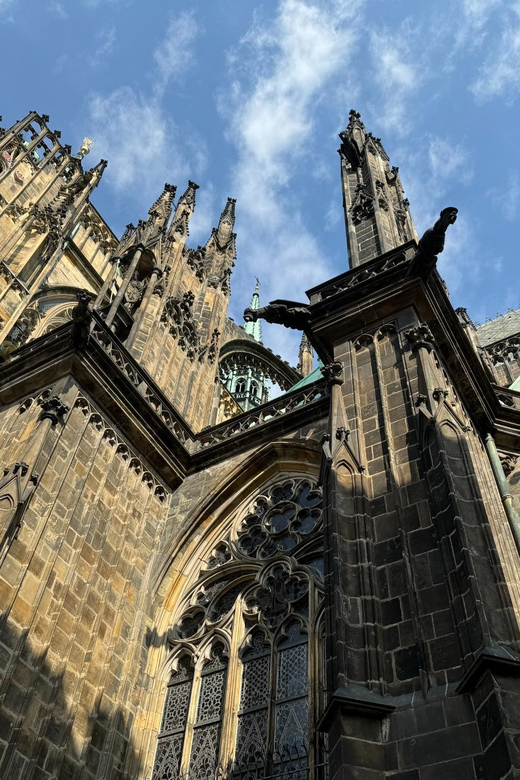
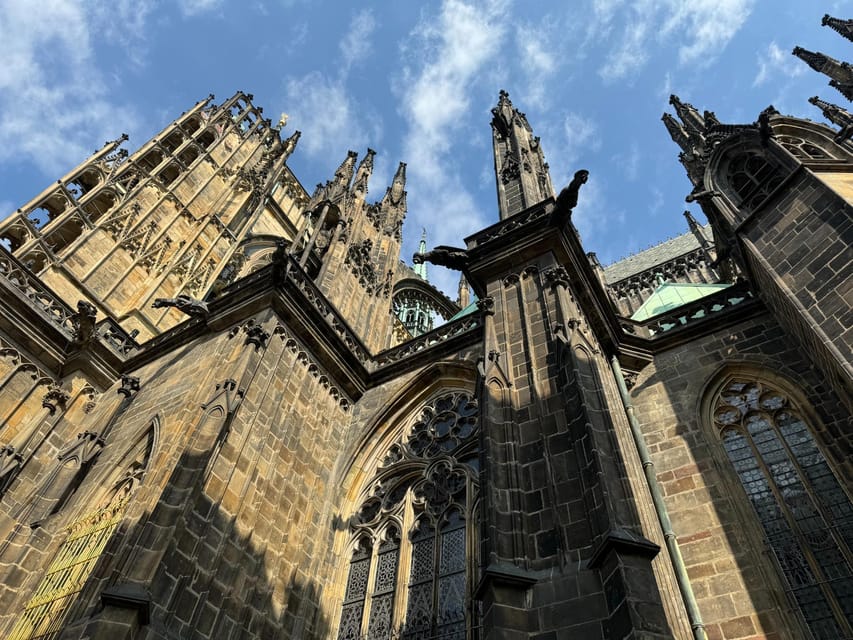
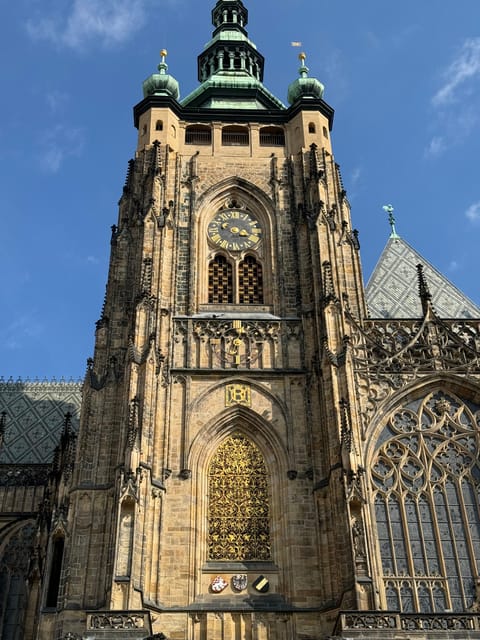
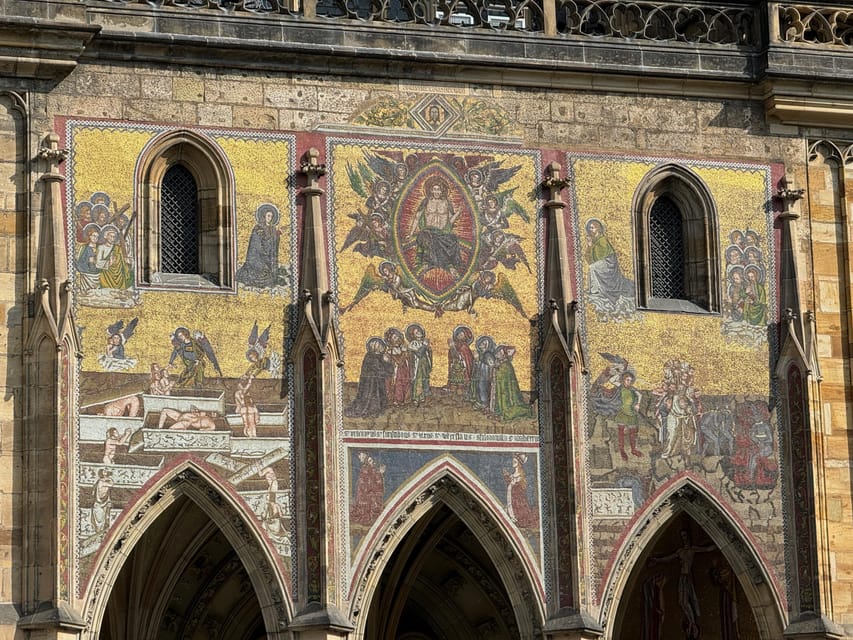
This is the core of the Castle complex, and going inside with a guide changes how you experience it. You spend about 30 minutes in St. Vitus Cathedral with time to understand what you’re looking at instead of just walking through.
The cathedral is where the architectural language gets serious. You’ll hear why this seat of power grew here, and how rulers used monumental building to communicate authority. In other words, you’re not just seeing impressive stone—you’re learning what that stone was meant to do.
A highlight is St. Wenceslas Chapel, which you’ll also see as part of the cathedral visit. Even if you’re not a religious art specialist, this chapel helps you connect names, dates, and symbolism to the physical space. One of the best things I took away is that the guide explains history in a way that lands immediately—using simple comparisons and, in at least one review, references via pictures to help dates and relationships stick.
If you want a “stand in the room and understand why it matters” kind of stop, this is it. If you’re the type who prefers maximum time in the cathedral’s quiet corners, note that you only have a guided window (about half an hour). You’ll leave knowing what to look for if you want to return later on your own.
Old Royal Palace and Vladislav Hall: power, drama, and a famous window
Next comes the Old Royal Palace, with around 20 minutes guided here. This section is where the tour moves from sacred symbolism into political theater.
You’ll visit Vladislav Hall, a space known for its dramatic scale and its role in royal ceremonies. The guide’s job in this kind of room is to translate architecture into meaning: where people gathered, how the room supported display, and what the space suggests about how power was performed.
Then there’s the Defenestration Window. If you associate that phrase with Czech history, you already know it’s not subtle. What’s useful on this tour is the framing. Instead of treating it like a spooky legend, you get the context that connects the window to the broader story of conflict and governance. It’s the kind of detail that makes you stop and look twice, because now you understand how a single physical feature can carry a whole moment in history.
One practical note: rooms like these can feel colder and dimmer than you expect, especially compared with the bright Castle courtyards outside. If you run cold easily, bring a layer you’d normally pack for a cathedral visit.
St. George’s Basilica and Golden Lane: the contrast between grand power and everyday life
After the royal and ceremonial spaces, the tour shifts to a different mood.
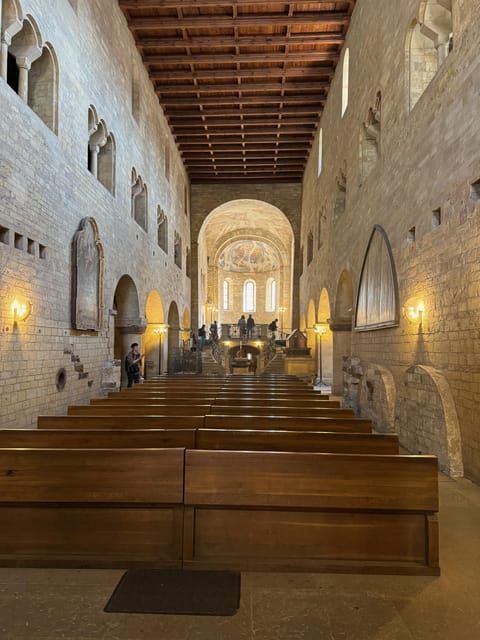
You’ll visit St. George’s Basilica for about 10 minutes. This is a shorter stop, but it works well because it gives you a change of pace. It also helps you understand how the religious and political worlds overlapped in the Castle complex.
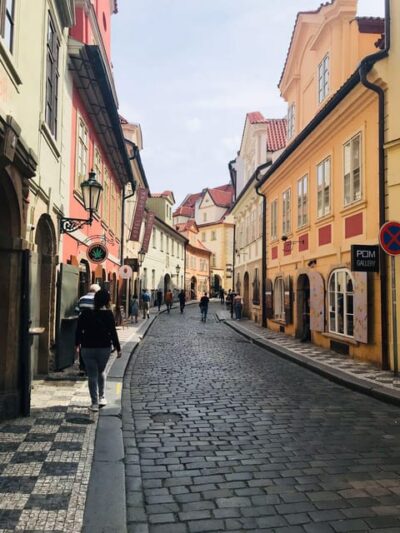
Then comes Golden Lane, with about 25 minutes to visit and walk through. This is one of the places where the Castle stops feeling like a fortress and starts feeling like lived-in ground. Golden Lane is known for its small houses along the lane, which makes it easier to imagine daily life against the backdrop of royal power.
This is also where a small group really pays off. With fewer people, you can walk at a comfortable speed and ask questions without having to shout over a constant stream of visitors. If your goal is to remember what you saw later, this is the section that helps it stick. The lane is visually distinctive, and the guide’s explanations help you connect that distinct look to why the Castle complex included spaces like this in the first place.
A small caution: Golden Lane is a walking environment. Wear shoes with solid grip. You’ll likely be stepping over uneven ground at times, and you don’t want to cut your experience short by worrying about your footing.



Hradčany Square and the Changing of the Guard: a short ceremony with real atmosphere
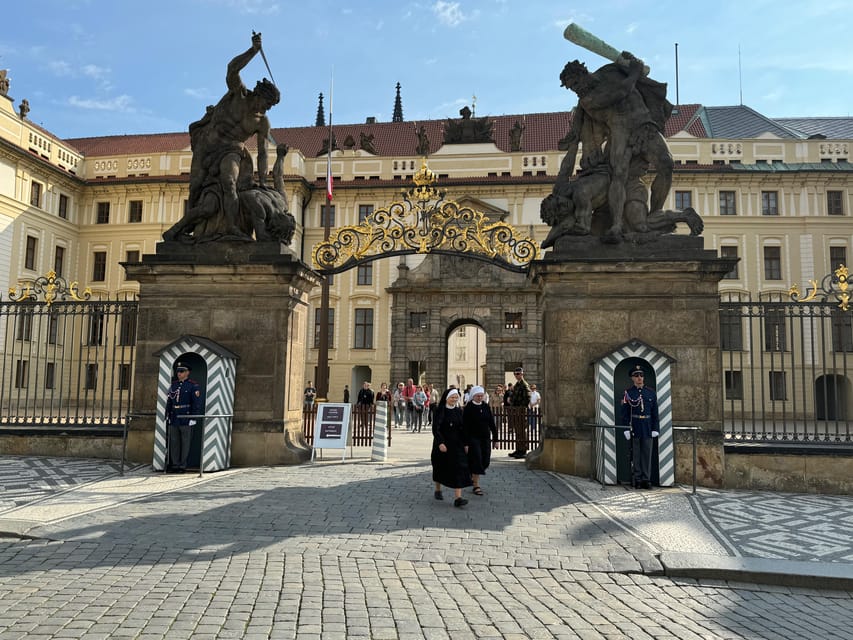
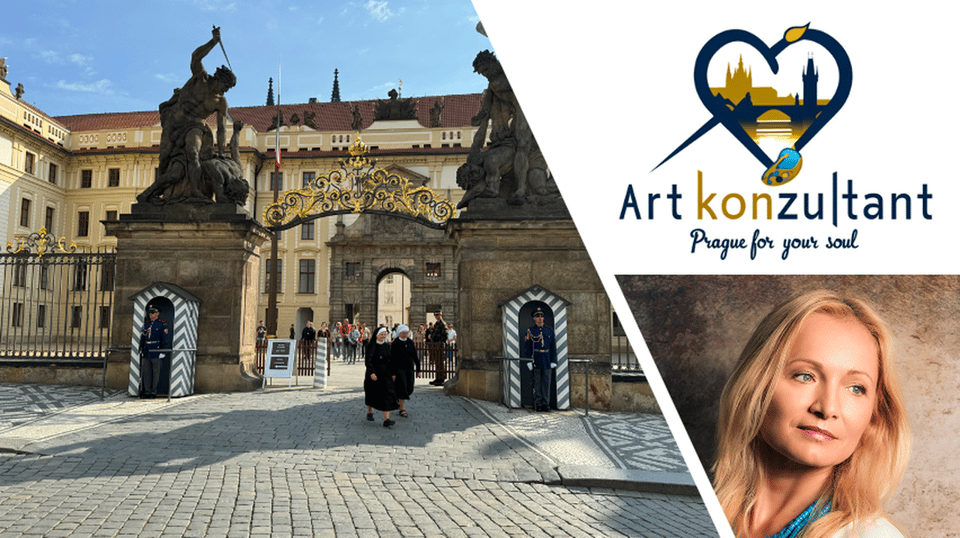
The tour ends at Hradčany Square, where you get about 20 minutes to watch the Changing of the Guard ceremony.
This is a great closing act because it turns the Castle from a museum-like place into something with rhythm. Even if you’ve seen ceremonies elsewhere in Europe, Prague’s setting makes it feel specific and local. You see the Castle surroundings provide the scale and backdrop that no photo ever captures fully.
Keep your expectations realistic: it’s a short ceremonial moment, not an all-day pageant. But that’s part of what makes it satisfying. You finish your interior-heavy tour with something visual and time-bound, and you get to do it without needing to figure out when and where to be on your own.
If you like photography, this is when to think about timing. You’ll likely be able to watch from a decent spot, but the area is still public—so keep your camera ready, move carefully, and don’t block other sightlines.
Price and value: what 150 minutes for $87 really buys you
At $87 per person for about 150 minutes, this tour isn’t cheap in a budget sense. But it’s not just paying for access to buildings. You’re paying for three things that are hard to replicate on your own:
First, guided context inside the spaces. Prague Castle is complicated. Without help, you can end up seeing beautiful rooms with little idea of what you’re looking at. With a guide, the architecture becomes a story—why rulers chose this setting, how power showed up in stone, and what specific features like the Defenestration Window were connected to.
Second, the tour includes tickets to the key interiors and includes the tram ride. When entry fees and transport are folded in, you avoid surprise costs and save time on planning.
Third, the small-group size. For a complex site like this, small group is what turns a rushed route into something you can actually enjoy. You get space to ask questions, and you’re not stuck waiting for a group that’s slower or unsure.
So if you’re the type who likes to understand what you’re seeing, rather than just collect photos, the value here feels fair.
Practical tips that make the day smoother
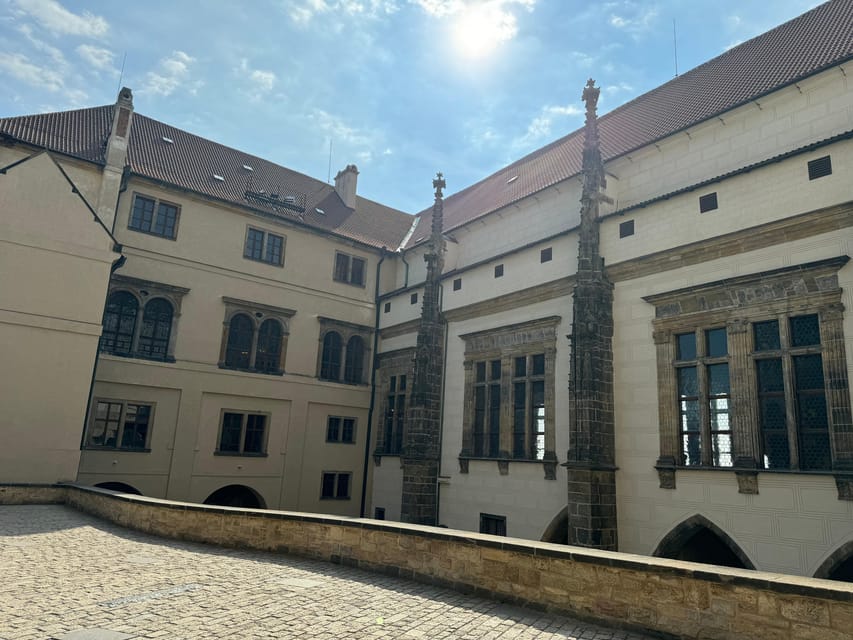
Bring comfortable shoes. This tour includes uneven surfaces and gentle uphill sections. The last thing you want is sore feet while you’re trying to enjoy cathedral interiors and cobbled lanes.
If rain threatens, bring an umbrella. Some parts of the day are outdoors, and the tour runs with a calm pace, not a sprint. You’ll also benefit from an umbrella because you’ll need to locate the guide at the start—again, the guide holds a blue umbrella.
Refreshments are not included, so plan a snack or drink before or after. The day is only about 2.5 hours, but it’s a concentrated Castle visit, and you’ll likely want water once you’re moving between rooms and courtyards.
One more real-world point: some areas of the Castle may occasionally close due to official state events. That’s not something you can control, so don’t be shocked if plans shift to follow visitor regulations.
Finally, if you’re running late, the team has shown patience in at least one situation where someone couldn’t catch a taxi. That doesn’t mean you should test the limits. But it does suggest the operator aims to be kind, organized, and human about delays.
Who should book this tour, and who might prefer another style
I think this tour fits best if you:
- Want interiors with context, not just outdoor photo stops
- Prefer a calmer route with a max 8 group size
- Like explanations that connect architecture to political and cultural meaning
- Plan to keep exploring Prague Castle on your own afterward, using this as your foundation
It might feel less perfect if you:
- Want to spend hours wandering independently without guidance
- Have very limited tolerance for walking on uneven ground
- Expect extra time at any one stop beyond the guided windows
Should you book Prague Castle Interiors and Changing of the Guard (small group)?
If your priority is understanding the Castle—inside rooms, not just around them—then yes, I’d book it. The combination of St. Vitus Cathedral, the Old Royal Palace spaces, Golden Lane, and the Changing of the Guard gives you variety without chaos.
The real reason I’d choose this over a bigger group tour is the pace. You can hear the story, ask questions, and still end on time to watch the ceremony at Hradčany Square. If you want your Prague Castle day to feel like a guided lesson with atmosphere, not a rushed line-up, this is a strong option.
FAQ
Where is the meeting point for the tour?
You meet at MALOSTRANSKÁ metro station, at the spot marked by a brown Meeting Point sign. The guide will be holding a blue umbrella. Note: this is not Malostranské Square.
How long is the tour?
The duration is about 150 minutes.
How many people are in the group?
The group is small, limited to a maximum of 8 participants.
What Prague Castle interiors are included?
The tour includes St. Vitus Cathedral (including St. Wenceslas Chapel), the Old Royal Palace (including Vladislav Hall and the Defenestration Window), Golden Lane, and St. George’s Basilica.
Is the Changing of the Guard included?
Yes. The tour ends at Hradčany Square to watch the Changing of the Guard ceremony, and it is included.
Are entrance tickets included?
Yes. Entry tickets to the Prague Castle interiors are included, and you should not need extra purchases on the day.
What languages are the tours offered in?
The licensed local guide offers the tour in English and Czech.
What should I wear or bring?
Wear comfortable shoes and avoid high-heeled shoes. Bring an umbrella in case of rain, since parts of the tour take place outdoors.
What if parts of Prague Castle are closed?
Some areas of Prague Castle may occasionally be closed due to official state events, following visitor regulations. The tour may adjust based on what’s open.